Lu Yan-Song, Jiang Yuan, Yuan Jin-Ping, Jiang Shi-Bin, Yang Yang, Zhu Pei-Yao, Sun Yu-Zhe, Qi Rui-Qun, Liu Tao, Wang He-Xiao, Wu Yan, Gao Xing-Hua, Chen Hong-Duo
Key Laboratory of Immunodermatology, Ministry of Education, Department of Dermatology, The First Hospital of China Medical University, Shenyang, China.
Department of Internal Medicine, School of Nursing, Shandong University of Traditional Chinese Medicine, Jinan, China.
Front Pharmacol. 2020 May 15;11:736. doi: 10.3389/fphar.2020.00736. eCollection 2020.
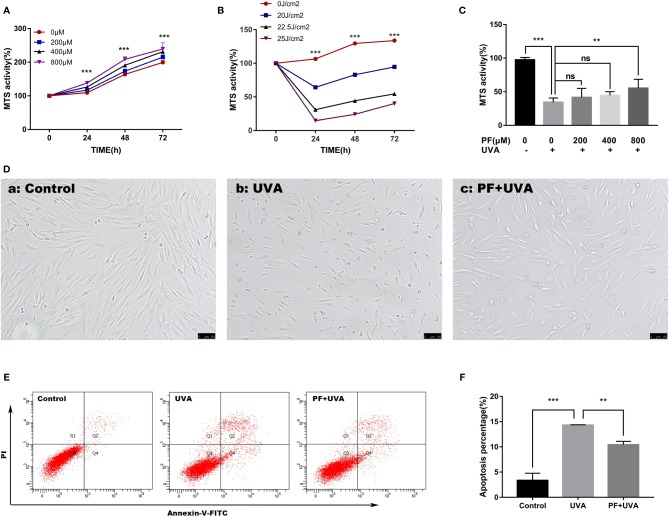
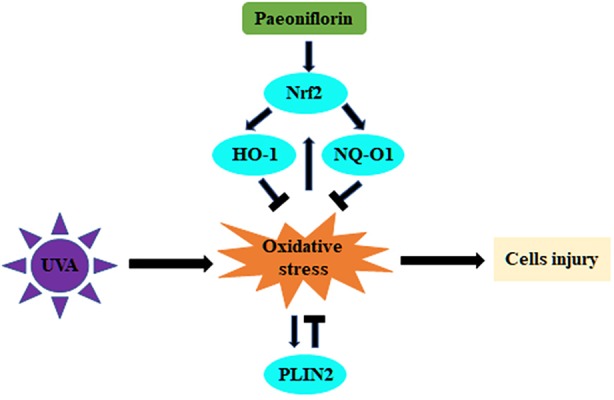
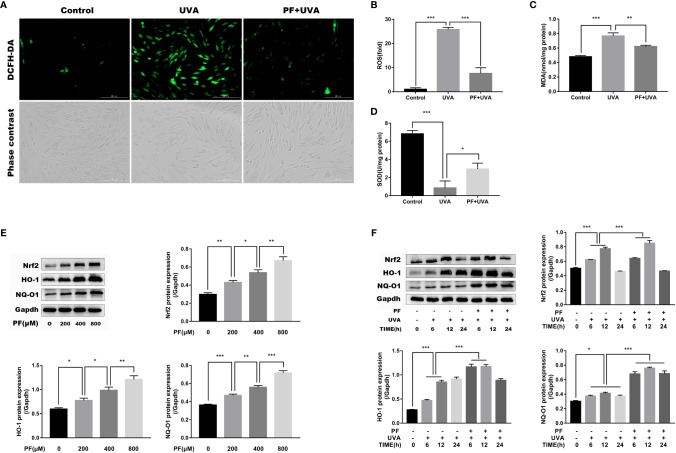
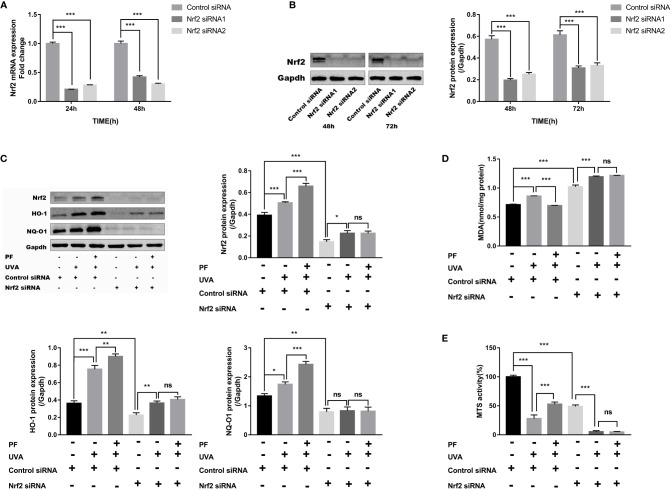
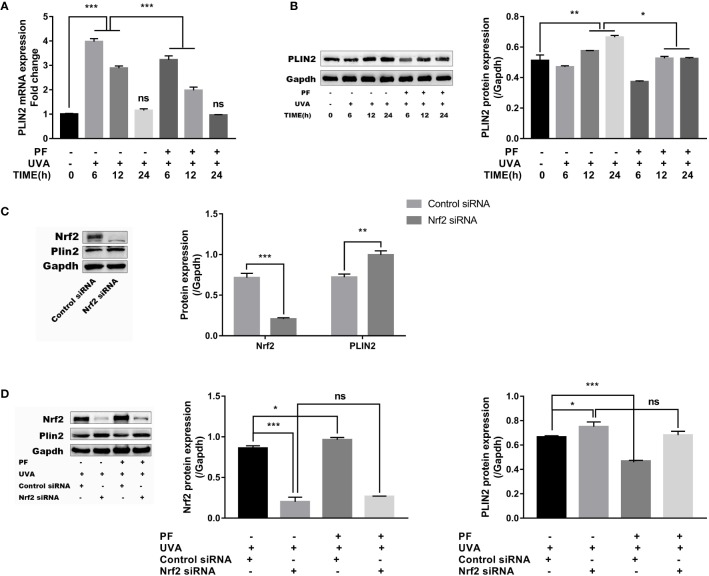
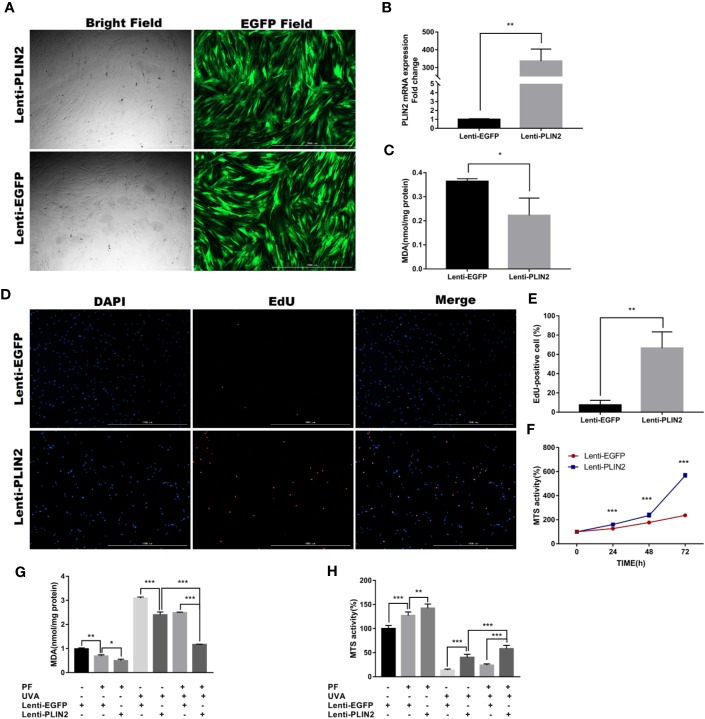
Photodamages caused by UVA radiation induced oxidative injuries are closely related to photoaging and skin cancer. Paeoniflorin (PF), extracted from the root of Paeonia lactiflora, has been reported to be an effective antioxidant. PLIN2, known as adipose differentiation-related protein, has been previously involved in the regulation of oxidative stress. In this study, we were sought to investigate the photo-protective property of PF and PLIN2 in UVA-radiated human dermal fibroblasts (HDFs). HDFs were pre-treated with PF (800 μM) followed by UVA radiation (22.5 J/cm2). MTS activity, cell apoptosis, ROS, MDA, and SOD were detected, respectively. The expressions of Nrf2, HO-1, NQ-O1, and PLIN2 were determined using RT-qPCR or western blot. Nrf2 was silenced by siRNA, and PLIN2 was overexpressed lentiviral transduction. Comparing to the UVA radiation, PF pre-treatment could prominently increase the MTS activity, decrease cell apoptosis, reduce the generations of ROS and MDA, increase the activity of SOD and increase the expression of Nrf2 and its target genes HO-1 and NQ-O1. When Nrf2 was knocked down, PF lost above protective properties. In addition, UVA induced oxidative stress led to upregulation of PLIN2 and the latter could be decreased by PF. Overexpression of PLIN2 improved MTS activity and reduced MDA level in HDFs. The combination of PLIN2 overexpression and PF pre-treatment corporately inhibited UVA-induced injury. Besides, we also found that PF and PLIN2 had a compensatory protection against UVA induced oxidative stress. In conclusion, our study demonstrated that UVA induced photodamages could be inhibited by PF Nrf2/HO-1/NQ-O1 signaling pathway or by PLIN2, and the combination of PLIN2 overexpression and PF played additive effects against UVA-related oxidative stress.
由UVA辐射诱导的氧化损伤所引起的光损伤与光老化和皮肤癌密切相关。从芍药根中提取的芍药苷(PF)据报道是一种有效的抗氧化剂。PLIN2,即脂肪分化相关蛋白,此前已参与氧化应激的调节。在本研究中,我们旨在探究PF和PLIN2在UVA辐射的人皮肤成纤维细胞(HDFs)中的光保护特性。HDFs先用PF(800μM)预处理,然后进行UVA辐射(22.5 J/cm²)。分别检测MTS活性、细胞凋亡、活性氧(ROS)、丙二醛(MDA)和超氧化物歧化酶(SOD)。使用RT-qPCR或蛋白质免疫印迹法测定Nrf2、血红素加氧酶-1(HO-1)、醌氧化还原酶1(NQ-O1)和PLIN2的表达。Nrf2通过小干扰RNA(siRNA)沉默,PLIN2通过慢病毒转导过表达。与UVA辐射相比,PF预处理可显著提高MTS活性,减少细胞凋亡,减少ROS和MDA的生成,增加SOD活性,并增加Nrf2及其靶基因HO-1和NQ-O1的表达。当Nrf2被敲低时,PF失去上述保护特性。此外,UVA诱导的氧化应激导致PLIN2上调,而PF可使其降低。PLIN2过表达可改善HDFs的MTS活性并降低MDA水平。PLIN2过表达与PF预处理联合可共同抑制UVA诱导的损伤。此外,我们还发现PF和PLIN2对UVA诱导的氧化应激具有代偿性保护作用。总之,我们的研究表明,UVA诱导的光损伤可通过PF-Nrf2/HO-1/NQ-O1信号通路或PLIN2抑制,PLIN2过表达与PF联合对UVA相关的氧化应激具有相加作用。