School of Environmental Sciences, Jawaharlal Nehru University, New Delhi, 110067, India.
School of Computational and Integrative Sciences, Jawaharlal Nehru University, New Delhi, 110067, India.
Sci Rep. 2020 Jun 17;10(1):9864. doi: 10.1038/s41598-020-66638-x.
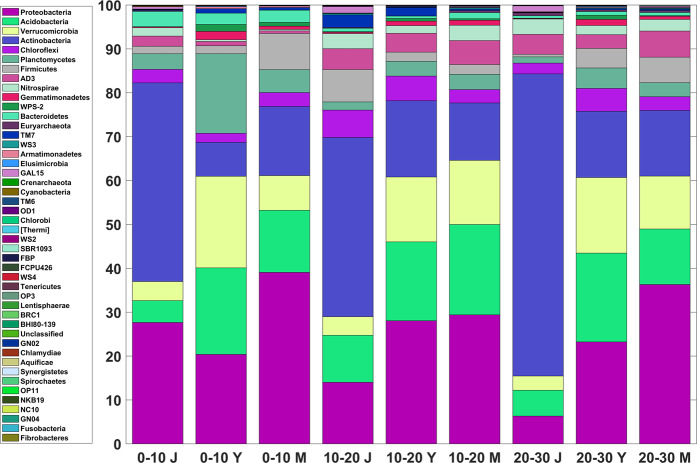
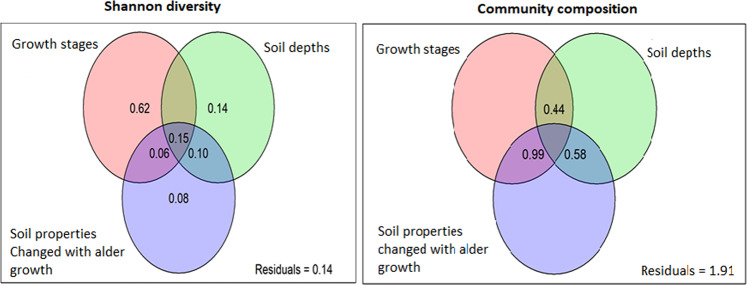
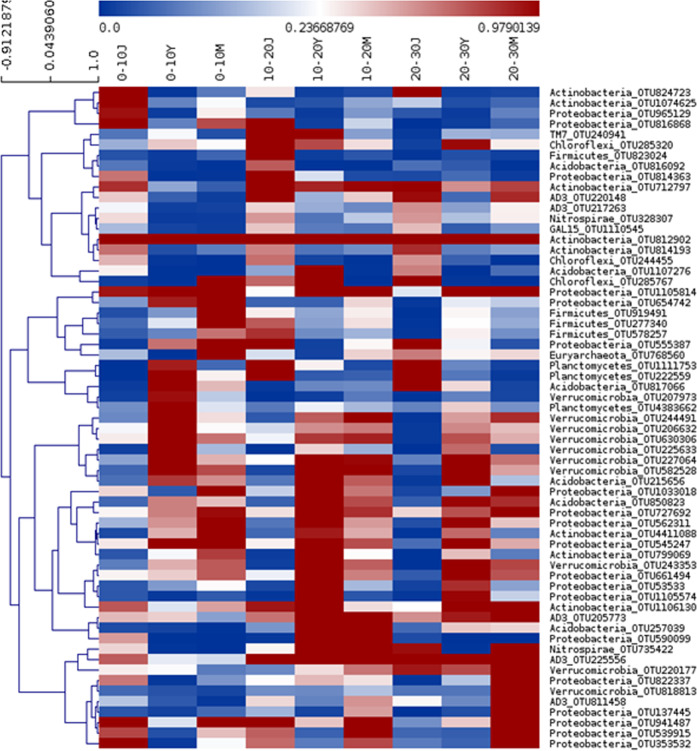
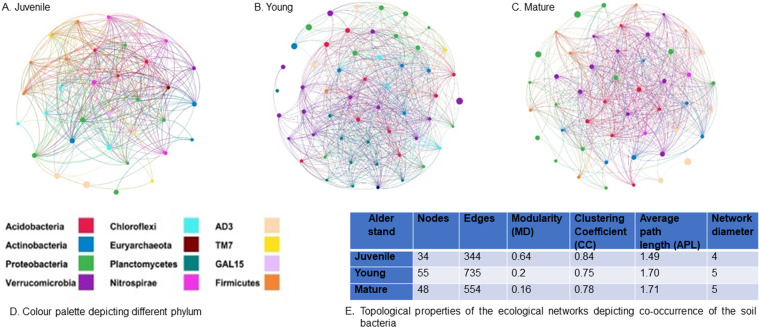
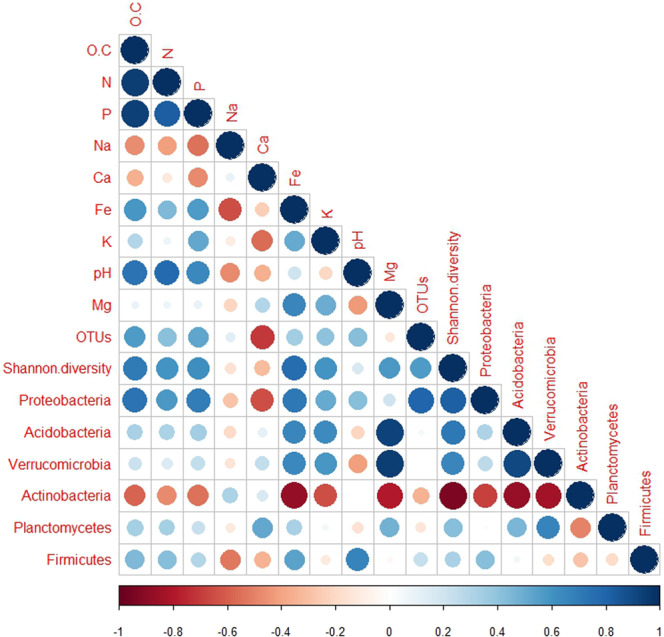
This study investigated the potential role of a nitrogen-fixing early-coloniser Alnus Nepalensis D. Don (alder) in driving the changes in soil bacterial communities during secondary succession. We found that bacterial diversity was positively associated with alder growth during course of ecosystem development. Alder development elicited multiple changes in bacterial community composition and ecological networks. For example, the initial dominance of actinobacteria within bacterial community transitioned to the dominance of proteobacteria with stand development. Ecological networks approximating species associations tend to stabilize with alder growth. Janthinobacterium lividum, Candidatus Xiphinematobacter and Rhodoplanes were indicator species of different growth stages of alder. While the growth stages of alder has a major independent contribution to the bacterial diversity, its influence on the community composition was explained conjointly by the changes in soil properties with alder. Alder growth increased trace mineral element concentrations in the soil and explained 63% of variance in the Shannon-diversity. We also found positive association of alder with late-successional Quercus leucotrichophora (Oak). Together, the changes in soil bacterial community shaped by early-coloniser alder and its positive association with late-successional oak suggests a crucial role played by alder in ecosystem recovery of degraded habitats.
本研究探讨了固氮先锋树种尼泊尔桤木(桤木)在次生演替过程中驱动土壤细菌群落变化中的潜在作用。我们发现,细菌多样性与生态系统发育过程中桤木的生长呈正相关。桤木的生长引发了细菌群落组成和生态网络的多种变化。例如,细菌群落中放线菌的初始优势演变为随着林分发育而占优势的变形菌。生态网络近似于物种关联的网络往往随着桤木的生长而稳定。节杆菌属、拟诺卡氏菌属和红平菌属是桤木不同生长阶段的指示种。虽然桤木的生长阶段对细菌多样性有主要的独立贡献,但它对群落组成的影响是由桤木生长引起的土壤性质变化共同解释的。桤木的生长增加了土壤中痕量矿物质元素的浓度,解释了香农多样性中 63%的变异。我们还发现桤木与晚生栎(栎)呈正相关。总之,由早期先锋树种桤木塑造的土壤细菌群落的变化及其与晚生栎的正相关关系表明,桤木在退化生境的生态系统恢复中起着至关重要的作用。