Division of Bacteriology, National Institute for Biological Standards and Control, Blanche Lane, South Mimms, Potters Bar, Hertfordshire, EN6 3QG, UK.
Division of Analytical and Biological Sciences, National Institute for Biological Standards and Control, Potters Bar, Hertfordshire, EN6 3QG, UK.
Microbiome. 2020 Jun 26;8(1):98. doi: 10.1186/s40168-020-00856-3.
Effective standardisation of methodologies to analyse the microbiome is essential to the entire microbiome community. Despite the microbiome field being established for over a decade, there are no accredited or certified reference materials available to the wider community. In this study, we describe the development of the first reference reagents produced by the National Institute for Biological Standards and Control (NIBSC) for microbiome analysis by next-generation sequencing. These can act as global working standards and will be evaluated as candidate World Health Organization International Reference Reagents.
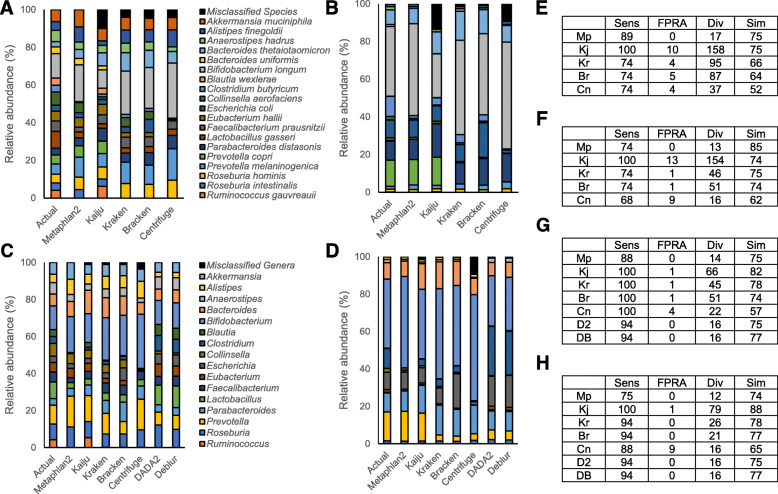
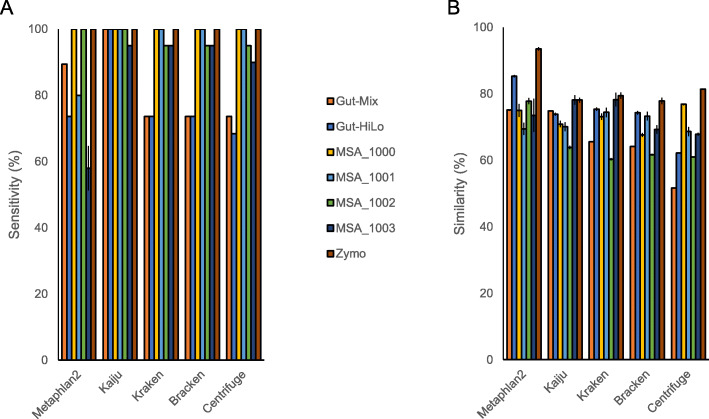
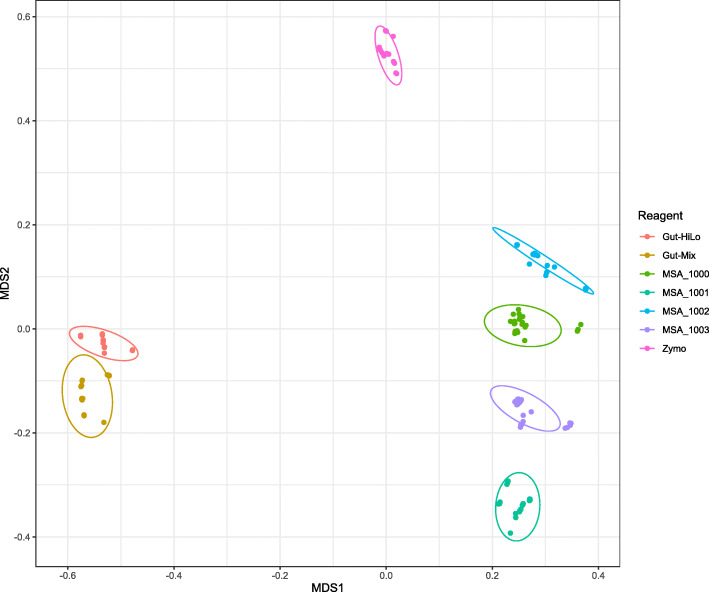
We developed the NIBSC DNA reference reagents Gut-Mix-RR and Gut-HiLo-RR and a four-measure framework for evaluation of bioinformatics tool and pipeline bias. Using these reagents and reporting system, we performed an independent evaluation of a variety of bioinformatics tools by analysing shotgun sequencing and 16S rRNA sequencing data generated from the Gut-Mix-RR and Gut-HiLo-RR. We demonstrate that key measures of microbiome health, such as diversity estimates, are largely inflated by the majority of bioinformatics tools. Across all tested tools, biases were present, with a clear trade-off occurring between sensitivity and the relative abundance of false positives in the final dataset. Using commercially available mock communities, we investigated how the composition of reference reagents may impact benchmarking studies. Reporting measures consistently changed when the same bioinformatics tools were used on different community compositions. This was influenced by both community complexity and taxonomy of species present. Both NIBSC reference reagents, which consisted of gut commensal species, proved to be the most challenging for the majority of bioinformatics tools tested. Going forward, we recommend the field uses site-specific reagents of a high complexity to ensure pipeline benchmarking is fit for purpose.
If a consensus of acceptable levels of error can be agreed on, widespread adoption of these reference reagents will standardise downstream gut microbiome analyses. We propose to do this through a large open-invite collaborative study for multiple laboratories in 2020. Video Abstract.
有效规范分析微生物组的方法对于整个微生物组社区至关重要。尽管微生物组领域已经建立了十多年,但广大社区仍然没有可获得的经过认证或认可的参考材料。在这项研究中,我们描述了由英国国家生物标准与控制研究所(NIBSC)为下一代测序微生物组分析生产的第一批参考试剂的开发。这些可以作为全球工作标准,并将作为世界卫生组织国际参考试剂的候选物进行评估。
我们开发了 NIBSC DNA 参考试剂 Gut-Mix-RR 和 Gut-HiLo-RR,以及用于评估生物信息学工具和管道偏差的四步评估框架。使用这些试剂和报告系统,我们通过分析来自 Gut-Mix-RR 和 Gut-HiLo-RR 的 shotgun 测序和 16S rRNA 测序数据,对各种生物信息学工具进行了独立评估。我们证明,微生物组健康的关键指标,如多样性估计,在很大程度上被大多数生物信息学工具夸大了。在所有测试的工具中,都存在偏差,在最终数据集的灵敏度和假阳性的相对丰度之间存在明显的权衡。使用市售的模拟群落,我们研究了参考试剂的组成如何影响基准测试研究。当使用相同的生物信息学工具对不同的群落组成进行分析时,报告的指标会发生变化。这受到群落复杂性和存在物种的分类的影响。由肠道共生物种组成的 NIBSC 参考试剂对大多数测试的生物信息学工具来说都是最具挑战性的。展望未来,我们建议该领域使用具有高复杂度的特定于站点的试剂,以确保管道基准测试符合目的。
如果可以就可接受的误差水平达成共识,广泛采用这些参考试剂将使下游肠道微生物组分析标准化。我们建议在 2020 年通过一项面向多个实验室的大型开放式邀请合作研究来实现这一目标。视频摘要。