Ahmed Wazir, Imran Muhammad, Yaseen Muhammad, Haq Tanveer Ul, Jamshaid Muhammad Usman, Rukh Shah, Ikram Rao Muhammad, Ali Muqarrab, Ali Anser, Maqbool Mudassar, Arif Muhammad, Khan Mahmood Alam
Department of Soil and Environmental Sciences, MNS-University of Agriculture, Multan, Multan, Pakistan.
Institute of Soil and Environmental Sciences, University of Agriculture Faisalabad, Faisalabad, Pakistan.
PeerJ. 2020 Mar 27;8:e8475. doi: 10.7717/peerj.8475. eCollection 2020.
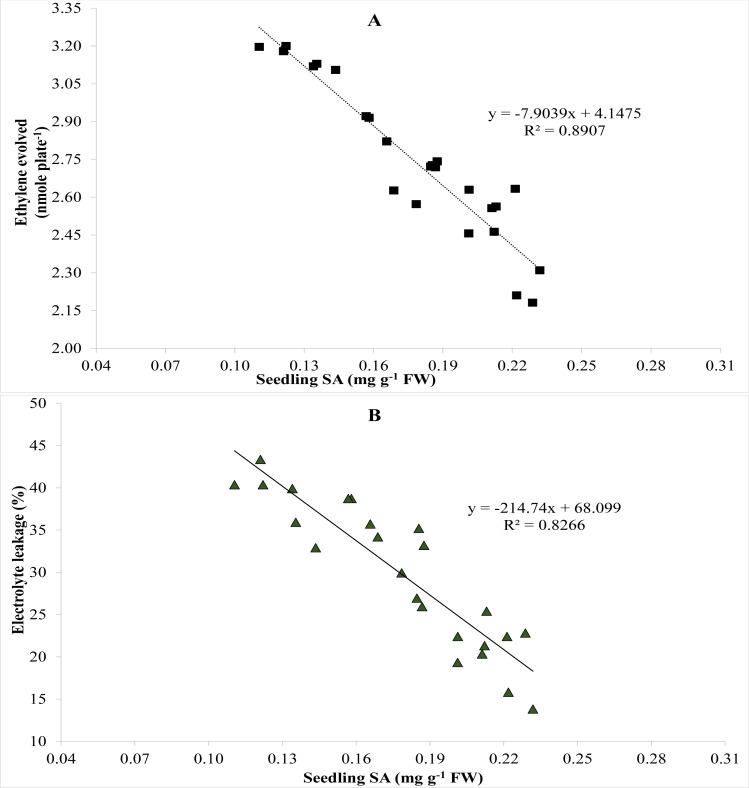
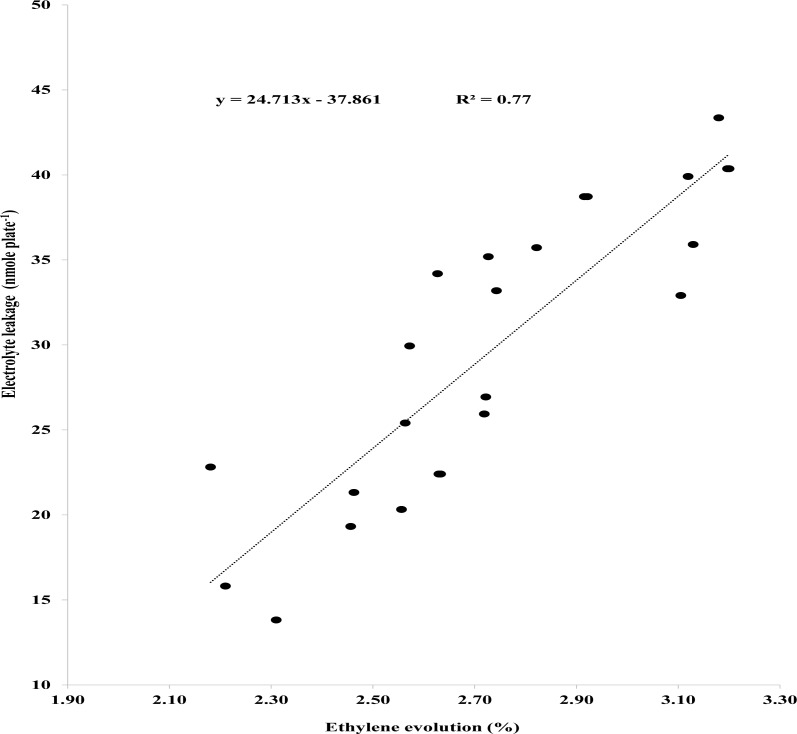
During a preliminary study, effects of 0, 20, 40, and 60 mM NaCl salinity were assessed on germination rate in relation to electrolyte leakage (EL) in sweet pepper. Results explored significant rises in ethylene evolution from seeds having more EL. It was, therefore, hypothesized that excessive ethylene biosynthesis in plants due to salinity stress might be a root cause of low crop productivity. As salicylic acid is one of the potent ethylene inhibitors, thus SA was used to combat effects of ethylene produced under salinity stress of 60 mM NaCl on different physiological and morphological characteristics of sweet pepper.
The effect of 0.05, 0.1, 0.2, 0.3, 0.4, 0.5 and 0.6 mM SA was evaluated on seed germination, growth and yield of sweet pepper cv. Yolo wonder at salinity stress on 60 mM NaCl. Seeds were primed with SA concentrations and incubated till 312 h in an incubator to study germination. Same SA concentrations were sprayed on foliage of plants grown in saline soil (60 mM NaCl).
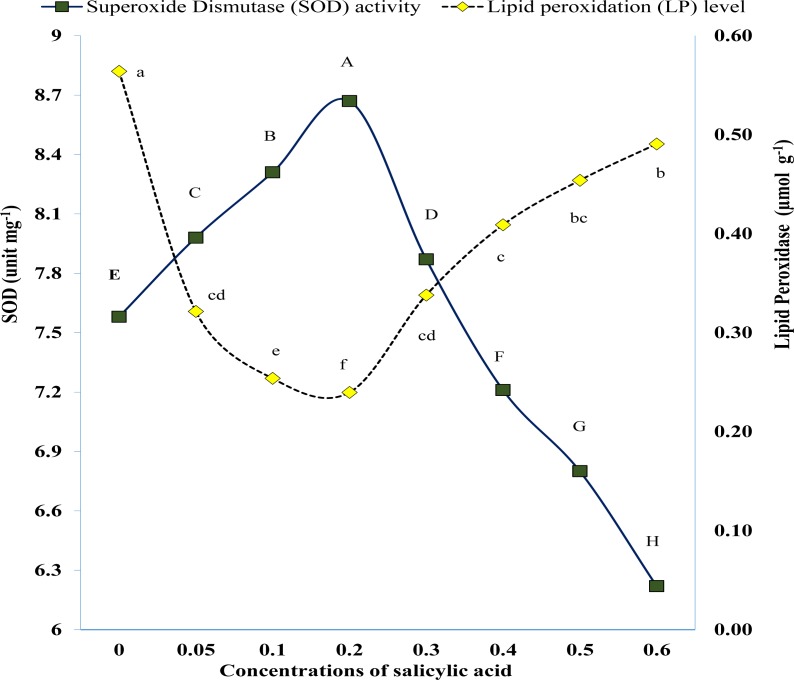
Seeds primed by 0.2 to 0.3 mM SA improved germination rate by 33% due to suppression of ethylene from 3.19 (control) to 2.23-2.70 mg plate. Electrolyte leakage reduced to 20.8-21.3% in seeds treated by 0.2-0.3 mM SA compared to 39.9% in untreated seeds. Results also explored that seed priming by 0.3 mM improved TSS, SOD and chlorophyll contents from 13.7 to 15.0 mg g FW, 4.64 to 5.38 activity h 100 mg and 89 to 102 ug g compared to untreated seeds, respectively. Results also explore that SA up to 0.2 mM SA applied on plant foliage improved LAI (5-13%), photosynthesis (4-27%), WUE (11-57%), dry weight (5-20%), SOD activity (4-20%) and finally fruit yield (4-20%) compared to untreated plants by ameliorating effect of 60 mM NaCl. Foliar application of SA also caused significant increase in nutrient use efficiency due to significant variations in POD and SOD activities.
Salicylic acid suppressed ethylene evolution from germinating seeds up to 30% under stress of 60 mM NaCl due to elevated levels of TSS and SOD activity. Foliar application of SA upgraded SOD by lowering POD activity to improve NUE particularly K use efficiency at salinity stress of 60 mM NaCl. Application of 0.2 and 0.3 mM SA emerged as the most effective concentrations of SA for mitigating 60 mM NaCl stress on different physiological and morphological characteristics of sweet pepper.
在一项初步研究中,评估了0、20、40和60 mM NaCl盐度对甜椒发芽率与电解质渗漏(EL)的影响。结果发现,EL较高的种子乙烯释放量显著增加。因此,推测盐胁迫导致植物体内乙烯生物合成过多可能是作物生产力低下的根本原因。由于水杨酸是一种有效的乙烯抑制剂,因此使用水杨酸来对抗60 mM NaCl盐胁迫下产生的乙烯对甜椒不同生理和形态特征的影响。
评估了0.05、0.1、0.2、0.3、0.4、0.5和0.6 mM水杨酸对甜椒品种Yolo wonder在60 mM NaCl盐胁迫下种子萌发、生长和产量的影响。用不同浓度的水杨酸处理种子,并在培养箱中培养312小时以研究发芽情况。将相同浓度的水杨酸喷洒在生长在盐渍土壤(60 mM NaCl)中的植物叶片上。
用0.2至0.3 mM水杨酸处理的种子,由于乙烯从3.19(对照)抑制到2.23 - 2.70 mg/平板,发芽率提高了33%。与未处理种子的39.9%相比,用0.2 - 0.3 mM水杨酸处理的种子电解质渗漏率降至20.8 - 21.3%。结果还表明,与未处理种子相比,用0.3 mM水杨酸处理种子可使总可溶性固形物(TSS)、超氧化物歧化酶(SOD)和叶绿素含量分别从13.7提高到15.0 mg/g鲜重、从4.64提高到5.38活性/h 100 mg以及从89提高到102 μg/g。结果还发现,在植物叶片上施用高达0.2 mM的水杨酸,通过缓解60 mM NaCl的影响,与未处理植株相比,叶面积指数(LAI)提高了(5 - 13%)、光合作用提高了(4 - 27%)、水分利用效率(WUE)提高了(11 - 57%)、干重提高了(5 - 20%)、SOD活性提高了(4 - 20%),最终果实产量提高了(4 - 20%)。叶面喷施水杨酸还由于过氧化物酶(POD)和SOD活性的显著变化而导致养分利用效率显著提高。
在60 mM NaCl胁迫下,由于TSS和SOD活性水平升高,水杨酸抑制发芽种子的乙烯释放达30%。叶面喷施水杨酸通过降低POD活性来提升SOD,从而在60 mM NaCl盐胁迫下提高养分利用效率,特别是钾的利用效率。0.2和0.3 mM水杨酸的施用被证明是缓解60 mM NaCl对甜椒不同生理和形态特征胁迫的最有效浓度。