School of Pharmaceutical Sciences, Cheeloo College of Medicine, Shandong University, Jinan, 250012, China.
Department of Pharmacy, Jinan Central Hospital, Cheeloo College of Medicine, Shandong University, Jinan, 250013, China.
BMC Complement Med Ther. 2020 Jul 6;20(1):209. doi: 10.1186/s12906-020-02965-w.
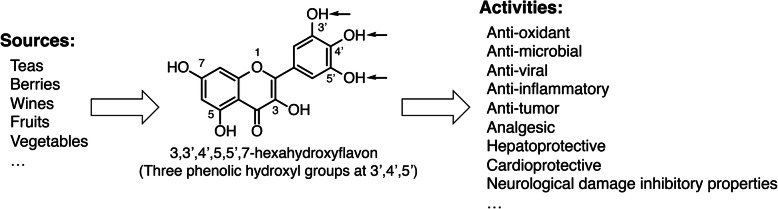
The compound 3,3',4',5,5',7-hexahydroxyflavone (myricetin) is a natural flavonoid with antitumour activity. Most of the studies on myricetin have focused on the induction of tumour cell apoptosis, and little is known about the regulatory effects of myricetin on autophagy in colorectal cancer.
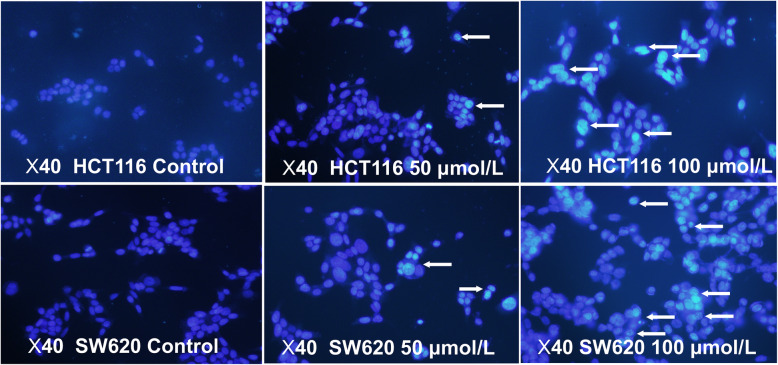
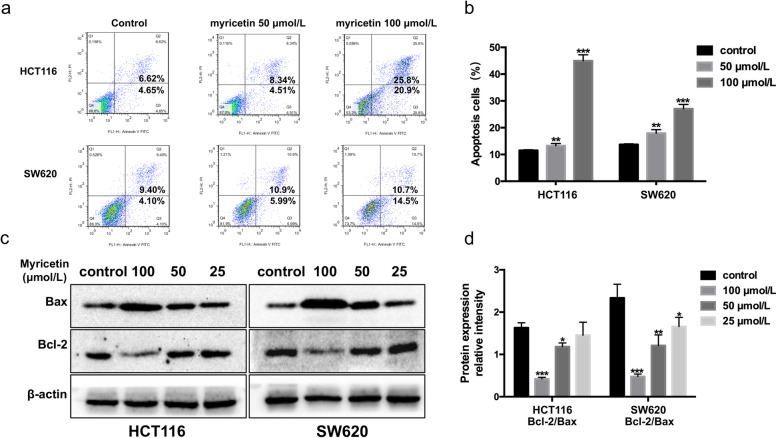
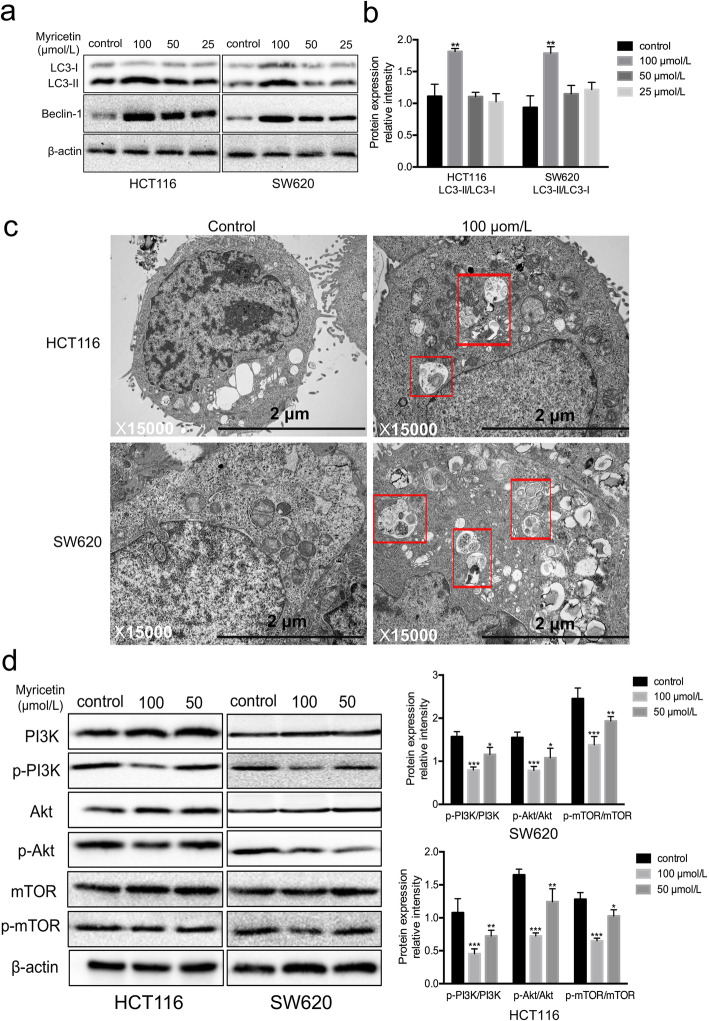
Here, we studied the effects of myricetin on colon cancer cell proliferation, apoptosis and autophagy. We detected colon cancer cell apoptosis induced by myricetin via flow cytometry and Hoechst 33258 staining. Transmission electron microscopy was performed to observe the morphological changes associated with autophagy. The expression levels of apoptosis-, autophagy- and PI3K/Akt/mTOR signalling-related proteins were measured by Western blot analysis.
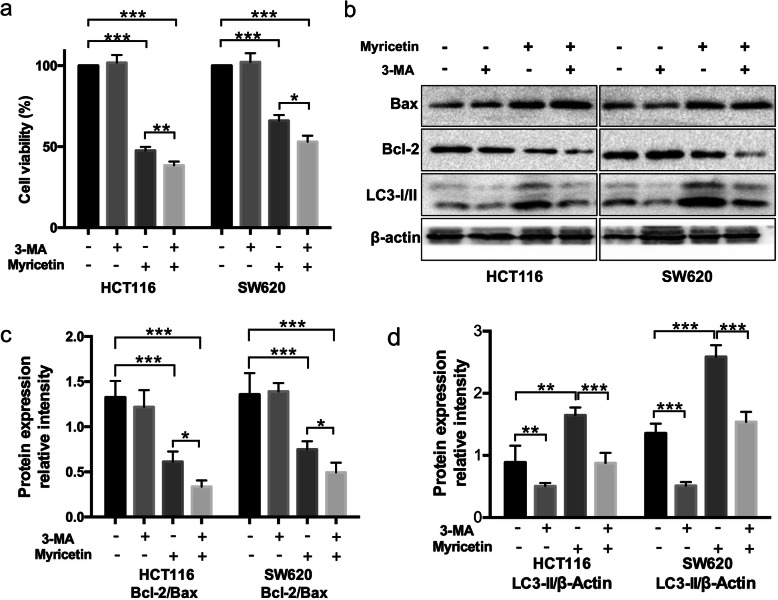
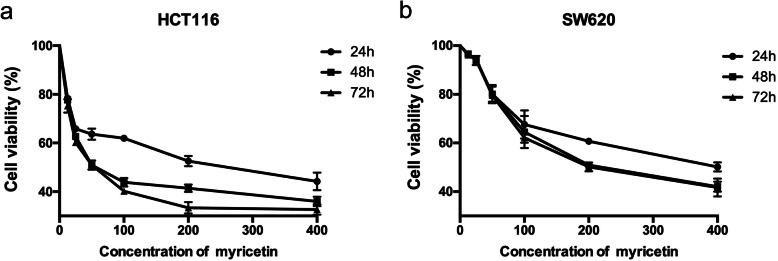
This study confirmed that myricetin inhibits the proliferation of 4 kinds of colon cancer cell lines. Myricetin induced cell apoptosis and autophagy by inhibiting PI3K/Akt/mTOR signalling pathway. In addition, the inhibition of autophagy with 3-methyladenine (3-MA) promoted the apoptosis of myricetin-treated colon cancer cells.
Considering that myricetin induces apoptosis and autophagy in colon cancer cells, myricetin may become a viable candidate for chemotherapy; it could be used to exert tumour inhibitory effects alone or as adjuvant chemotherapy to inhibit autophagy. These studies may provide further evidence for the potential use of myricetin in the treatment of colon cancer.
化合物 3,3',4',5,5',7-六羟基黄酮(杨梅素)是一种具有抗肿瘤活性的天然类黄酮。大多数关于杨梅素的研究都集中在诱导肿瘤细胞凋亡上,而对杨梅素调节结直肠癌细胞自噬的作用知之甚少。
在这里,我们研究了杨梅素对结肠癌细胞增殖、凋亡和自噬的影响。我们通过流式细胞术和 Hoechst 33258 染色检测杨梅素诱导的结肠癌细胞凋亡。透射电子显微镜观察与自噬相关的形态变化。通过 Western blot 分析测量凋亡、自噬和 PI3K/Akt/mTOR 信号转导相关蛋白的表达水平。
本研究证实杨梅素抑制 4 种结肠癌细胞系的增殖。杨梅素通过抑制 PI3K/Akt/mTOR 信号通路诱导细胞凋亡和自噬。此外,用 3-甲基腺嘌呤(3-MA)抑制自噬促进杨梅素处理的结肠癌细胞凋亡。
鉴于杨梅素诱导结肠癌细胞凋亡和自噬,杨梅素可能成为化疗的可行候选药物;它可以单独用于发挥肿瘤抑制作用,也可以作为辅助化疗来抑制自噬。这些研究可能为杨梅素在结肠癌治疗中的潜在应用提供进一步的证据。