• 文献检索
  • 文档翻译
  • 深度研究
  • 学术资讯
  • Suppr Zotero 插件Zotero 插件
  • 邀请有礼
  • 套餐&价格
  • 历史记录
应用&插件
Suppr Zotero 插件Zotero 插件浏览器插件Mac 客户端Windows 客户端微信小程序
定价
高级版会员购买积分包购买API积分包
服务
文献检索文档翻译深度研究API 文档MCP 服务
关于我们
关于 Suppr公司介绍联系我们用户协议隐私条款
关注我们

Suppr 超能文献

核心技术专利:CN118964589B侵权必究
粤ICP备2023148730 号-1Suppr @ 2026

文献检索

告别复杂PubMed语法,用中文像聊天一样搜索,搜遍4000万医学文献。AI智能推荐,让科研检索更轻松。

立即免费搜索

文件翻译

保留排版,准确专业,支持PDF/Word/PPT等文件格式,支持 12+语言互译。

免费翻译文档

深度研究

AI帮你快速写综述,25分钟生成高质量综述,智能提取关键信息,辅助科研写作。

立即免费体验

可推广的深度时间模型用于预测危重病患者突发性低血压发作:个性化方法。

Generalizable deep temporal models for predicting episodes of sudden hypotension in critically ill patients: a personalized approach.

机构信息

School of Computing, Queen's University, Kingston, K7L 3N6, Canada.

Department of Critical Care Medicine, Queen's University, Kingston, K7L 2V7, Canada.

出版信息

Sci Rep. 2020 Jul 10;10(1):11480. doi: 10.1038/s41598-020-67952-0.

DOI:10.1038/s41598-020-67952-0
PMID:32651401
原文链接:https://pmc.ncbi.nlm.nih.gov/articles/PMC7351714/
Abstract

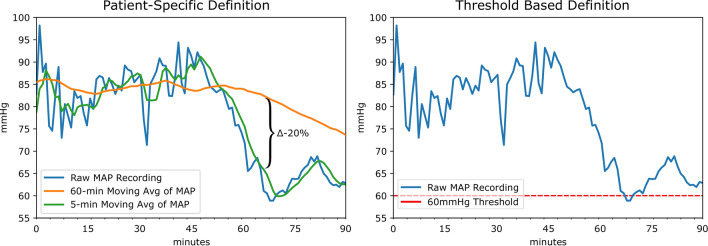
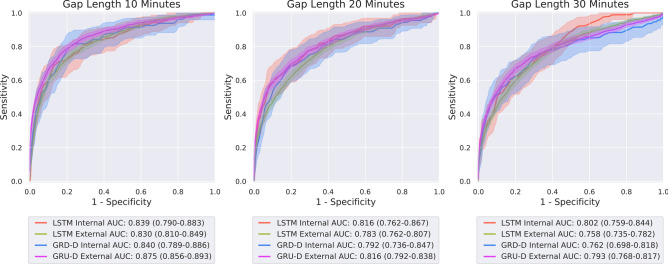
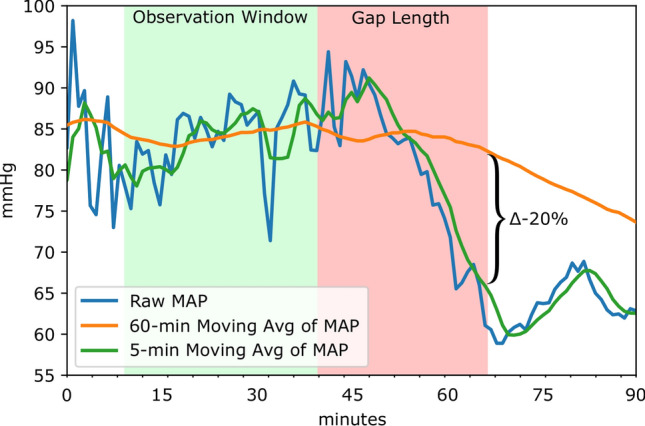
The vast quantities of data generated and collected in the Intensive Care Unit (ICU) have given rise to large retrospective datasets that are frequently used for observational studies. The temporal nature and fine granularity of much of the data collected in the ICU enable the pursuit of predictive modeling. In particular, forecasting acute hypotensive episodes (AHE) in intensive care patients has been of interest to researchers in critical care medicine. Given an advance warning of an AHE, care providers may be prompted to search for evolving disease processes and help mitigate negative clinical outcomes. However, the conventionally adopted definition of an AHE does not account for inter-patient variability and is restrictive. To reflect the wider trend of global clinical and research efforts in precision medicine, we introduce a patient-specific definition of AHE in this study and propose deep learning based models to predict this novel definition of AHE in data from multiple independent institutions. We provide extensive evaluation of the models by studying their accuracies in detecting patient-specific AHEs with lead-times ranging from 10 min to 1 hour before the onset of the event. The resulting models achieve AUROC values ranging from 0.57-0.87 depending on the lead time of the prediction. We demonstrate the generalizability and robustness of our approach through the use of independent multi-institutional data.

摘要

重症监护病房(ICU)中产生和收集的大量数据导致了大型回顾性数据集,这些数据集经常被用于观察性研究。ICU 中收集的许多数据具有时间性质和细粒度,这使得可以进行预测建模。特别是,预测重症监护患者的急性低血压发作(AHE)一直是重症监护医学研究人员感兴趣的问题。如果事先预警 AHE,护理人员可能会被提示寻找正在发展的疾病过程,并帮助减轻负面的临床结果。然而,传统上采用的 AHE 定义没有考虑到患者间的变异性,并且具有限制性。为了反映全球临床和研究在精准医学方面的广泛趋势,我们在本研究中引入了一种患者特异性的 AHE 定义,并提出了基于深度学习的模型,以预测来自多个独立机构的数据中的这种新的 AHE 定义。我们通过研究模型在检测从事件发生前 10 分钟到 1 小时不等的患者特异性 AHE 方面的准确性,对模型进行了广泛的评估。根据预测的提前时间,得到的模型的 AUROC 值范围为 0.57-0.87。我们通过使用独立的多机构数据证明了我们方法的通用性和鲁棒性。
https://cdn.ncbi.nlm.nih.gov/pmc/blobs/f9ff/7351714/d255db04e713/41598_2020_67952_Fig6_HTML.jpg
https://cdn.ncbi.nlm.nih.gov/pmc/blobs/f9ff/7351714/8545ee780172/41598_2020_67952_Fig1_HTML.jpg
https://cdn.ncbi.nlm.nih.gov/pmc/blobs/f9ff/7351714/2c10150dcf89/41598_2020_67952_Fig2_HTML.jpg
https://cdn.ncbi.nlm.nih.gov/pmc/blobs/f9ff/7351714/f8b4336e6524/41598_2020_67952_Fig3_HTML.jpg
https://cdn.ncbi.nlm.nih.gov/pmc/blobs/f9ff/7351714/d52fc2486ba4/41598_2020_67952_Fig4_HTML.jpg
https://cdn.ncbi.nlm.nih.gov/pmc/blobs/f9ff/7351714/f1e8f76256ad/41598_2020_67952_Fig5_HTML.jpg
https://cdn.ncbi.nlm.nih.gov/pmc/blobs/f9ff/7351714/d255db04e713/41598_2020_67952_Fig6_HTML.jpg
https://cdn.ncbi.nlm.nih.gov/pmc/blobs/f9ff/7351714/8545ee780172/41598_2020_67952_Fig1_HTML.jpg
https://cdn.ncbi.nlm.nih.gov/pmc/blobs/f9ff/7351714/2c10150dcf89/41598_2020_67952_Fig2_HTML.jpg
https://cdn.ncbi.nlm.nih.gov/pmc/blobs/f9ff/7351714/f8b4336e6524/41598_2020_67952_Fig3_HTML.jpg
https://cdn.ncbi.nlm.nih.gov/pmc/blobs/f9ff/7351714/d52fc2486ba4/41598_2020_67952_Fig4_HTML.jpg
https://cdn.ncbi.nlm.nih.gov/pmc/blobs/f9ff/7351714/f1e8f76256ad/41598_2020_67952_Fig5_HTML.jpg
https://cdn.ncbi.nlm.nih.gov/pmc/blobs/f9ff/7351714/d255db04e713/41598_2020_67952_Fig6_HTML.jpg

相似文献

1
Generalizable deep temporal models for predicting episodes of sudden hypotension in critically ill patients: a personalized approach.可推广的深度时间模型用于预测危重病患者突发性低血压发作:个性化方法。
Sci Rep. 2020 Jul 10;10(1):11480. doi: 10.1038/s41598-020-67952-0.
2
Prediction of Patient-specific Acute Hypotensive Episodes in ICU Using Deep Models.使用深度模型预测重症监护病房中患者特异性急性低血压发作
Annu Int Conf IEEE Eng Med Biol Soc. 2019 Jul;2019:566-569. doi: 10.1109/EMBC.2019.8856985.
3
Predicting Future Occurrence of Acute Hypotensive Episodes Using Noninvasive and Invasive Features.使用无创和有创特征预测未来发生急性低血压事件的情况。
Mil Med. 2021 Jan 25;186(Suppl 1):445-451. doi: 10.1093/milmed/usaa418.
4
Prediction of an Acute Hypotensive Episode During an ICU Hospitalization With a Super Learner Machine-Learning Algorithm.使用超级学习机机器学习算法预测 ICU 住院期间的急性低血压发作。
Anesth Analg. 2020 May;130(5):1157-1166. doi: 10.1213/ANE.0000000000004539.
5
A dual boundary classifier for predicting acute hypotensive episodes in critical care.一种用于预测重症监护中急性低血压发作的双边界分类器。
PLoS One. 2018 Feb 23;13(2):e0193259. doi: 10.1371/journal.pone.0193259. eCollection 2018.
6
Predictive Modeling using Intensive Care Unit Data: Considerations for Data Pre-processing and Analysis.
Annu Int Conf IEEE Eng Med Biol Soc. 2019 Jul;2019:3429-3432. doi: 10.1109/EMBC.2019.8857564.
7
Prediction of acute hypertensive episodes in critically ill patients.危重症患者急性高血压发作的预测
Artif Intell Med. 2023 May;139:102525. doi: 10.1016/j.artmed.2023.102525. Epub 2023 Mar 8.
8
LDSG-Net: an efficient lightweight convolutional neural network for acute hypotensive episode prediction during ICU hospitalization.LDSG-Net:一种用于 ICU 住院期间急性低血压发作预测的高效轻量级卷积神经网络。
Physiol Meas. 2024 Jun 5;45(6). doi: 10.1088/1361-6579/ad4e92.
9
The Role of Baroreflex Sensitivity in Acute Hypotensive Episodes Prediction in the Intensive Care Unit.压力反射敏感性在重症监护病房急性低血压发作预测中的作用
Annu Int Conf IEEE Eng Med Biol Soc. 2018 Jul;2018:2784-2787. doi: 10.1109/EMBC.2018.8512859.
10
[Study on predicting model for acute hypotensive episodes in ICU based on support vector machine].基于支持向量机的ICU急性低血压发作预测模型研究
Sheng Wu Yi Xue Gong Cheng Xue Za Zhi. 2011 Jun;28(3):451-5.

引用本文的文献

1
Personalized and real time hemodynamic management in critical care using Dynamic Cohort Ensemble Learning (DynaCEL).在重症监护中使用动态队列集成学习(DynaCEL)进行个性化实时血流动力学管理。
NPJ Digit Med. 2025 Jul 24;8(1):474. doi: 10.1038/s41746-025-01863-0.
2
Where do doctors disagree? Characterizing Decision Points for Safe Reinforcement Learning in Choosing Vasopressor Treatment.医生们在哪些方面存在分歧?确定选择血管加压药治疗时安全强化学习的决策点。
AMIA Annu Symp Proc. 2025 May 22;2024:222-231. eCollection 2024.
3
Intraoperative Hypotension Prediction: Current Methods, Controversies, and Research Outlook.

本文引用的文献

1
Development and Reporting of Prediction Models: Guidance for Authors From Editors of Respiratory, Sleep, and Critical Care Journals.预测模型的制定和报告:呼吸、睡眠和危重病期刊编辑给作者的指南。
Crit Care Med. 2020 May;48(5):623-633. doi: 10.1097/CCM.0000000000004246.
2
Multitask learning and benchmarking with clinical time series data.多任务学习与临床时间序列数据的基准测试。
Sci Data. 2019 Jun 17;6(1):96. doi: 10.1038/s41597-019-0103-9.
3
Assessment of a Deep Learning Model Based on Electronic Health Record Data to Forecast Clinical Outcomes in Patients With Rheumatoid Arthritis.
术中低血压预测:当前方法、争议与研究展望
Anesth Analg. 2024 Oct 23. doi: 10.1213/ANE.0000000000007216.
4
Development and Validation of a Prediction Model for Acute Hypotensive Events in Intensive Care Unit Patients.重症监护病房患者急性低血压事件预测模型的开发与验证
J Clin Med. 2024 May 9;13(10):2786. doi: 10.3390/jcm13102786.
5
Multitask Attention-Based Neural Network for Intraoperative Hypotension Prediction.基于多任务注意力的神经网络用于术中低血压预测
Bioengineering (Basel). 2023 Aug 31;10(9):1026. doi: 10.3390/bioengineering10091026.
6
An interpretable RL framework for pre-deployment modeling in ICU hypotension management.一种用于重症监护病房低血压管理预部署建模的可解释强化学习框架。
NPJ Digit Med. 2022 Nov 18;5(1):173. doi: 10.1038/s41746-022-00708-4.
7
Dynamic prediction of life-threatening events for patients in intensive care unit.重症监护病房患者危及生命事件的动态预测。
BMC Med Inform Decis Mak. 2022 Oct 22;22(1):276. doi: 10.1186/s12911-022-02026-x.
8
Mortality Prediction in Cardiac Intensive Care Unit Patients: A Systematic Review of Existing and Artificial Intelligence Augmented Approaches.心脏重症监护病房患者的死亡率预测:对现有方法和人工智能增强方法的系统评价
Front Artif Intell. 2022 May 31;5:876007. doi: 10.3389/frai.2022.876007. eCollection 2022.
9
Artificial intelligence in telemetry: what clinicians should know.遥测技术中的人工智能:临床医生应了解的内容。
Intensive Care Med. 2021 Feb;47(2):150-153. doi: 10.1007/s00134-020-06295-w. Epub 2021 Jan 2.
基于电子健康记录数据的深度学习模型评估类风湿关节炎患者临床结局预测
JAMA Netw Open. 2019 Mar 1;2(3):e190606. doi: 10.1001/jamanetworkopen.2019.0606.
4
Machine-learning Algorithm to Predict Hypotension Based on High-fidelity Arterial Pressure Waveform Analysis.基于高保真动脉压力波形分析的低血压预测机器学习算法。
Anesthesiology. 2018 Oct;129(4):663-674. doi: 10.1097/ALN.0000000000002300.
5
Benchmarking deep learning models on large healthcare datasets.基于大型医疗保健数据集的深度学习模型基准测试。
J Biomed Inform. 2018 Jul;83:112-134. doi: 10.1016/j.jbi.2018.04.007. Epub 2018 Jun 5.
6
The relationship between ICU hypotension and in-hospital mortality and morbidity in septic patients.脓毒症患者 ICU 低血压与院内死亡率和发病率的关系。
Intensive Care Med. 2018 Jun;44(6):857-867. doi: 10.1007/s00134-018-5218-5. Epub 2018 Jun 5.
7
Big Data and Machine Learning in Health Care.医疗保健中的大数据与机器学习
JAMA. 2018 Apr 3;319(13):1317-1318. doi: 10.1001/jama.2017.18391.
8
Outlier-based detection of unusual patient-management actions: An ICU study.基于异常值检测异常的患者管理行为:一项重症监护病房研究。
J Biomed Inform. 2016 Dec;64:211-221. doi: 10.1016/j.jbi.2016.10.002. Epub 2016 Oct 5.
9
MIMIC-III, a freely accessible critical care database.MIMIC-III,一个免费获取的重症监护数据库。
Sci Data. 2016 May 24;3:160035. doi: 10.1038/sdata.2016.35.
10
Hypotension Risk Prediction via Sequential Contrast Patterns of ICU Blood Pressure.通过重症监护病房血压的序列对比模式进行低血压风险预测
IEEE J Biomed Health Inform. 2016 Sep;20(5):1416-1426. doi: 10.1109/JBHI.2015.2453478. Epub 2015 Jul 7.