Graduate School of Public Health, St. Luke's International University, Tokyo, Japan.
Australian Institute of Health Innovation, Macquarie University, Sydney, Australia.
J Med Internet Res. 2020 Aug 20;22(8):e17015. doi: 10.2196/17015.
Electronic health (eHealth) refers to the use of information and communication technologies for health. It plays an increasingly important role in patients' medication management.
To assess evidence on (1) whether eHealth for patients' medication management can improve drug adherence and health outcomes in nonhospital settings and (2) which eHealth functions are commonly used and are effective in improving drug adherence.
We searched for randomized controlled trials (RCTs) on PubMed, MEDLINE, CINAHL, EMBASE, EmCare, ProQuest, Scopus, Web of Science, ScienceDirect, and IEEE Xplore, in addition to other published sources between 2000 and 2018. We evaluated the studies against the primary outcome measure of medication adherence and multiple secondary health care outcome measures relating to adverse events, quality of life, patient satisfaction, and health expenditure. The quality of the studies included was assessed using the Cochrane Collaboration's Risk of Bias (RoB) tool.
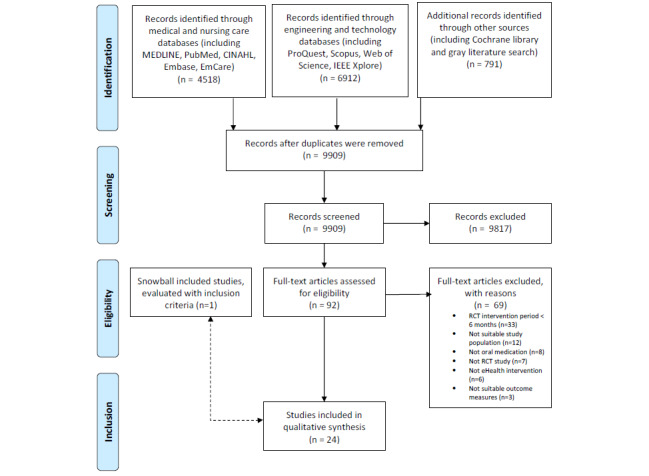
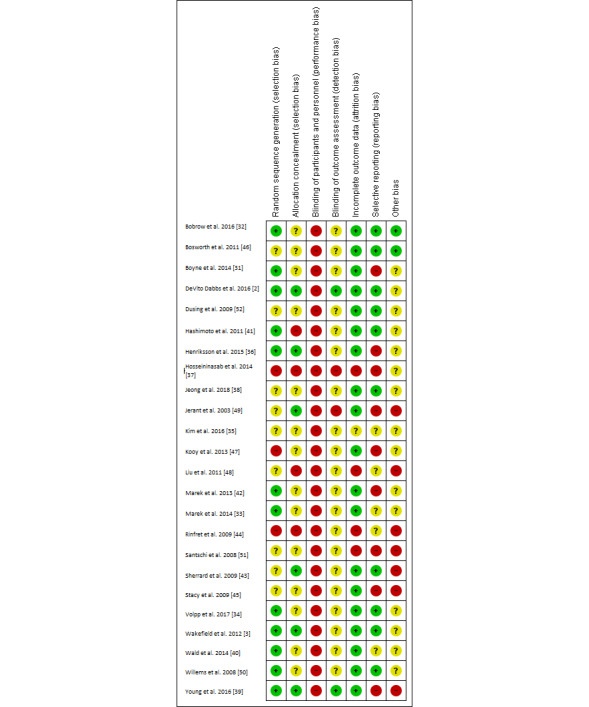
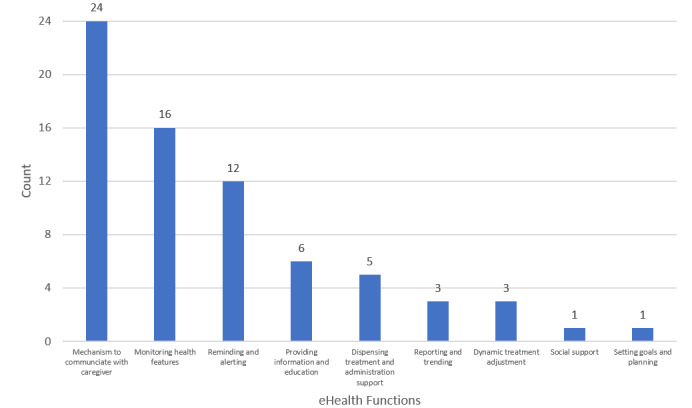
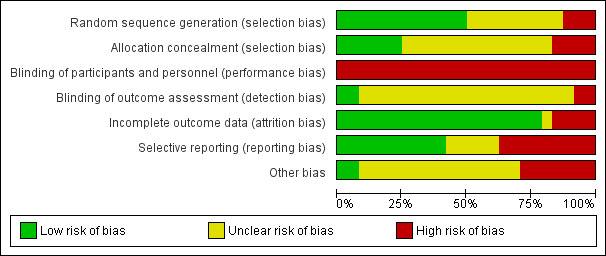
Our initial search yielded 9909 records, and 24 studies met the selection criteria. Of these, 13 indicated improvement in medication adherence at the significance level of P<.1 and 2 indicated an improved quality of life at the significance level of P<.01. The top 3 functions that were employed included mechanisms to communicate with caregivers, monitoring health features, and reminders and alerts. eHealth functions of providing information and education, and dispensing treatment and administration support tended to favor improved medication adherence outcomes (Fisher exact test, P=.02). There were differences in the characteristics of the study population, intervention design, functionality provided, reporting adherence, and outcome measures among the included studies. RoB assessment items, including blinding of outcome assessment and method for allocation concealment, were not explicitly reported in a large number of studies.
All the studies included were designed for patient home-based care application and provided a mechanism to communicate with caregivers. A targeted study population such as older patients should be considered to maximize the public health impact on the self-management of diseases.
International Prospective Register of Systematic Reviews (PROSPERO) CRD42018096627; https://www.crd.york.ac.uk/prospero/display_record.php?RecordID=96627.
电子健康(eHealth)是指利用信息和通信技术进行健康管理。它在患者的药物管理中发挥着越来越重要的作用。
评估电子健康在非医院环境中用于患者药物管理时,能否提高药物依从性和健康结果;以及哪些电子健康功能常用于改善药物依从性,并且是有效的。
我们在 2000 年至 2018 年期间,在 PubMed、MEDLINE、CINAHL、EMBASE、EmCare、ProQuest、Scopus、Web of Science、ScienceDirect 和 IEEE Xplore 等数据库以及其他已发表资源中搜索了随机对照试验(RCT)。我们根据药物依从性的主要结局测量指标以及与不良事件、生活质量、患者满意度和医疗支出相关的多个次要医疗结果测量指标来评估研究。使用 Cochrane 协作风险偏倚评估工具(RoB)评估研究质量。
我们最初的搜索结果有 9909 条记录,24 项研究符合入选标准。其中,13 项研究表明药物依从性有显著改善(P<.1),2 项研究表明生活质量有显著改善(P<.01)。使用率最高的前 3 项功能包括与护理人员沟通的机制、监测健康特征以及提醒和警示功能。提供信息和教育、提供治疗和管理支持的电子健康功能往往有利于改善药物依从性结局(Fisher 确切检验,P=.02)。纳入研究在研究人群特征、干预设计、提供的功能、报告的依从性和结局测量指标方面存在差异。大量研究没有明确报告结局评估的设盲和分配隐藏方法等 RoB 评估项目。
所有纳入的研究均为患者家庭护理应用而设计,并提供了与护理人员沟通的机制。应考虑针对特定的研究人群,如老年患者,以最大限度地提高其在疾病自我管理方面对公众健康的影响。
国际前瞻性系统评价注册库(PROSPERO)CRD42018096627;https://www.crd.york.ac.uk/prospero/display_record.php?RecordID=96627。