Department of Medical Microbiology and Immunology, University of Wisconsin-Madison, Madison, Wisconsin, USA
Department of Genetics, University of Wisconsin-Madison, Madison, Wisconsin, USA.
mBio. 2020 Jul 14;11(4):e00963-20. doi: 10.1128/mBio.00963-20.
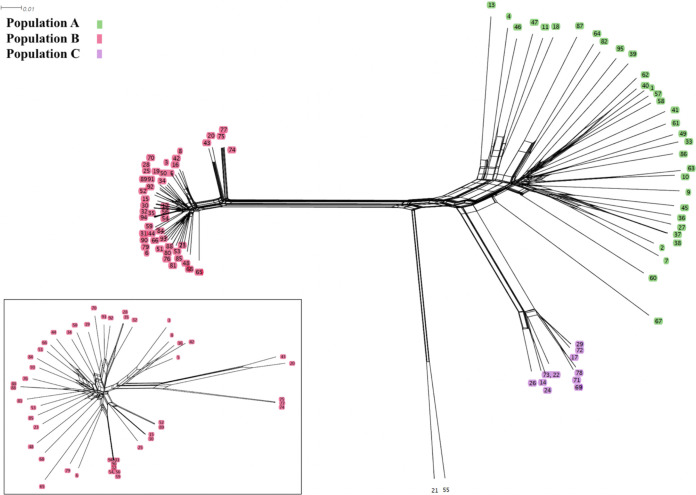
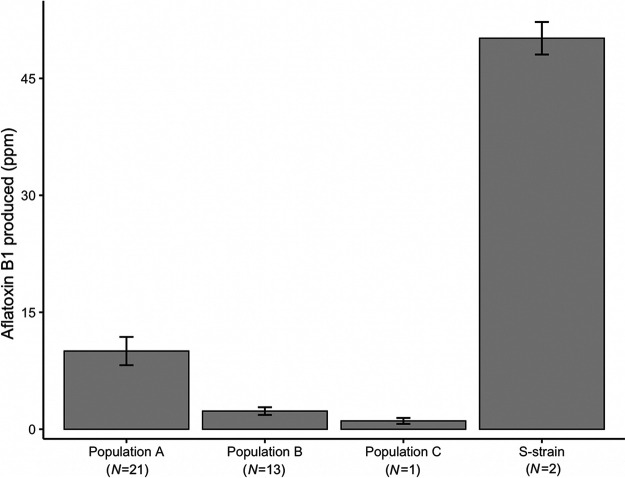
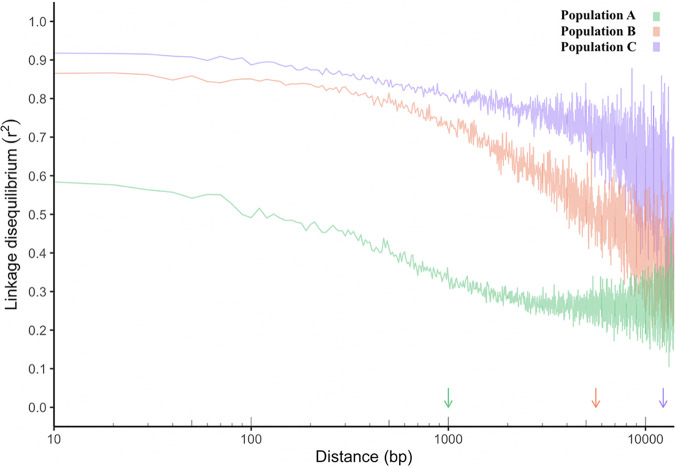
The apparent rarity of sex in many fungal species has raised questions about how much sex is needed to purge deleterious mutations and how differences in frequency of sex impact fungal evolution. We sought to determine how differences in the extent of recombination between populations of impact the evolution of genes associated with the synthesis of aflatoxin, a notoriously potent carcinogen. We sequenced the genomes of, and quantified aflatoxin production in, 94 isolates of sampled from seven states in eastern and central latitudinal transects of the United States. The overall population is subdivided into three genetically differentiated populations (A, B, and C) that differ greatly in their extent of recombination, diversity, and aflatoxin-producing ability. Estimates of the number of recombination events and linkage disequilibrium decay suggest relatively frequent sex only in population A. Population B is sympatric with population A but produces significantly less aflatoxin and is the only population where the inability of nonaflatoxigenic isolates to produce aflatoxin was explained by multiple gene deletions. Population expansion evident in population B suggests a recent introduction or range expansion. Population C is largely nonaflatoxigenic and restricted mainly to northern sampling locations through restricted migration and/or selection. Despite differences in the number and type of mutations in the aflatoxin gene cluster, codon optimization and site frequency differences in synonymous and nonsynonymous mutations suggest that low levels of recombination in some populations are sufficient to purge deleterious mutations. Differences in the relative frequencies of sexual and asexual reproduction have profound implications for the accumulation of deleterious mutations (Muller's ratchet), but little is known about how these differences impact the evolution of ecologically important phenotypes. is the main producer of aflatoxin, a notoriously potent carcinogen that often contaminates food. We investigated if differences in the levels of production of aflatoxin by could be explained by the accumulation of deleterious mutations due to a lack of recombination. Despite differences in the extent of recombination, variation in aflatoxin production is better explained by the demography and history of specific populations and may suggest important differences in the ecological roles of aflatoxin among populations. Furthermore, the association of aflatoxin production and populations provides a means of predicting the risk of aflatoxin contamination by determining the frequencies of isolates from low- and high-production populations.
在许多真菌物种中,性的出现似乎很少见,这引发了人们的疑问,即需要多少性才能清除有害突变,以及性的频率差异如何影响真菌的进化。我们试图确定种群之间重组程度的差异如何影响与合成黄曲霉毒素相关的基因的进化,黄曲霉毒素是一种臭名昭著的强致癌物。我们对从美国东部和中部纬度横切的七个州采集的 94 个 分离株进行了基因组测序,并量化了黄曲霉毒素的产生。整个种群分为三个遗传分化的种群(A、B 和 C),它们在重组、多样性和产黄曲霉毒素能力方面差异很大。重组事件和连锁不平衡衰减的估计表明,只有在种群 A 中才会相对频繁地发生性。种群 B 与种群 A 共生,但产黄曲霉毒素的能力显著较低,而且是唯一一个无法产黄曲霉毒素的非产黄曲霉毒素分离株的原因可以用多个基因缺失来解释。种群 B 中明显的种群扩张表明最近的引入或范围扩张。种群 C 主要是非产黄曲霉毒素的,主要通过限制迁移和/或选择限制在北部采样地点。尽管黄曲霉毒素基因簇中的突变数量和类型不同,但密码子优化和同义及非同义突变中的碱基频率差异表明,一些 种群中低水平的重组足以清除有害突变。有性繁殖和无性繁殖的相对频率的差异对有害突变的积累(Muller's ratchet)有深远的影响,但人们对这些差异如何影响生态重要表型的进化知之甚少。 是黄曲霉毒素的主要生产者,黄曲霉毒素是一种臭名昭著的强致癌物,经常污染食物。我们研究了 产黄曲霉毒素的水平差异是否可以用缺乏重组导致的有害突变的积累来解释。尽管重组程度存在差异,但黄曲霉毒素产量的变化更多地可以用特定种群的人口统计学和历史来解释,并且可能表明种群之间黄曲霉毒素的生态作用存在重要差异。此外,黄曲霉毒素产生与种群的关联为通过确定低产和高产种群的分离株频率来预测黄曲霉毒素污染的风险提供了一种方法。