Faculty of Education and Sport Sciences, University of Vigo, Vigo, Spain.
Health Research Institute of Santiago de Compostela (IDIS), Santiago de Compostela, Spain.
PLoS One. 2020 Jul 16;15(7):e0236070. doi: 10.1371/journal.pone.0236070. eCollection 2020.
To identify, synthesise and evaluate studies that investigated the reliability of the Test of Gross Motor Development (TGMD) variants.
A systematic search was employed to identify studies that have investigated internal consistency, inter-rater, intra-rater and test-retest reliability of the TGMD variants through Scopus, Pubmed/MEDLINE, PsycINFO, Sport Discus and Web of Science databases.
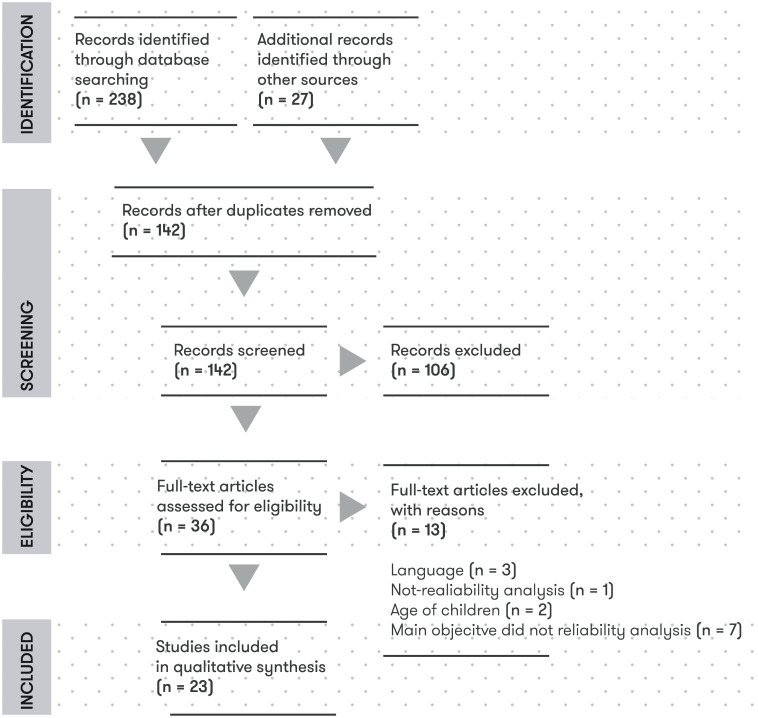
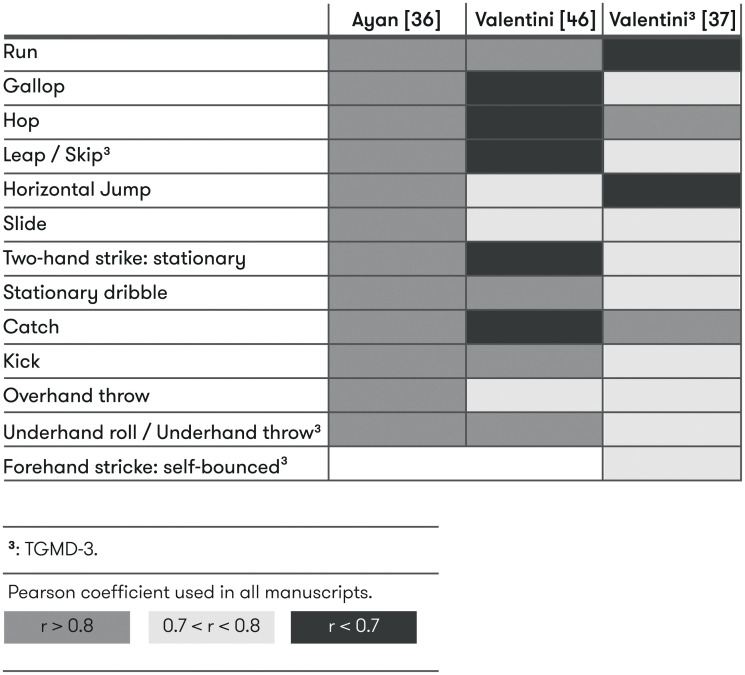
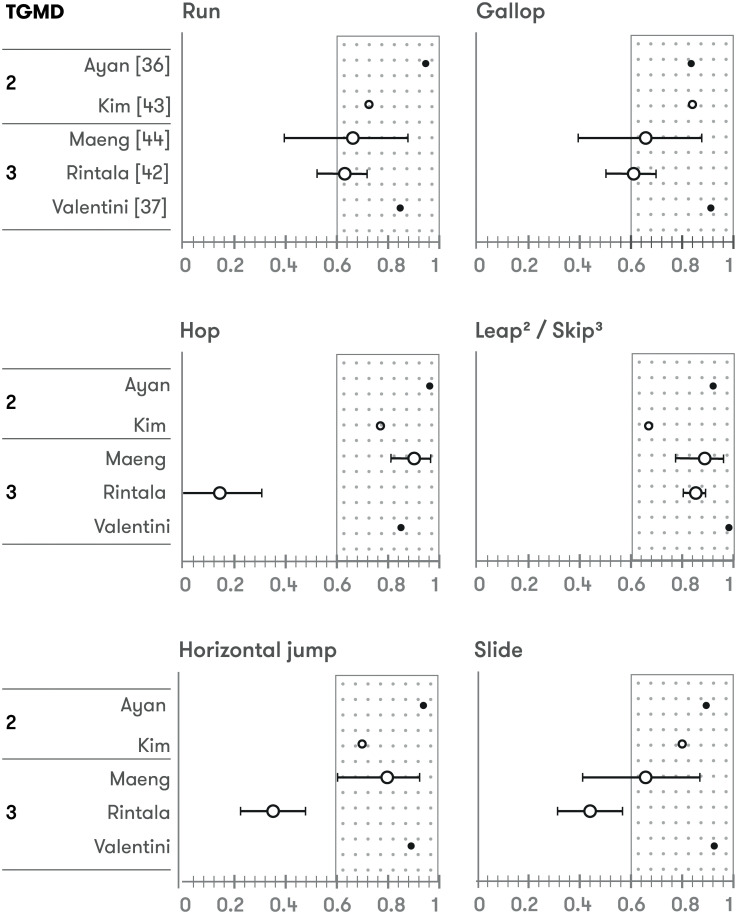
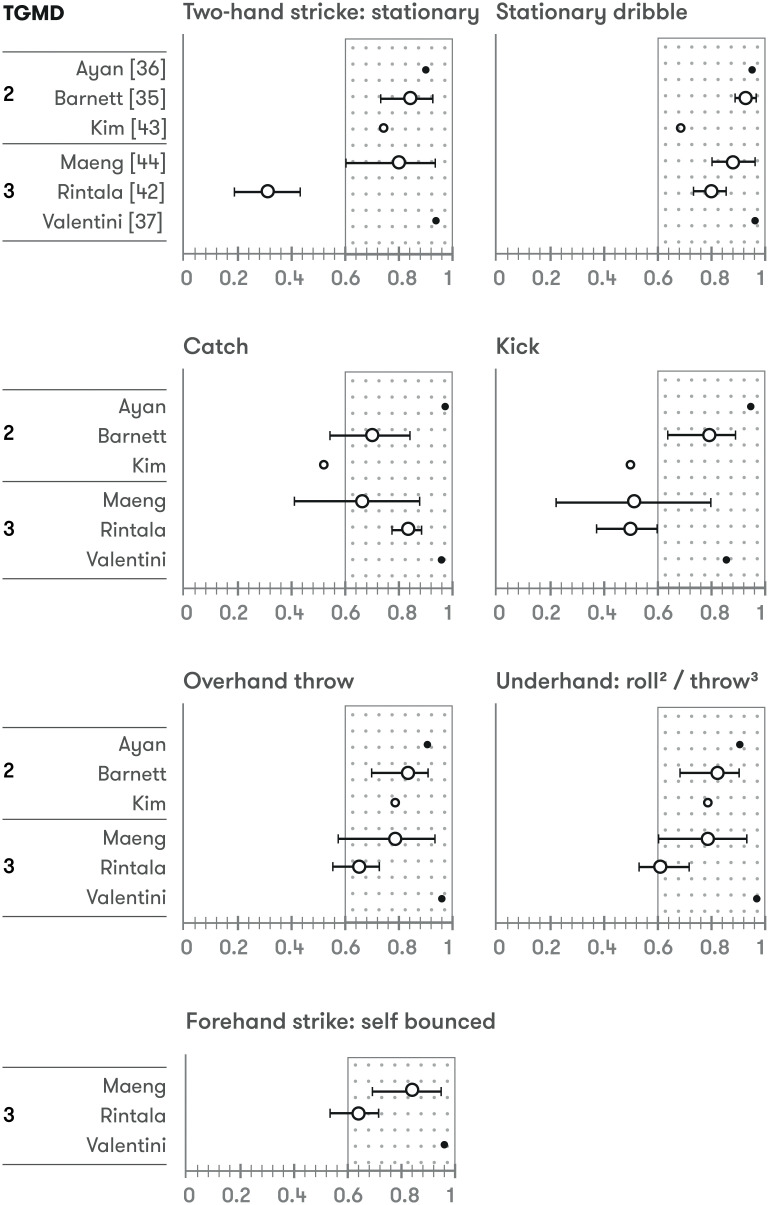
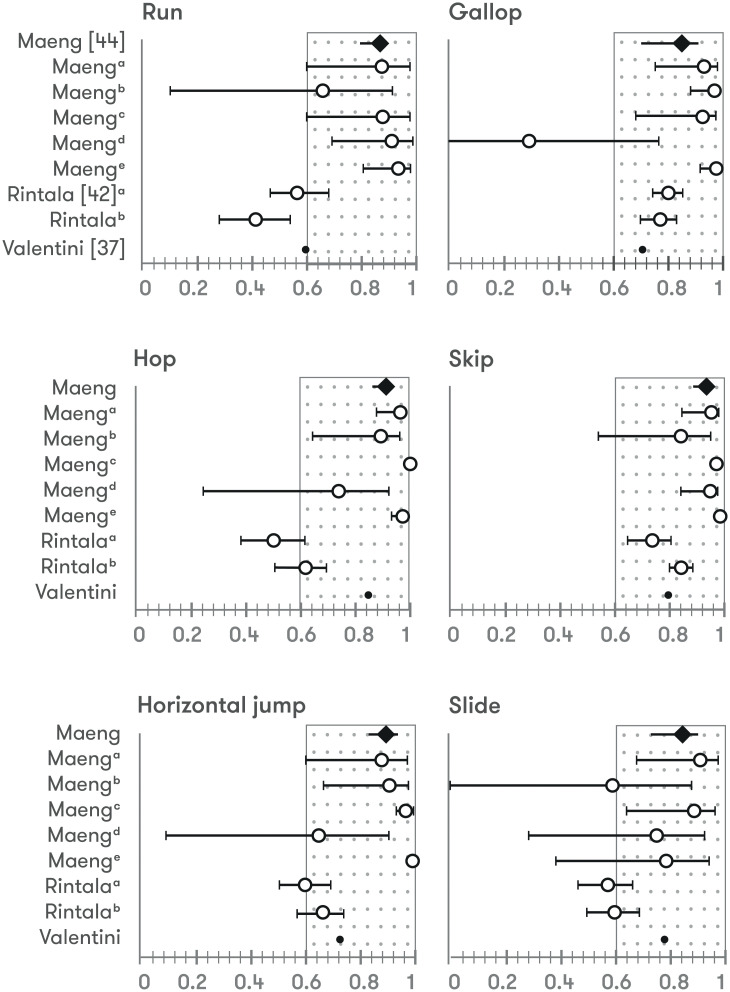
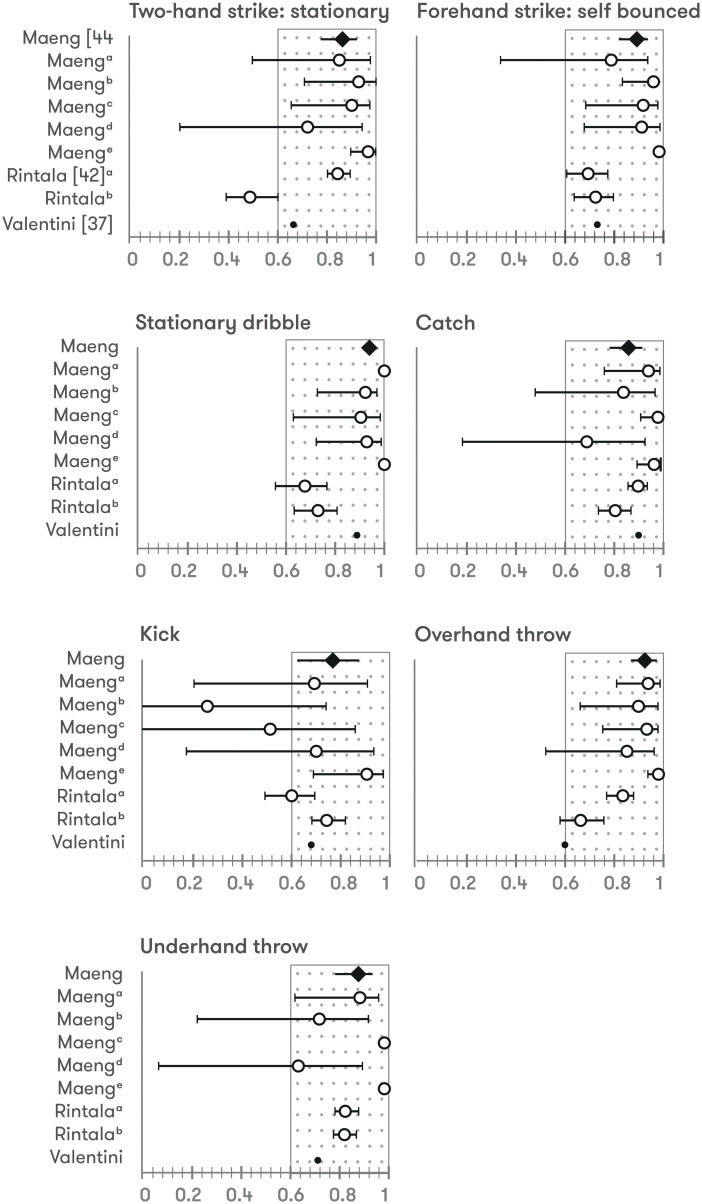
Of the 265 studies identified, 23 were included. Internal consistency, evaluated in 14 studies, confirming good-to-excellent consistency for the overall score and general motor quotient (GMQ), and acceptable-to-excellent levels in both subscales (locomotor and ball skills). Inter-rater reliability, evaluated in 19 studies, showing good-to-excellent intra-class correlation coefficient (ICC) values in locomotor skills score, ball skills score, overall score, and GMQ. Intra-rater reliability, evaluated in 13 studies, displaying excellent ICC values in overall score and GMQ, and good-to-excellent ICC values in locomotor skills score and ball skills score. Test-retest reliability was evaluated in 15 studies with 100% of the statistics reported above the threshold of acceptable reliability when ICC was not used. Studies with ICC statistic showed good-to-excellent values in ball skills score, overall score, and GMQ; and moderate-to-excellent values in locomotor skills score.
Overall, the results of this systematic review indicate that, regardless of the variant of the test, the TMGD has moderate-to-excellent internal consistency, good-to-excellent inter-rater reliability, good-to-excellent intra-rater reliability, and moderate-to-excellent test-retest reliability. Considering the few high-quality studies in terms of internal consistency, it would be recommend to carry out further studies in this field to improve their quality. Since there is no gold standard for assessing FMS, TGMD variants could be appropriate when opting for a psychometrical robust test. However, standardized training protocols for coding TGMD variants seem to be necessary both for researchers and practitioners in order to ensure acceptable reliability.
识别、综合和评估研究测试运动发育测试(TGMD)变体的可靠性。
系统检索以确定通过 Scopus、Pubmed/MEDLINE、PsycINFO、Sport Discus 和 Web of Science 数据库研究 TGMD 变体的内部一致性、评分者间信度、评分者内信度和重测信度的研究。
在确定的 265 项研究中,有 23 项被纳入。内部一致性评估了 14 项研究,确认了整体评分和一般运动商数(GMQ)的良好到优秀一致性,以及两个子量表(移动技能和球技)的可接受到优秀水平。评分者间信度评估了 19 项研究,显示了移动技能评分、球技评分、整体评分和 GMQ 的良好到优秀的组内相关系数(ICC)值。评分者内信度评估了 13 项研究,显示了整体评分和 GMQ 的优秀 ICC 值,以及移动技能评分和球技评分的良好到优秀 ICC 值。重测信度评估了 15 项研究,当不使用 ICC 时,有 100%的统计数据超过可接受的可靠性阈值。使用 ICC 统计的研究显示球技评分、整体评分和 GMQ 的良好到优秀值,移动技能评分的中等到优秀值。
总的来说,这项系统评价的结果表明,无论测试的变体如何,TGMD 具有中等到优秀的内部一致性、良好到优秀的评分者间信度、良好到优秀的评分者内信度和中等到优秀的重测信度。考虑到内部一致性方面高质量研究较少,建议在该领域开展进一步研究以提高其质量。由于评估功能性运动模式没有金标准,因此 TGMD 变体可能是一种合适的心理测量可靠测试。然而,为了确保可接受的可靠性,对研究人员和从业者来说,对 TGMD 变体进行标准化的编码培训似乎是必要的。