Department of Cellular Neurobiology, Zoological Institute, TU Braunschweig, Germany; Helmholtz Centre for Infection Research, Neuroinflammation and Neurodegeneration Group, Braunschweig, Germany.
Dialogues Clin Neurosci. 2020 Jun;22(2):101-111. doi: 10.31887/DCNS.2020.22.2/mkorte.
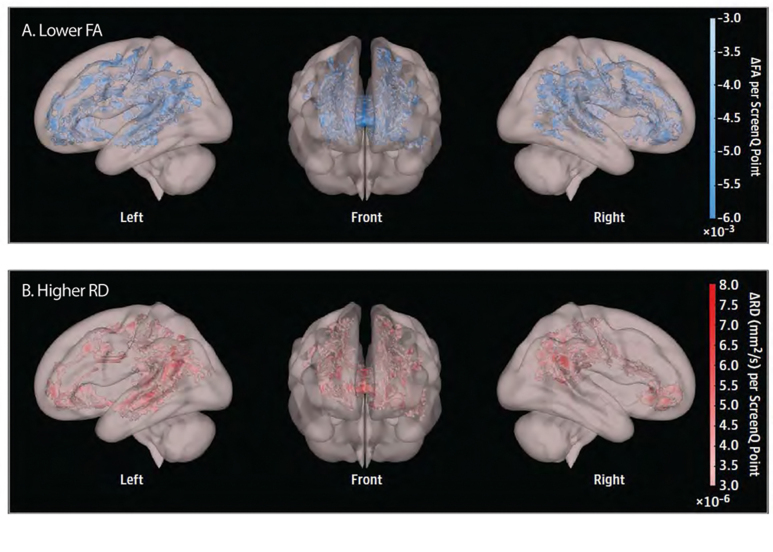
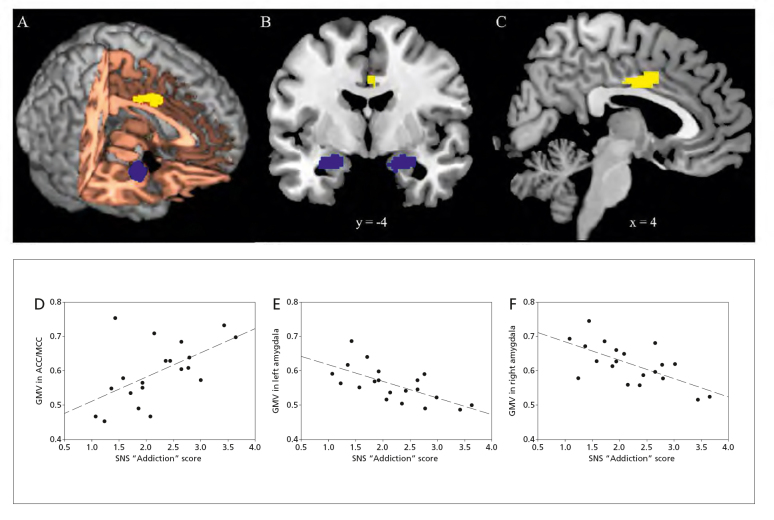
This overview will outline the current results of neuroscience research on the possible effects of digital media use on the human brain, cognition, and behavior. This is of importance due to the significant amount of time that individuals spend using digital media. Despite several positive aspects of digital media, which include the capability to effortlessly communicate with peers, even over a long distance, and their being used as training tools for students and the elderly, detrimental effects on our brains and minds have also been suggested. Neurological consequences have been observed related to internet/gaming addiction, language development, and processing of emotional signals. However, given that much of the neuroscientific research conducted up to now relies solely on self-reported parameters to assess social media usage, it is argued that neuroscientists need to include datasets with higher precision in terms of what is done on screens, for how long, and at what age. .
这篇综述概述了神经科学研究关于数字媒体使用可能对人类大脑、认知和行为产生的影响的最新结果。由于个人花费大量时间使用数字媒体,这一点很重要。尽管数字媒体有几个积极的方面,包括能够毫不费力地与同龄人交流,即使是在很远的距离内,并且可以作为学生和老年人的培训工具,但也有人认为它们对我们的大脑和思维有不良影响。已经观察到与网络/游戏成瘾、语言发展和情绪信号处理有关的神经后果。然而,鉴于迄今为止进行的大部分神经科学研究仅依靠自我报告的参数来评估社交媒体的使用情况,有人认为神经科学家需要将更精确的数据集纳入到屏幕上的活动内容、时长和年龄等方面。