Translational Stem Cell Biology Branch, National Heart, Lung and Blood Institute (NHLBI), National Institutes of Health (NIH), Bethesda, Maryland, USA.
Molecular Imaging Program, Laboratory of Cellular Therapeutics, National Cancer Institute (NCI), NIH, Bethesda, Maryland, USA.
Stem Cells Transl Med. 2020 Oct;9(10):1203-1217. doi: 10.1002/sctm.20-0019. Epub 2020 Jul 23.
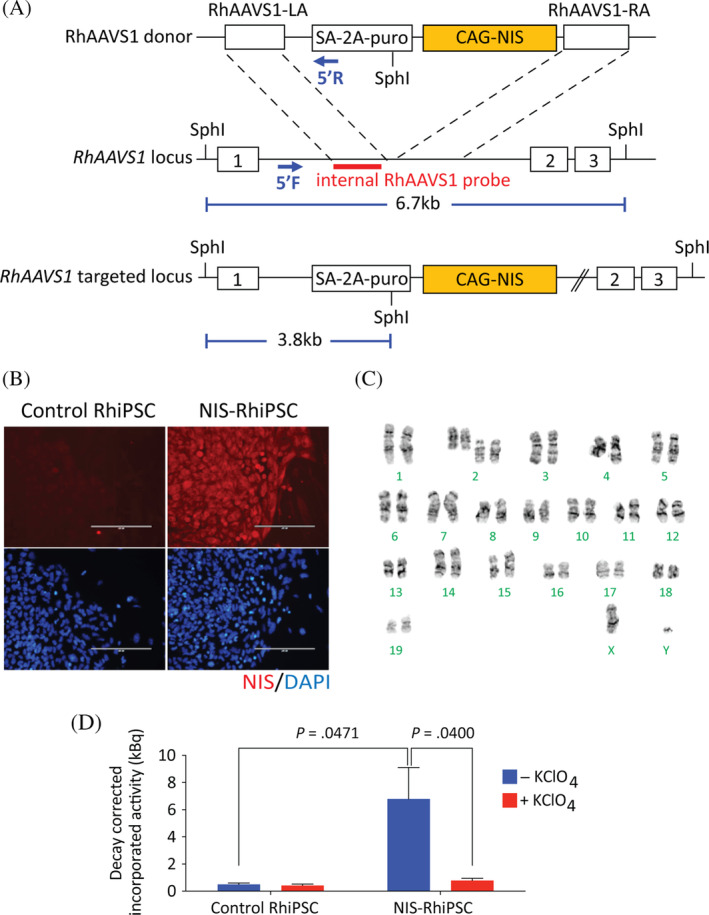
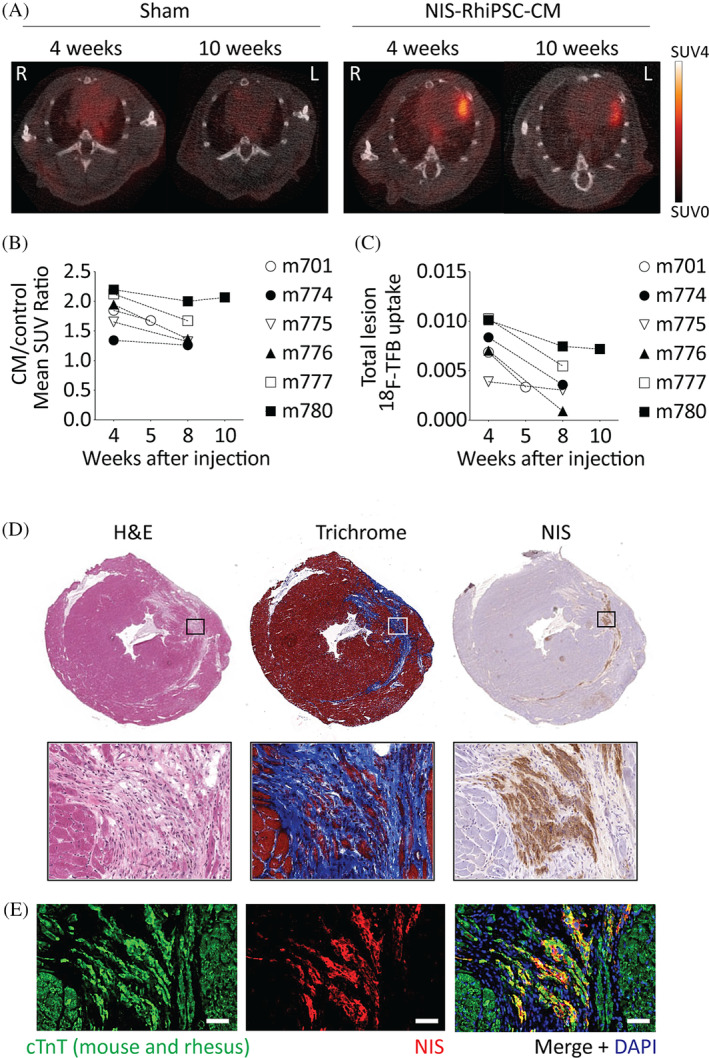
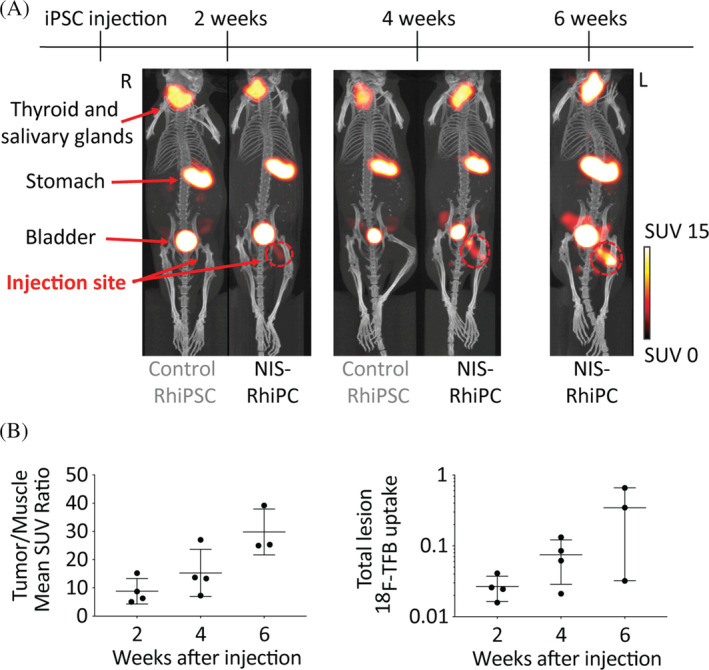
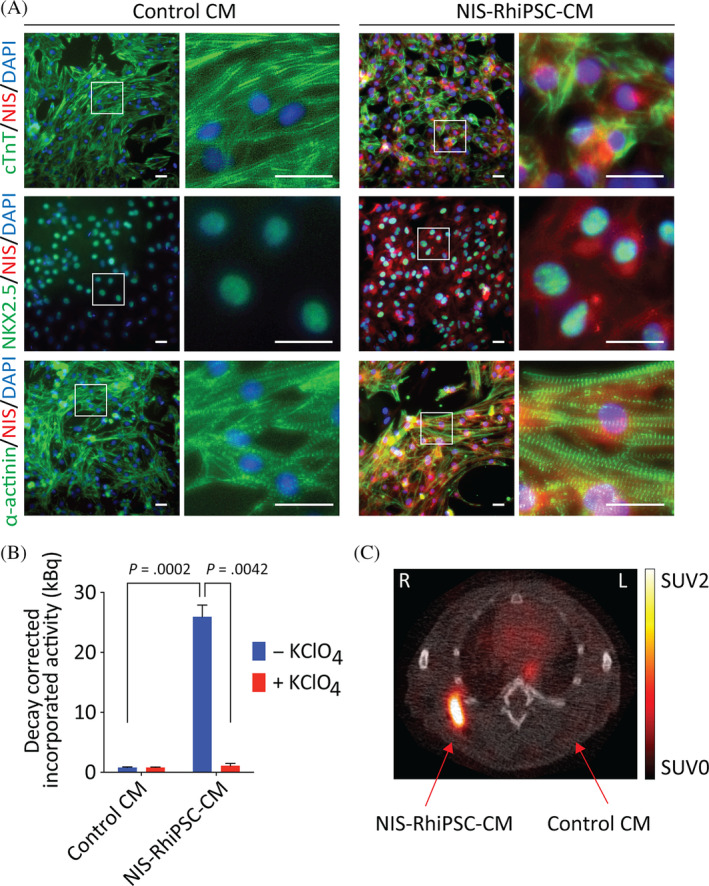
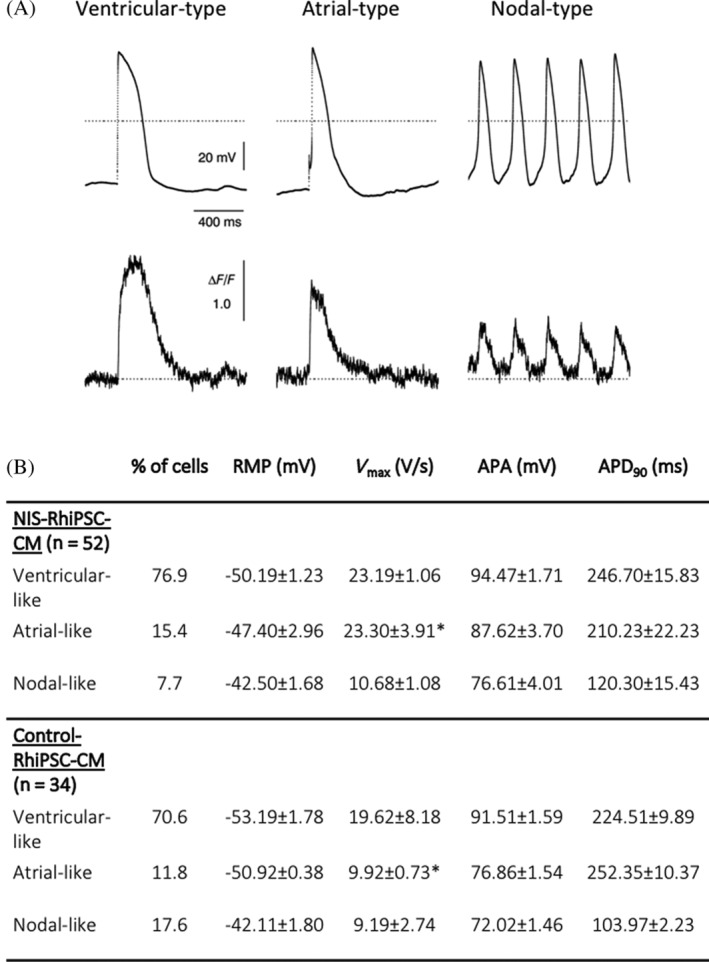
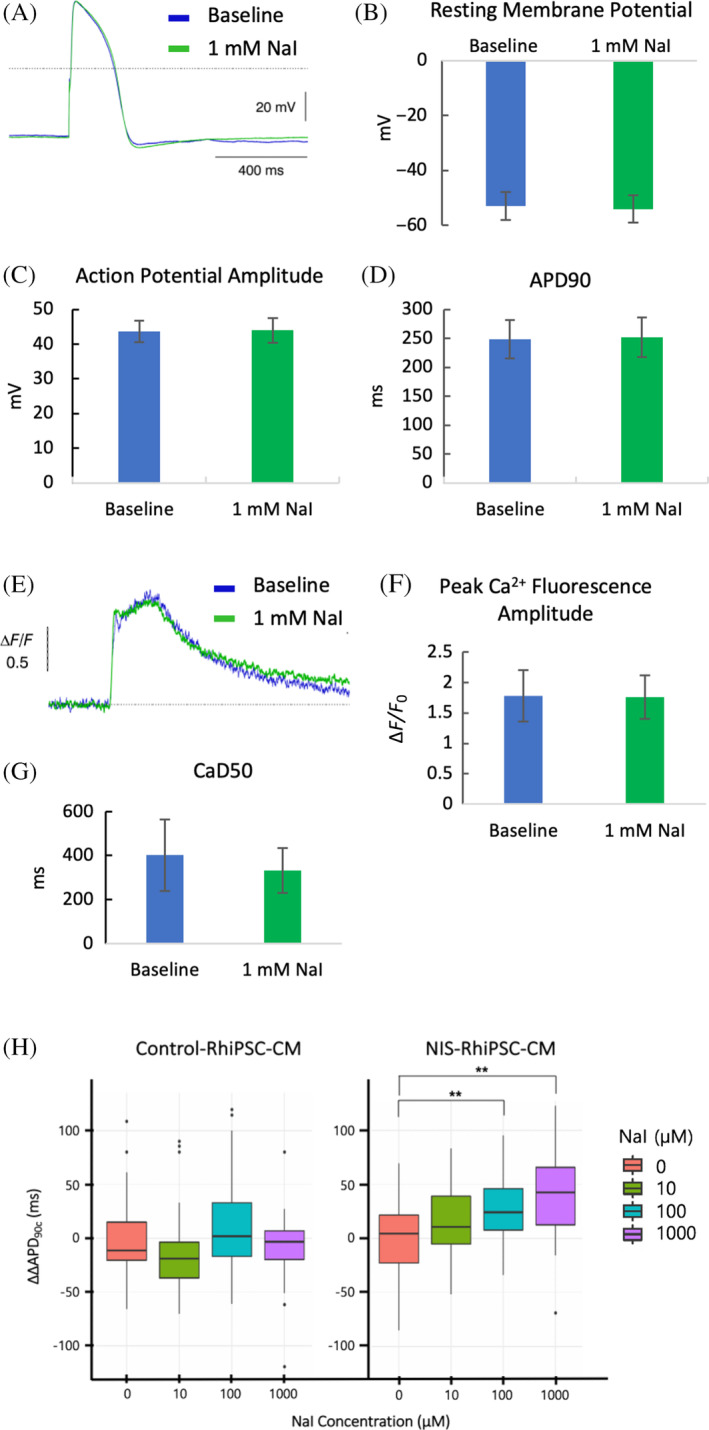
Techniques that enable longitudinal tracking of cell fate after myocardial delivery are imperative for optimizing the efficacy of cell-based cardiac therapies. However, these approaches have been underutilized in preclinical models and clinical trials, and there is considerable demand for site-specific strategies achieving long-term expression of reporter genes compatible with safe noninvasive imaging. In this study, the rhesus sodium/iodide symporter (NIS) gene was incorporated into rhesus macaque induced pluripotent stem cells (RhiPSCs) via CRISPR/Cas9. Cardiomyocytes derived from NIS-RhiPSCs (NIS-RhiPSC-CMs) exhibited overall similar morphological and electrophysiological characteristics compared to parental control RhiPSC-CMs at baseline and with exposure to physiological levels of sodium iodide. Mice were injected intramyocardially with 2 million NIS-RhiPSC-CMs immediately following myocardial infarction, and serial positron emission tomography/computed tomography was performed with F-tetrafluoroborate to monitor transplanted cells in vivo. NIS-RhiPSC-CMs could be detected until study conclusion at 8 to 10 weeks postinjection. This NIS-based molecular imaging platform, with optimal safety and sensitivity characteristics, is primed for translation into large-animal preclinical models and clinical trials.
实现心肌内细胞命运的纵向跟踪技术对于优化基于细胞的心脏治疗效果至关重要。然而,这些方法在临床前模型和临床试验中并未得到充分利用,人们迫切需要实现与安全的非侵入性成像兼容的长期表达报告基因的特定部位策略。在这项研究中,恒河猴钠/碘同向转运体(NIS)基因通过 CRISPR/Cas9 被整合到恒河猴诱导多能干细胞(RhiPSCs)中。与未处理的对照 RhiPSC-CMs 相比,来源于 NIS-RhiPSCs 的心肌细胞(NIS-RhiPSC-CMs)在基线时以及暴露于生理浓度的碘化钠时,具有总体相似的形态和电生理特征。在心肌梗死后,立即将 200 万个 NIS-RhiPSC-CMs 注射到心肌内,并用 F-四氟硼酸进行连续正电子发射断层扫描/计算机断层扫描,以监测体内移植细胞。在注射后 8 至 10 周的研究结束时,仍能检测到 NIS-RhiPSC-CMs。这种基于 NIS 的分子成像平台具有最佳的安全性和灵敏度特征,有望转化为大型动物临床前模型和临床试验。