Oculoplasty and Ocular Oncology Services, Dr Shroff's Charity Eye Hospital, New Delhi, India.
Indian J Ophthalmol. 2020 Aug;68(8):1629-1634. doi: 10.4103/ijo.IJO_104_20.
To describe the clinical features of thyroid eye disease (TED) in patients presenting at a tertiary eye care centre in North India and to identify factors predictive of severe disease.
This observational cross-sectional study involved clinical evaluation of all patients with TED who presented at the oculoplastic clinic based on the ITEDS VISA proforma. Risk factors for the severe disease were assessed using univariate and multivariate logistic regression.
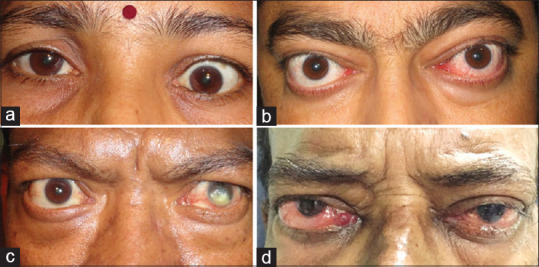
A total of 106 patients (50 males, 56 females; mean age 41.30 ± 14.76 years) were identified during the study period, 46.23% hyperthyroid, 33.96% hypothyroid and 19.81% euthyroid. The proportion of the patients with hypothyroid was higher as compared with prior studies and most patients with hypothyroid had the mild disease (63.89%). Orbitopathy symptoms were the presenting feature leading to the diagnosis of systemic thyroid abnormality in 25% of the patients with hypothyroid and 59.18% of the patients with hyperthyroid, respectively (P < 0.05). Eyelid and orbitopathy signs were more common in the patients with hyperthyroid (51.2% and 87.7%) as compared with hypothyroid where the commonest presenting symptoms were related to dry eye (50.1%). Active disease was seen in 22.6% of the patients. Mild, moderate to severe and sight-threatening disease was seen in 54.7%, 37.7% and 7.5%, respectively. On multivariate analyses, hyperthyroid status and activity was associated with severe disease. Smoking was not associated with activity or severity.
There is no significant difference in the gender profile of the patients with TED in this cohort. The patients with hypothyroid have a milder disease compared to the patients with hyperthyroid, and dry eye symptoms are the commonest presenting symptoms in hypothyroid subjects. Hyperthyroidism and activity were associated with severe and sight-threatening disease.
描述在印度北部一家三级眼科保健中心就诊的甲状腺眼病(TED)患者的临床特征,并确定预测严重疾病的因素。
本观察性横断面研究根据 ITEDS VISA 表格对在整形诊所就诊的所有 TED 患者进行临床评估。使用单变量和多变量逻辑回归评估严重疾病的危险因素。
研究期间共发现 106 例患者(50 例男性,56 例女性;平均年龄 41.30 ± 14.76 岁),其中 46.23%为甲状腺功能亢进,33.96%为甲状腺功能减退,19.81%为甲状腺功能正常。与先前的研究相比,甲状腺功能减退患者的比例更高,且大多数甲状腺功能减退患者的疾病较轻(63.89%)。眼病症状是导致 25%甲状腺功能减退和 59.18%甲状腺功能亢进患者诊断出系统性甲状腺异常的主要特征(P<0.05)。与甲状腺功能减退患者相比,甲状腺功能亢进患者更常见眼睑和眼病迹象(分别为 51.2%和 87.7%),而甲状腺功能减退患者最常见的症状与干眼症有关(50.1%)。活跃性疾病见于 22.6%的患者。轻度、中度至重度和威胁视力的疾病分别见于 54.7%、37.7%和 7.5%的患者。多变量分析显示,甲状腺功能亢进状态和活动性与严重疾病相关。吸烟与活动或严重程度无关。
在本队列中,甲状腺眼病患者的性别特征没有显著差异。与甲状腺功能亢进患者相比,甲状腺功能减退患者的疾病较轻,且干眼症症状是甲状腺功能减退患者最常见的首发症状。甲状腺功能亢进和活动与严重和威胁视力的疾病相关。