Department of Virology II, National Institute of Infectious Diseases, Gakuen 4-7-1, Musashimurayama-shi, Tokyo, 208-0011, Japan.
Division of Microbiology, Osaka Institute of Public Health, Osaka, Japan.
Arch Virol. 2020 Oct;165(10):2335-2340. doi: 10.1007/s00705-020-04746-9. Epub 2020 Jul 27.
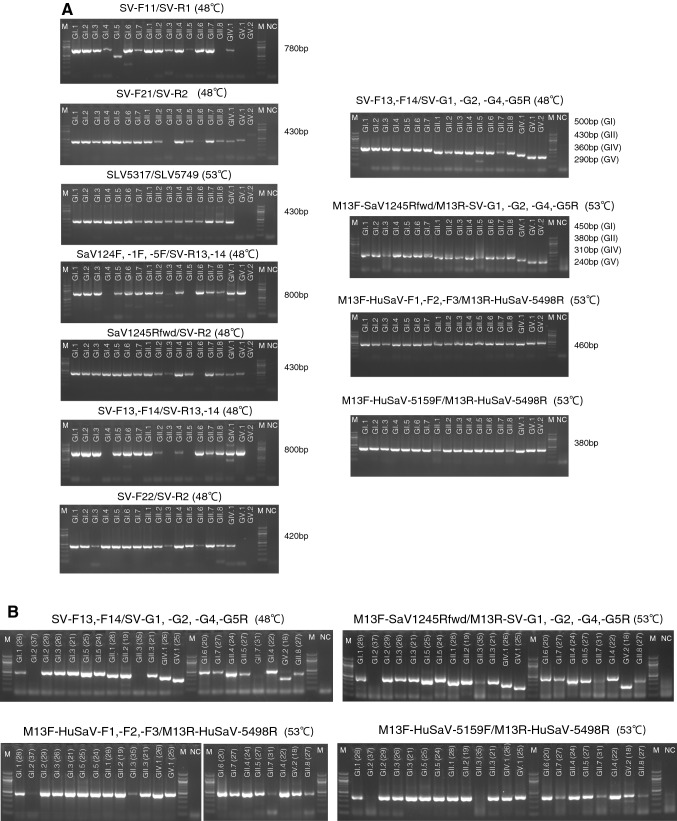
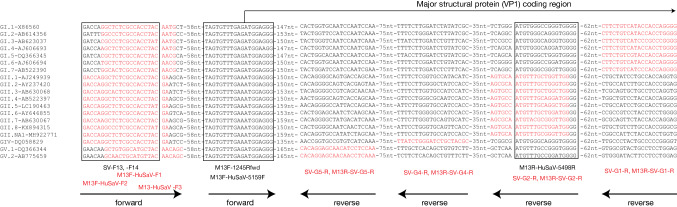
Sapoviruses are increasingly being recognized as pathogens associated with gastroenteritis in humans. Human sapoviruses are currently assigned to 18 genotypes (GI.1-7, GII.1-8, GIV.1, and GV.1-2) based on the sequence of the region encoding the major structural protein. In this study, we evaluated 11 polymerase chain reaction (PCR) assays using published and newly designed/modified primers and showed that four PCR assays with different primer combinations amplified all of the tested human sapovirus genotypes using either synthetic DNA or cDNA prepared from human sapovirus-positive fecal specimens. These assays can be used as improved broadly reactive screening tests or as tools for molecular characterization of human sapoviruses.
肠道病毒日益被认为是与人类胃肠炎相关的病原体。根据编码主要结构蛋白的区域序列,人类肠道病毒目前被分为 18 个基因型(GI.1-7、GII.1-8、GIV.1 和 GV.1-2)。在这项研究中,我们评估了 11 种聚合酶链反应(PCR)检测方法,使用已发表和新设计/修改的引物,结果表明,使用合成 DNA 或从人类肠道病毒阳性粪便标本制备的 cDNA,四种具有不同引物组合的 PCR 检测方法可扩增所有测试的人类肠道病毒基因型。这些检测方法可作为改进的广泛反应性筛选检测方法,或作为人类肠道病毒分子特征分析的工具。