International Centre for Indoor Environment and Energy, Technical University of Denmark, Lyngby, Denmark.
Department of Building Environment and Energy, College of Civil Engineering, Hunan University, Changsha, China.
Sci Total Environ. 2020 Nov 20;744:140908. doi: 10.1016/j.scitotenv.2020.140908. Epub 2020 Jul 15.
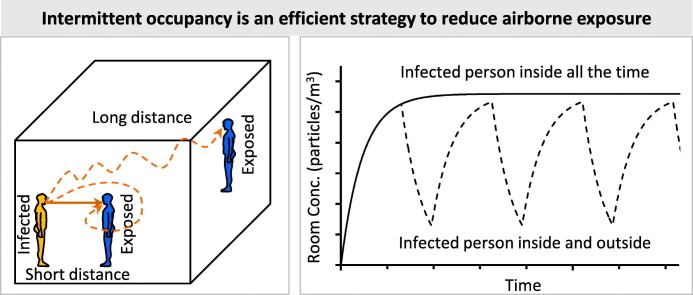
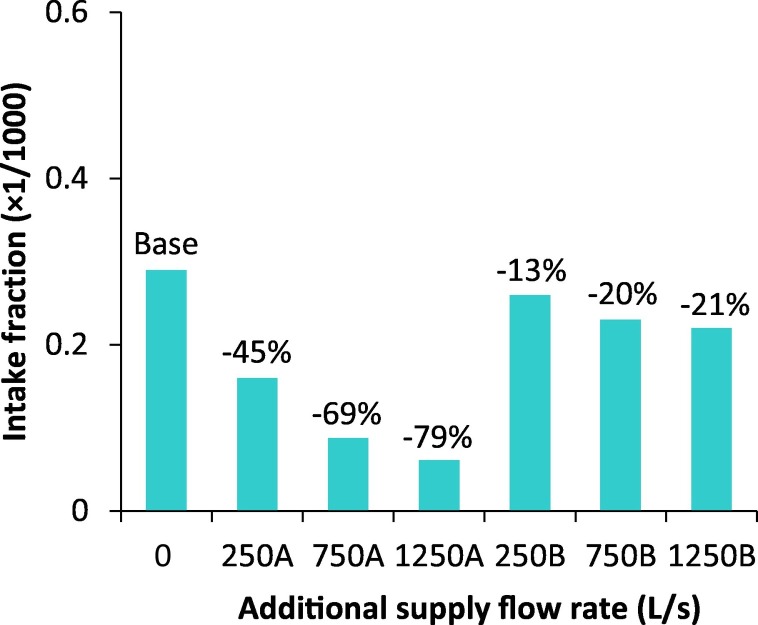
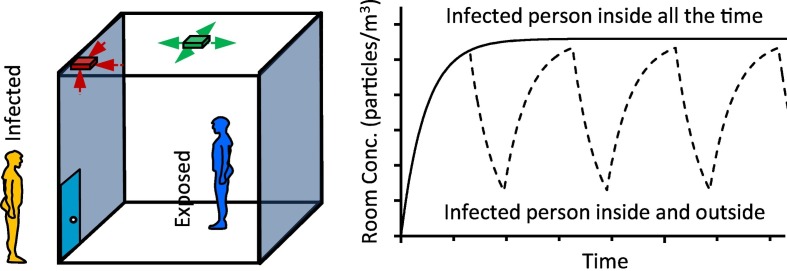
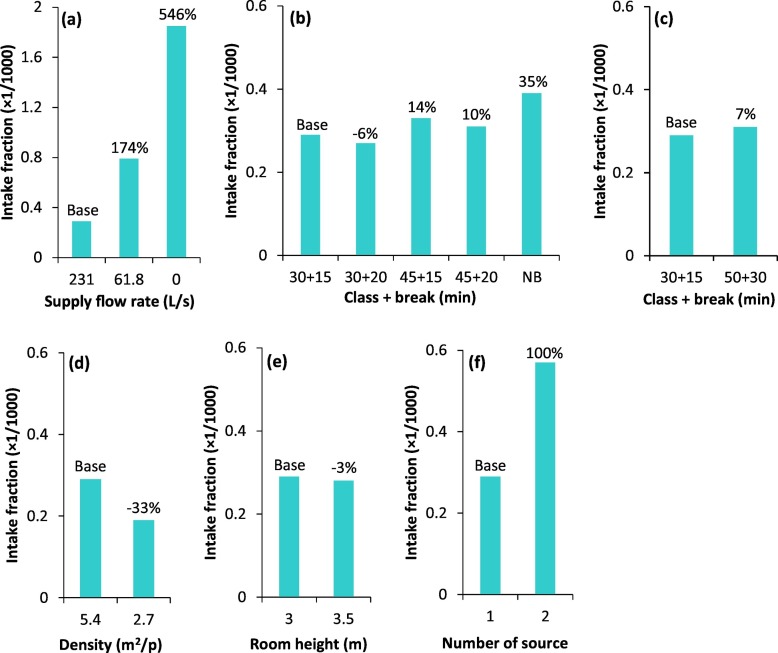
It is important that efficient measures to reduce the airborne transmission of respiratory infectious diseases (including COVID-19) should be formulated as soon as possible to ensure a safe easing of lockdown. Ventilation has been widely recognized as an efficient engineering control measure for airborne transmission. Room ventilation with an increased supply of clean outdoor air could dilute the expiratory airborne aerosols to a lower concentration level. However, sufficient increase is beyond the capacity of most of the existing mechanical ventilation systems that were designed to be energy efficient under non-pandemic conditions. We propose an improved control strategy based on source control, which would be achieved by implementing intermittent breaks in room occupancy, specifically that all occupants should leave the room periodically and the room occupancy time should be reduced as much as possible. Under the assumption of good mixing of clean outdoor supply air with room air, the evolution of the concentration in the room of aerosols exhaled by infected person(s) is predicted. The risk of airborne cross-infection is then evaluated by calculating the time-averaged intake fraction. The effectiveness of the strategy is demonstrated for a case study of a typical classroom. This strategy, together with other control measures such as continuous supply of maximum clean air, distancing, face-to-back layout of workstations and reducing activities that increase aerosol generation (e.g., loudly talking and singing), is applicable in classrooms, offices, meeting rooms, conference rooms, etc.
应尽快制定有效的措施来减少呼吸道传染病(包括 COVID-19)的空气传播,以确保安全地放宽封锁。通风已被广泛认为是控制空气传播的有效工程措施。增加清洁室外空气供应的室内通风可以将呼出的空气传播气溶胶稀释到较低的浓度水平。然而,大多数现有的机械通风系统都无法满足这一要求,这些系统在非大流行情况下的设计目的是为了节能。我们提出了一种基于源头控制的改进控制策略,通过实施间歇性的房间占用中断来实现,具体来说,所有居住者应定期离开房间,并尽可能减少房间占用时间。假设清洁的室外供应空气与室内空气充分混合,预测感染者呼出的气溶胶在室内的浓度演变。然后通过计算时间平均摄入分数来评估空气传播交叉感染的风险。通过对一个典型教室的案例研究来证明该策略的有效性。这种策略,结合其他控制措施,如持续供应最大量的清洁空气、保持距离、工作站背靠背布局以及减少增加气溶胶产生的活动(例如大声说话和唱歌),适用于教室、办公室、会议室、会议室等场所。