Sit Hao Fong, Ling Rui, Lam Agnes Iok Fong, Chen Wen, Latkin Carl A, Hall Brian J
Global and Community Mental Health Research Group, Department of Psychology, University of Macau, Macau, China.
Department of International Health, Johns Hopkins Bloomberg School of Public Health, Johns Hopkins University, Baltimore, MD, United States.
Front Psychiatry. 2020 Jul 7;11:650. doi: 10.3389/fpsyt.2020.00650. eCollection 2020.
Digital mental health interventions leverage digital communication technology to address the mental health needs of populations. Culturally adapting interventions can lead to a successful, scalable mental health intervention implementation, and cultural adaptation of digital mental health interventions is a critical component to implementing interventions at scale within contexts where mental health services are not well supported.
The study aims to describe the cultural adaptation of a digital mental health intervention Step-by-Step in order to address depression among Chinese young adults.
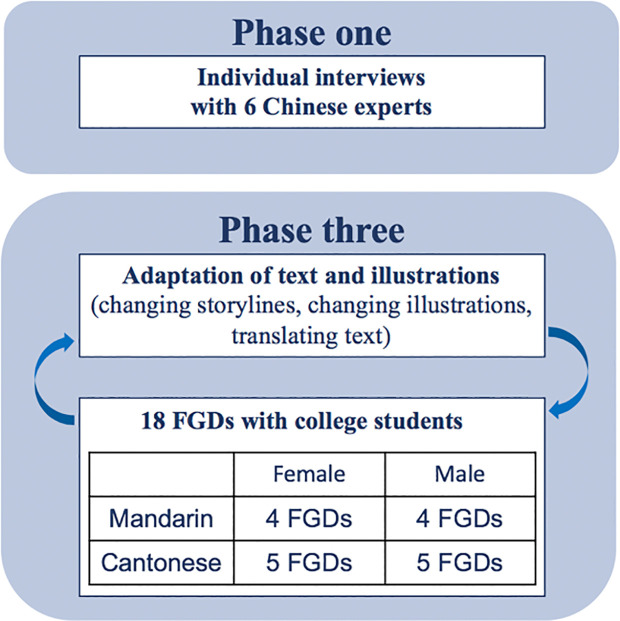
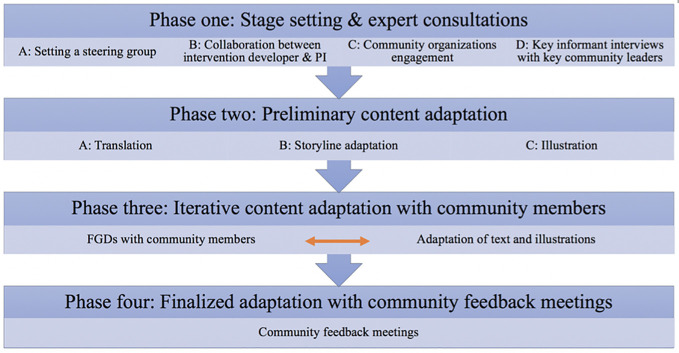
Cultural adaptation was carried out in four phases following Ecological Validity Model: (1) stage setting and expert consultation; (2) preliminary content adaptation; (3) iterative content adaptation with community members; (4) finalized adaptation with community feedback meetings. Cognitive interviewing was applied to probe for relevance, acceptability, comprehensibility, and completeness of illustrations and text. Six mental health experts and 34 Chinese young adults were recruited for key informant interviews and focus group discussions.
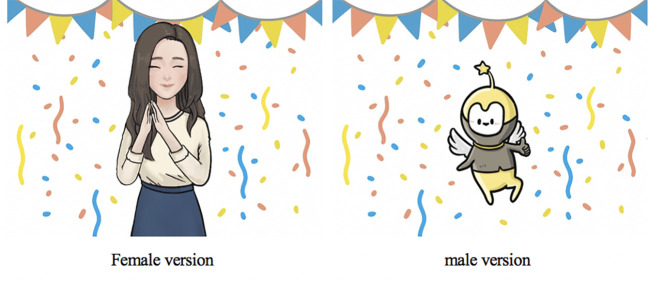
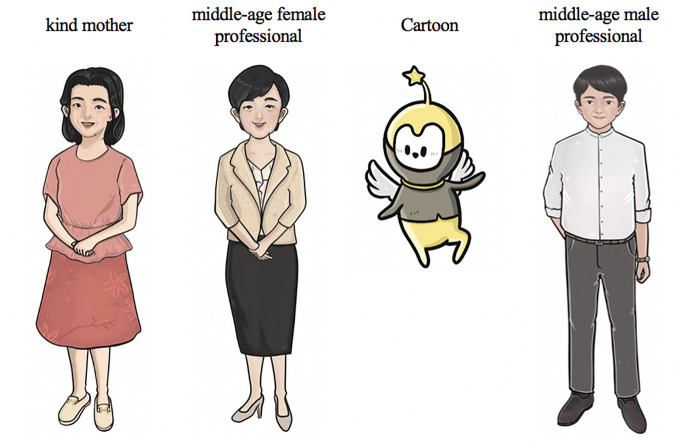
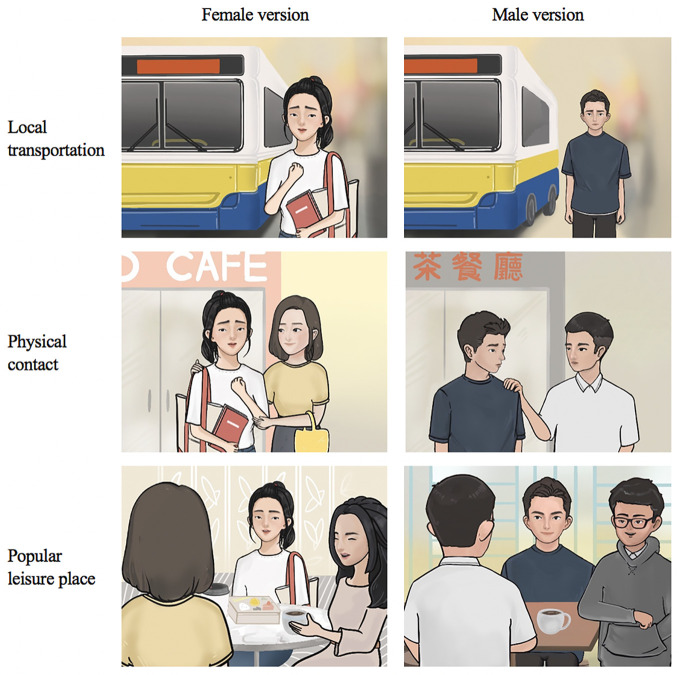
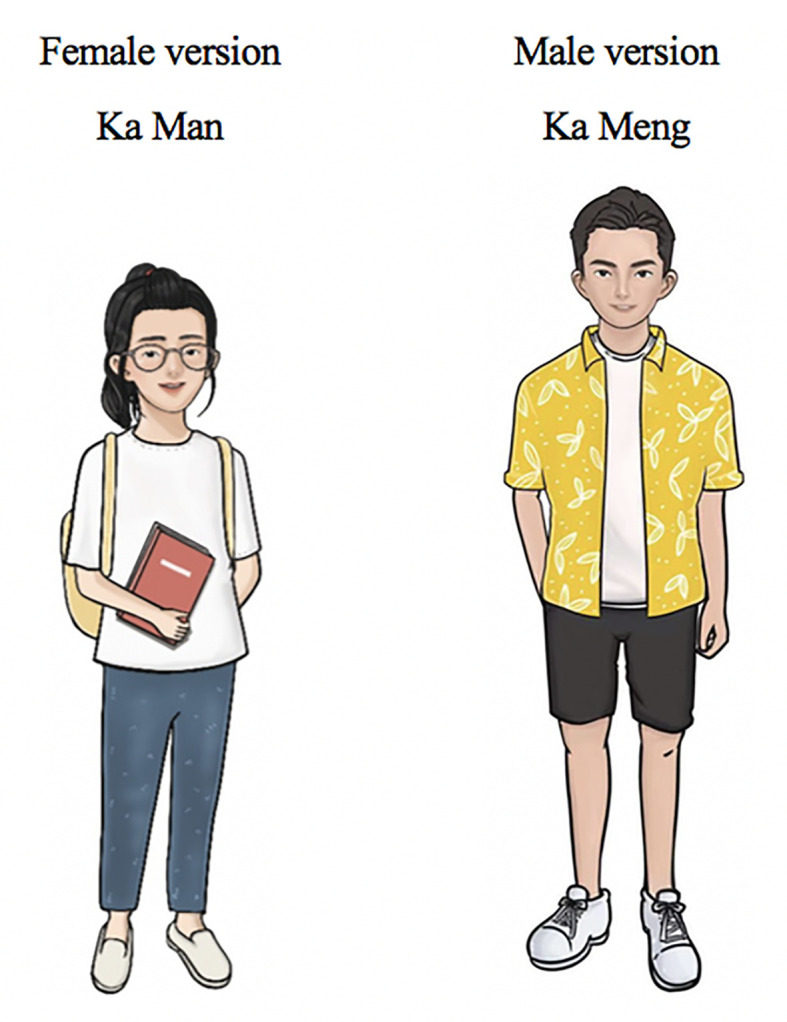
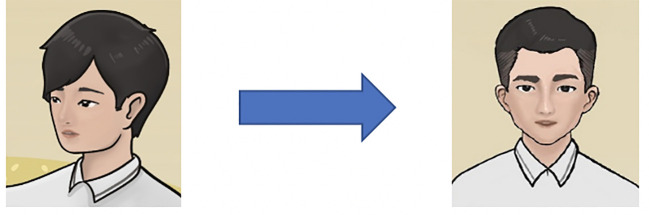
We adapted the text and illustrations to fit the culture among Chinese young adults. Eight elements of the intervention were chosen as the targets of cultural adaptation (e.g., language, metaphors, content). Samples of major adaptations included: adding scenarios related to university life (), changing leading characters from a physician to a peer and a cartoon (), incorporating two language versions (traditional Chinese and simplified Chinese) in the intervention (), and maintaining fundamental therapeutic components ().
This study showed the utility of using Ecological Validity Model and a four-point procedure framework for cultural adaptation and achieved a culturally appropriate version of the Step-by-Step program for Chinese young adults.
数字心理健康干预利用数字通信技术来满足人群的心理健康需求。对干预措施进行文化调适可促成一项成功、可扩展的心理健康干预实施,而数字心理健康干预的文化调适是在心理健康服务支持不足的背景下大规模实施干预措施的关键组成部分。
本研究旨在描述一种数字心理健康干预“步步为营”的文化调适情况,以解决中国年轻成年人的抑郁问题。
按照生态效度模型分四个阶段进行文化调适:(1)阶段设定与专家咨询;(2)初步内容调适;(3)与社区成员进行迭代内容调适;(4)通过社区反馈会议进行最终调适。应用认知访谈来探究插图和文本的相关性、可接受性、可理解性和完整性。招募了6名心理健康专家和34名中国年轻成年人进行关键 informant 访谈和焦点小组讨论。
我们对文本和插图进行了调适,以适应中国年轻成年人的文化。选择干预措施的八个要素作为文化调适的目标(例如,语言、隐喻、内容)。主要调适示例包括:添加与大学生活相关的场景(),将主角从医生改为同龄人及卡通形象();在干预措施中纳入两种语言版本(繁体中文和简体中文)(),并保留基本治疗成分()。
本研究展示了使用生态效度模型和四点程序框架进行文化调适的效用,并为中国年轻成年人实现了一个文化上合适的“步步为营”项目版本。