Department of Information and Communications Engineering, Chosun University, Gwangju, Republic of Korea.
Division of Computer & Electronic Systems Engineering, Hankuk University of Foreign Studies, Yongin-si, Republic of Korea.
PLoS One. 2020 Aug 3;15(8):e0236493. doi: 10.1371/journal.pone.0236493. eCollection 2020.
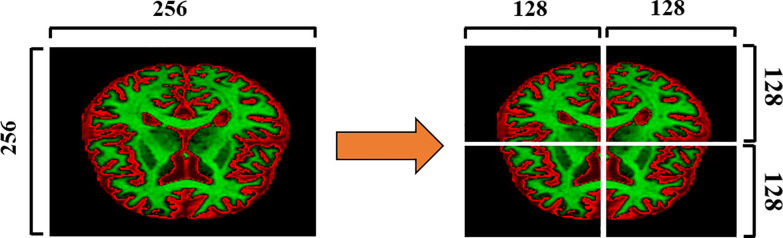
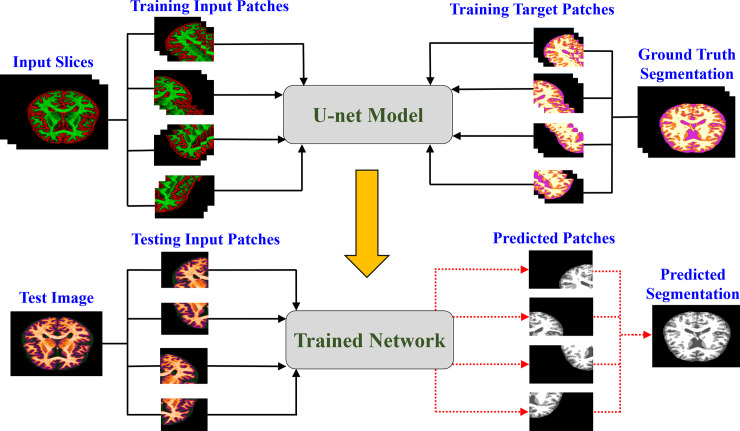
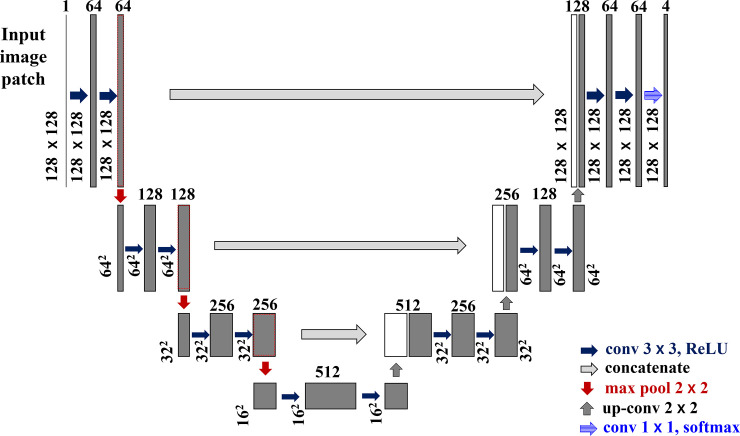
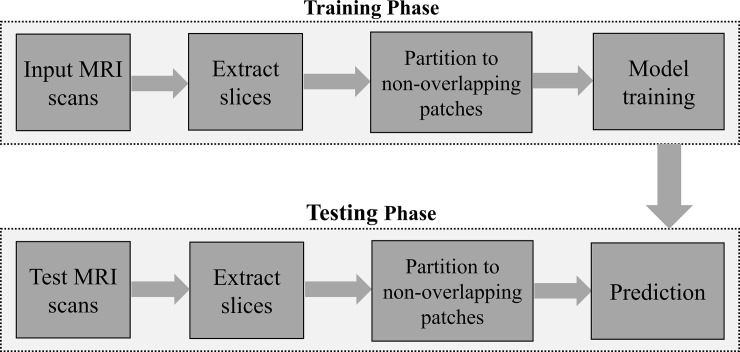
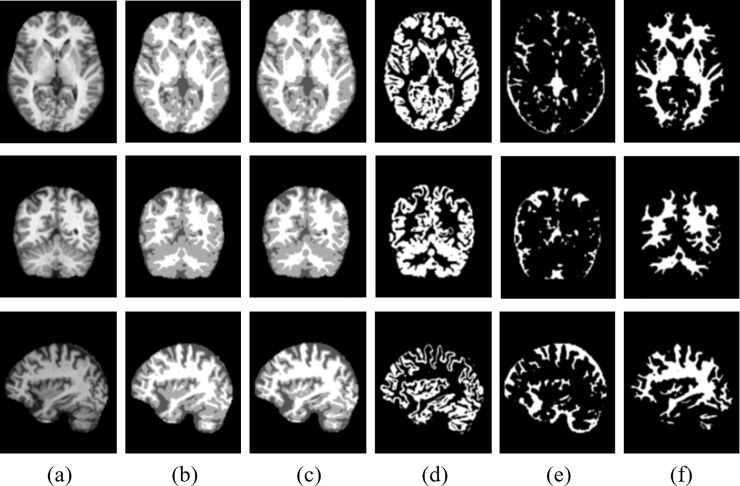
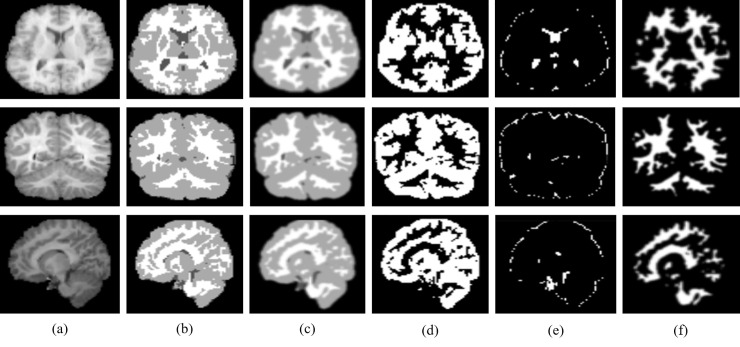
Accurate segmentation of brain magnetic resonance imaging (MRI) is an essential step in quantifying the changes in brain structure. Deep learning in recent years has been extensively used for brain image segmentation with highly promising performance. In particular, the U-net architecture has been widely used for segmentation in various biomedical related fields. In this paper, we propose a patch-wise U-net architecture for the automatic segmentation of brain structures in structural MRI. In the proposed brain segmentation method, the non-overlapping patch-wise U-net is used to overcome the drawbacks of conventional U-net with more retention of local information. In our proposed method, the slices from an MRI scan are divided into non-overlapping patches that are fed into the U-net model along with their corresponding patches of ground truth so as to train the network. The experimental results show that the proposed patch-wise U-net model achieves a Dice similarity coefficient (DSC) score of 0.93 in average and outperforms the conventional U-net and the SegNet-based methods by 3% and 10%, respectively, for on Open Access Series of Imaging Studies (OASIS) and Internet Brain Segmentation Repository (IBSR) dataset.
准确的脑磁共振成像 (MRI) 分割是量化脑结构变化的重要步骤。近年来,深度学习在脑图像分割方面得到了广泛的应用,具有很高的性能。特别是 U-net 架构已被广泛应用于各种与生物医学相关的领域中的分割。在本文中,我们提出了一种基于补丁的 U-net 架构,用于自动分割结构 MRI 中的脑结构。在提出的脑分割方法中,使用非重叠补丁的 U-net 克服了传统 U-net 的缺点,更保留了局部信息。在我们提出的方法中,将 MRI 扫描的切片分成非重叠的补丁,并将其与相应的真实补丁一起输入 U-net 模型中,以训练网络。实验结果表明,所提出的基于补丁的 U-net 模型在 Open Access Series of Imaging Studies (OASIS)和 Internet Brain Segmentation Repository (IBSR)数据集上的平均 Dice 相似系数 (DSC) 分数为 0.93,分别比传统的 U-net 和基于 SegNet 的方法提高了 3%和 10%。