IEEE Trans Med Imaging. 2020 Nov;39(11):3523-3534. doi: 10.1109/TMI.2020.2998600. Epub 2020 Oct 28.
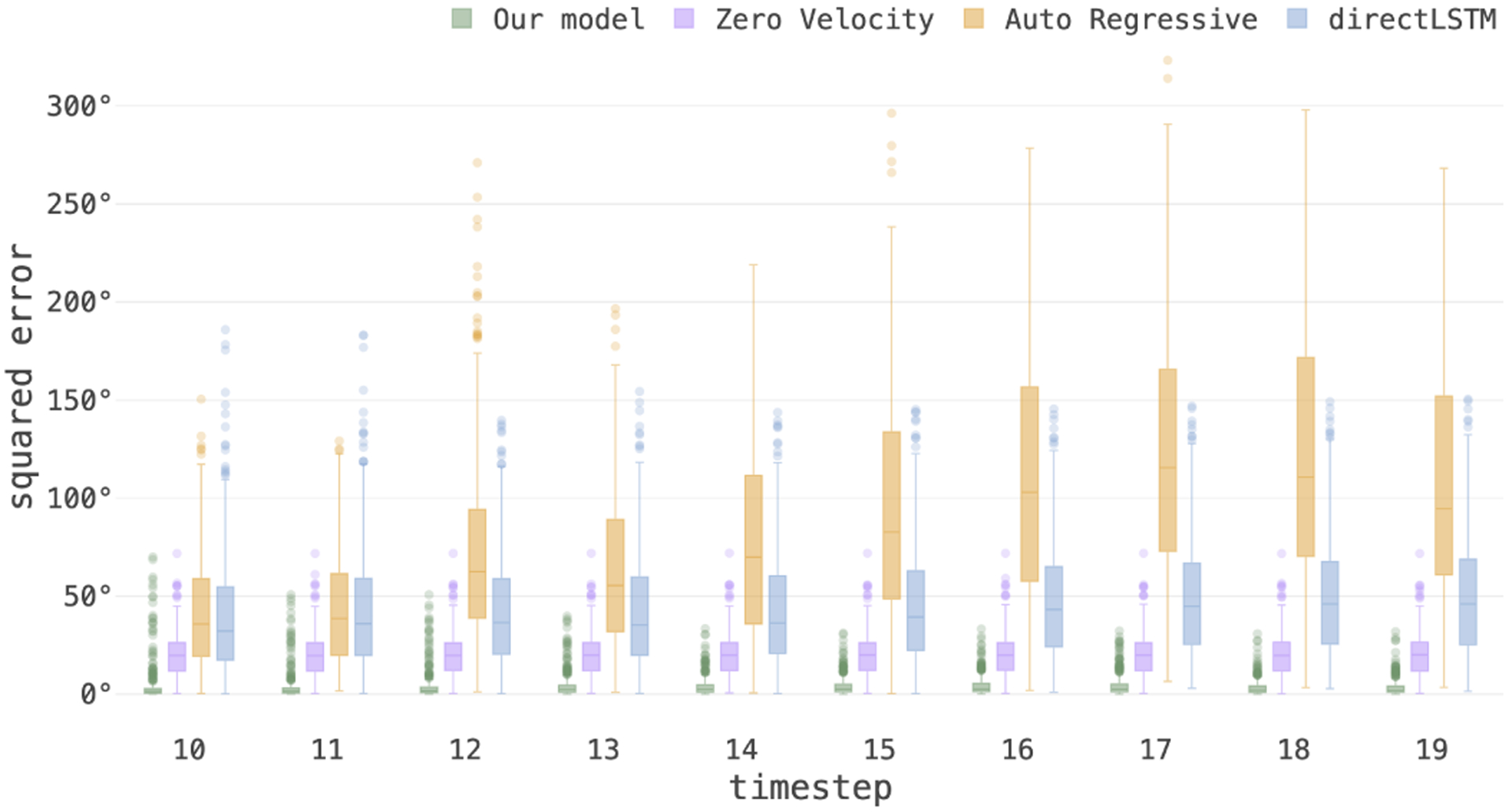
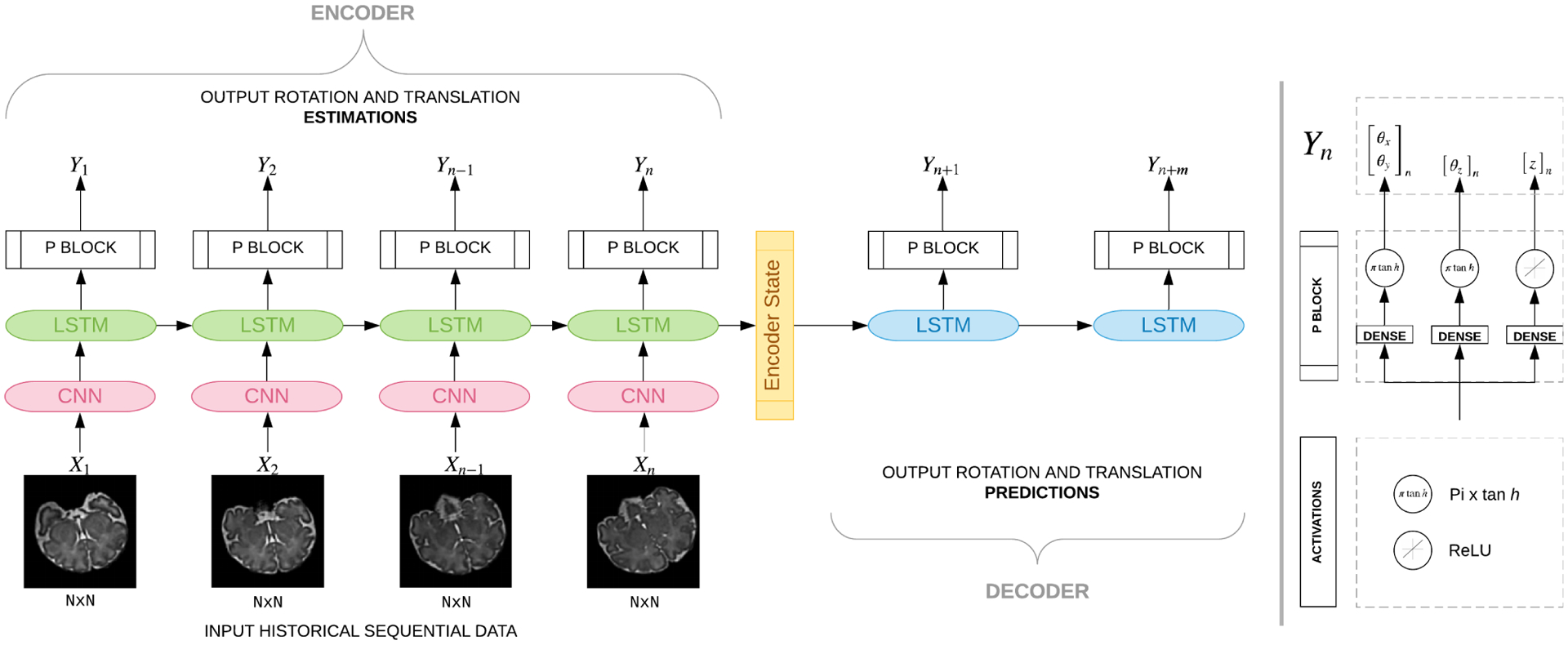
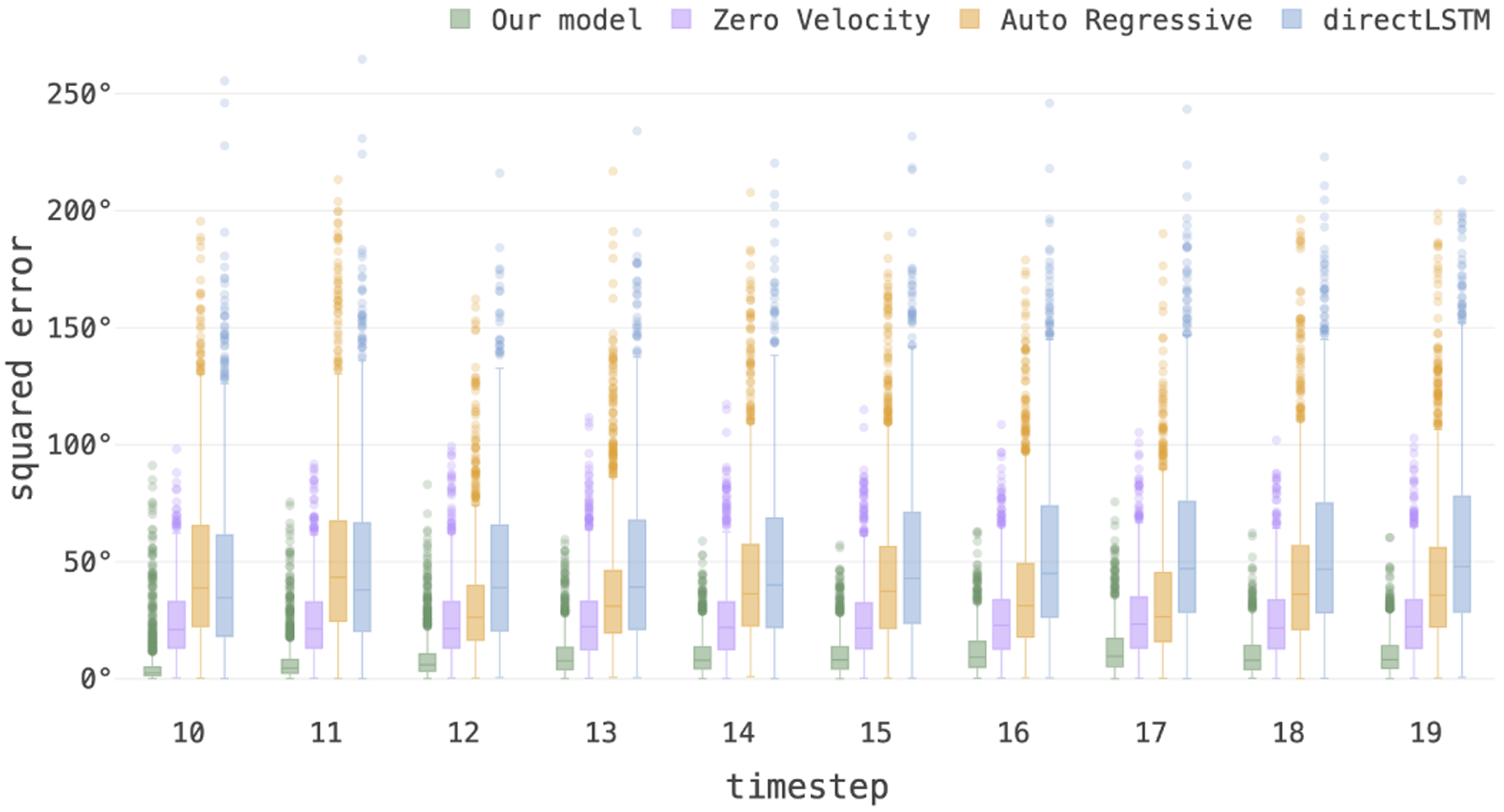
Fetal magnetic resonance imaging (MRI) is challenged by uncontrollable, large, and irregular fetal movements. It is, therefore, performed through visual monitoring of fetal motion and repeated acquisitions to ensure diagnostic-quality images are acquired. Nevertheless, visual monitoring of fetal motion based on displayed slices, and navigation at the level of stacks-of-slices is inefficient. The current process is highly operator-dependent, increases scanner usage and cost, and significantly increases the length of fetal MRI scans which makes them hard to tolerate for pregnant women. To help build automatic MRI motion tracking and navigation systems to overcome the limitations of the current process and improve fetal imaging, we have developed a new real-time image-based motion tracking method based on deep learning that learns to predict fetal motion directly from acquired images. Our method is based on a recurrent neural network, composed of spatial and temporal encoder-decoders, that infers motion parameters from anatomical features extracted from sequences of acquired slices. We compared our trained network on held-out test sets (including data with different characteristics, e.g. different fetuses scanned at different ages, and motion trajectories recorded from volunteer subjects) with networks designed for estimation as well as methods adopted to make predictions. The results show that our method outperformed alternative techniques, and achieved real-time performance with average errors of 3.5 and 8 degrees for the estimation and prediction tasks, respectively. Our real-time deep predictive motion tracking technique can be used to assess fetal movements, to guide slice acquisitions, and to build navigation systems for fetal MRI.
胎儿磁共振成像(MRI)受到无法控制的、大的和不规则的胎儿运动的挑战。因此,它是通过视觉监测胎儿运动和重复采集来进行的,以确保获得诊断质量的图像。然而,基于显示切片的胎儿运动的视觉监测和在切片堆栈级别的导航效率低下。当前的过程高度依赖于操作人员,增加了扫描仪的使用和成本,并且显著增加了胎儿 MRI 扫描的长度,使得它们对孕妇来说难以忍受。为了帮助构建自动 MRI 运动跟踪和导航系统,以克服当前过程的局限性并改善胎儿成像,我们开发了一种新的基于深度学习的实时基于图像的运动跟踪方法,该方法直接从采集的图像中学习预测胎儿运动。我们的方法基于一个递归神经网络,由时空编码器-解码器组成,它从采集的切片序列中提取的解剖特征推断运动参数。我们在保留的测试集(包括具有不同特征的数据,例如在不同年龄扫描的不同胎儿,以及从志愿者受试者记录的运动轨迹)上比较了我们训练的网络与专门用于估计的网络以及用于进行预测的方法。结果表明,我们的方法优于替代技术,并且在估计和预测任务中分别实现了平均误差为 3.5 和 8 度的实时性能。我们的实时深度预测运动跟踪技术可用于评估胎儿运动,指导切片采集,并为胎儿 MRI 构建导航系统。