Sensory and Consumer Science, CSIRO Agriculture and Food, North Ryde, NSW 2113, Australia.
Public Health Nutrition, CSIRO Health and Biosecurity, Adelaide, SA 5000, Australia.
Nutrients. 2020 Aug 5;12(8):2343. doi: 10.3390/nu12082343.
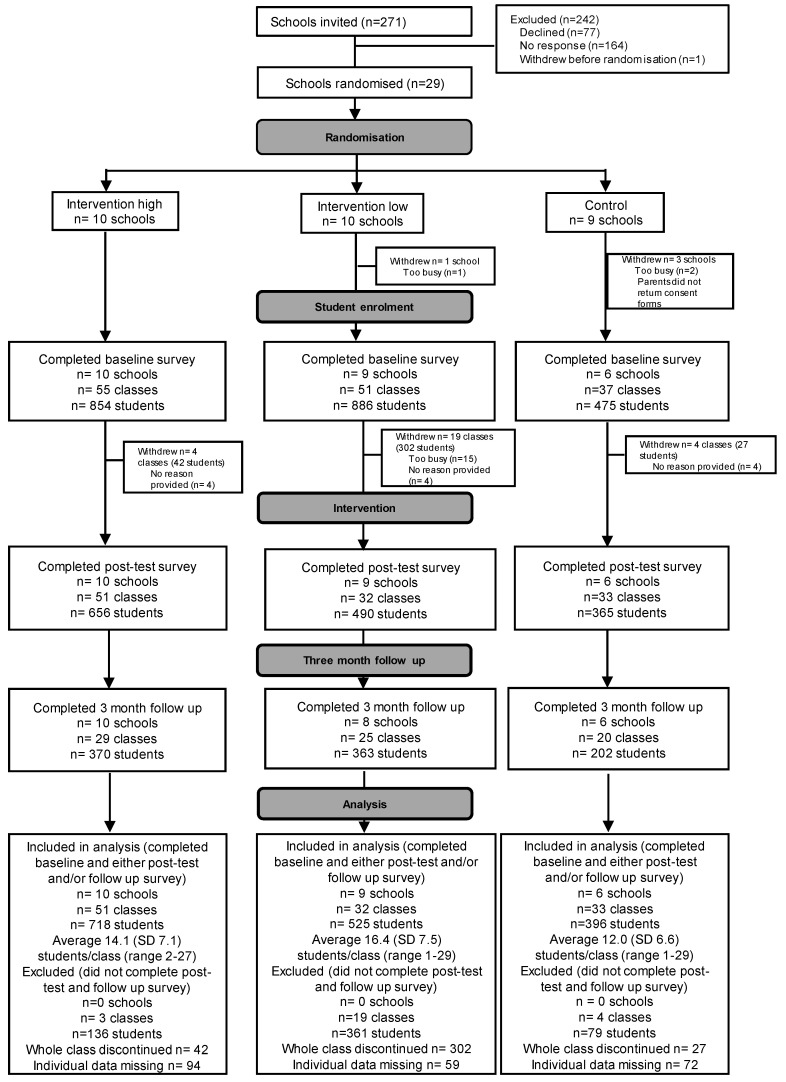
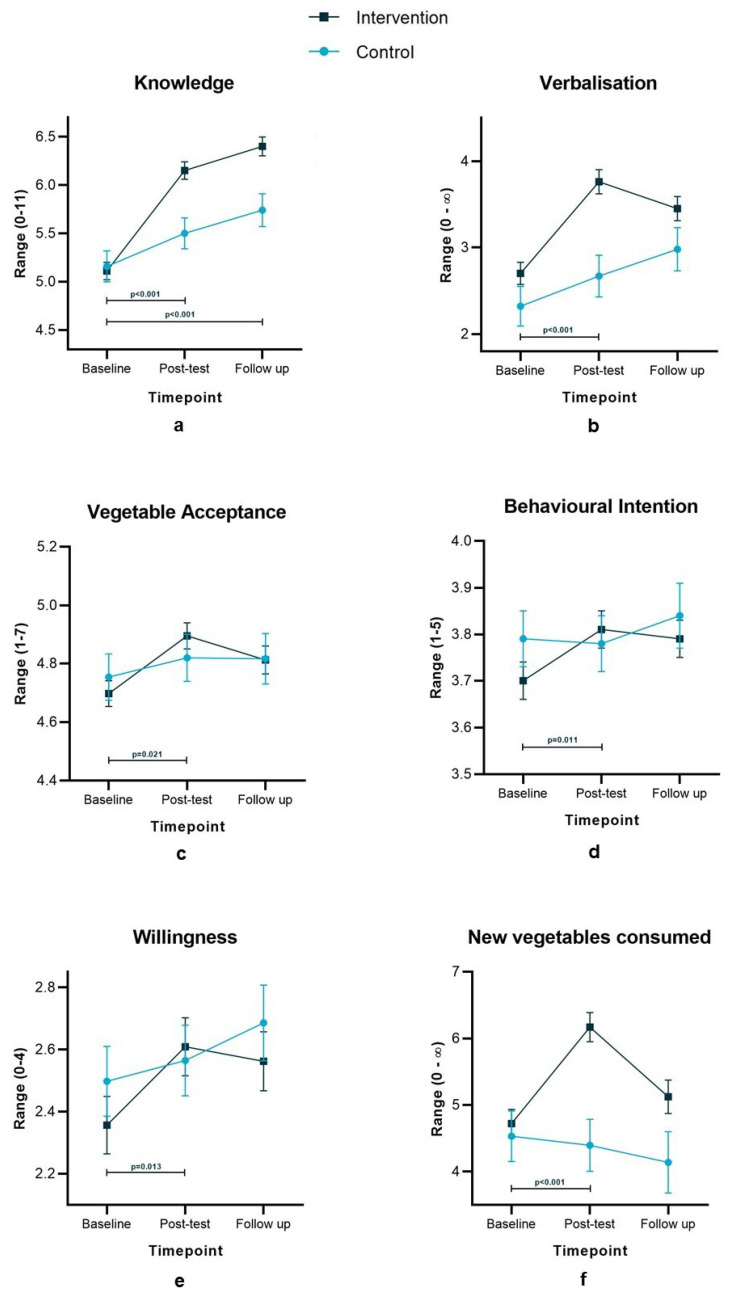
Schools provide a relevant and equitable environment to influence students towards increased vegetable consumption. This study aimed to evaluate the effectiveness of a Vegetable Education Resource To Increase Children's Acceptance and Liking (VERTICAL) for Australian primary schools (curriculum aligned and based on a framework of food preference development and sensory experiential learning) on positively influencing factors predisposing children towards increased vegetable consumption. The secondary aim was to evaluate two levels of teacher training intensity on intervention effectiveness. A cluster-RCT amongst schools with three conditions was conducted: 1 = teaching VERTICAL preceded by online teacher training; 2 = as per 1 with additional face-to-face teacher training; 3 = Control. Pre-test, post-test and 3-month follow-up measures (knowledge, verbalization ability, vegetable acceptance, behavioural intentions, willing to taste, new vegetables consumed) were collected from students ( = 1639 from 25 schools in Sydney/Adelaide, Australia). Data were analyzed using mixed model analysis. No difference in intervention effectiveness was found between the two training methods. Compared to the Control, VERTICAL positively affected all outcome measures after intervention ( < 0.01) with knowledge sustained at 3-month follow-up ( < 0.001). In conclusion, VERTICAL was effective in achieving change amongst students in mediating factors known to be positively associated with vegetable consumption.
学校提供了一个相关且公平的环境,以影响学生增加蔬菜消费。本研究旨在评估澳大利亚小学的蔬菜教育资源(VERTICAL)对增加儿童接受和喜欢蔬菜的有效性(与课程一致,并基于食物偏好发展和感官体验学习框架),以积极影响儿童增加蔬菜消费的倾向因素。次要目的是评估两种教师培训强度对干预效果的影响。在有三个条件的学校中进行了群组随机对照试验:1 = 教授 VERTICAL 之前进行在线教师培训;2 = 与 1 相同,增加面对面的教师培训;3 = 对照组。从学生(来自澳大利亚悉尼/阿德莱德的 25 所学校的 = 1639 名学生)中收集了预测试、后测试和 3 个月随访测量(知识、口头表达能力、蔬菜接受度、行为意图、愿意品尝、新食用的蔬菜)。使用混合模型分析对数据进行了分析。两种培训方法之间的干预效果没有差异。与对照组相比,VERTICAL 在干预后积极影响所有结果测量(<0.01),知识在 3 个月随访时仍保持不变(<0.001)。总之,VERTICAL 有效地改变了学生在与蔬菜消费呈正相关的中介因素方面的情况。