Cavedoni Silvia, Chirico Alice, Pedroli Elisa, Cipresso Pietro, Riva Giuseppe
Applied Technology for Neuro-Psychology Lab, Istituto Auxologico Italiano, Milan, Italy.
Department of Psychology, Catholic University of the Sacred Heart, Milan, Italy.
Front Hum Neurosci. 2020 Jul 24;14:245. doi: 10.3389/fnhum.2020.00245. eCollection 2020.
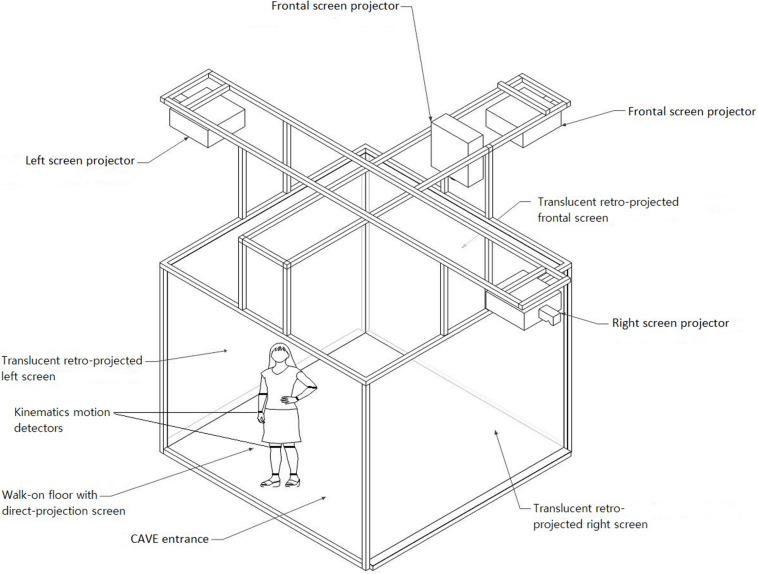
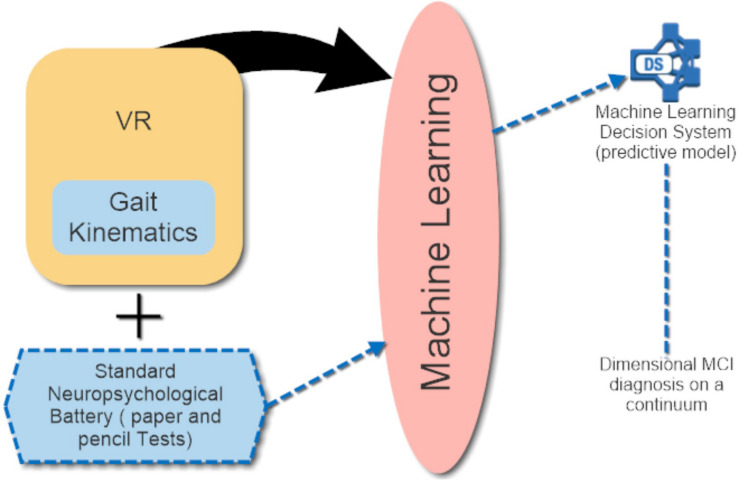
Elderly people affected by Mild Cognitive Impairment (MCI) usually report a perceived decline in cognitive functions that deeply impacts their quality of life. This subtle waning, although it cannot be diagnosable as dementia, is noted by caregivers on the basis of their relative's behaviors. Crucially, if this condition is also not detected in time by clinicians, it can easily turn into dementia. Thus, early detection of MCI is strongly needed. Classical neuropsychological measures - underlying a categorical model of diagnosis - could be integrated with a dimensional assessment approach involving Virtual Reality (VR) and Artificial Intelligence (AI). VR can be used to create highly ecologically controlled simulations resembling the daily life contexts in which patients' daily instrumental activities (IADL) usually take place. Clinicians can record patients' kinematics, particularly gait, while performing IADL (Digital Biomarkers). Then, Artificial Intelligence employs Machine Learning (ML) to analyze them in combination with clinical and neuropsychological data. This integrated computational approach would enable the creation of a predictive model to identify specific patterns of cognitive and motor impairment in MCI. Therefore, this new dimensional cognitive-behavioral assessment would reveal elderly people's neural alterations and impaired cognitive functions, typical of MCI and dementia, even in early stages for more time-sensitive interventions.
受轻度认知障碍(MCI)影响的老年人通常报告称,认知功能明显下降,这对他们的生活质量产生了深远影响。这种细微的衰退,虽然不能诊断为痴呆症,但护理人员会根据亲属的行为注意到。至关重要的是,如果临床医生也未能及时发现这种情况,它很容易发展成痴呆症。因此,迫切需要早期检测MCI。基于分类诊断模型的经典神经心理学测量方法,可以与涉及虚拟现实(VR)和人工智能(AI)的维度评估方法相结合。VR可用于创建高度生态可控的模拟环境,类似于患者日常工具性活动(IADL)通常发生的日常生活场景。临床医生可以在患者进行IADL(数字生物标志物)时记录其运动学,特别是步态。然后,人工智能利用机器学习(ML)将其与临床和神经心理学数据结合起来进行分析。这种综合计算方法将能够创建一个预测模型,以识别MCI中认知和运动障碍的特定模式。因此,这种新的维度认知行为评估将揭示老年人的神经改变和受损的认知功能,这是MCI和痴呆症的典型特征,即使在早期阶段也能进行更具时间敏感性的干预。