Guan Lim Choon, Lim-Ashworth Nikki S J, Fung Daniel S S
Department of Developmental Psychiatry, Institute of Mental Health, Singapore, Singapore.
Curr Opin Psychiatry. 2020 Nov;33(6):577-585. doi: 10.1097/YCO.0000000000000643.
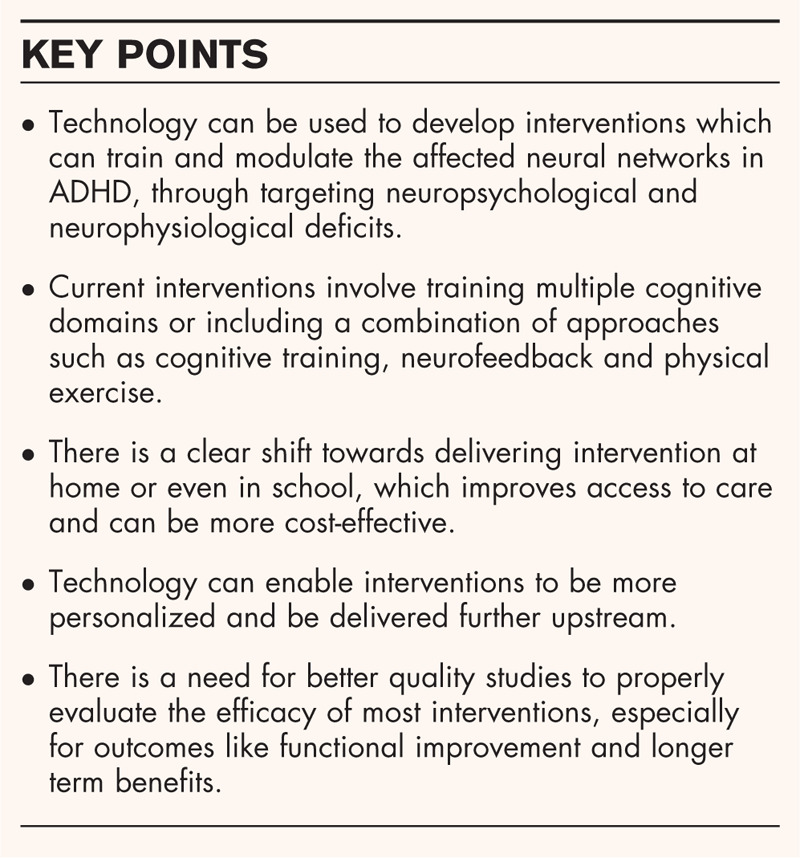
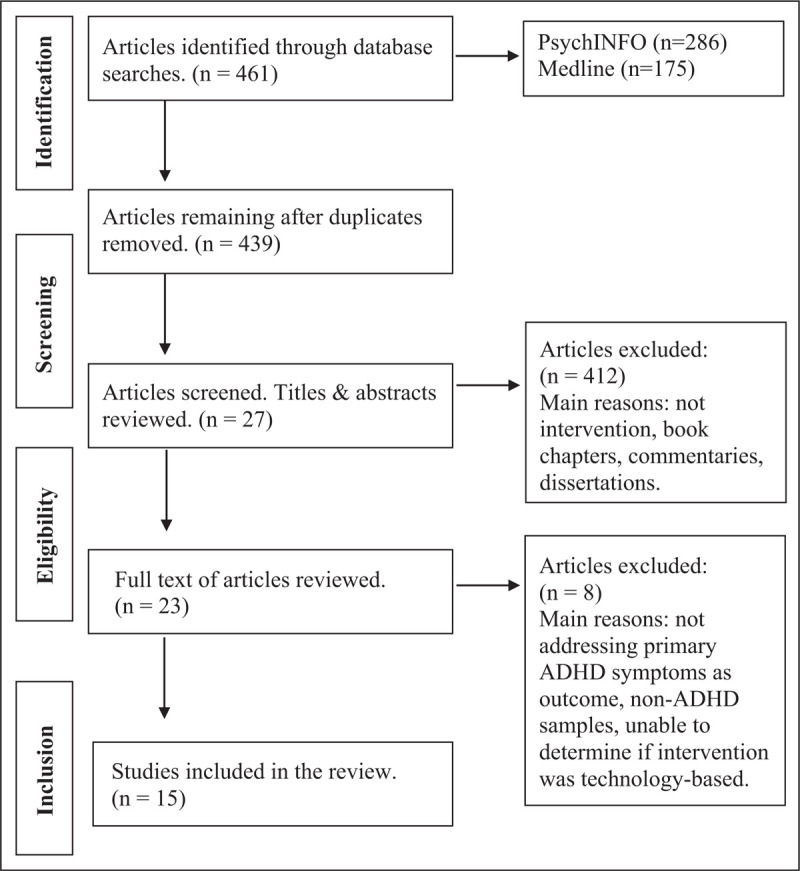
Technological advancement has led to the development of novel treatment approaches for attention deficit hyperactivity disorder (ADHD). This review aims to review recent studies which employ the use of technology to treat ADHD, with particular focus on studies published during a 1-year period from February 2019 to February 2020.
Most recent studies involved children aged 12 years and below. Interventions included cognitive training through games, neurofeedback and a combination of several approaches. More novel approaches included trigeminal nerve stimulation and brain-computer interface, and studies had utilized technology such as X-box Kinect and eye tracker. There was a shift towards delivering intervention at home and in school, enabled by technology. The study outcomes were variable and mainly included executive functioning measures and clinical ratings. These interventions were generally safe with few reported adverse events.
Technology has enabled interventions to be delivered outside of the clinic setting and presented an opportunity for increased access to care and early intervention. Better quality studies are needed to inform on the efficacy of these interventions.
技术进步推动了注意力缺陷多动障碍(ADHD)新型治疗方法的发展。本综述旨在回顾近期采用技术治疗ADHD的研究,特别关注2019年2月至2020年2月这1年期间发表的研究。
最近的研究大多涉及12岁及以下儿童。干预措施包括通过游戏进行认知训练、神经反馈以及多种方法的组合。更新颖的方法包括三叉神经刺激和脑机接口,并且研究使用了如X-box Kinect和眼动仪等技术。借助技术,出现了向在家中和学校提供干预的转变。研究结果各不相同,主要包括执行功能测量和临床评分。这些干预措施总体上是安全的,报告的不良事件很少。
技术使干预能够在临床环境之外进行,并为增加获得护理和早期干预的机会提供了可能。需要开展质量更高的研究,以了解这些干预措施的疗效。