• 文献检索
  • 文档翻译
  • 深度研究
  • 学术资讯
  • Suppr Zotero 插件Zotero 插件
  • 邀请有礼
  • 套餐&价格
  • 历史记录
应用&插件
Suppr Zotero 插件Zotero 插件浏览器插件Mac 客户端Windows 客户端微信小程序
定价
高级版会员购买积分包购买API积分包
服务
文献检索文档翻译深度研究API 文档MCP 服务
关于我们
关于 Suppr公司介绍联系我们用户协议隐私条款
关注我们

Suppr 超能文献

核心技术专利:CN118964589B侵权必究
粤ICP备2023148730 号-1Suppr @ 2026

文献检索

告别复杂PubMed语法,用中文像聊天一样搜索,搜遍4000万医学文献。AI智能推荐,让科研检索更轻松。

立即免费搜索

文件翻译

保留排版,准确专业,支持PDF/Word/PPT等文件格式,支持 12+语言互译。

免费翻译文档

深度研究

AI帮你快速写综述,25分钟生成高质量综述,智能提取关键信息,辅助科研写作。

立即免费体验

2018年欧盟食品中农药残留报告。

The 2018 European Union report on pesticide residues in food.

作者信息

Medina-Pastor Paula, Triacchini Giuseppe

出版信息

EFSA J. 2020 Apr 2;18(4):e06057. doi: 10.2903/j.efsa.2020.6057. eCollection 2020 Apr.

DOI:10.2903/j.efsa.2020.6057
PMID:32874271
原文链接:https://pmc.ncbi.nlm.nih.gov/articles/PMC7447915/
Abstract

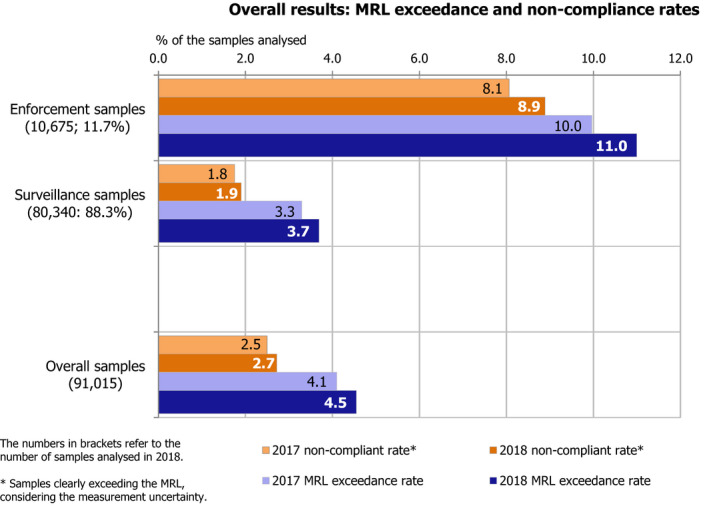
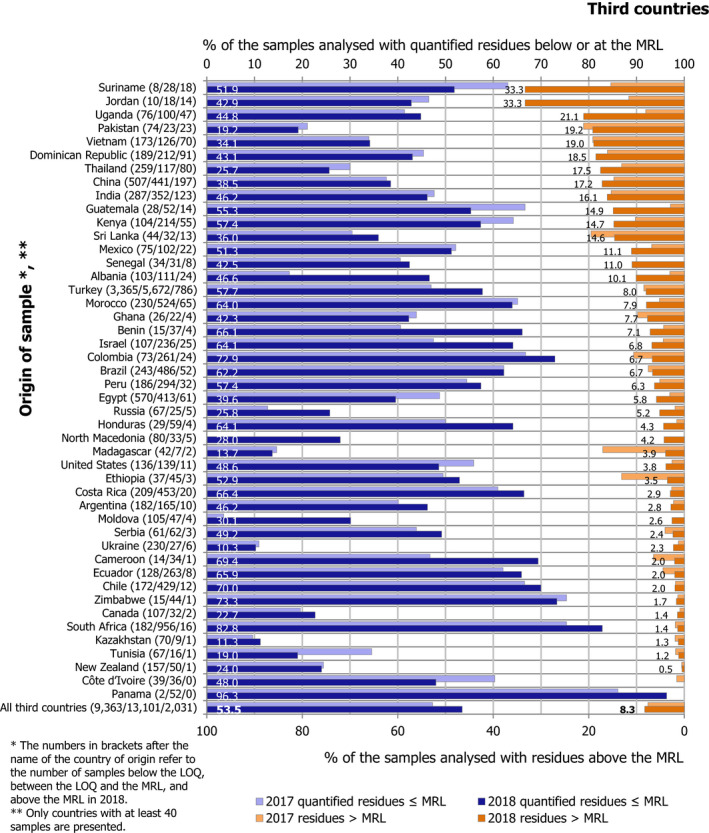
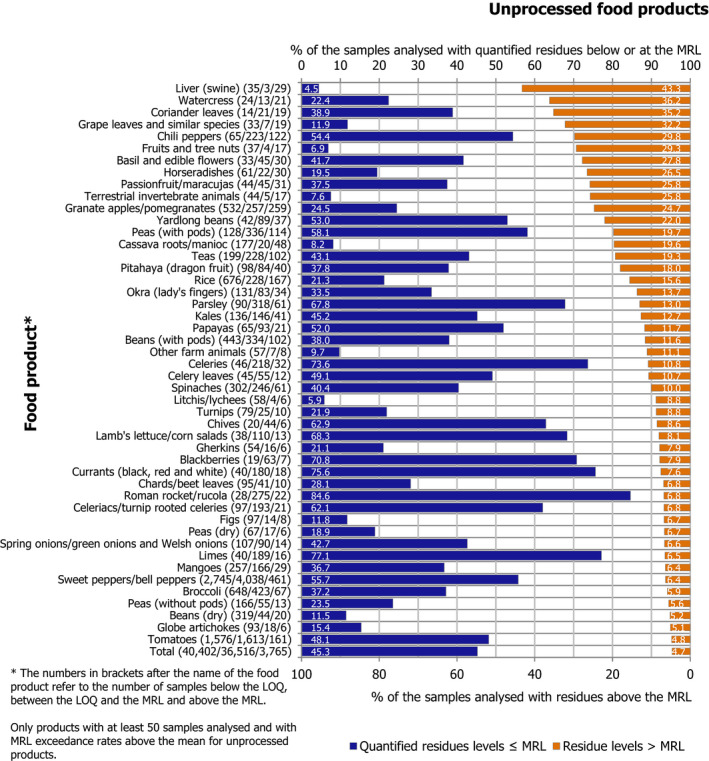
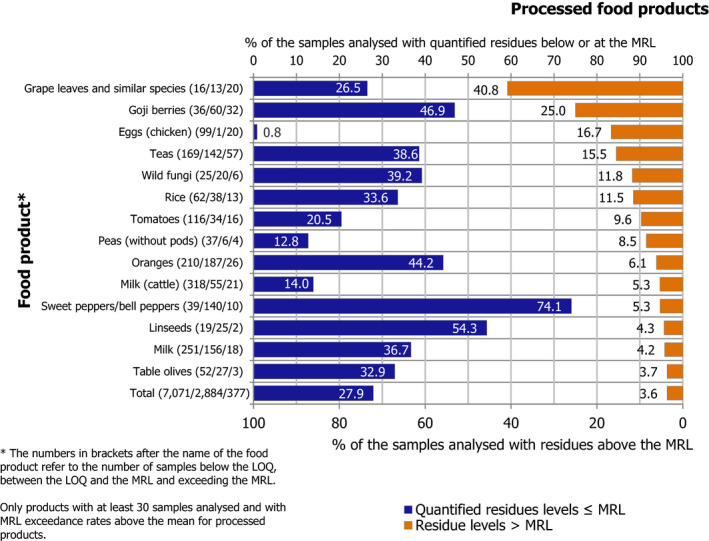
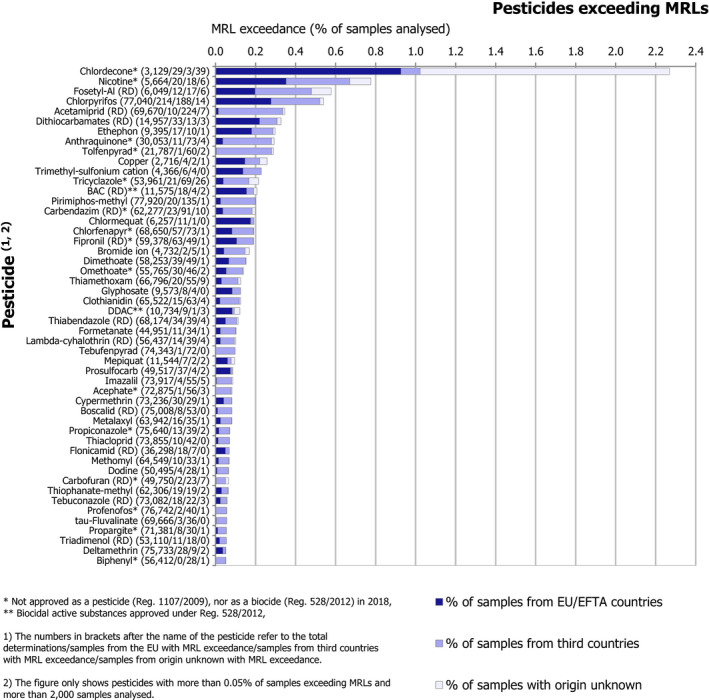
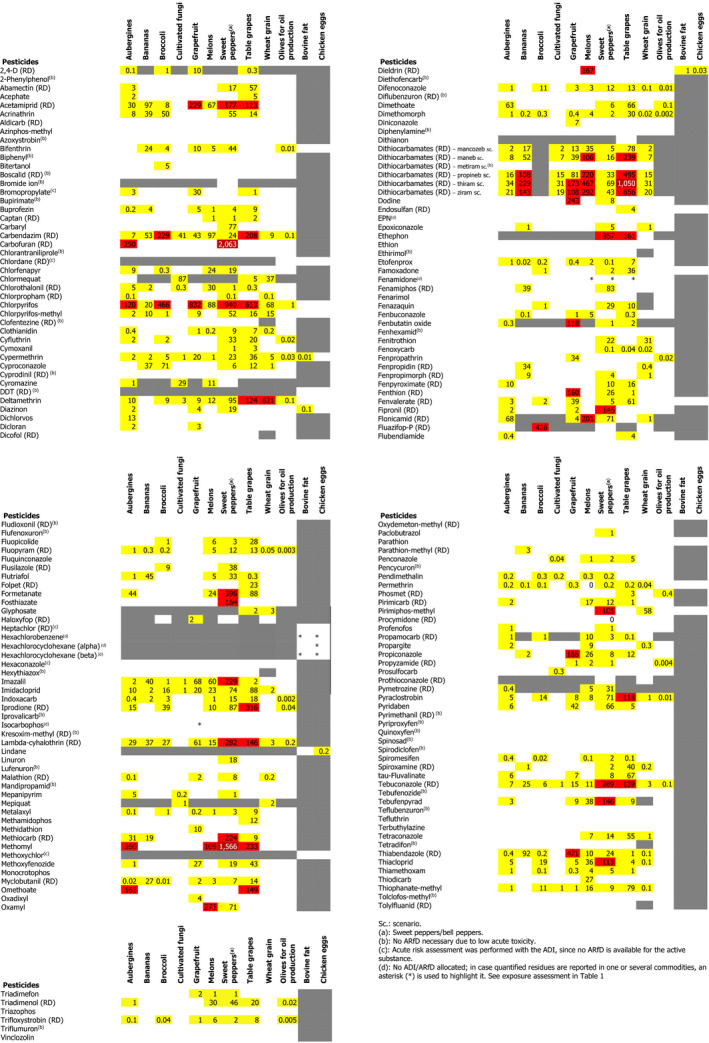
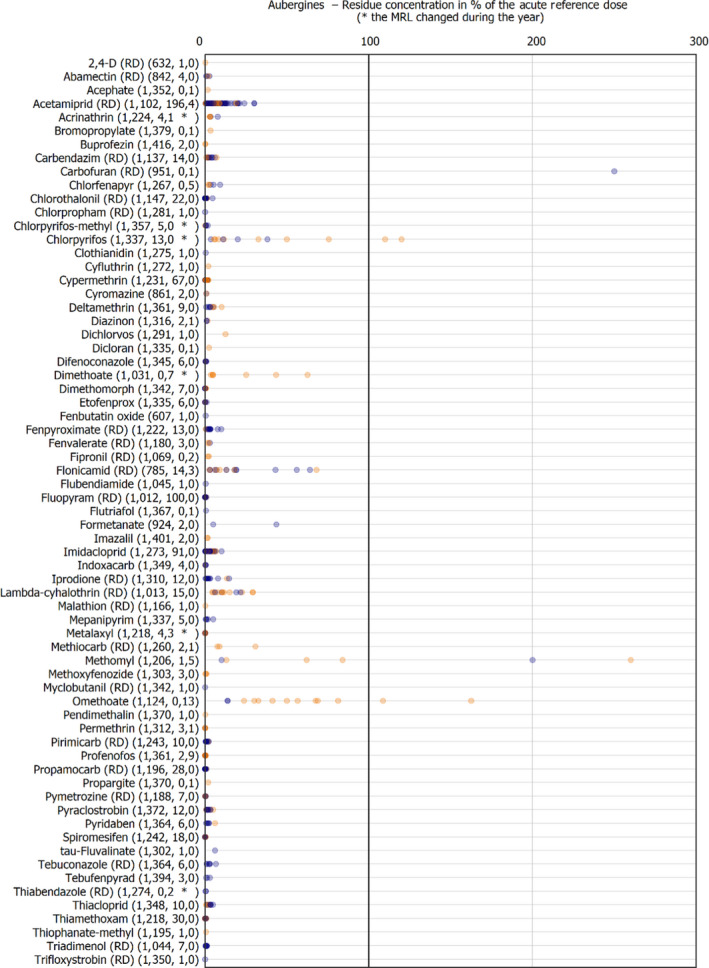
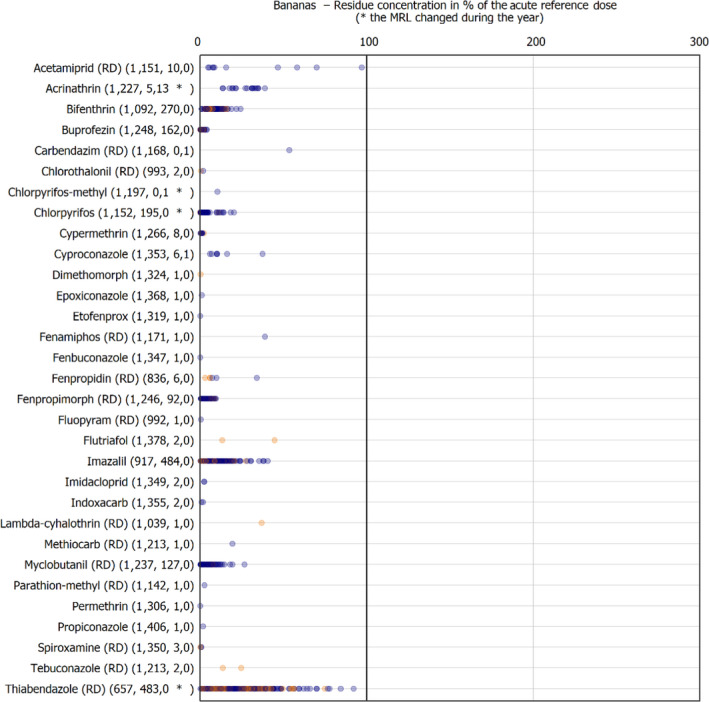
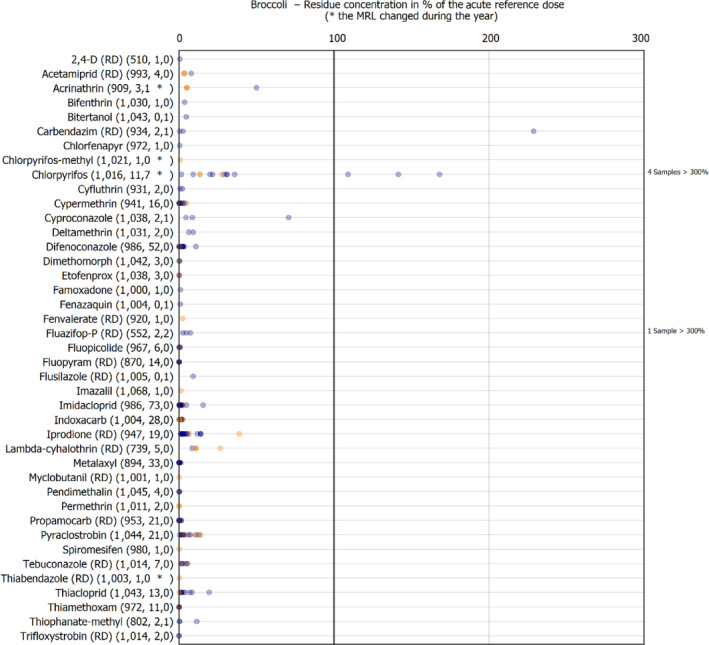
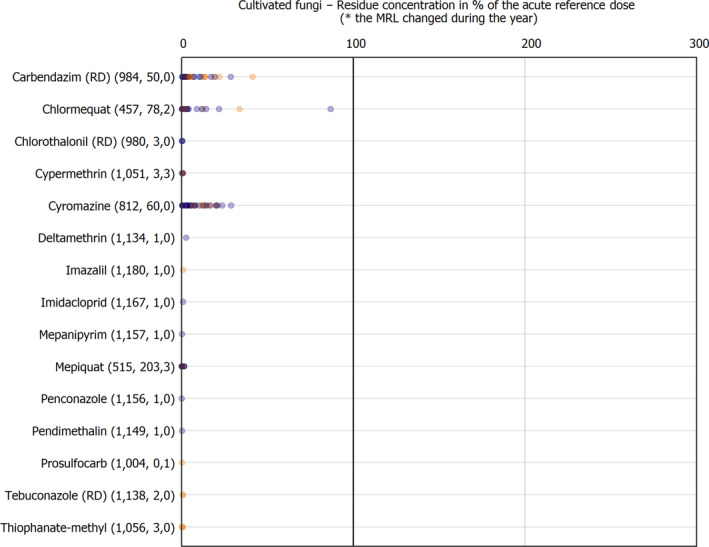
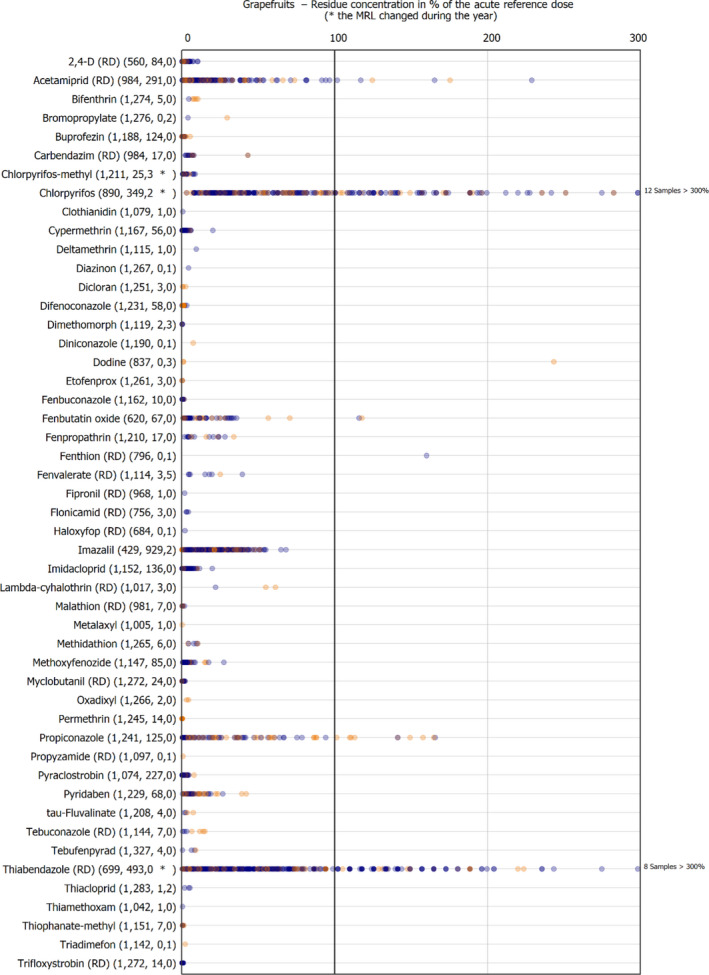
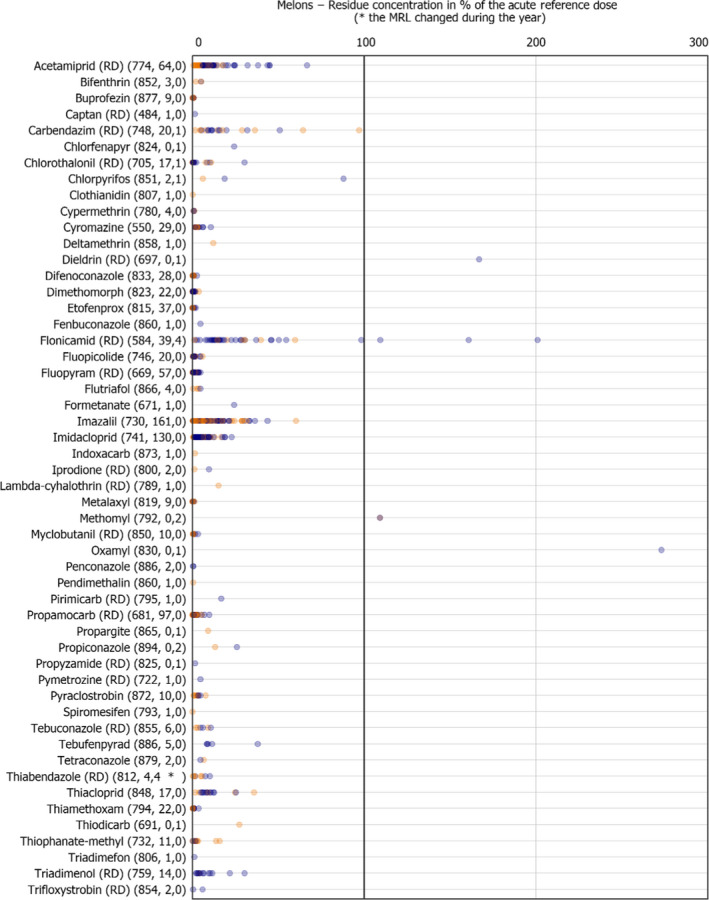
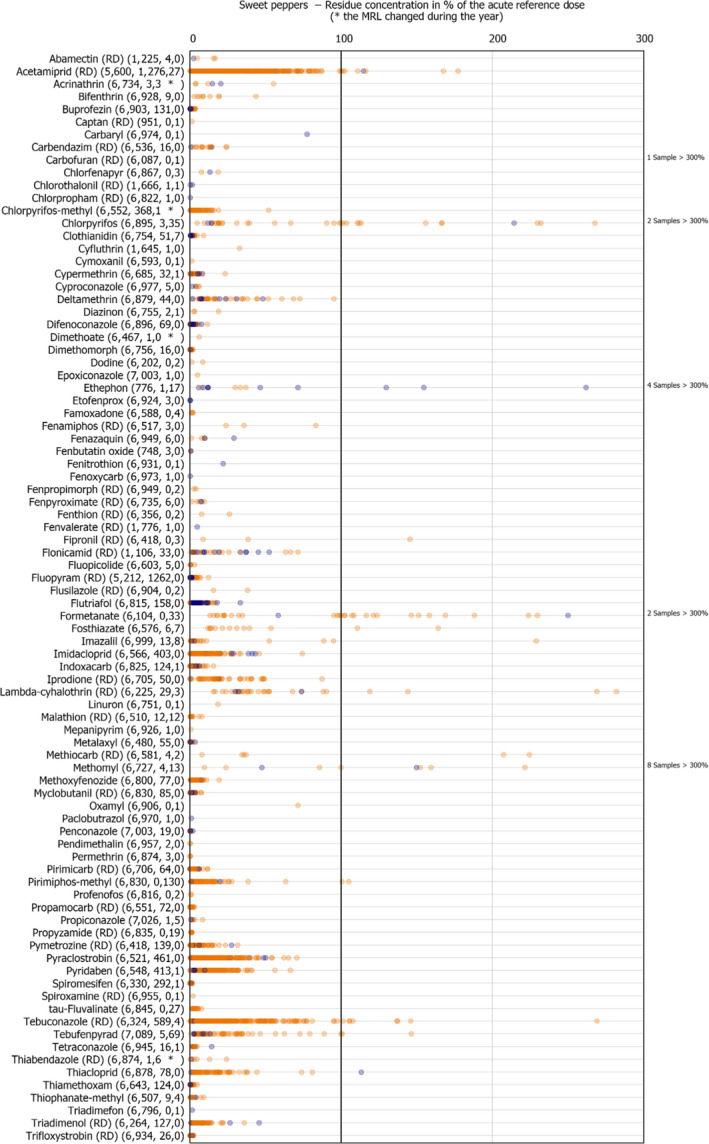
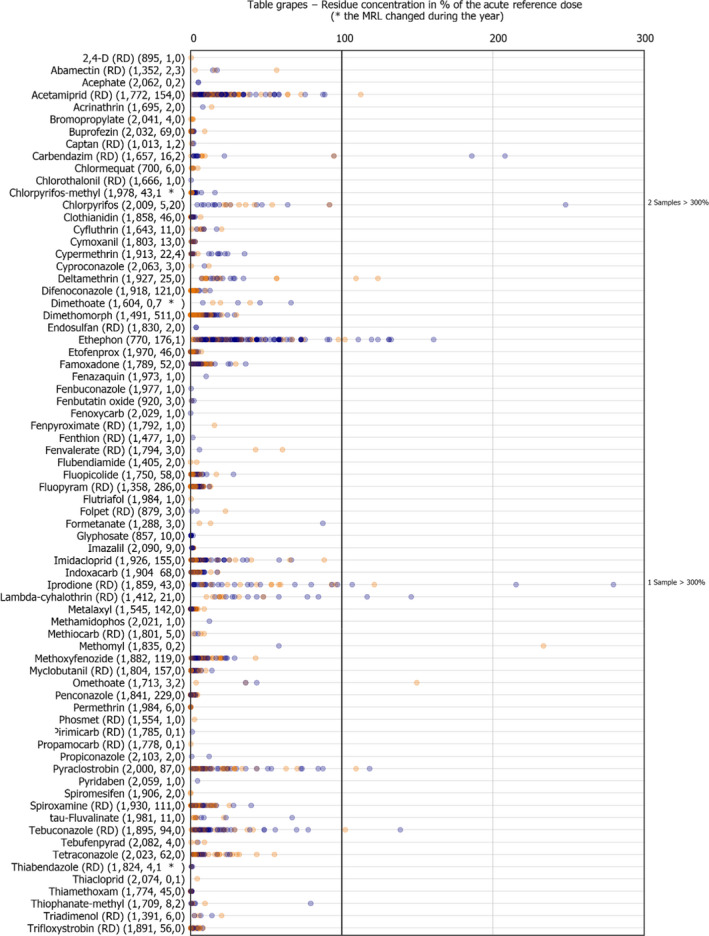
Under EU legislation (Article 32, Regulation (EC) No 396/2005), EFSA provides an annual report which analyses pesticide residue levels in foods on the European market. The analysis is based on data from the official national control activities carried out by EU Member States, Iceland and Norway and includes a subset of data from the EU-coordinated control programme which uses a randomised sampling strategy. For 2018, 95.5% of the overall 91,015 samples analysed fell below the maximum residue level (MRL), 4.5% exceeded this level, of which 2.7% were non-compliant, i.e. samples exceeding the MRL after taking into account the measurement uncertainty. For the subset of 11,679 samples analysed as part of the EU-coordinated control programme, 1.4% exceeded the MRL and 0.9% were non-compliant. Table grapes and sweet peppers/bell peppers were among the food products that most frequently exceeded the MRLs. To assess acute and chronic risk to consumer health, dietary exposure to pesticide residues was estimated and compared with health-based guidance values. The findings suggest that the assessed levels for the food commodities analysed are unlikely to pose concern for consumer health. However, a number of recommendations are proposed to increase the efficiency of European control systems (e.g. optimising traceability), thereby continuing to ensure a high level of consumer protection.

摘要

根据欧盟法规(《欧洲共同体第396/2005号条例》第32条),欧洲食品安全局(EFSA)发布年度报告,分析欧洲市场上食品中的农药残留水平。该分析基于欧盟成员国、冰岛和挪威开展的官方国家监控活动数据,其中包括来自采用随机抽样策略的欧盟协调监控计划的部分数据。2018年,在分析的总计91,015个样本中,95.5%的样本低于最大残留限量(MRL),4.5%的样本超过该水平,其中2.7%不符合标准,即考虑测量不确定度后超过最大残留限量的样本。作为欧盟协调监控计划一部分进行分析的11,679个样本中,1.4%超过最大残留限量,0.9%不符合标准。鲜食葡萄和甜椒是最常超过最大残留限量的食品类别。为评估对消费者健康的急性和慢性风险,对农药残留的膳食暴露量进行了估算,并与基于健康的指导值进行了比较。结果表明,所分析食品商品的评估水平不太可能对消费者健康构成担忧。然而,提出了一些建议以提高欧洲监控系统的效率(例如优化可追溯性),从而继续确保高水平的消费者保护。
https://cdn.ncbi.nlm.nih.gov/pmc/blobs/2eaf/7447915/f91080738da4/EFS2-18-e06057-g037.jpg
https://cdn.ncbi.nlm.nih.gov/pmc/blobs/2eaf/7447915/ffc39fad2a9e/EFS2-18-e06057-g001.jpg
https://cdn.ncbi.nlm.nih.gov/pmc/blobs/2eaf/7447915/8b658187d8b6/EFS2-18-e06057-g002.jpg
https://cdn.ncbi.nlm.nih.gov/pmc/blobs/2eaf/7447915/7d3c1ba0452f/EFS2-18-e06057-g003.jpg
https://cdn.ncbi.nlm.nih.gov/pmc/blobs/2eaf/7447915/b87bdac2bcb0/EFS2-18-e06057-g004.jpg
https://cdn.ncbi.nlm.nih.gov/pmc/blobs/2eaf/7447915/be61d91ed2bf/EFS2-18-e06057-g005.jpg
https://cdn.ncbi.nlm.nih.gov/pmc/blobs/2eaf/7447915/fb260abe89bb/EFS2-18-e06057-g006.jpg
https://cdn.ncbi.nlm.nih.gov/pmc/blobs/2eaf/7447915/3eee211a1a49/EFS2-18-e06057-g007.jpg
https://cdn.ncbi.nlm.nih.gov/pmc/blobs/2eaf/7447915/24658f3ea2d7/EFS2-18-e06057-g008.jpg
https://cdn.ncbi.nlm.nih.gov/pmc/blobs/2eaf/7447915/e0156a089f34/EFS2-18-e06057-g009.jpg
https://cdn.ncbi.nlm.nih.gov/pmc/blobs/2eaf/7447915/6692044a490f/EFS2-18-e06057-g010.jpg
https://cdn.ncbi.nlm.nih.gov/pmc/blobs/2eaf/7447915/0a027077a4ac/EFS2-18-e06057-g011.jpg
https://cdn.ncbi.nlm.nih.gov/pmc/blobs/2eaf/7447915/a0667bc0bead/EFS2-18-e06057-g012.jpg
https://cdn.ncbi.nlm.nih.gov/pmc/blobs/2eaf/7447915/c8df5f958d14/EFS2-18-e06057-g013.jpg
https://cdn.ncbi.nlm.nih.gov/pmc/blobs/2eaf/7447915/420f54945e2c/EFS2-18-e06057-g014.jpg
https://cdn.ncbi.nlm.nih.gov/pmc/blobs/2eaf/7447915/b7d8db127a24/EFS2-18-e06057-g015.jpg
https://cdn.ncbi.nlm.nih.gov/pmc/blobs/2eaf/7447915/136e36298bba/EFS2-18-e06057-g016.jpg
https://cdn.ncbi.nlm.nih.gov/pmc/blobs/2eaf/7447915/5f1f80fd7049/EFS2-18-e06057-g017.jpg
https://cdn.ncbi.nlm.nih.gov/pmc/blobs/2eaf/7447915/a0df57ed49f7/EFS2-18-e06057-g018.jpg
https://cdn.ncbi.nlm.nih.gov/pmc/blobs/2eaf/7447915/b45b1a67fb0b/EFS2-18-e06057-g019.jpg
https://cdn.ncbi.nlm.nih.gov/pmc/blobs/2eaf/7447915/8c9ae5540ef3/EFS2-18-e06057-g020.jpg
https://cdn.ncbi.nlm.nih.gov/pmc/blobs/2eaf/7447915/b8a11761367b/EFS2-18-e06057-g021.jpg
https://cdn.ncbi.nlm.nih.gov/pmc/blobs/2eaf/7447915/3a9720dd17db/EFS2-18-e06057-g022.jpg
https://cdn.ncbi.nlm.nih.gov/pmc/blobs/2eaf/7447915/b5eccb5460f7/EFS2-18-e06057-g023.jpg
https://cdn.ncbi.nlm.nih.gov/pmc/blobs/2eaf/7447915/c7a11cff958b/EFS2-18-e06057-g024.jpg
https://cdn.ncbi.nlm.nih.gov/pmc/blobs/2eaf/7447915/6c92855867c8/EFS2-18-e06057-g025.jpg
https://cdn.ncbi.nlm.nih.gov/pmc/blobs/2eaf/7447915/b846447956d9/EFS2-18-e06057-g026.jpg
https://cdn.ncbi.nlm.nih.gov/pmc/blobs/2eaf/7447915/0a8bc95d655d/EFS2-18-e06057-g027.jpg
https://cdn.ncbi.nlm.nih.gov/pmc/blobs/2eaf/7447915/174beed868a8/EFS2-18-e06057-g028.jpg
https://cdn.ncbi.nlm.nih.gov/pmc/blobs/2eaf/7447915/3af4d0b1b173/EFS2-18-e06057-g029.jpg
https://cdn.ncbi.nlm.nih.gov/pmc/blobs/2eaf/7447915/18b4c68b4218/EFS2-18-e06057-g030.jpg
https://cdn.ncbi.nlm.nih.gov/pmc/blobs/2eaf/7447915/72833f539ebb/EFS2-18-e06057-g031.jpg
https://cdn.ncbi.nlm.nih.gov/pmc/blobs/2eaf/7447915/bed7a83f0a54/EFS2-18-e06057-g032.jpg
https://cdn.ncbi.nlm.nih.gov/pmc/blobs/2eaf/7447915/a130071d5016/EFS2-18-e06057-g033.jpg
https://cdn.ncbi.nlm.nih.gov/pmc/blobs/2eaf/7447915/603f744b9736/EFS2-18-e06057-g035.jpg
https://cdn.ncbi.nlm.nih.gov/pmc/blobs/2eaf/7447915/f91080738da4/EFS2-18-e06057-g037.jpg
https://cdn.ncbi.nlm.nih.gov/pmc/blobs/2eaf/7447915/ffc39fad2a9e/EFS2-18-e06057-g001.jpg
https://cdn.ncbi.nlm.nih.gov/pmc/blobs/2eaf/7447915/8b658187d8b6/EFS2-18-e06057-g002.jpg
https://cdn.ncbi.nlm.nih.gov/pmc/blobs/2eaf/7447915/7d3c1ba0452f/EFS2-18-e06057-g003.jpg
https://cdn.ncbi.nlm.nih.gov/pmc/blobs/2eaf/7447915/b87bdac2bcb0/EFS2-18-e06057-g004.jpg
https://cdn.ncbi.nlm.nih.gov/pmc/blobs/2eaf/7447915/be61d91ed2bf/EFS2-18-e06057-g005.jpg
https://cdn.ncbi.nlm.nih.gov/pmc/blobs/2eaf/7447915/fb260abe89bb/EFS2-18-e06057-g006.jpg
https://cdn.ncbi.nlm.nih.gov/pmc/blobs/2eaf/7447915/3eee211a1a49/EFS2-18-e06057-g007.jpg
https://cdn.ncbi.nlm.nih.gov/pmc/blobs/2eaf/7447915/24658f3ea2d7/EFS2-18-e06057-g008.jpg
https://cdn.ncbi.nlm.nih.gov/pmc/blobs/2eaf/7447915/e0156a089f34/EFS2-18-e06057-g009.jpg
https://cdn.ncbi.nlm.nih.gov/pmc/blobs/2eaf/7447915/6692044a490f/EFS2-18-e06057-g010.jpg
https://cdn.ncbi.nlm.nih.gov/pmc/blobs/2eaf/7447915/0a027077a4ac/EFS2-18-e06057-g011.jpg
https://cdn.ncbi.nlm.nih.gov/pmc/blobs/2eaf/7447915/a0667bc0bead/EFS2-18-e06057-g012.jpg
https://cdn.ncbi.nlm.nih.gov/pmc/blobs/2eaf/7447915/c8df5f958d14/EFS2-18-e06057-g013.jpg
https://cdn.ncbi.nlm.nih.gov/pmc/blobs/2eaf/7447915/420f54945e2c/EFS2-18-e06057-g014.jpg
https://cdn.ncbi.nlm.nih.gov/pmc/blobs/2eaf/7447915/b7d8db127a24/EFS2-18-e06057-g015.jpg
https://cdn.ncbi.nlm.nih.gov/pmc/blobs/2eaf/7447915/136e36298bba/EFS2-18-e06057-g016.jpg
https://cdn.ncbi.nlm.nih.gov/pmc/blobs/2eaf/7447915/5f1f80fd7049/EFS2-18-e06057-g017.jpg
https://cdn.ncbi.nlm.nih.gov/pmc/blobs/2eaf/7447915/a0df57ed49f7/EFS2-18-e06057-g018.jpg
https://cdn.ncbi.nlm.nih.gov/pmc/blobs/2eaf/7447915/b45b1a67fb0b/EFS2-18-e06057-g019.jpg
https://cdn.ncbi.nlm.nih.gov/pmc/blobs/2eaf/7447915/8c9ae5540ef3/EFS2-18-e06057-g020.jpg
https://cdn.ncbi.nlm.nih.gov/pmc/blobs/2eaf/7447915/b8a11761367b/EFS2-18-e06057-g021.jpg
https://cdn.ncbi.nlm.nih.gov/pmc/blobs/2eaf/7447915/3a9720dd17db/EFS2-18-e06057-g022.jpg
https://cdn.ncbi.nlm.nih.gov/pmc/blobs/2eaf/7447915/b5eccb5460f7/EFS2-18-e06057-g023.jpg
https://cdn.ncbi.nlm.nih.gov/pmc/blobs/2eaf/7447915/c7a11cff958b/EFS2-18-e06057-g024.jpg
https://cdn.ncbi.nlm.nih.gov/pmc/blobs/2eaf/7447915/6c92855867c8/EFS2-18-e06057-g025.jpg
https://cdn.ncbi.nlm.nih.gov/pmc/blobs/2eaf/7447915/b846447956d9/EFS2-18-e06057-g026.jpg
https://cdn.ncbi.nlm.nih.gov/pmc/blobs/2eaf/7447915/0a8bc95d655d/EFS2-18-e06057-g027.jpg
https://cdn.ncbi.nlm.nih.gov/pmc/blobs/2eaf/7447915/174beed868a8/EFS2-18-e06057-g028.jpg
https://cdn.ncbi.nlm.nih.gov/pmc/blobs/2eaf/7447915/3af4d0b1b173/EFS2-18-e06057-g029.jpg
https://cdn.ncbi.nlm.nih.gov/pmc/blobs/2eaf/7447915/18b4c68b4218/EFS2-18-e06057-g030.jpg
https://cdn.ncbi.nlm.nih.gov/pmc/blobs/2eaf/7447915/72833f539ebb/EFS2-18-e06057-g031.jpg
https://cdn.ncbi.nlm.nih.gov/pmc/blobs/2eaf/7447915/bed7a83f0a54/EFS2-18-e06057-g032.jpg
https://cdn.ncbi.nlm.nih.gov/pmc/blobs/2eaf/7447915/a130071d5016/EFS2-18-e06057-g033.jpg
https://cdn.ncbi.nlm.nih.gov/pmc/blobs/2eaf/7447915/603f744b9736/EFS2-18-e06057-g035.jpg
https://cdn.ncbi.nlm.nih.gov/pmc/blobs/2eaf/7447915/f91080738da4/EFS2-18-e06057-g037.jpg

相似文献

1
The 2018 European Union report on pesticide residues in food.2018年欧盟食品中农药残留报告。
EFSA J. 2020 Apr 2;18(4):e06057. doi: 10.2903/j.efsa.2020.6057. eCollection 2020 Apr.
2
The 2019 European Union report on pesticide residues in food.2019年欧盟食品中农药残留报告。
EFSA J. 2021 Apr 7;19(4):e06491. doi: 10.2903/j.efsa.2021.6491. eCollection 2021 Apr.
3
The 2020 European Union report on pesticide residues in food.2020年欧盟食品中农药残留报告。
EFSA J. 2022 Mar 30;20(3):e07215. doi: 10.2903/j.efsa.2022.7215. eCollection 2022 Mar.
4
The 2021 European Union report on pesticide residues in food.2021年欧盟食品中农药残留报告。
EFSA J. 2023 Apr 26;21(4):e07939. doi: 10.2903/j.efsa.2023.7939. eCollection 2023 Apr.
5
The 2022 European Union report on pesticide residues in food.2022年欧盟食品中农药残留报告。
EFSA J. 2024 Apr 23;22(4):e8753. doi: 10.2903/j.efsa.2024.8753. eCollection 2024 Apr.
6
The 2017 European Union report on pesticide residues in food.2017年欧盟食品中农药残留报告。
EFSA J. 2019 Jun 26;17(6):e05743. doi: 10.2903/j.efsa.2019.5743. eCollection 2019 Jun.
7
The 2016 European Union report on pesticide residues in food.2016年欧盟食品中农药残留报告。
EFSA J. 2018 Jul 25;16(7):e05348. doi: 10.2903/j.efsa.2018.5348. eCollection 2018 Jul.
8
The 2015 European Union report on pesticide residues in food.2015年欧盟食品中农药残留报告。
EFSA J. 2017 Apr 11;15(4):e04791. doi: 10.2903/j.efsa.2017.4791. eCollection 2017 Apr.
9
[Consumer risk assessment in case of maximum residue levels (MRLs) violations in food].[食品中最大残留限量(MRLs)违规情况下的消费者风险评估]
Rocz Panstw Zakl Hig. 2007;58(2):377-88.
10
Targeted risk assessment of maximum residue levels for lambda-cyhalothrin in commodities from poultry and birds' eggs.家禽及禽蛋产品中高效氯氟氰菊酯最大残留限量的靶向风险评估。
EFSA J. 2024 Jun 5;22(6):e8816. doi: 10.2903/j.efsa.2024.8816. eCollection 2024 Jun.

引用本文的文献

1
The Potential Mechanisms of Ochratoxin A in Prostate Cancer Development: An Integrated Study Combining Network Toxicology, Machine Learning, and Molecular Docking.赭曲霉毒素A在前列腺癌发生发展中的潜在机制:一项结合网络毒理学、机器学习和分子对接的综合研究
Toxins (Basel). 2025 Aug 4;17(8):388. doi: 10.3390/toxins17080388.
2
Rapid enrichment and SERS detection of fenitrothion and methyl parathion in vegetable and fruit juices using a dual-functionalized microneedle.使用双功能化微针快速富集和表面增强拉曼光谱检测蔬菜汁和果汁中的杀螟硫磷和甲基对硫磷。
Curr Res Food Sci. 2025 Jun 3;10:101106. doi: 10.1016/j.crfs.2025.101106. eCollection 2025.
3

本文引用的文献

1
The 2020 European Union report on pesticide residues in food.2020年欧盟食品中农药残留报告。
EFSA J. 2022 Mar 30;20(3):e07215. doi: 10.2903/j.efsa.2022.7215. eCollection 2022 Mar.
2
Statement on the available outcomes of the human health assessment in the context of the pesticides peer review of the active substance chlorpyrifos.关于在活性物质毒死蜱农药同行评审背景下人类健康评估现有结果的声明。
EFSA J. 2019 Aug 28;17(8):e05809. doi: 10.2903/j.efsa.2019.5809. eCollection 2019 Aug.
3
Review of the existing maximum residue levels for fluopicolide according to Article 12 of Regulation (EC) No 396/2005.
L. Essential Oil Induces Oxidative Stress and DNA Replication Disruptions in Root Meristem Cells of Two Fabaceae and Two Brassicaceae Species.
L. 香精油在两种豆科和两种十字花科植物的根分生组织细胞中诱导氧化应激和DNA复制中断。
Int J Mol Sci. 2025 May 14;26(10):4715. doi: 10.3390/ijms26104715.
4
Determination of Pesticide Residues in Fresh Fruits in the Serbian Market by LC-MS/MS.采用液相色谱-串联质谱法测定塞尔维亚市场上新鲜水果中的农药残留量。
Foods. 2025 May 21;14(10):1828. doi: 10.3390/foods14101828.
5
Potential Residual Pesticide Consumption: A Stratified Analysis of Brazilian Families.潜在的残留农药消费:巴西家庭的分层分析
J Xenobiot. 2025 Mar 1;15(2):37. doi: 10.3390/jox15020037.
6
The Potential Effect of Bualuang (White Gaertn.) Extract on Sperm Quality and Metabolomic Profiles in Mancozeb-Induced Oxidative Stress in Male Rats.布阿銮(白盖尔特恩)提取物对代森锰锌诱导的雄性大鼠氧化应激中精子质量和代谢组学特征的潜在影响。
Life (Basel). 2024 Dec 24;15(1):6. doi: 10.3390/life15010006.
7
Antimicrobial Properties and Therapeutic Potential of Bioactive Compounds in : A Review.天然产物中生物活性化合物的抗菌性能和治疗潜力:综述。
Molecules. 2024 Oct 17;29(20):4914. doi: 10.3390/molecules29204914.
8
Monitoring pesticide residues in pepper ( L.) from Al-Qassim region, Saudi Arabia: Occurrence, quality, and risk evaluations.沙特阿拉伯卡西姆地区辣椒(L.)中农药残留的监测:存在情况、质量及风险评估
Heliyon. 2024 Aug 29;10(17):e36805. doi: 10.1016/j.heliyon.2024.e36805. eCollection 2024 Sep 15.
9
Potential Role of Glyphosate, Glyphosate-Based Herbicides, and AMPA in Breast Cancer Development: A Review of Human and Human Cell-Based Studies.草甘膦、基于草甘膦的除草剂和 AMPA 在乳腺癌发展中的潜在作用:基于人体和人体细胞的研究综述。
Int J Environ Res Public Health. 2024 Aug 17;21(8):1087. doi: 10.3390/ijerph21081087.
10
Scientific Committee guidance on appraising and integrating evidence from epidemiological studies for use in EFSA's scientific assessments.科学委员会关于评估和整合流行病学研究证据以供欧洲食品安全局科学评估使用的指南。
EFSA J. 2024 Jul 5;22(7):e8866. doi: 10.2903/j.efsa.2024.8866. eCollection 2024 Jul.
根据欧盟法规(EC)No 396/2005第12条对氟吡菌酰胺现有最大残留限量的审查。
EFSA J. 2019 Jul 16;17(7):e05748. doi: 10.2903/j.efsa.2019.5748. eCollection 2019 Jul.
4
Review of the existing maximum residue levels for glyphosate according to Article 12 of Regulation (EC) No 396/2005 - revised version to take into account omitted data.根据欧盟委员会第396/2005号法规第12条对草甘膦现有最大残留限量进行审查——修订版以考虑遗漏数据。
EFSA J. 2019 Oct 31;17(10):e05862. doi: 10.2903/j.efsa.2019.5862. eCollection 2019 Oct.
5
The 2016 European Union report on pesticide residues in food.2016年欧盟食品中农药残留报告。
EFSA J. 2018 Jul 25;16(7):e05348. doi: 10.2903/j.efsa.2018.5348. eCollection 2018 Jul.
6
Reporting data on pesticide residues in food and feed according to Regulation (EC) No 396/2005 (2017 data collection).根据(欧盟)第396/2005号法规(2017年数据收集)报告食品和饲料中的农药残留数据。
EFSA J. 2018 Jun 28;16(6):e05285. doi: 10.2903/j.efsa.2018.5285. eCollection 2018 Jun.
7
Occurrence of residues of fipronil and other acaricides in chicken eggs and poultry muscle/fat.氟虫腈及其他杀螨剂在鸡蛋和禽肉/脂肪中的残留情况。
EFSA J. 2018 May 3;16(5):e05164. doi: 10.2903/j.efsa.2018.5164. eCollection 2018 May.
8
Setting of maximum residue limits for propargite in citrus fruits and tea.设定柑橘类水果和茶叶中炔螨特的最大残留限量。
EFSA J. 2018 Feb 26;16(2):e05193. doi: 10.2903/j.efsa.2018.5193. eCollection 2018 Feb.
9
Updated review of the existing maximum residue levels for imazalil according to Article 12 of Regulation (EC) No 396/2005 following new toxicological information.根据新的毒理学信息,按照欧盟委员会条例(EC)No 396/2005第12条对抑霉唑现有最大残留限量进行的更新审查。
EFSA J. 2018 Oct 30;16(10):e05453. doi: 10.2903/j.efsa.2018.5453. eCollection 2018 Oct.
10
Use of EFSA Pesticide Residue Intake Model (EFSA PRIMo revision 3).使用欧洲食品安全局农药残留摄入模型(EFSA PRIMo第3版修订本)。
EFSA J. 2018 Jan 15;16(1):e05147. doi: 10.2903/j.efsa.2018.5147. eCollection 2018 Jan.