Computational Neuroscience Unit, Okinawa Institute of Science and Technology Graduate University, Okinawa, Japan.
Elife. 2020 Sep 8;9:e60692. doi: 10.7554/eLife.60692.
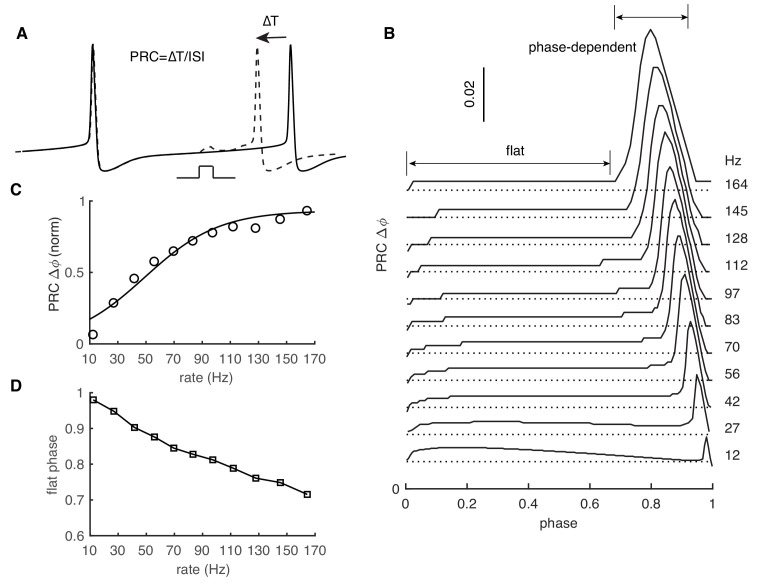
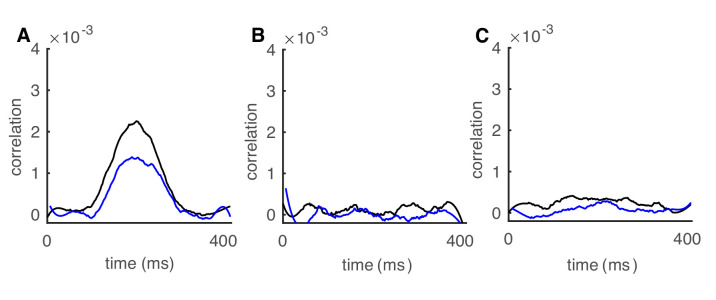
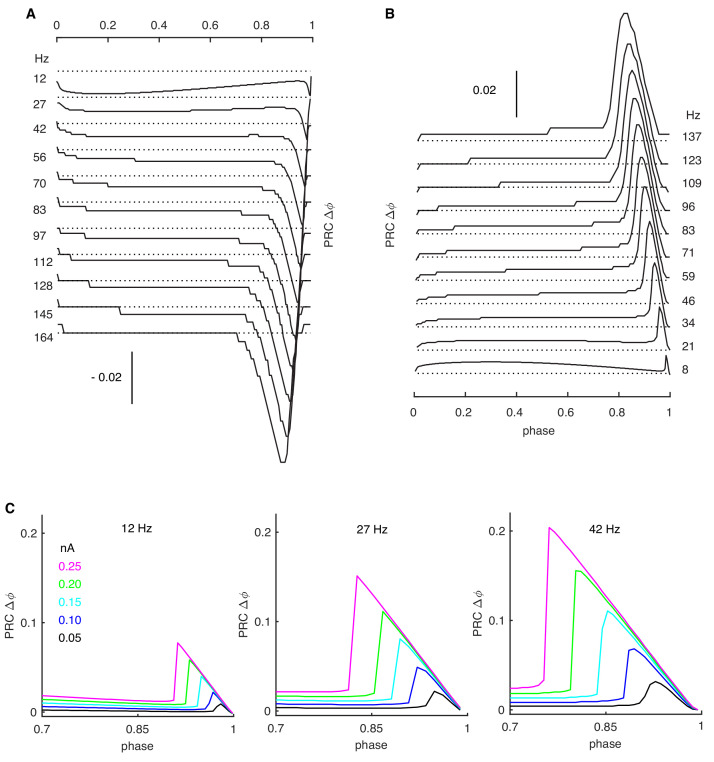
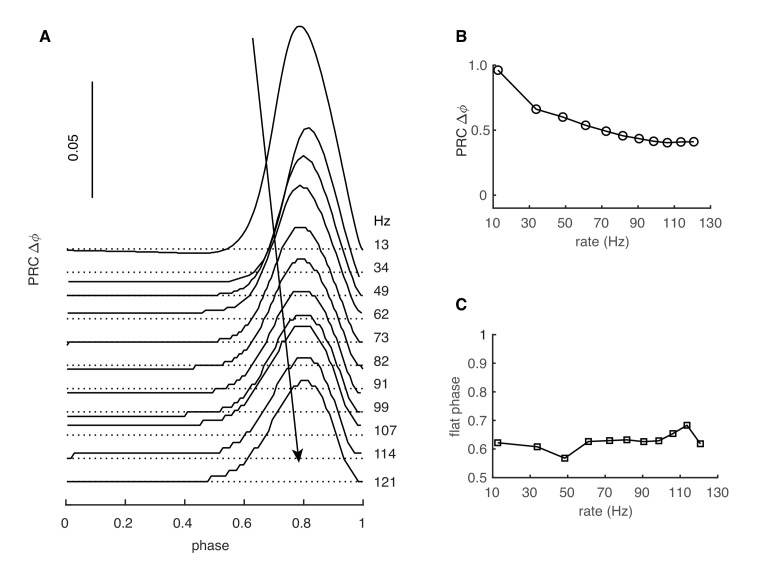
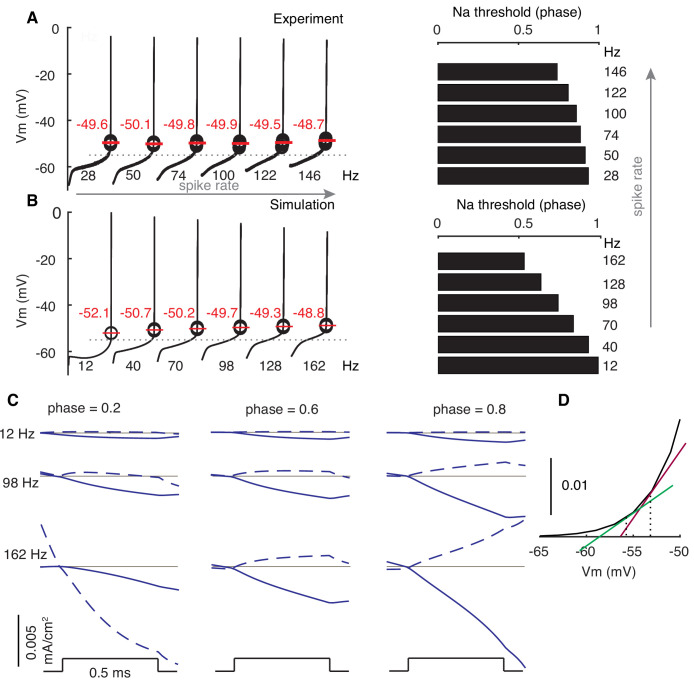
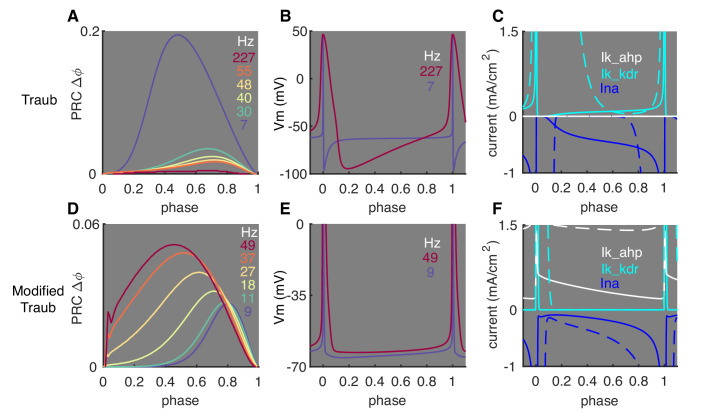
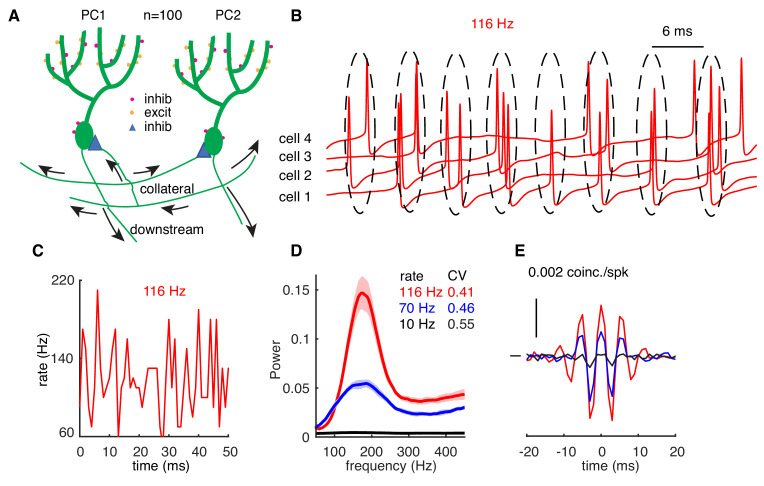
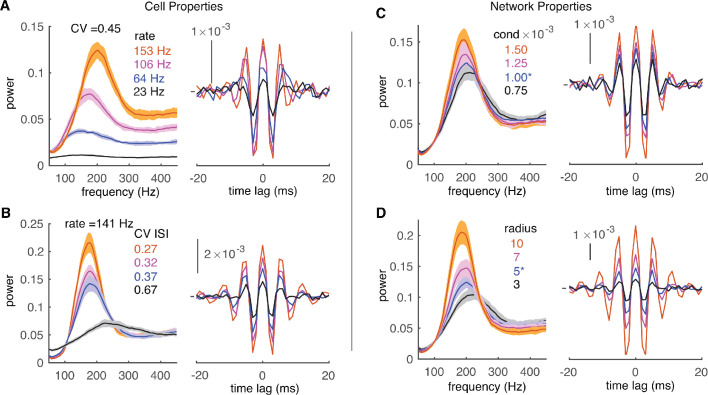
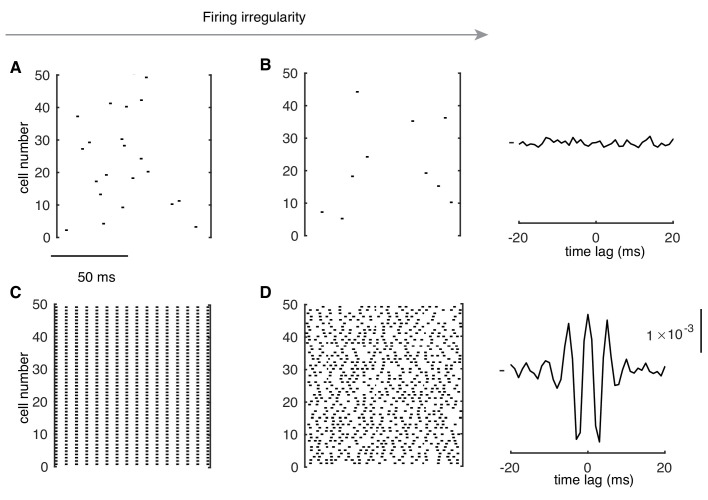
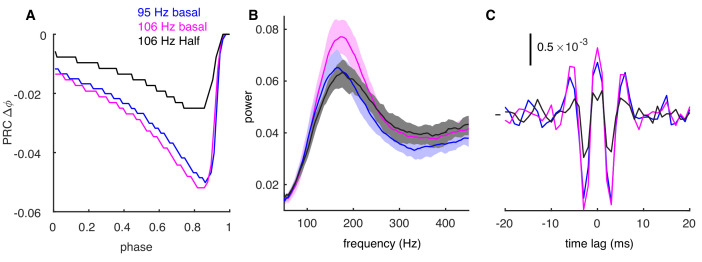
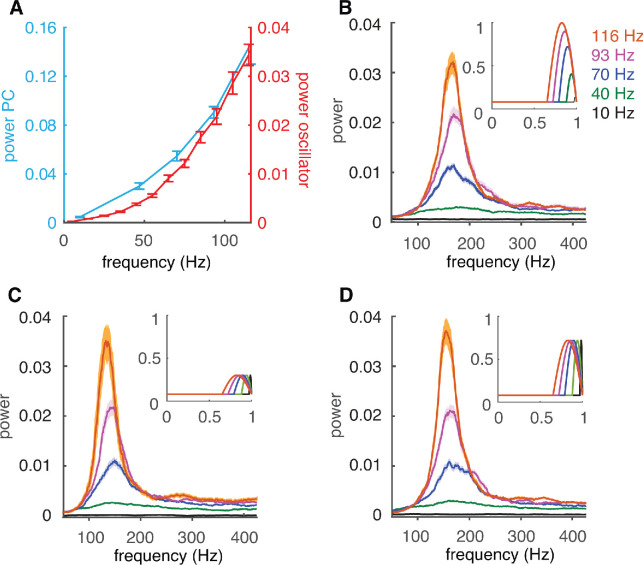
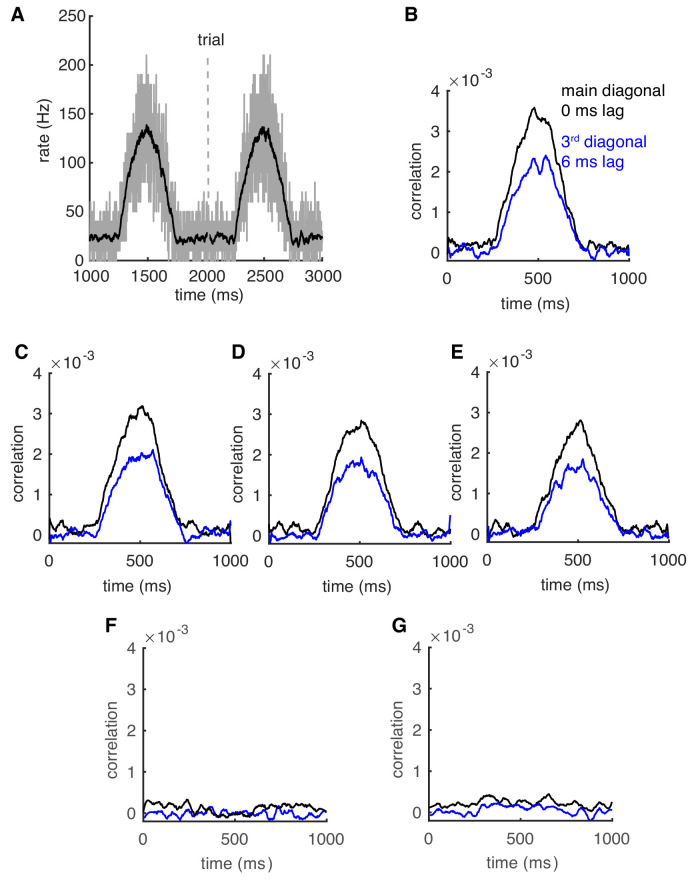
Both spike rate and timing can transmit information in the brain. Phase response curves (PRCs) quantify how a neuron transforms input to output by spike timing. PRCs exhibit strong firing-rate adaptation, but its mechanism and relevance for network output are poorly understood. Using our Purkinje cell (PC) model, we demonstrate that the rate adaptation is caused by rate-dependent subthreshold membrane potentials efficiently regulating the activation of Na channels. Then, we use a realistic PC network model to examine how rate-dependent responses synchronize spikes in the scenario of reciprocal inhibition-caused high-frequency oscillations. The changes in PRC cause oscillations and spike correlations only at high firing rates. The causal role of the PRC is confirmed using a simpler coupled oscillator network model. This mechanism enables transient oscillations between fast-spiking neurons that thereby form PC assemblies. Our work demonstrates that rate adaptation of PRCs can spatio-temporally organize the PC input to cerebellar nuclei.
尖峰率和时间都可以在大脑中传递信息。相位反应曲线(PRC)定量描述了神经元如何通过尖峰时间将输入转换为输出。PRC 表现出强烈的放电率适应,但它的机制及其对网络输出的相关性知之甚少。使用我们的浦肯野细胞(PC)模型,我们证明了这种适应是由依赖于速率的亚阈膜电位引起的,该电位可以有效地调节 Na 通道的激活。然后,我们使用一个现实的 PC 网络模型来研究在由相互抑制引起的高频振荡的情况下,依赖于速率的反应如何同步尖峰。PRC 的变化仅在高放电率下引起振荡和尖峰相关性。使用更简单的耦合振荡器网络模型证实了 PRC 的因果作用。这种机制使快速放电神经元之间产生短暂的振荡,从而形成 PC 集合。我们的工作表明,PRC 的放电率适应可以时空组织小脑核的 PC 输入。