Department of Biology, Massachusetts Institute of Technology, Cambridge, Massachusetts, USA.
Department of Biological Engineering, Massachusetts Institute of Technology, Cambridge, Massachusetts, USA.
mBio. 2020 Sep 8;11(5):e00217-20. doi: 10.1128/mBio.00217-20.
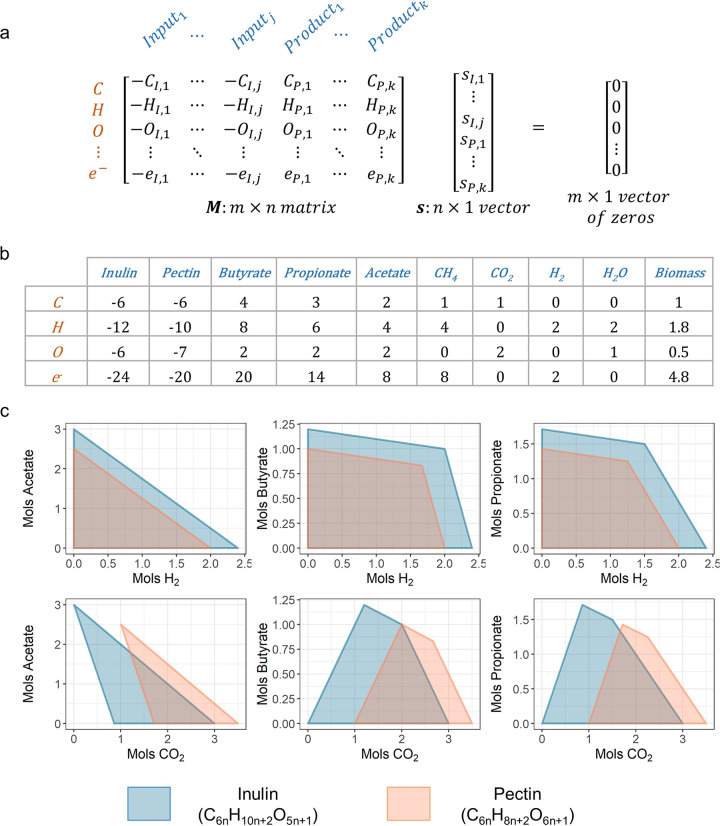
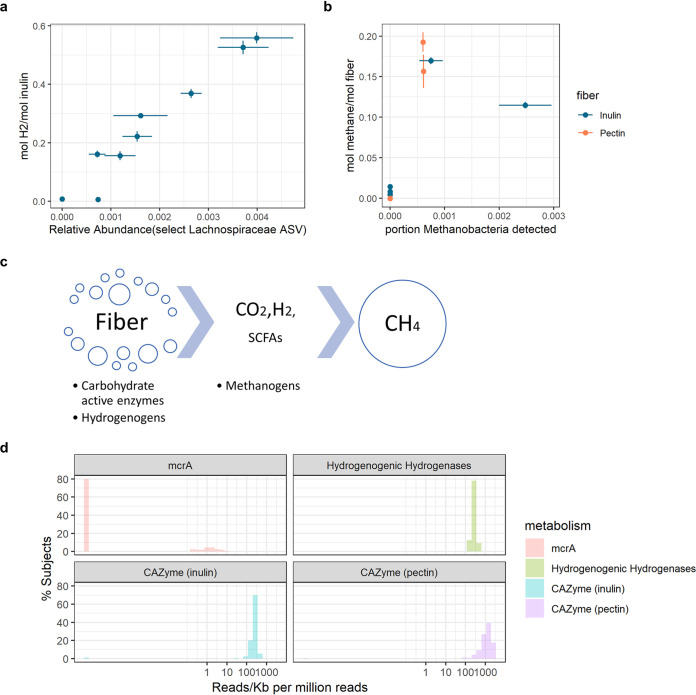
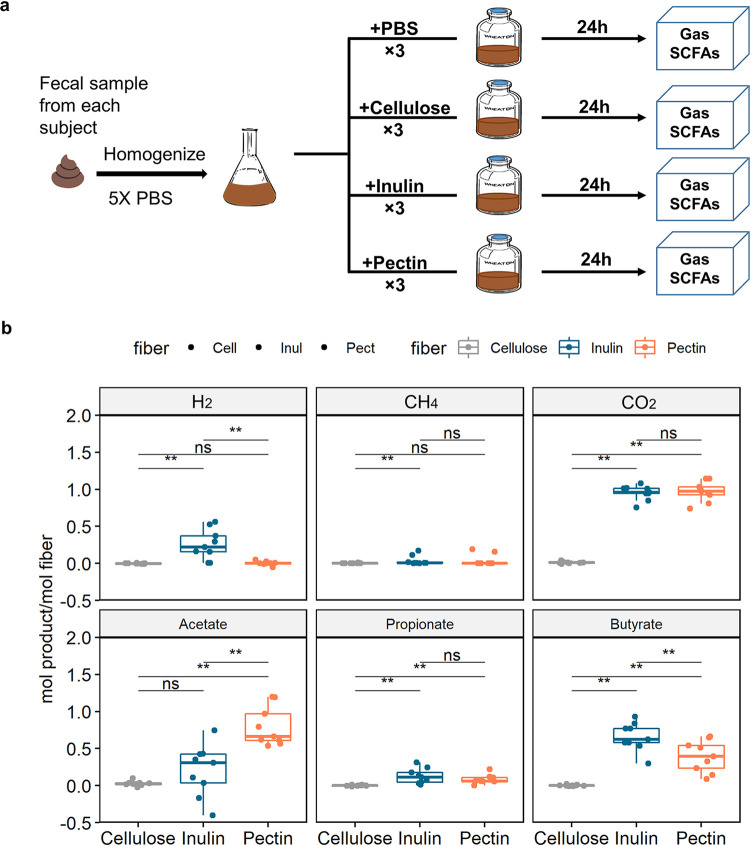
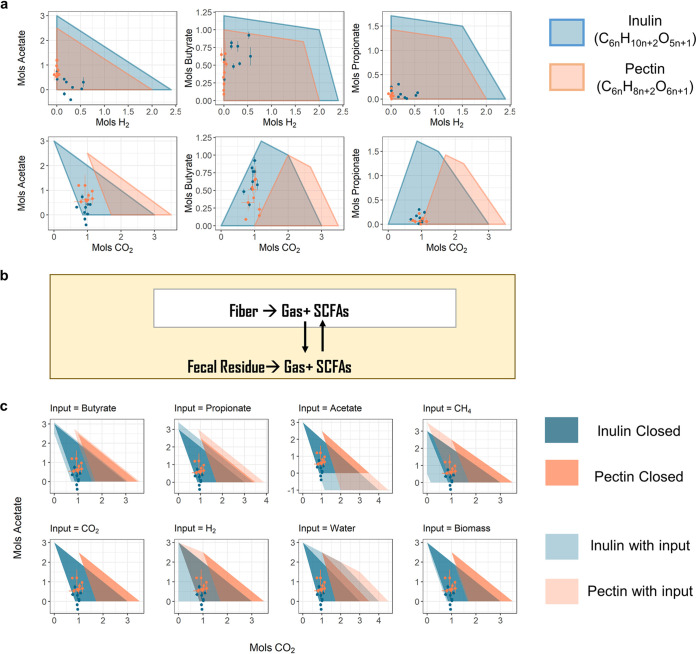
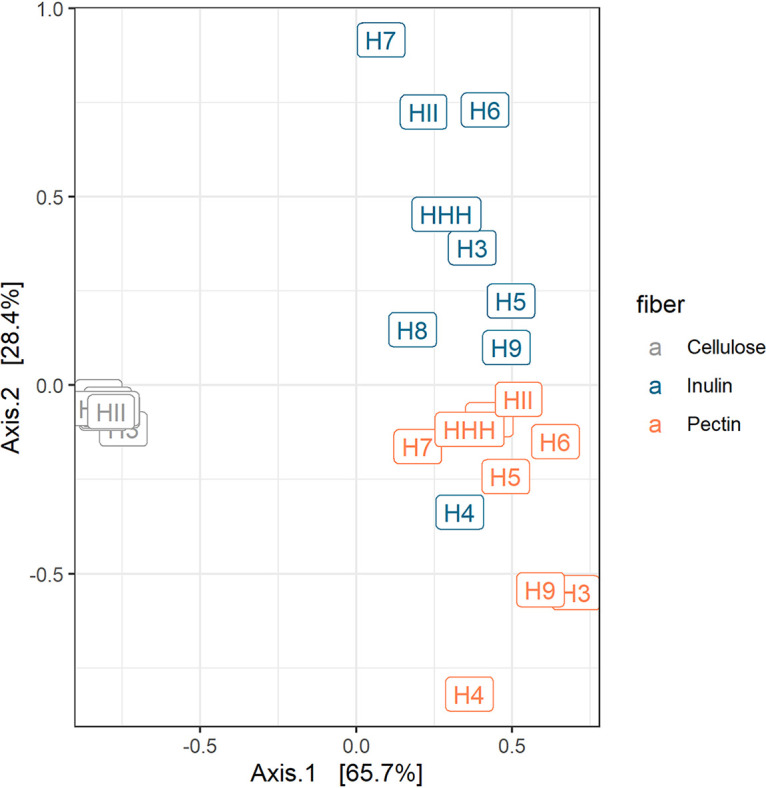
Prebiotics confer benefits to human health, often by promoting the growth of gut bacteria that produce metabolites valuable to the human body, such as short-chain fatty acids (SCFAs). While prebiotic selection has strongly focused on maximizing the production of SCFAs, less attention has been paid to gases, a by-product of SCFA production that also has physiological effects on the human body. Here, we investigate how the content and volume of gas production by human gut microbiota are affected by the chemical composition of the prebiotic and the community composition of the microbiota. We first constructed a linear system model based on mass and electron balance and compared the theoretical product ranges of two prebiotics, inulin and pectin. Modeling shows that pectin is more restricted in product space, with less potential for H but more potential for CO production. An experimental system showed pectin degradation produced significantly less H than inulin, but CO production fell outside the theoretical product range, suggesting fermentation of fecal debris. Microbial community composition also impacted results: methane production was dependent on the presence of , while interindividual differences in H production during inulin degradation were driven by a taxon. Overall, these results suggest that both the chemistry of the prebiotic and the composition of the microbiota are relevant to gas production. Metabolic processes that are relatively prevalent in the microbiome, such as H production, will depend more on substrate, while rare metabolisms such as methanogenesis depend more strongly on microbiome composition. Prebiotic fermentation in the gut often leads to the coproduction of short-chain fatty acids (SCFAs) and gases. While excess gas production can be a potential problem for those with functional gut disorders, gas production is rarely considered during prebiotic design. In this study, we combined the use of theoretical models and an experimental platform to illustrate that both the chemical composition of the prebiotic and the community composition of the human gut microbiota can affect the volume and content of gas production during prebiotic fermentation. Specifically, more prevalent metabolic processes such as hydrogen production were strongly affected by the oxidation state of the probiotic, while rare metabolisms such as methane production were less affected by the chemical nature of the substrate and entirely dependent on the presence of in the microbiota.
益生元对人类健康有益,通常通过促进产生对人体有价值的代谢物的肠道细菌的生长来实现,例如短链脂肪酸 (SCFA)。虽然益生元的选择强烈侧重于最大限度地提高 SCFA 的产量,但对气体的关注较少,气体是 SCFA 生产的副产品,对人体也有生理影响。在这里,我们研究了人类肠道微生物群产生的气体的含量和体积如何受到益生元的化学成分和微生物群落组成的影响。我们首先基于质量和电子平衡构建了一个线性系统模型,并比较了两种益生元——菊粉和果胶的理论产物范围。建模表明,果胶在产物空间中受到更多限制,产生 H 的潜力较小,但产生 CO 的潜力较大。实验系统表明,果胶降解产生的 H 明显少于菊粉,但 CO 产量超出了理论产物范围,表明粪便残渣的发酵。微生物群落组成也影响了结果:甲烷的产生依赖于 的存在,而在菊粉降解过程中 H 产生的个体间差异是由一个 分类群驱动的。总体而言,这些结果表明,益生元的化学性质和微生物群落的组成都与气体产生有关。在微生物组中相对普遍的代谢过程,例如 H 产生,将更多地依赖于底物,而稀有代谢过程,如产甲烷作用,则更强烈地依赖于微生物组组成。肠道中的益生元发酵通常会导致短链脂肪酸 (SCFA) 和气体的共同产生。虽然气体产生过多可能是功能性肠道紊乱患者的一个潜在问题,但在益生元设计过程中很少考虑气体产生。在这项研究中,我们结合使用理论模型和 实验平台来说明,益生元的化学组成和人类肠道微生物群落的群落组成都可以影响益生元发酵过程中气体的产生量和含量。具体来说,更普遍的代谢过程,如氢气的产生,强烈受到益生菌氧化状态的影响,而稀有代谢过程,如甲烷的产生,受底物化学性质的影响较小,完全依赖于微生物群中 的存在。