State Key Laboratory Breeding Base of Basic Science of Stomatology (Hubei-MOST) and Key Laboratory of Oral Biomedicine, Ministry of Education, School and Hospital of Stomatology, Wuhan University, 430079, Wuhan, PR China.
Medical Research Institute, School of Medicine, Wuhan University, 430071, Wuhan, PR China.
Nat Commun. 2020 Sep 8;11(1):4465. doi: 10.1038/s41467-020-18267-1.
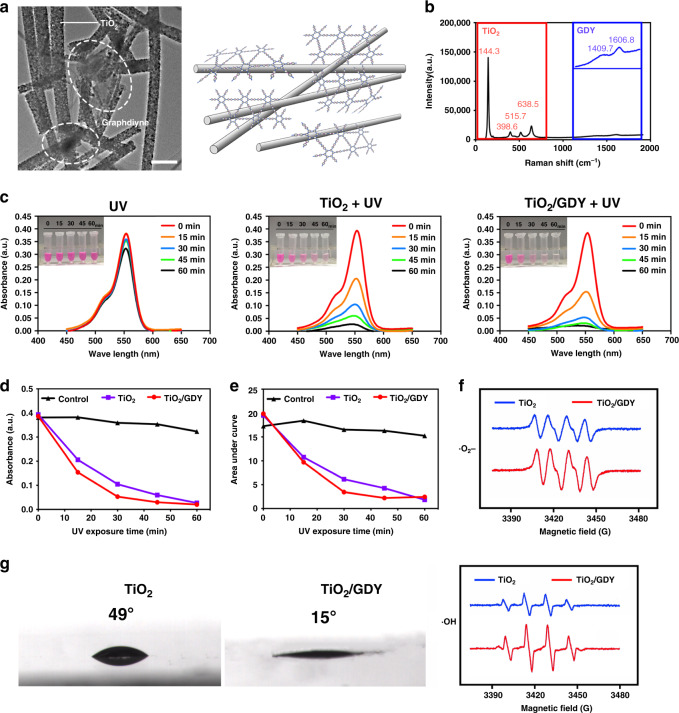
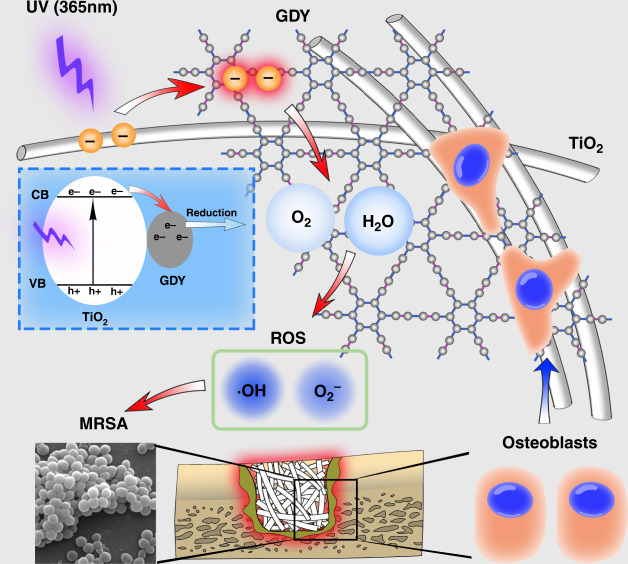
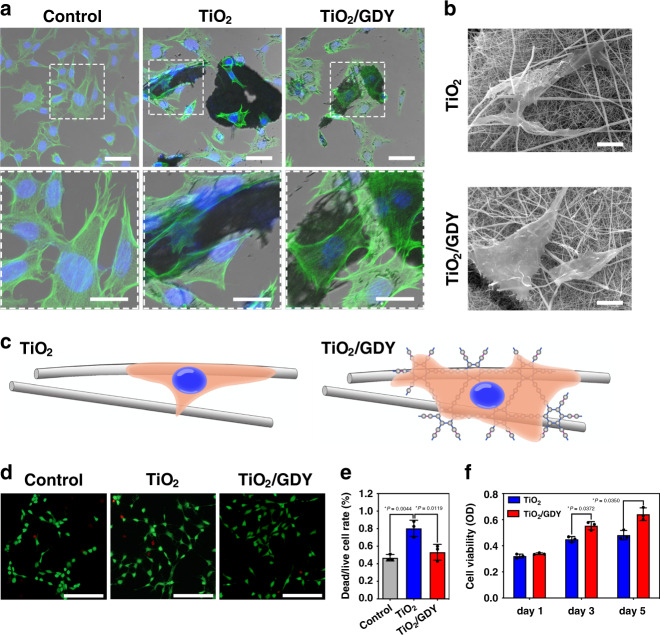
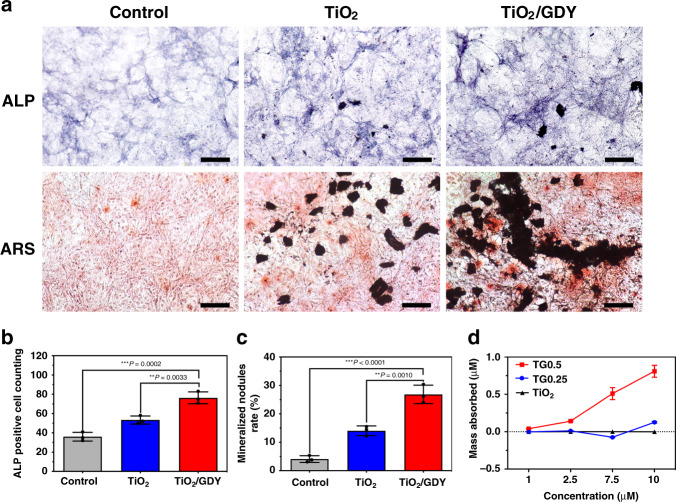
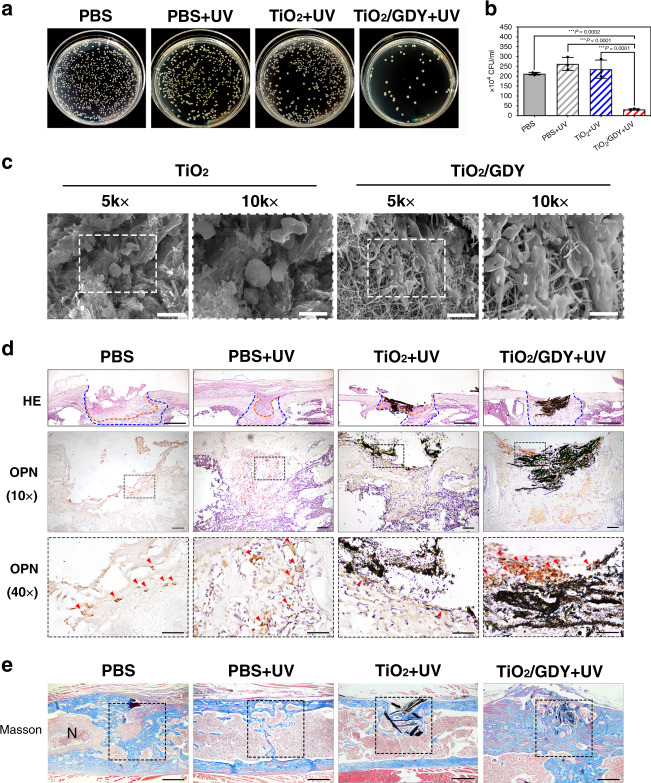
Titanium implants have been widely used in bone tissue engineering for decades. However, orthopedic implant-associated infections increase the risk of implant failure and even lead to amputation in severe cases. Although TiO has photocatalytic activity to produce reactive oxygen species (ROS), the recombination of generated electrons and holes limits its antibacterial ability. Here, we describe a graphdiyne (GDY) composite TiO nanofiber that combats implant infections through enhanced photocatalysis and prolonged antibacterial ability. In addition, GDY-modified TiO nanofibers exert superior biocompatibility and osteoinductive abilities for cell adhesion and differentiation, thus contributing to the bone tissue regeneration process in drug-resistant bacteria-induced implant infection.
几十年来,钛植入物已广泛应用于骨组织工程。然而,骨科植入物相关感染会增加植入物失败的风险,在严重情况下甚至导致截肢。尽管 TiO 具有光催化活性以产生活性氧(ROS),但生成的电子和空穴的复合限制了其抗菌能力。在这里,我们描述了一种通过增强光催化和延长抗菌能力来对抗植入物感染的二维碳纳米材料(GDY)复合 TiO 纳米纤维。此外,GDY 修饰的 TiO 纳米纤维表现出优异的生物相容性和成骨诱导能力,有利于细胞黏附和分化,从而促进了耐抗生素细菌诱导的植入物感染中的骨组织再生过程。