Cao Huiliang, Qin Hui, Zhao Yaochao, Jin Guodong, Lu Tao, Meng Fanhao, Zhang Xianlong, Liu Xuanyong
State Key Laboratory of High Performance Ceramics and Superfine Microstructure, Shanghai Institute of Ceramics, Chinese Academy of Sciences, Shanghai 200050, China.
Department of Orthopedics, Shanghai Sixth People's Hospital, Shanghai Jiao Tong University, Shanghai 200233, China.
Sci Rep. 2016 Feb 22;6:21761. doi: 10.1038/srep21761.
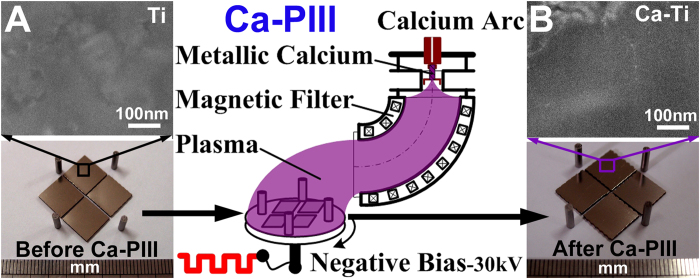
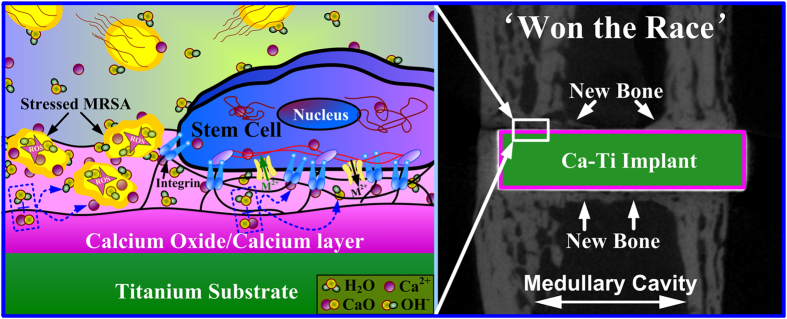
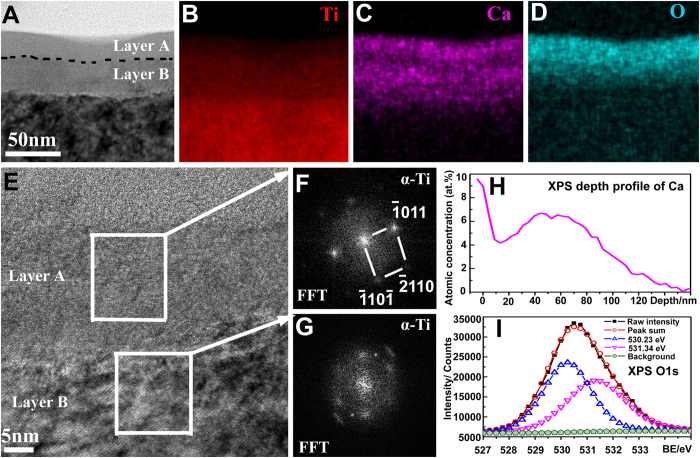
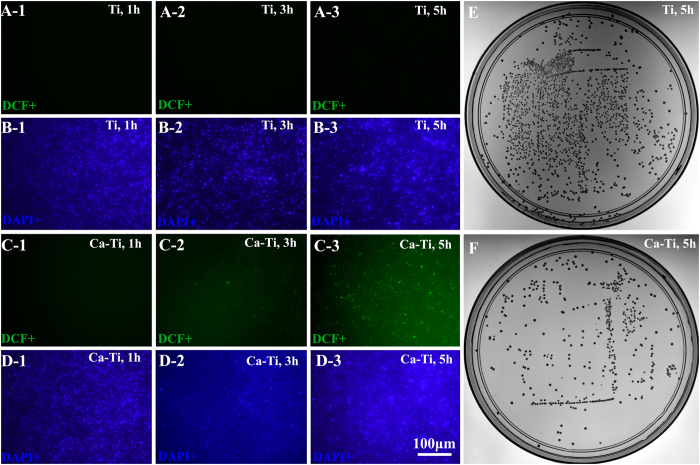
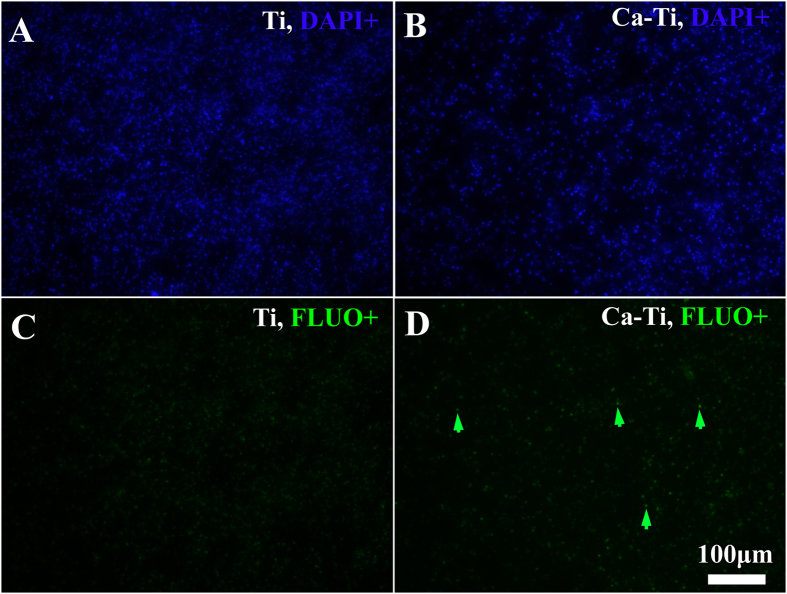
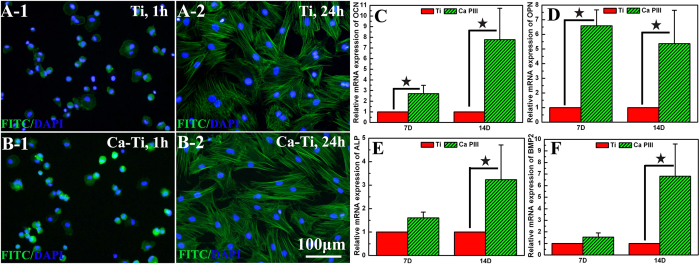
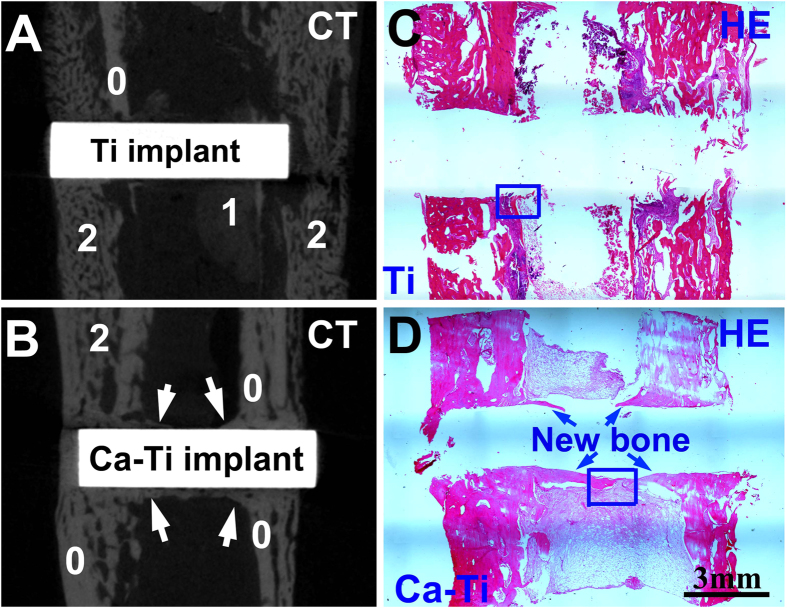
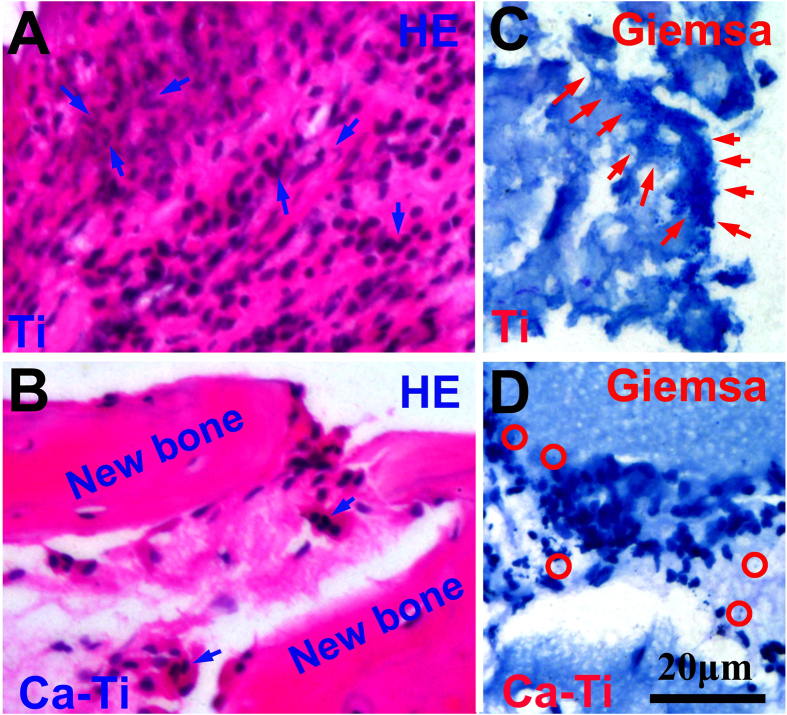
Since the use of systemic antibiotics for preventing acute biomaterial-associated infections (BAIs) may build up bacterial resistance and result in huge medical costs and unpredictable mortality, new precaution strategies are required. Here, it demonstrated that titanium armed with a nano-thick calcium oxide layer was effective on averting methicillin-resistant Staphylococcus aureus (MRSA) infections in rabbits. The calcium oxide layer was constructed by, firstly, injecting of metallic calcium into titanium via a plasma immersion ion implantation process, and then transforming the outer most surface into oxide by exposing to the atmosphere. Although the calcium oxide armed titanium had a relative low reduction rate (~74%) in growth of MRSA in vitro, it could markedly promote the osteogenic differentiation of bone marrow stem cells (BMSCs), restore local bone integration against the challenge of MRSA, and decrease the incidence of MRSA infection with a rate of 100% (compared to the titanium control). This study demonstrated for the first time that calcium, as one of the major elements in a human body, could be engineered to avert MRSA infections, which is promising as a safe precaution of disinfection for implantable biomedical devices.
由于使用全身性抗生素预防急性生物材料相关感染(BAIs)可能会产生细菌耐药性,并导致巨大的医疗成本和不可预测的死亡率,因此需要新的预防策略。在此,研究表明,带有纳米厚氧化钙层的钛对预防家兔耐甲氧西林金黄色葡萄球菌(MRSA)感染有效。氧化钙层的构建方法是,首先通过等离子体浸没离子注入工艺将金属钙注入钛中,然后通过暴露于大气将最外层转化为氧化物。尽管带有氧化钙的钛在体外对MRSA的生长抑制率相对较低(约74%),但它可以显著促进骨髓干细胞(BMSCs)的成骨分化,恢复局部骨整合以应对MRSA的挑战,并将MRSA感染的发生率降低100%(与钛对照组相比)。这项研究首次证明,钙作为人体中的主要元素之一,可以被设计用于预防MRSA感染,这有望成为一种安全的可植入生物医学设备消毒预防措施。