Kwon Chan-Young, Cho Ik-Hyun, Park Kyoung Sun
Department of Oriental Neuropsychiatry, Dong-eui University College of Korean Medicine, Busan, South Korea.
Department of Convergence Medical Science, Brain Korea 21 Plus Program, and Institute of Korean Medicine, College of Korean Medicine, Kyung Hee University, Seoul, South Korea.
Front Pharmacol. 2020 Aug 12;11:1192. doi: 10.3389/fphar.2020.01192. eCollection 2020.
Polycystic ovary syndrome (PCOS) is one of the most common disorders of endocrinology in reproductive-age women. In this study, we reviewed data on the effects and underlying mechanisms of herbal medicines used in the treatment of PCOS in laboratory studies.
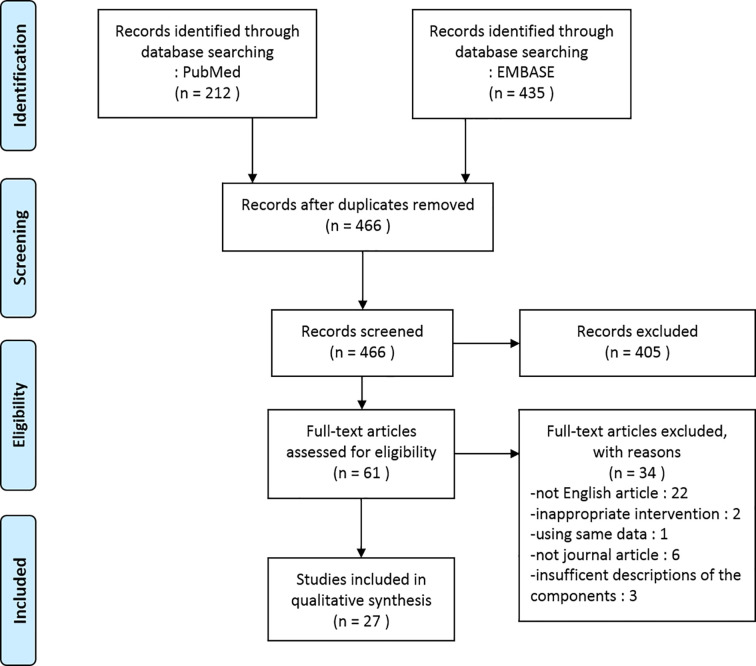
Articles published in English up to June 30, 2018 were searched in Medline and EMBASE. We extracted data regarding herbal intervention; target cell (or animal model) usage; method of herbal extraction; route of administration; dosage and periods; and outcomes of the compounds isolated from herbs, individual herbal extracts, and herbal formula decoctions. We summarized the actions and the mechanisms underlying the beneficial effects of herbal medicines on PCOS.
A total of 27 studies involving 22 herbal medicines reported their efficacy on PCOS. The herbal interventions in the 27 studies comprised four compounds isolated from herbs (6 studies), nine individual herbal extracts (11 studies), and nine herbal formula decoctions (10 studies). Herbal medicines normalized female hormones, diminished male hormones, recovered the estrous cycle, ameliorated insulin resistance, and improved lipid metabolism in PCOS. The mechanisms underlying the beneficial effects of herbal medicines on PCOS were found to be associated with anti-inflammation, anti-oxidative stress, inhibition of autophagy and/or apoptosis, and ovarian nerve growth factor reduction.
Herbal medicines are thought to be promising resources in the development of effective therapeutic agents for PCOS. Further studies that include methodological quality assessment and quantitative synthesis of outcomes are recommended.
多囊卵巢综合征(PCOS)是育龄期女性最常见的内分泌疾病之一。在本研究中,我们回顾了实验室研究中用于治疗PCOS的草药的作用及潜在机制的数据。
检索截至2018年6月30日发表的英文文章,检索数据库为Medline和EMBASE。我们提取了有关草药干预、靶细胞(或动物模型)使用、草药提取方法、给药途径、剂量和疗程以及从草药中分离的化合物、单一草药提取物和草药配方汤剂的结果的数据。我们总结了草药对PCOS有益作用的作用及机制。
共有27项涉及22种草药的研究报告了它们对PCOS的疗效。这27项研究中的草药干预包括从草药中分离的4种化合物(6项研究)、9种单一草药提取物(11项研究)和9种草药配方汤剂(10项研究)。草药使PCOS患者的女性激素正常化,降低男性激素,恢复发情周期,改善胰岛素抵抗,并改善脂质代谢。发现草药对PCOS有益作用背后的机制与抗炎、抗氧化应激、抑制自噬和/或凋亡以及降低卵巢神经生长因子有关。
草药被认为是开发PCOS有效治疗药物的有前途的资源。建议进行进一步的研究,包括方法学质量评估和结果的定量综合分析。