Romanella S M, Sprugnoli G, Ruffini G, Seyedmadani K, Rossi S, Santarnecchi E
Siena Brain Investigation & Neuromodulation Lab (Si-BIN Lab), Department of Medicine, Surgery and Neuroscience, Neurology and Clinical Neurophysiology Section, University of Siena, Italy.
Berenson-Allen Center for Noninvasive Brain Stimulation, Beth Israel Deaconess Medical Center, Harvard Medical School, Boston, MA, USA; Radiology Unit, Department of Medicine and Surgery, University of Parma, Parma, Italy.
Neurosci Biobehav Rev. 2020 Dec;119:294-319. doi: 10.1016/j.neubiorev.2020.09.005. Epub 2020 Sep 13.
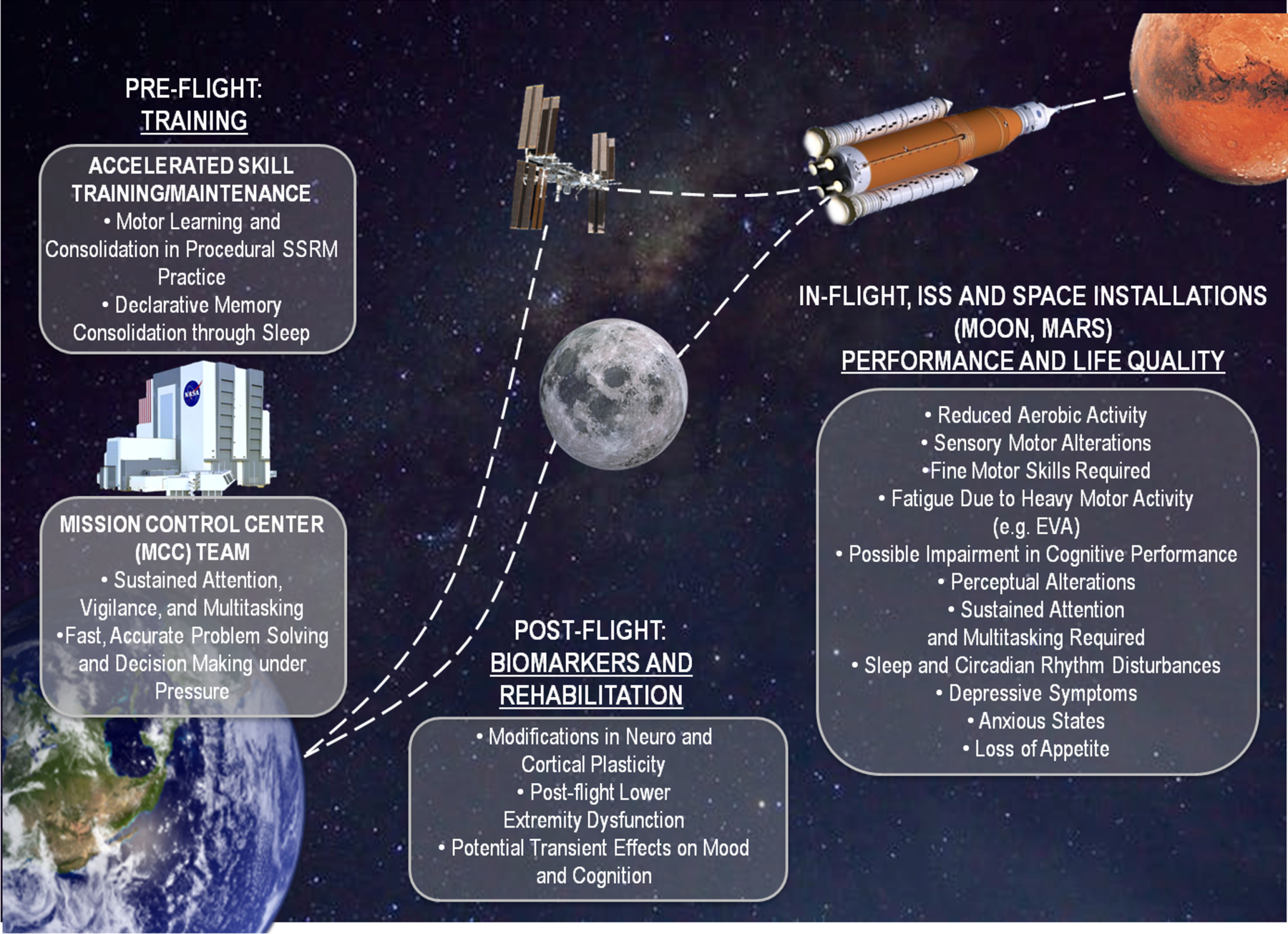
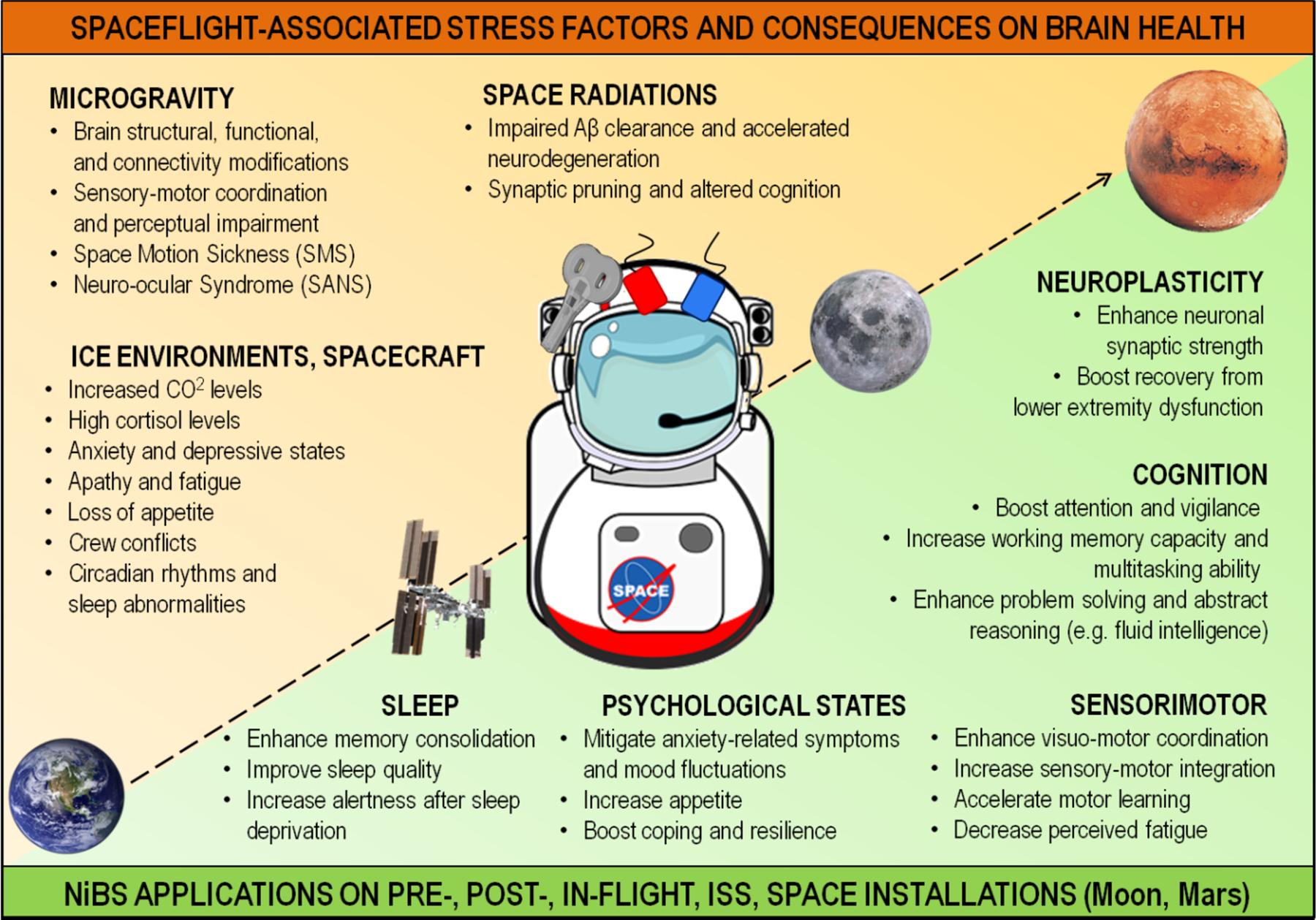
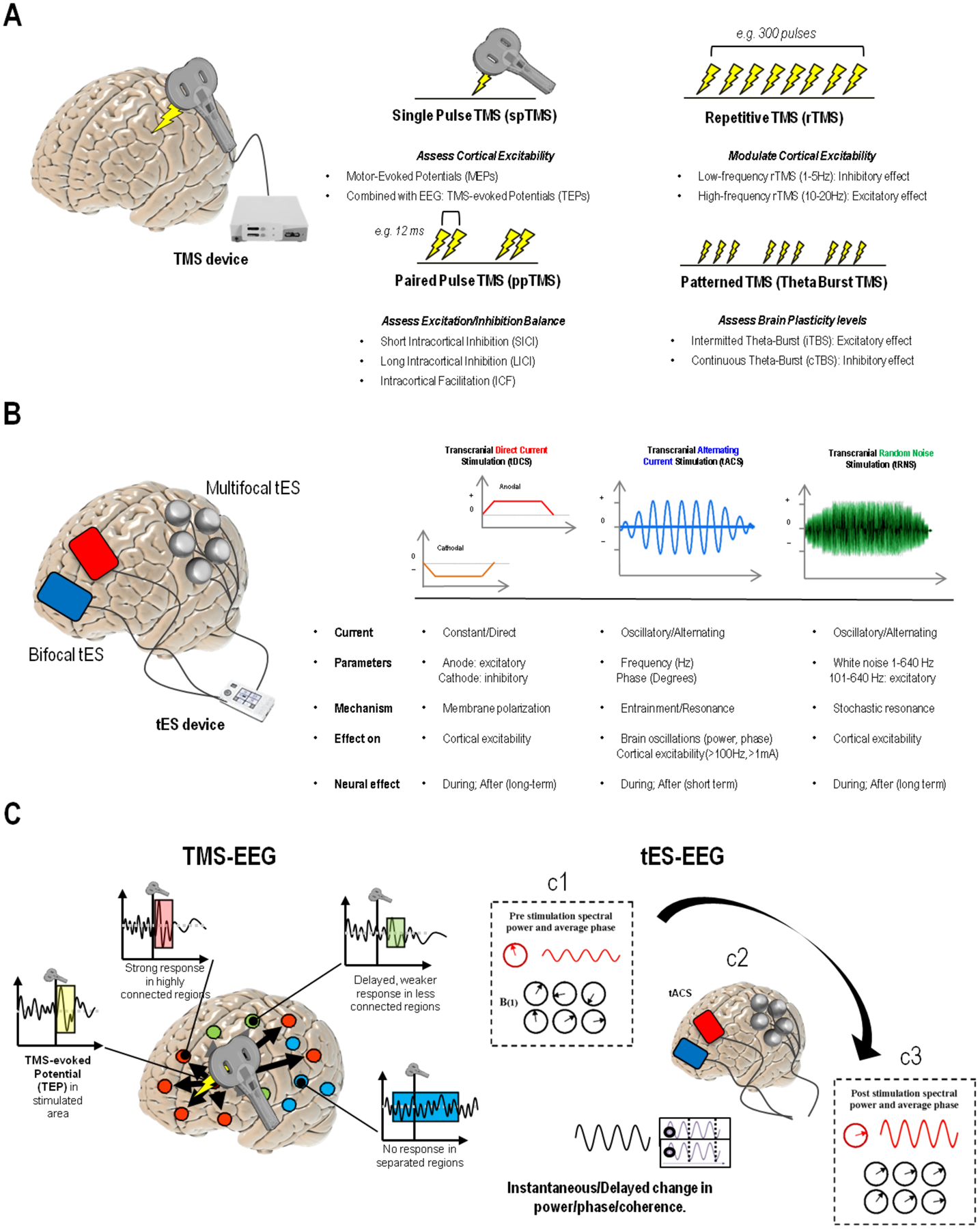
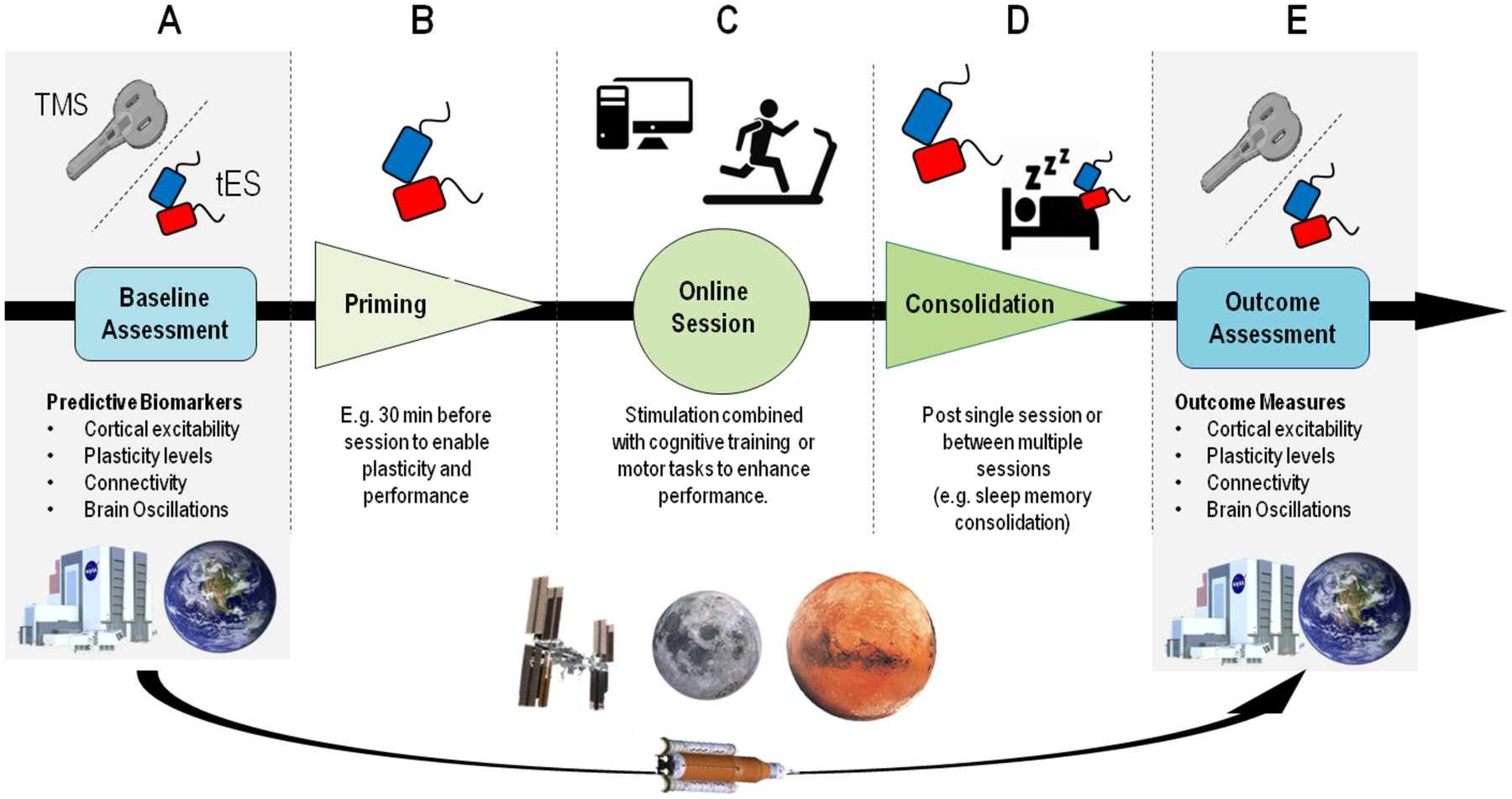
As NASA prepares for longer space missions aiming for the Moon and Mars, astronauts' health and performance are becoming a central concern due to the threats associated with galactic cosmic radiation, unnatural gravity fields, and life in extreme environments. In space, the human brain undergoes functional and structural changes related to fluid shift and changes in intracranial pressure. Behavioral abnormalities, such as cognitive deficits, sleep disruption, and visuomotor difficulties, as well as psychological effects, are also an issue. We discuss opportunities and challenges of noninvasive brain stimulation (NiBS) methods - including transcranial magnetic stimulation (TMS) and transcranial electrical stimulation (tES) - to support space exploration in several ways. NiBS includes safe and portable techniques already applied in a wide range of cognitive and motor domains, as well as therapeutically. NiBS could be used to enhance in-flight performance, supporting astronauts during pre-flight Earth-based training, as well as to identify biomarkers of post-flight brain changes for optimization of rehabilitation/compensatory strategies. We review these NiBS techniques and their effects on brain physiology, psychology, and cognition.
随着美国国家航空航天局(NASA)为旨在前往月球和火星的更长时间太空任务做准备,由于与银河宇宙辐射、非自然重力场以及极端环境中的生活相关的威胁,宇航员的健康和表现正成为核心关注点。在太空中,人类大脑会经历与体液转移和颅内压变化相关的功能和结构变化。行为异常,如认知缺陷、睡眠中断和视觉运动困难,以及心理影响,也是一个问题。我们讨论非侵入性脑刺激(NiBS)方法——包括经颅磁刺激(TMS)和经颅电刺激(tES)——在多个方面支持太空探索的机遇和挑战。NiBS包括已广泛应用于各种认知和运动领域以及治疗领域的安全且便携的技术。NiBS可用于提高飞行中的表现,在飞行前的地面训练中支持宇航员,还可用于识别飞行后脑变化的生物标志物,以优化康复/补偿策略。我们回顾这些NiBS技术及其对脑生理学、心理学和认知的影响。