IEEE J Biomed Health Inform. 2021 May;25(5):1824-1831. doi: 10.1109/JBHI.2020.3025049. Epub 2021 May 11.
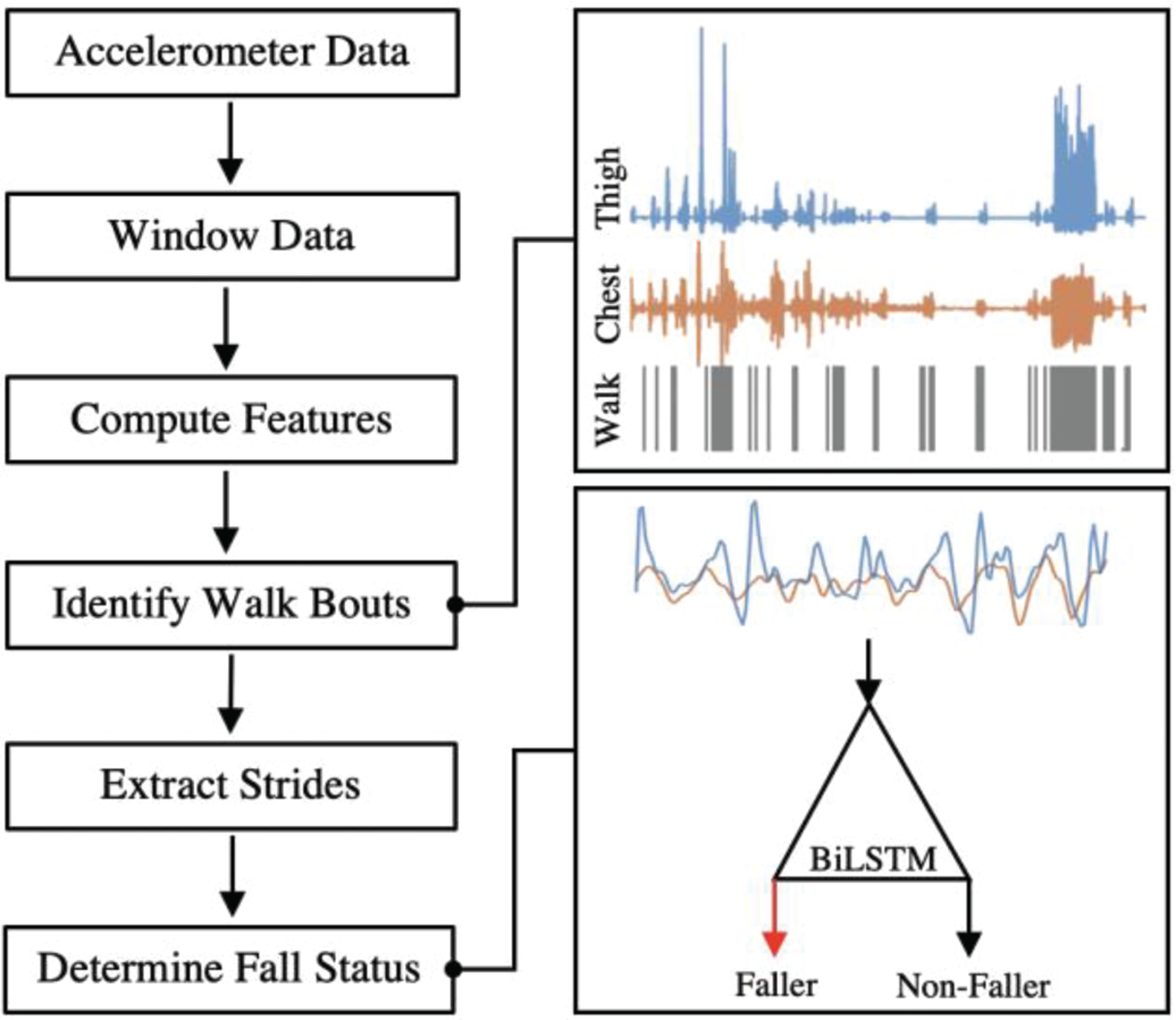
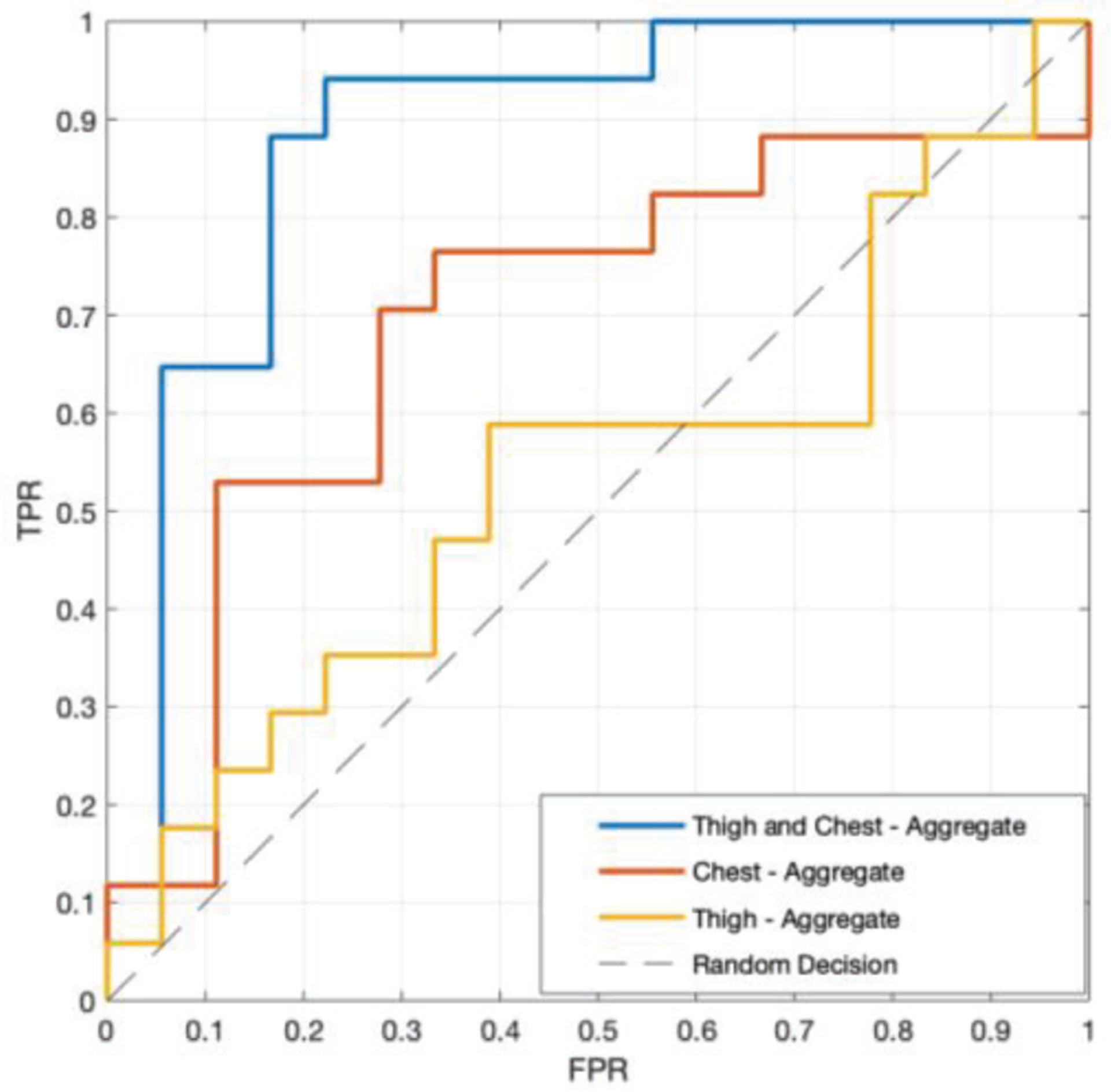
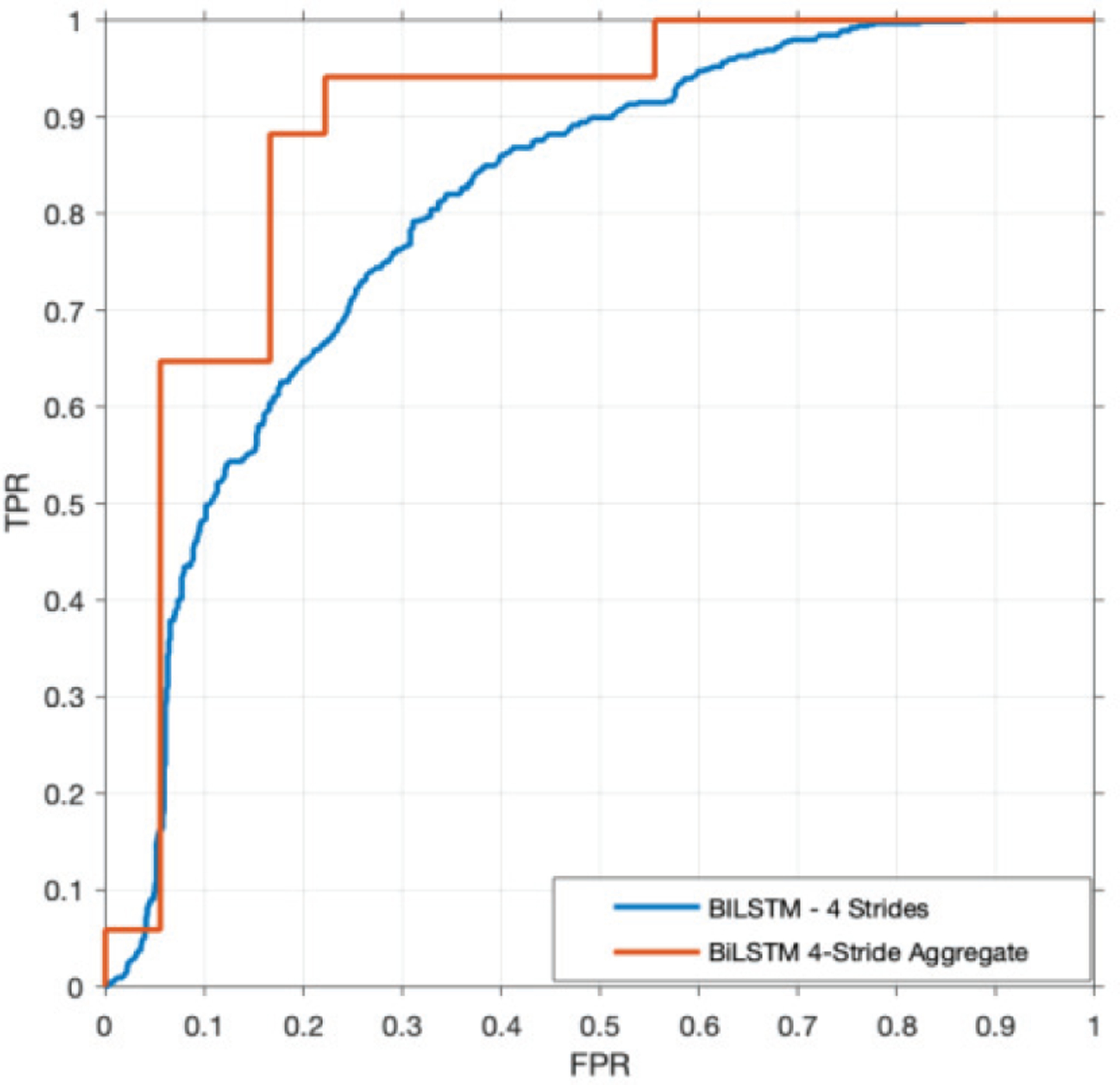
Falls are a significant problem for persons with multiple sclerosis (PwMS). Yet fall prevention interventions are not often prescribed until after a fall has been reported to a healthcare provider. While still nascent, objective fall risk assessments could help in prescribing preventative interventions. To this end, retrospective fall status classification commonly serves as an intermediate step in developing prospective fall risk assessments. Previous research has identified measures of gait biomechanics that differ between PwMS who have fallen and those who have not, but these biomechanical indices have not yet been leveraged to detect PwMS who have fallen. Moreover, they require the use of laboratory-based measurement technologies, which prevent clinical deployment. Here we demonstrate that a bidirectional long short-term (BiLSTM) memory deep neural network was able to identify PwMS who have recently fallen with good performance (AUC of 0.88) based on accelerometer data recorded from two wearable sensors during a one-minute walking task. These results provide substantial improvements over machine learning models trained on spatiotemporal gait parameters (21% improvement in AUC), statistical features from the wearable sensor data (16%), and patient-reported (19%) and neurologist-administered (24%) measures in this sample. The success and simplicity (two wearable sensors, only one-minute of walking) of this approach indicates the promise of inexpensive wearable sensors for capturing fall risk in PwMS.
跌倒对于多发性硬化症患者(PwMS)来说是一个严重的问题。然而,在向医疗保健提供者报告跌倒事件后,通常才会开出预防跌倒的干预措施。尽管仍处于起步阶段,但客观的跌倒风险评估可能有助于预防干预措施的制定。为此,回顾性跌倒状态分类通常是开发前瞻性跌倒风险评估的中间步骤。先前的研究已经确定了步态生物力学指标,这些指标在跌倒和未跌倒的 PwMS 之间存在差异,但这些生物力学指标尚未被利用来检测跌倒的 PwMS。此外,它们需要使用基于实验室的测量技术,这阻碍了临床应用。在这里,我们证明了双向长短时记忆(BiLSTM)记忆深度神经网络可以根据佩戴在两个可穿戴传感器上的加速度计数据,在一分钟步行任务中,以良好的性能(AUC 为 0.88)识别最近跌倒的 PwMS。与基于时空步态参数(AUC 提高 21%)、可穿戴传感器数据的统计特征(提高 16%)、患者报告(提高 19%)和神经病学家管理(提高 24%)的机器学习模型相比,这些结果提供了实质性的改进。该方法的成功和简单性(两个可穿戴传感器,仅一分钟步行)表明,廉价的可穿戴传感器在捕捉 PwMS 的跌倒风险方面具有很大的潜力。