Institute of Medical Informatics, University of Lübeck, Ratzeburger Allee 160, 23562 Lübeck, Germany.
Punjab University College of Information Technology, University of the Punjab, Lahore 54000, Pakistan.
Sensors (Basel). 2020 Sep 17;20(18):5321. doi: 10.3390/s20185321.
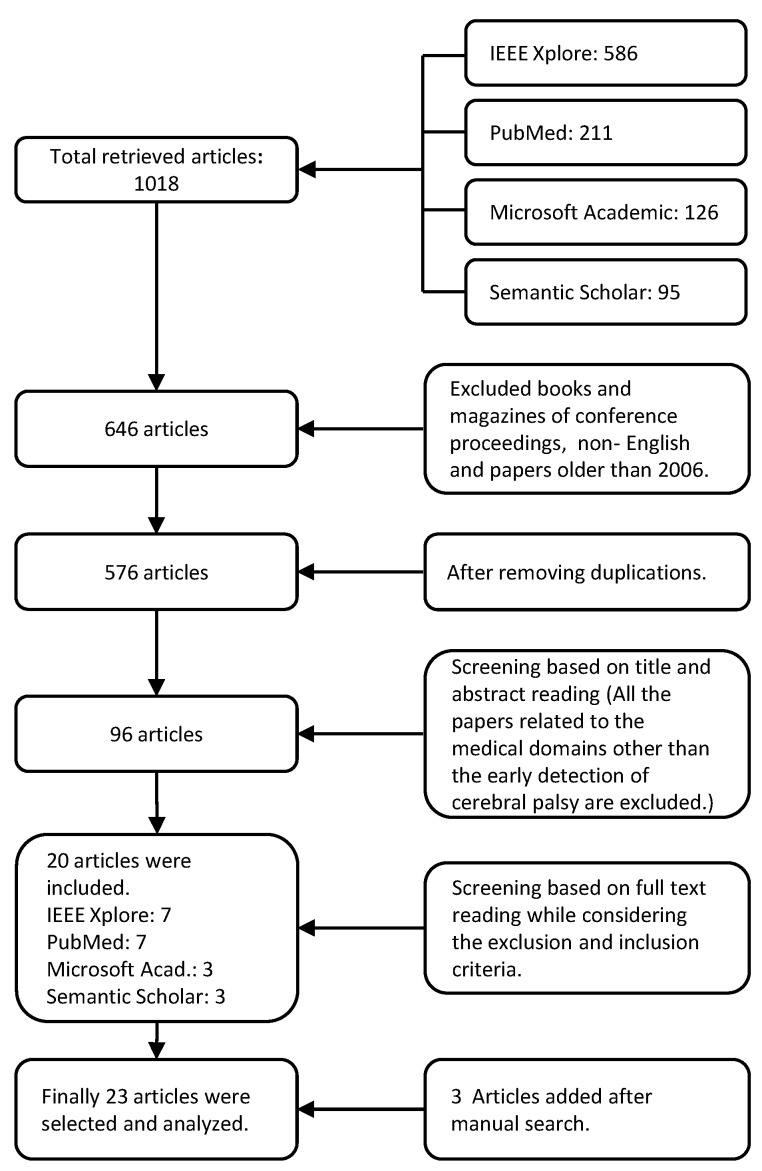
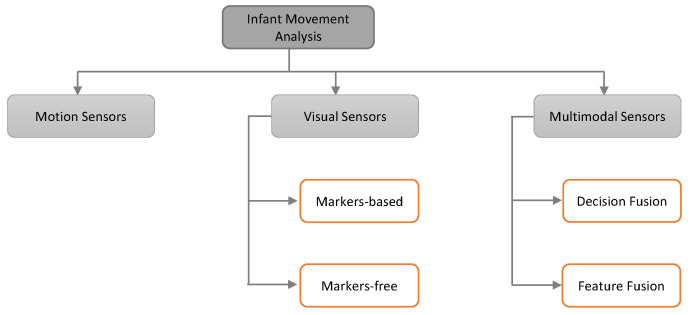
General movements (GMs) are spontaneous movements of infants up to five months post-term involving the whole body varying in sequence, speed, and amplitude. The assessment of GMs has shown its importance for identifying infants at risk for neuromotor deficits, especially for the detection of cerebral palsy. As the assessment is based on videos of the infant that are rated by trained professionals, the method is time-consuming and expensive. Therefore, approaches based on Artificial Intelligence have gained significantly increased attention in the last years. In this article, we systematically analyze and discuss the main design features of all existing technological approaches seeking to transfer the Prechtl's assessment of general movements from an individual visual perception to computer-based analysis. After identifying their shared shortcomings, we explain the methodological reasons for their limited practical performance and classification rates. As a conclusion of our literature study, we conceptually propose a methodological solution to the defined problem based on the groundbreaking innovation in the area of Deep Learning.
全身运动是指足月后 5 个月内婴儿的自发性运动,涉及全身,在顺序、速度和幅度上有所变化。GMs 的评估对于识别有神经运动缺陷风险的婴儿,特别是对于脑瘫的检测具有重要意义。由于评估是基于经过训练的专业人员对婴儿视频的评分,因此该方法既耗时又昂贵。因此,基于人工智能的方法在过去几年中受到了极大的关注。在本文中,我们系统地分析和讨论了所有现有技术方法的主要设计特点,这些方法旨在将 Prechtl 的全身运动评估从个体视觉感知转移到基于计算机的分析。在确定了它们的共同缺点后,我们解释了它们在实际性能和分类率方面受到限制的方法学原因。作为文献研究的结论,我们基于深度学习领域的开创性创新,从概念上提出了一种针对所定义问题的方法学解决方案。