Institute of Hygiene, University Hospital Münster, Robert-Koch-Straße 41, 48149, Münster, Germany.
Antimicrob Resist Infect Control. 2020 Sep 22;9(1):154. doi: 10.1186/s13756-020-00820-8.
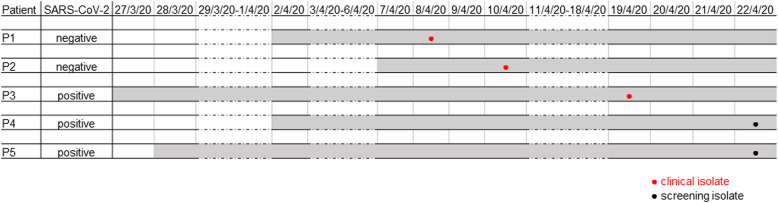
Currently, hospitals have been forced to divert substantial resources to cope with the ongoing coronavirus disease 2019 (COVID-19) pandemic. It is unclear if this situation will affect long-standing infection prevention practices and impact on healthcare associated infections. Here, we report a nosocomial cluster of vancomycin-resistant enterococci (VRE) that occurred on a COVID-19 dedicated intensive care unit (ICU) despite intensified contact precautions during the current pandemic. Whole genome sequence-based typing (WGS) was used to investigate genetic relatedness of VRE isolates collected from COVID-19 and non-COVID-19 patients during the outbreak and to compare them to environmental VRE samples.
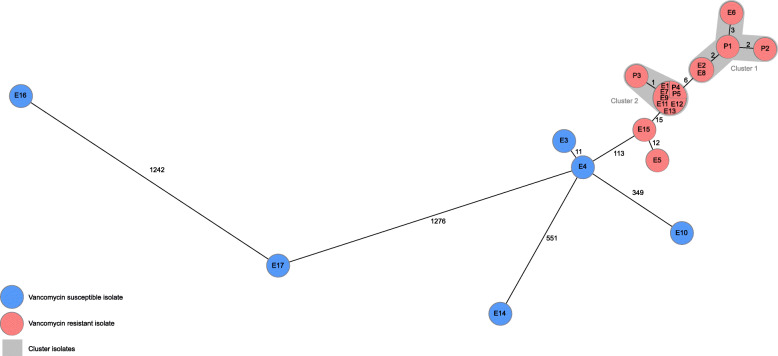
Five VRE isolated from patients (three clinical and two screening samples) as well as 11 VRE and six vancomycin susceptible Enterococcus faecium (E. faecium) samples from environmental sites underwent WGS during the outbreak investigation. Isolate relatedness was determined using core genome multilocus sequence typing (cgMLST).
WGS revealed two genotypic distinct VRE clusters with genetically closely related patient and environmental isolates. The cluster was terminated by enhanced infection control bundle strategies.
Our results illustrate the importance of continued adherence to infection prevention and control measures during the COVID-19 pandemic to prevent VRE transmission and healthcare associated infections.
目前,医院已被迫调拨大量资源以应对持续的 2019 年冠状病毒病(COVID-19)大流行。目前尚不清楚这种情况是否会影响长期存在的感染预防实践并影响与医疗保健相关的感染。在这里,我们报告了在 COVID-19 专用重症监护病房(ICU)中发生的万古霉素耐药肠球菌(VRE)医院内聚集性感染,尽管在当前大流行期间加强了接触预防措施。全基因组序列分型(WGS)用于研究从 COVID-19 和非 COVID-19 患者中收集的 VRE 分离株的遗传相关性,并将其与环境 VRE 样本进行比较。
在暴发调查期间,对来自患者(三例临床和两例筛查样本)的五株 VRE 以及来自环境部位的 11 株 VRE 和 6 株万古霉素敏感屎肠球菌(E. faecium)进行 WGS。使用核心基因组多位点序列分型(cgMLST)确定分离株的相关性。
WGS 显示了两个基因型不同的 VRE 簇,具有遗传上密切相关的患者和环境分离株。该集群通过强化感染控制捆绑策略得以终止。
我们的结果表明,在 COVID-19 大流行期间,继续坚持感染预防和控制措施对于防止 VRE 传播和与医疗保健相关的感染非常重要。