Wellcome Trust Centre for Neuroimaging, UCL. Queen Square 12, London, WC1N 3BG, UK.
Max Planck UCL Center for Computational Psychiatry and Aging Research, Russell Square 10-12, London, WC1B 5EH, UK.
Nat Commun. 2020 Sep 22;11(1):4783. doi: 10.1038/s41467-020-18254-6.
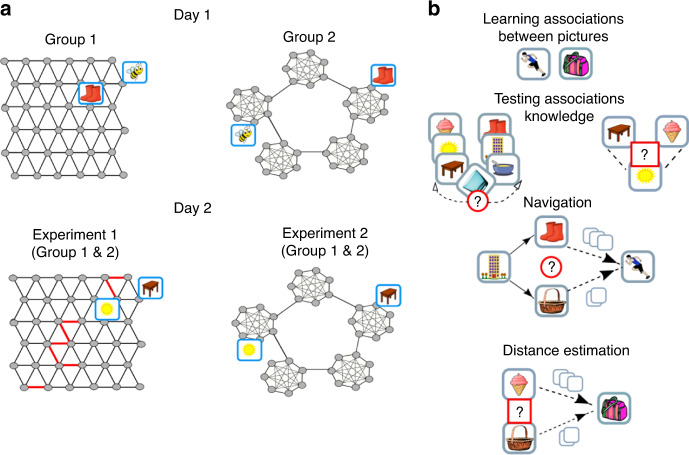
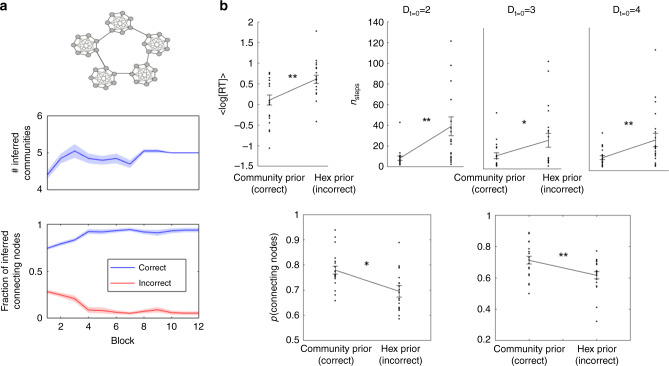
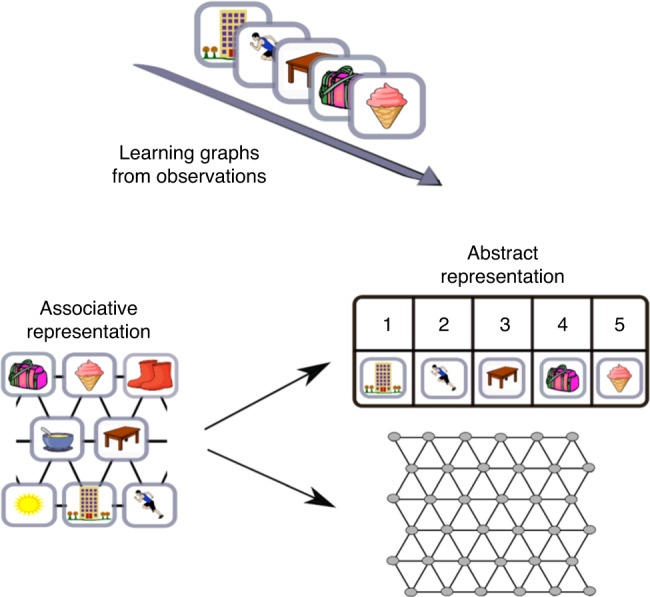
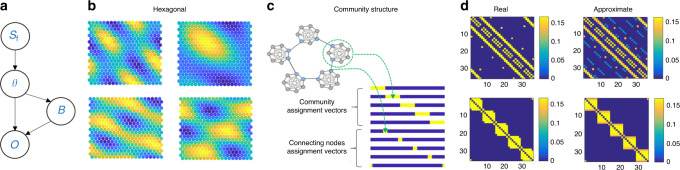
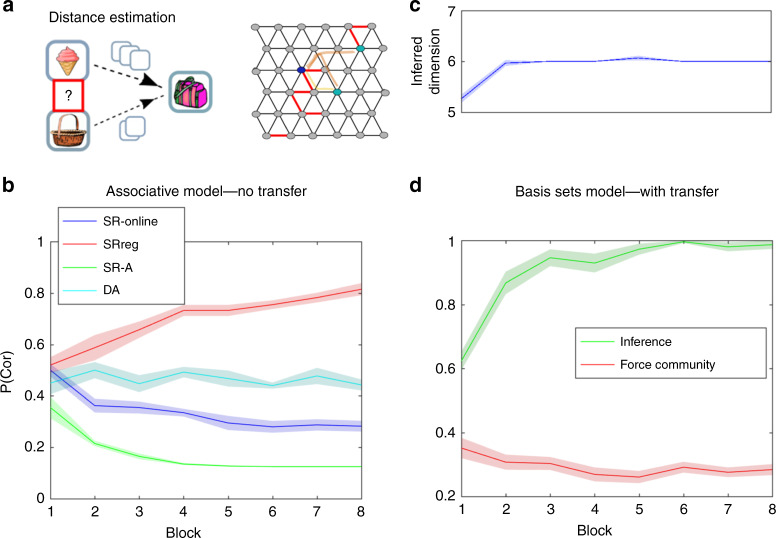
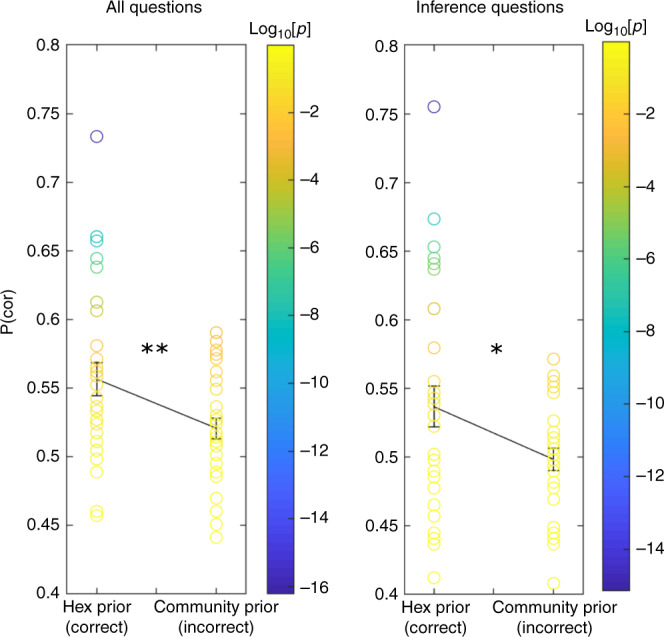
Relations between task elements often follow hidden underlying structural forms such as periodicities or hierarchies, whose inferences fosters performance. However, transferring structural knowledge to novel environments requires flexible representations that are generalizable over particularities of the current environment, such as its stimuli and size. We suggest that humans represent structural forms as abstract basis sets and that in novel tasks, the structural form is inferred and the relevant basis set is transferred. Using a computational model, we show that such representation allows inference of the underlying structural form, important task states, effective behavioural policies and the existence of unobserved state-trajectories. In two experiments, participants learned three abstract graphs during two successive days. We tested how structural knowledge acquired on Day-1 affected Day-2 performance. In line with our model, participants who had a correct structural prior were able to infer the existence of unobserved state-trajectories and appropriate behavioural policies.
任务元素之间的关系通常遵循隐藏的基础结构形式,如周期性或层次结构,这些推断有助于提高性能。然而,将结构知识转移到新的环境中需要灵活的表示,这些表示在当前环境的特殊性(如刺激和大小)上具有通用性。我们认为,人类将结构形式表示为抽象的基础集,并且在新的任务中,结构形式是推断出来的,相关的基础集是转移的。使用计算模型,我们表明这种表示允许推断基础结构形式、重要的任务状态、有效的行为策略和未观察到的状态轨迹的存在。在两个实验中,参与者在两天内学习了三个抽象图。我们测试了在第一天获得的结构知识如何影响第二天的表现。与我们的模型一致,具有正确结构先验的参与者能够推断出未观察到的状态轨迹和适当的行为策略的存在。