Institut de Physique des 2 Infinis (IP2I), CNRS/IN2P3, UMR5822, 69622, Villeurbanne, France.
Université de Lyon, Université Claude Bernard Lyon 1, 69001, Lyon, France.
Sci Rep. 2020 Sep 23;10(1):15514. doi: 10.1038/s41598-020-72611-5.
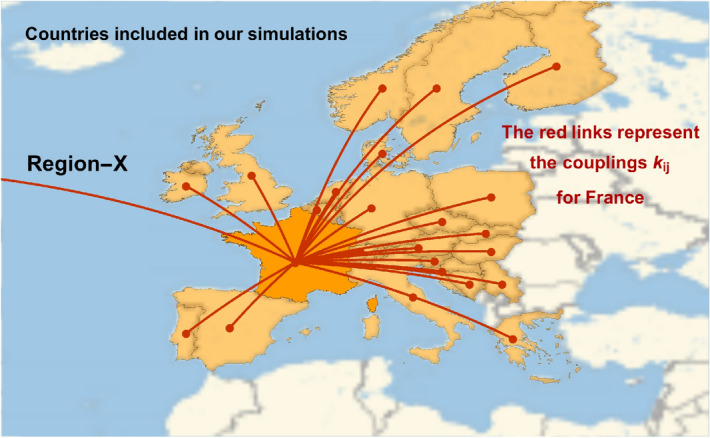
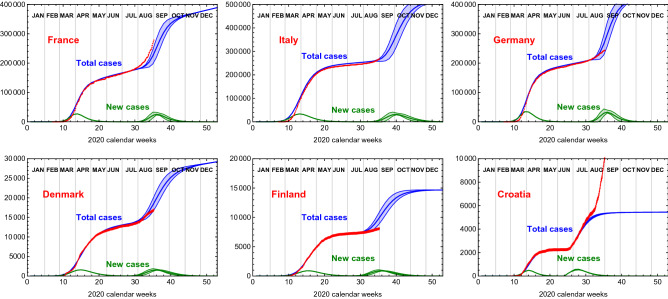
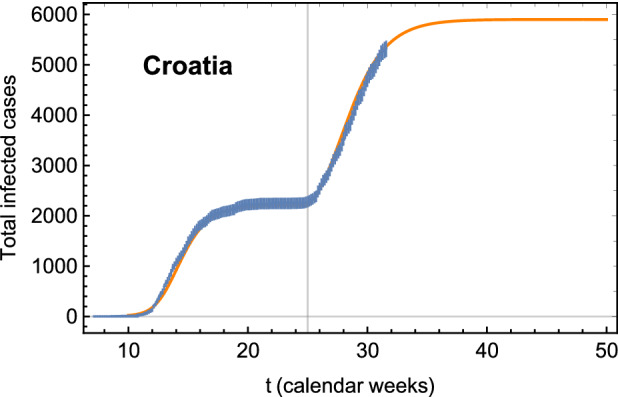
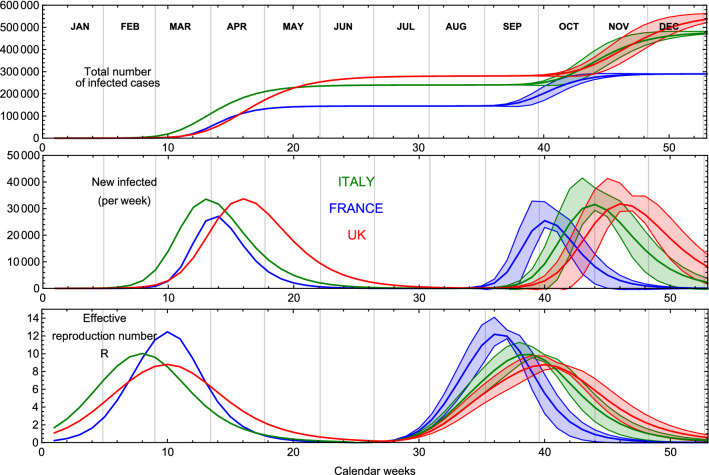
A second wave pandemic constitutes an imminent threat to society, with a potentially immense toll in terms of human lives and a devastating economic impact. We employ the epidemic Renormalisation Group (eRG) approach to pandemics, together with the first wave data for COVID-19, to efficiently simulate the dynamics of disease transmission and spreading across different European countries. The framework allows us to model, not only inter and extra European border control effects, but also the impact of social distancing for each country. We perform statistical analyses averaging on different level of human interaction across Europe and with the rest of the World. Our results are neatly summarised as an animation reporting the time evolution of the first and second waves of the European COVID-19 pandemic. Our temporal playbook of the second wave pandemic can be used by governments, financial markets, the industries and individual citizens, to efficiently time, prepare and implement local and global measures.
第二波大流行对社会构成迫在眉睫的威胁,可能会给人类生命造成巨大损失,并对经济造成毁灭性影响。我们采用流行病重整群(eRG)方法和 COVID-19 的第一波数据,高效模拟疾病在不同欧洲国家的传播和扩散动态。该框架使我们能够建模,不仅包括欧洲内部和外部边境控制的影响,还包括每个国家的社交距离措施的影响。我们对整个欧洲和世界其他地区不同程度的人际互动进行了统计分析。我们的结果以一个动画的形式进行了简洁的总结,报告了欧洲 COVID-19 大流行的第一波和第二波的时间演变。我们的第二波大流行时间表可以供政府、金融市场、行业和个人公民使用,以有效地把握、准备和实施地方和全球措施。