Interdisciplinary Program in Bioengineering, College of Engineering, Seoul National University, Seoul, Korea.
Department of Chemical and Biomolecular Engineering, Yonsei University, Seoul, Korea.
PLoS One. 2020 Oct 7;15(10):e0239317. doi: 10.1371/journal.pone.0239317. eCollection 2020.
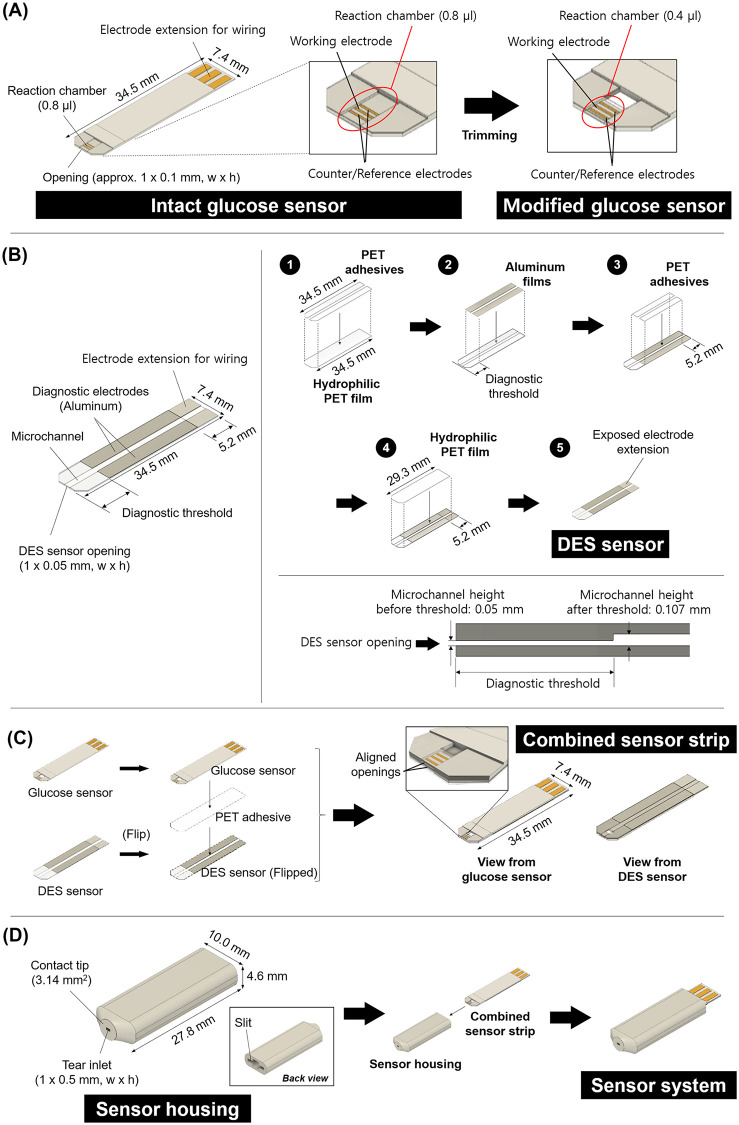
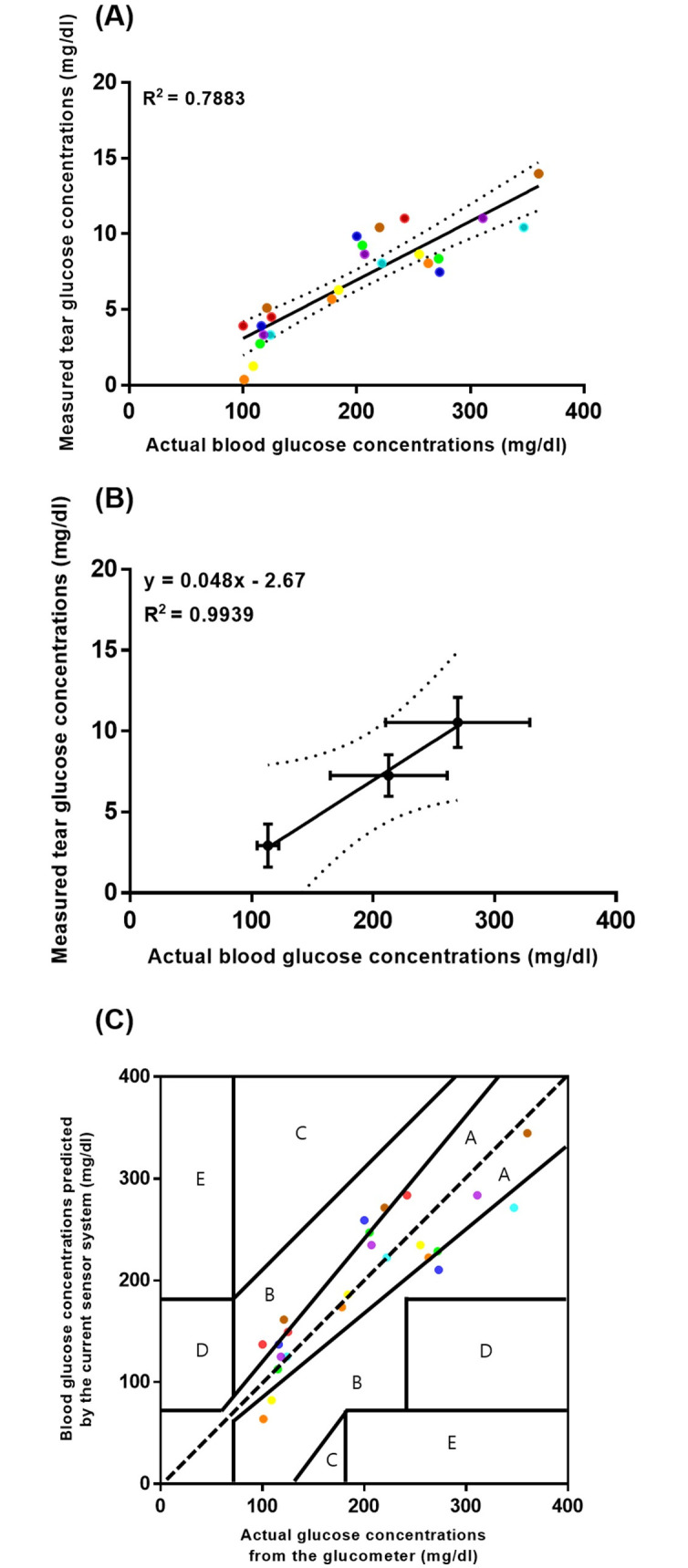
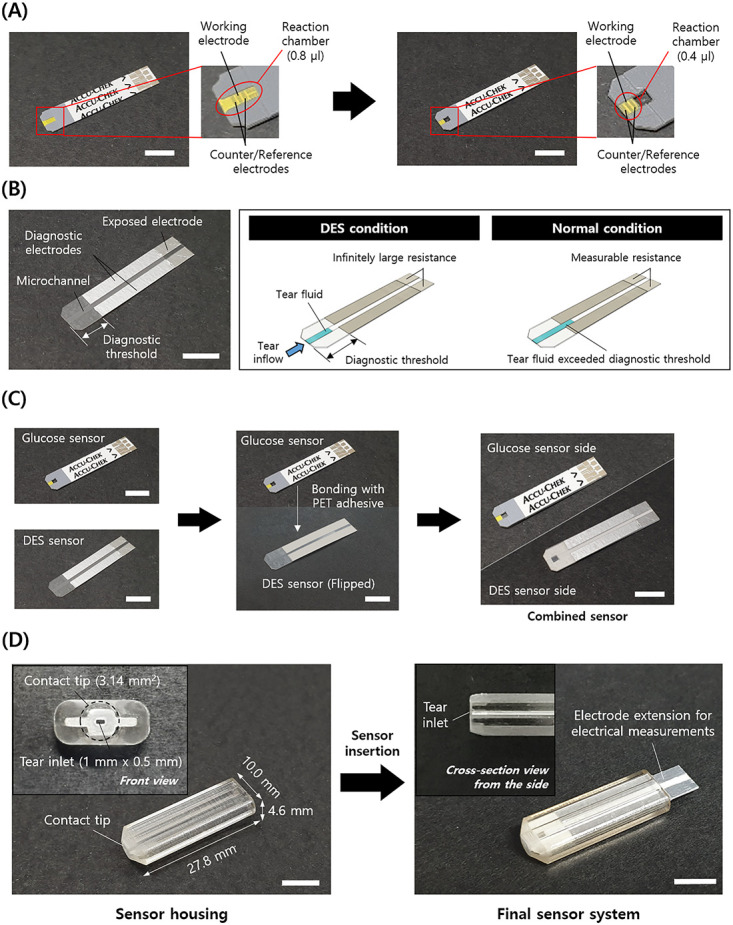
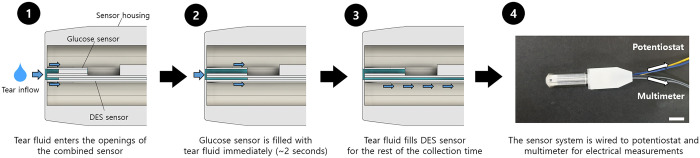
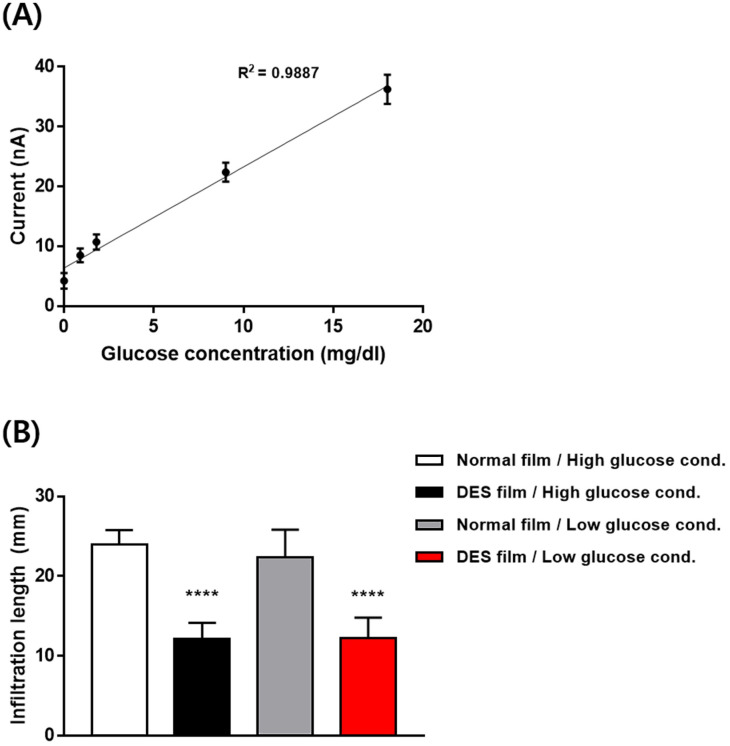
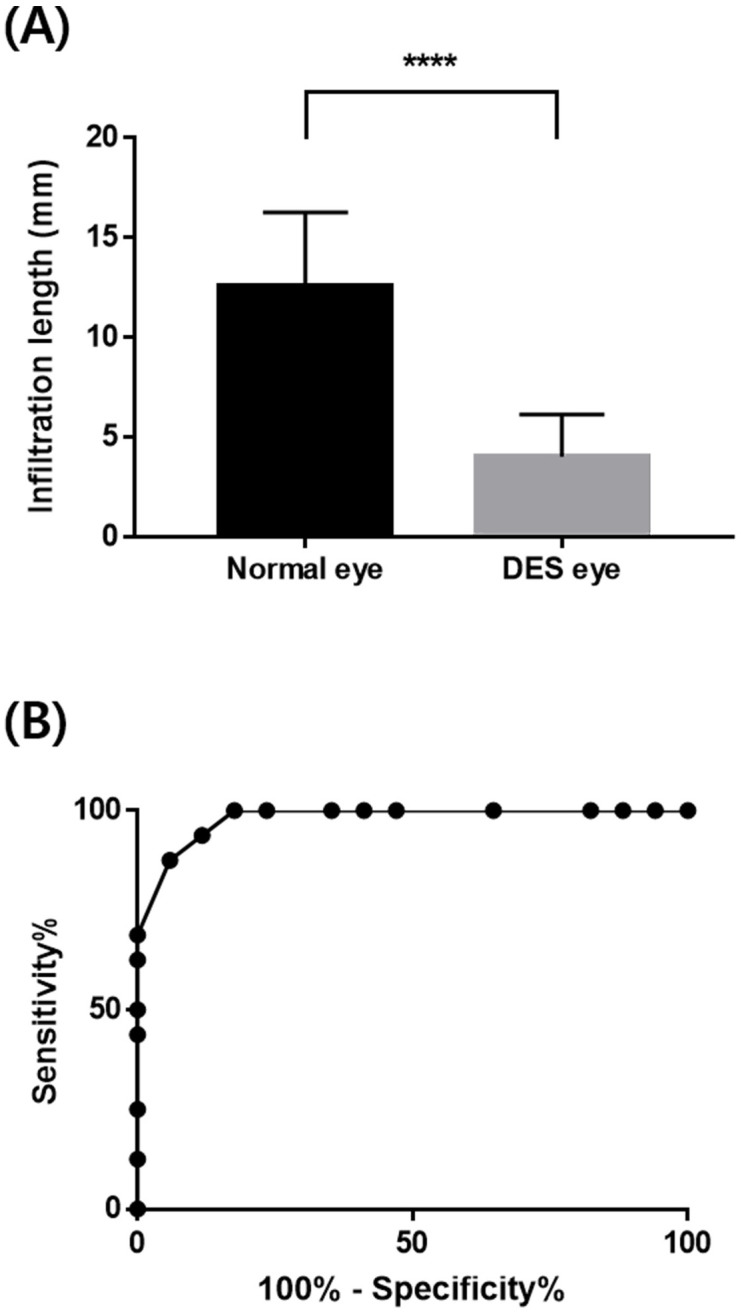
The present study demonstrated a noninvasive preocular sensor system for the concurrent monitoring of diabetes and one of its prevalent complications, dry eye syndrome (DES), using tear fluids. Two distinct sensors, i.e., the glucose and DES sensors, were prepared and encased together in a single housing unit to produce the sensor system, and the tip was designed to be in contact with the eye surface noninvasively to collect and deliver tear fluid to the sensors. The glucose sensor was modified from a commercially available electrochemical sensor to allow for the measurement of glucose concentrations, even in a small amount of collected tear fluid. The DES sensor was equipped with a microchannel spaced with two parallel electrodes to determine the amount of collected tear fluid. In vivo experimental results revealed that with the collected tear fluid of about 0.6-1.0 μl, the sensor system estimated the blood glucose concentrations with acceptable accuracy compared with that of the glucometer in clinical use. The DES condition in animals was diagnosed with high sensitivity (91.7%) and specificity (83.3%).
本研究展示了一种非侵入式眼前部传感器系统,可使用泪液同时监测糖尿病及其常见并发症干眼症(DES)。两种不同的传感器,即葡萄糖和 DES 传感器,被制备并封装在单个外壳单元中以产生传感器系统,并且传感器的尖端设计为非侵入式地接触眼睛表面,以收集并将泪液输送到传感器。葡萄糖传感器是从市售的电化学传感器修改而来的,即使在收集的少量泪液中也可以测量葡萄糖浓度。DES 传感器配备了带有两个平行电极的微通道,以确定收集的泪液量。体内实验结果表明,使用约 0.6-1.0 μl 的收集泪液,与临床使用的血糖仪相比,传感器系统可以以可接受的精度估计血糖浓度。动物的 DES 情况具有高灵敏度(91.7%)和特异性(83.3%)。