School of Pharmaceutical Sciences, Guangzhou University of Chinese Medicine, Guangzhou, Guangdong, P. R. China.
Research Center of Chinese Herbal Resource Science and Engineering, Guangzhou University of Chinese Medicine, Guangzhou, Guangdong, P. R. China.
PLoS One. 2020 Oct 22;15(10):e0240939. doi: 10.1371/journal.pone.0240939. eCollection 2020.
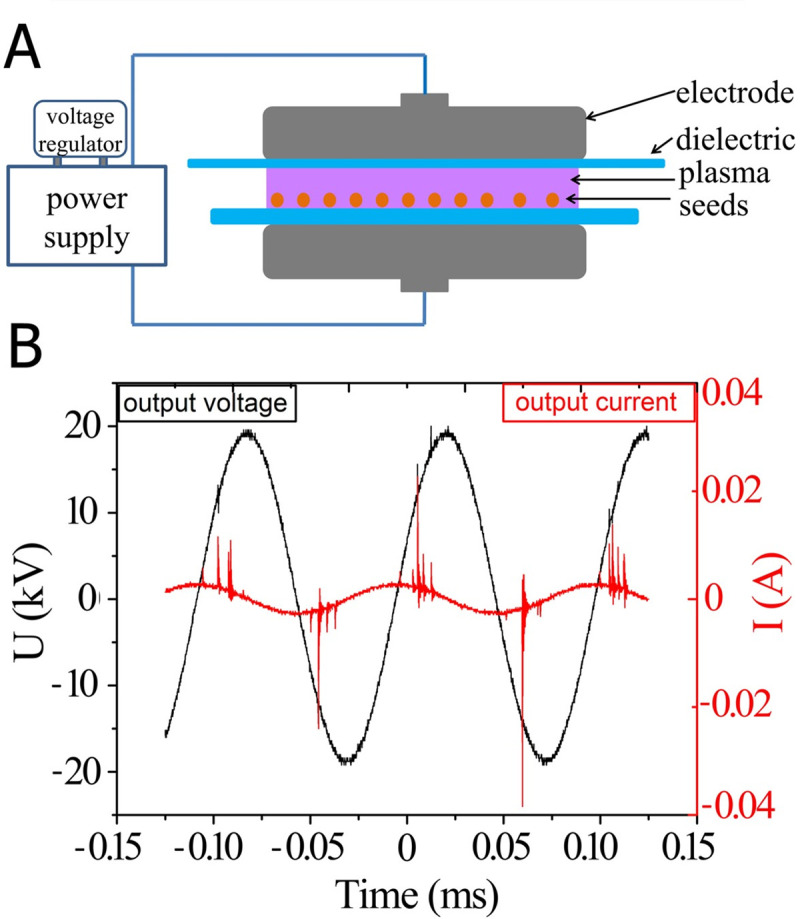
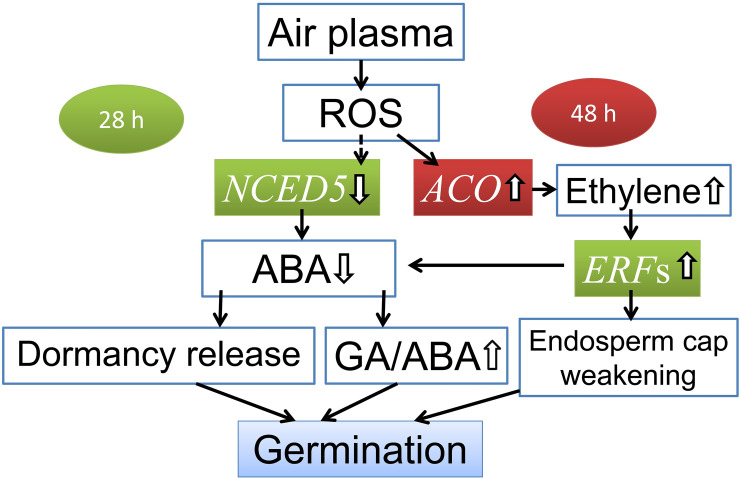
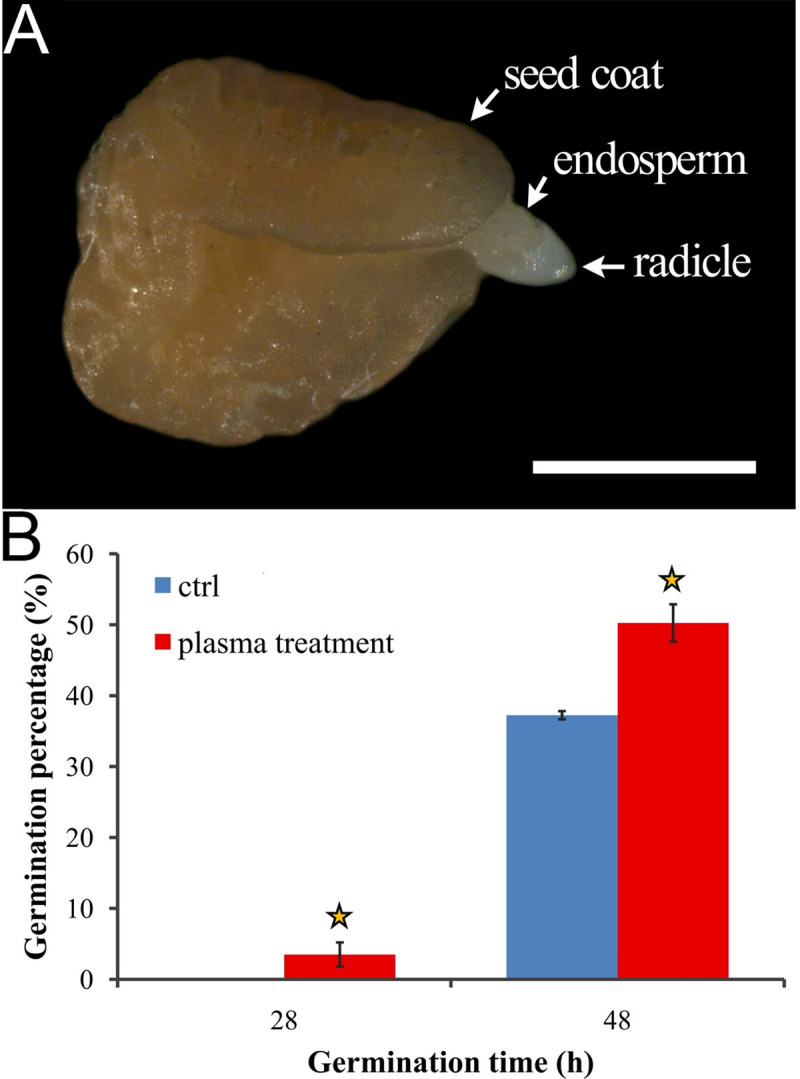
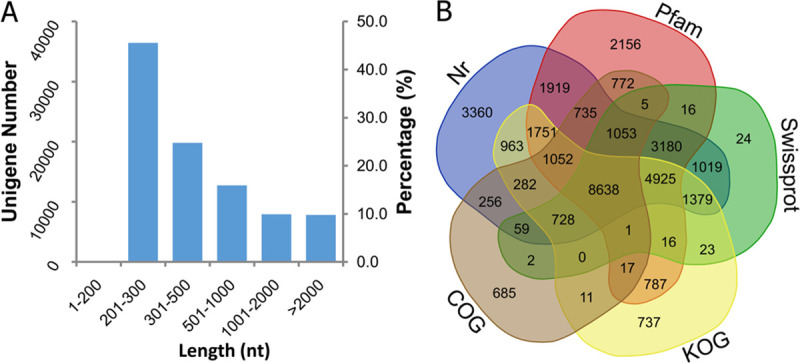
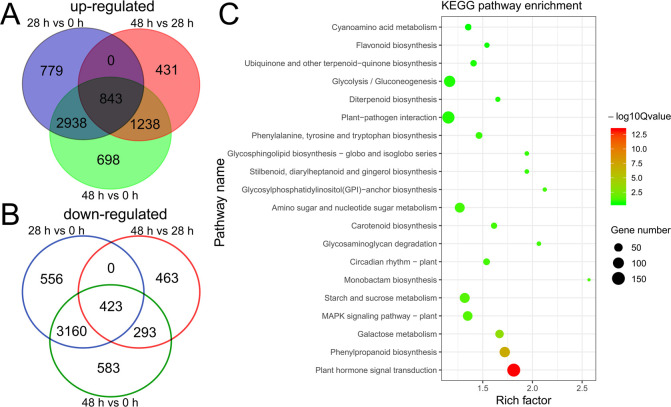
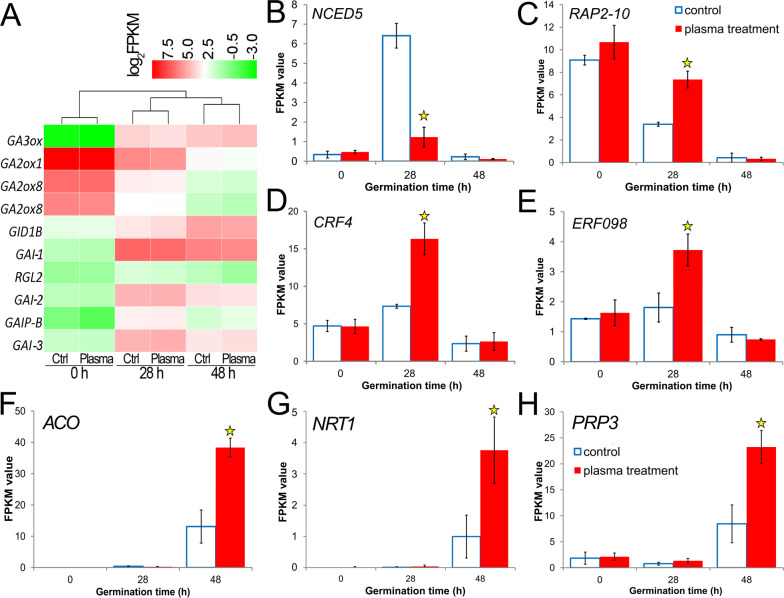
The plasma seed treatment is effective for promoting seed germination in many crops. However, the biological mechanism remains unclear. Therefore, mRNA sequencing was used to screen differentially expressed genes in the germination process of Andrographis paniculata seeds treated with air plasma (power density = 8.99 J/cm3). Following plasma treatment, the germination percentages were significantly higher than those of the control, they were 3.5±0.6% vs. 0 at 28 hours after sowing (HAS) and 50.3±2.6% vs. 37.3±1.7% at 48 HAS. After unigenes were assembled and annotated, 125 differentially expressed genes (DEGs) were detected at 28 HAS, compared with nine DEGs at 48 HAS, but no DEGs were detected at 0 HAS, indicating that air plasma treatment mainly changed the gene expression of A. paniculata seeds at 28 HAS. The NCED5 expression level of the treated group was less than one-fifth of the control, and the expressions of three ethylene response factors were significantly higher than the control at 28 HAS, indicating that lower abscisic acid levels play an important role and ethylene signal transduction also participates in radicle protrusion. ACO, NRT1 and PRP3 expressions were significantly higher than in the control at 48 HAS, suggesting that higher ethylene levels cause the endosperm cap to weaken and start to grow root hairs and lateral roots earlier. These findings reveal that plasma promotes seed germination mainly by regulating the expression of hormone-related genes. And the possible signal transduction of related hormones was discussed.
等离子体种子处理在促进许多作物种子萌发方面非常有效。然而,其生物学机制尚不清楚。因此,采用 mRNA 测序筛选空气等离子体(功率密度=8.99 J/cm3)处理穿心莲种子萌发过程中的差异表达基因。等离子体处理后,发芽率显著高于对照,处理后 28 小时(HAS)的发芽率为 3.5±0.6%,而对照为 0%;处理后 48 HAS 的发芽率为 50.3±2.6%,而对照为 37.3±1.7%。对 unigenes 进行组装和注释后,在 28 HAS 检测到 125 个差异表达基因(DEGs),而在 48 HAS 仅检测到 9 个 DEGs,而在 0 HAS 则未检测到 DEGs,表明空气等离子体处理主要改变了 28 HAS 穿心莲种子的基因表达。处理组的 NCED5 表达水平低于对照组的五分之一,3 个乙烯响应因子的表达水平在 28 HAS 时明显高于对照组,表明较低的脱落酸水平发挥了重要作用,乙烯信号转导也参与了胚根的突出。处理组的 ACO、NRT1 和 PRP3 表达水平明显高于对照组,表明较高的乙烯水平导致胚乳帽变弱,开始更早地生长根毛和侧根。这些发现表明,等离子体主要通过调节激素相关基因的表达来促进种子萌发。并讨论了相关激素的可能信号转导途径。