Health Research Centre, University of Almería, 04120 Almería, Spain.
Faculty of Computer Science, Multimedia and Telecommunications, Universitat Oberta de Catalunya, 08018 Barcelona, Spain.
Sensors (Basel). 2020 Oct 22;20(21):5971. doi: 10.3390/s20215971.
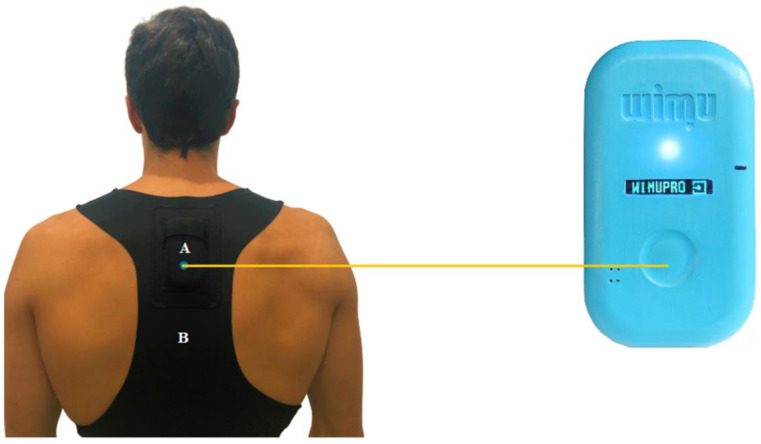
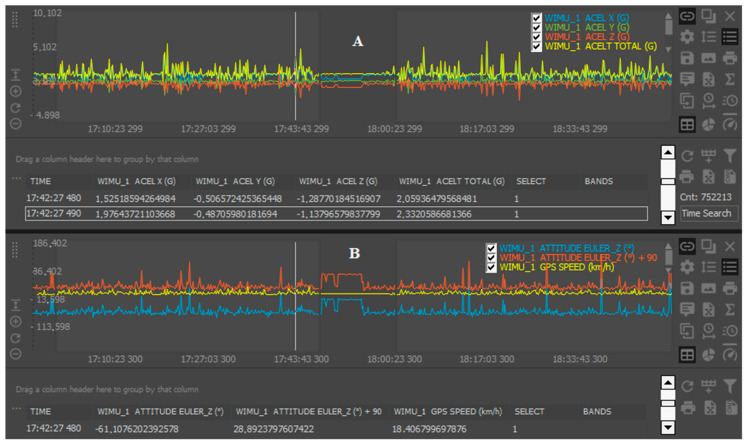
The development of wearable sensors has allowed the analysis of trunk kinematics in match play, which is necessary for a better understanding of the postural demands of the players. The aims of this study were to analyze the postural demands of professional soccer players by playing position. A longitudinal study for 13 consecutive microcycles, which included one match per microcycle, was conducted. Wearable sensors with inertial measurement units were used to collect the percentage (%) of playing time spent and G-forces experienced in different trunk inclinations and the inclination required for different speeds thresholds. The inclination zone had a significant effect on the time percentage spent on each zone ( < 0.001, partial eta-squared ( = 0.85) and the G-forces experienced by the players ( < 0.001, = 0.24). Additionally, a significant effect of the speed variable on the trunk inclination zones was found, since trunk flexion increased with greater speeds ( < 0.001; = 0.73), except for midfielders. The players spent most of the time in trunk flexion between 20° and 40°; the greatest G-forces were observed in trunk extension zones between 0° and 30°, and a linear relationship between trunk inclination and speed was found. This study presents a new approach for the analysis of players' performance. Given the large volumes of trunk flexion and the interaction of playing position, coaches are recommended to incorporate position-specific training drills aimed to properly prepare the players for the perception-action demands (i.e., visual exploration and decision-making) of the match, as well as trunk strength exercises and other compensatory strategies before and after the match.
可穿戴传感器的发展使得对比赛中躯干运动学的分析成为可能,这对于更好地理解运动员的姿势需求至关重要。本研究的目的是根据球员的场上位置分析职业足球运动员的姿势需求。进行了一项连续 13 个微周期的纵向研究,其中每个微周期包括一场比赛。使用带有惯性测量单元的可穿戴传感器来收集不同躯干倾斜度下的比赛时间百分比和所经历的 G 力,以及达到不同速度阈值所需的倾斜度。倾斜区域对每个区域的时间百分比有显著影响(<0.001,部分 eta 平方( = 0.85)和球员经历的 G 力(<0.001, = 0.24)。此外,还发现速度变量对躯干倾斜区域有显著影响,因为随着速度的增加,躯干屈曲增加(<0.001; = 0.73),除了中场球员。球员在躯干屈曲 20°至 40°之间的时间最长;在 0°至 30°的躯干伸展区域观察到最大的 G 力,并且发现躯干倾斜度与速度之间存在线性关系。本研究提出了一种新的球员表现分析方法。鉴于躯干屈曲量较大,以及场上位置的相互作用,建议教练采用针对特定位置的训练练习,旨在使球员为比赛的感知-动作需求(即视觉探索和决策)做好适当准备,并在比赛前后进行躯干力量练习和其他补偿策略。