Department of Laboratory Medicine, Zhongnan Hospital of Wuhan University, Wuhan, Hubei, China.
Department of Laboratory Medicine, Wuhan Leishenshan Hospital, Wuhan, Hubei, China.
PLoS One. 2020 Oct 29;15(10):e0241329. doi: 10.1371/journal.pone.0241329. eCollection 2020.
To investigate the blood coagulation function in COVID-19 patients, and the correlation between coagulopathy and disease severity.
We retrospectively collected 147 clinically diagnosed COVID-19 patients at Wuhan Leishenshan Hospital of Hubei, China. We analyzed the coagulation function in COVID-19 patients through the data including thrombin-antithrombin complex (TAT), α2-plasmininhibitor-plasmin Complex (PIC), thrombomodulin (TM), t-PA/PAI-1 Complex (t-PAIC), prothrombin time (PT), international normalized ratio (INR), activated partial thromboplastin time (APTT), fibrinogen (FIB), thrombin time (TT), D-Dimer (DD), and platelet (PLT).
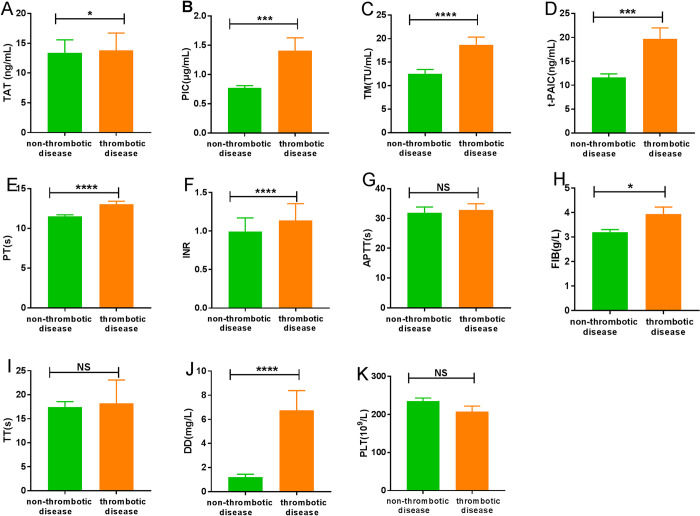
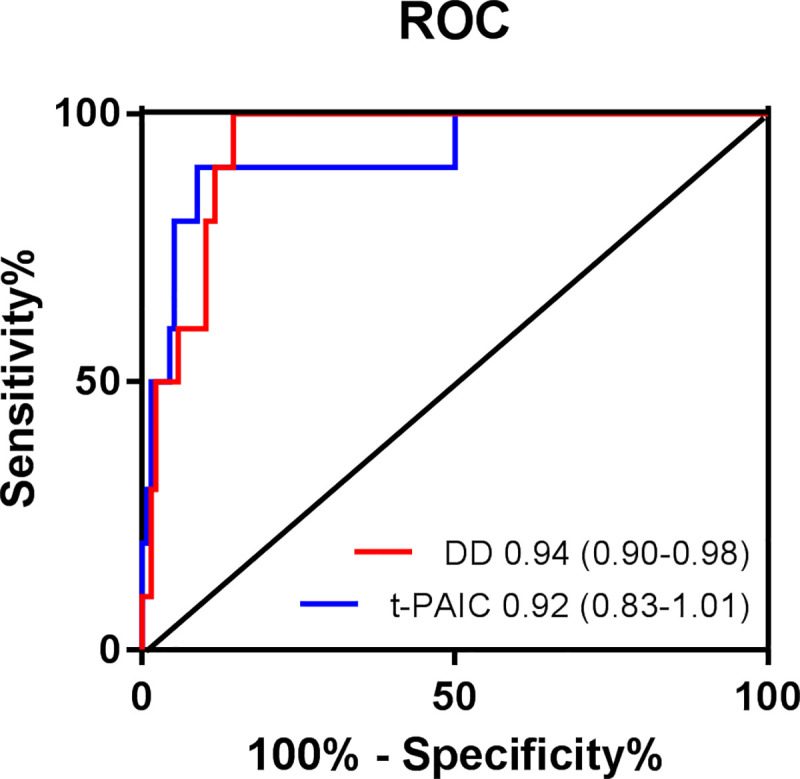
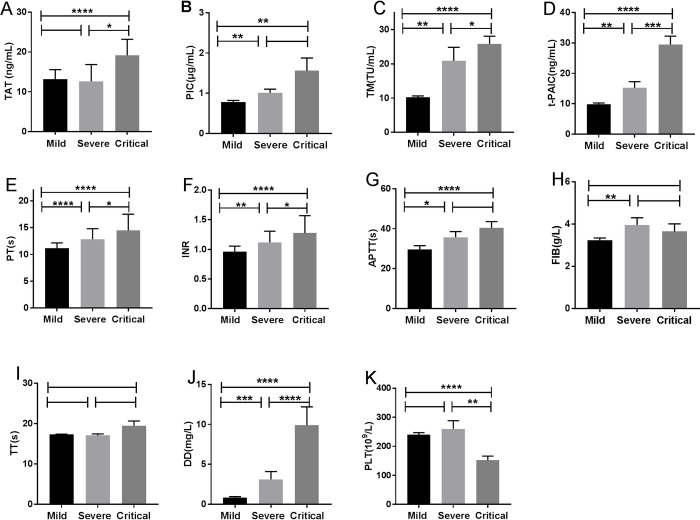
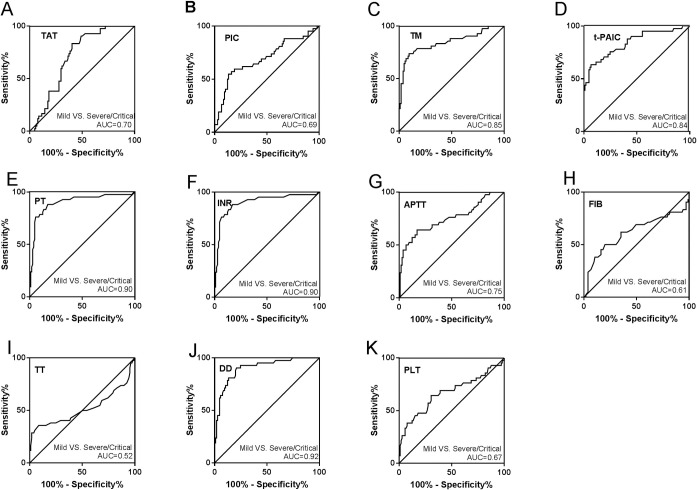
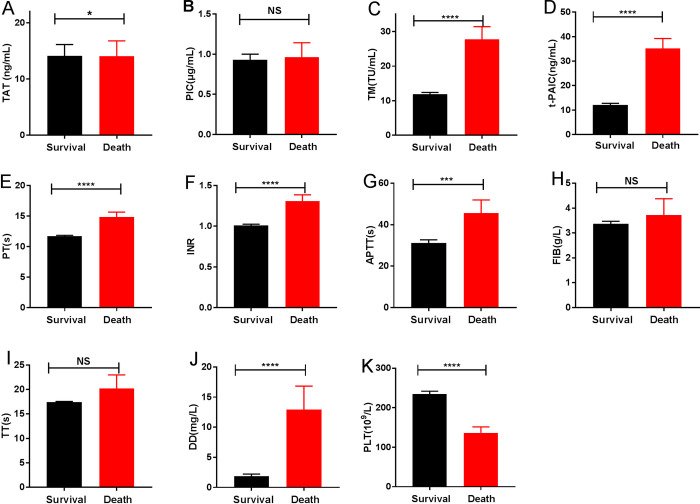
The levels of TAT, PIC, TM, t-PAIC, PT, INR, FIB, and DD in COVID-19 patients were higher than health controls (p<0.05), and also higher in the patients with thrombotic disease than without thrombotic disease (p<0.05). What's more, the patients with thrombotic disease had a higher case-fatality (p<0.05). TAT, PIC, TM, t-PAIC, PT, INR, APTT, FIB, DD, and PLT were also found correlated with disease severity. Meanwhile, we found that there were significant difference in TAT, TM, t-PAIC, PT, INR, APTT, DD, and PLT in the death and survival group. Further using univariate and multivariate logistic regression analysis also found that t-PAIC and DD were independent risk factors for death in patients and are excellent predicting the mortality risk of COVID-19.
Most COVID-19 patients with inordinate coagulation systems, dynamic monitoring of coagulation parameters might be a key in the control of COVID-19 death.
探讨 COVID-19 患者的凝血功能及其与疾病严重程度的相关性。
我们回顾性收集了中国湖北武汉雷神山医院的 147 例临床确诊 COVID-19 患者的数据。我们通过凝血酶-抗凝血酶复合物(TAT)、α2-纤溶酶抑制剂-纤溶复合物(PIC)、血栓调节蛋白(TM)、组织型纤溶酶原激活物/纤溶酶原激活物抑制剂-1 复合物(t-PAIC)、凝血酶原时间(PT)、国际标准化比值(INR)、活化部分凝血活酶时间(APTT)、纤维蛋白原(FIB)、凝血酶时间(TT)、D-二聚体(DD)和血小板(PLT)等数据来分析 COVID-19 患者的凝血功能。
COVID-19 患者的 TAT、PIC、TM、t-PAIC、PT、INR、FIB 和 DD 水平高于健康对照组(p<0.05),且血栓性疾病患者高于无血栓性疾病患者(p<0.05)。此外,血栓性疾病患者的病死率更高(p<0.05)。TAT、PIC、TM、t-PAIC、PT、INR、APTT、FIB、DD 和 PLT 也与疾病严重程度相关。同时,我们发现 TAT、TM、t-PAIC、PT、INR、APTT、DD 和 PLT 在死亡组和存活组之间存在显著差异。进一步采用单因素和多因素逻辑回归分析发现,t-PAIC 和 DD 是 COVID-19 患者死亡的独立危险因素,是预测 COVID-19 患者死亡风险的优秀指标。
大多数 COVID-19 患者存在凝血系统异常,动态监测凝血参数可能是控制 COVID-19 死亡的关键。