Department of Biochemistry and Biophysics, University of Rochester Medical Center, Rochester, NY 14642, USA.
Laboratory of Chromatin Structure and Function, Institute for Quantitative Biosciences, The University of Tokyo 1-1-1 Yayoi, Bunkyo-ku, Tokyo 113-0032, Japan.
Nucleic Acids Res. 2020 Nov 18;48(20):11510-11520. doi: 10.1093/nar/gkaa949.
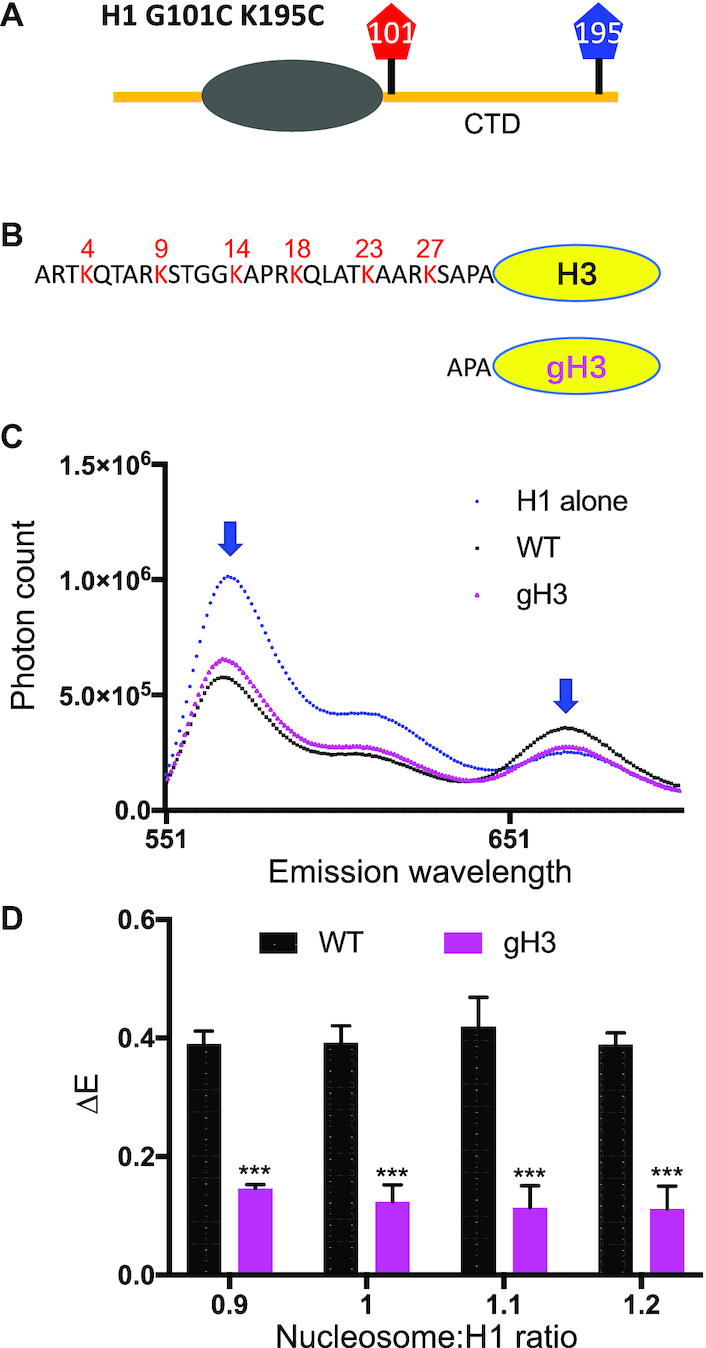
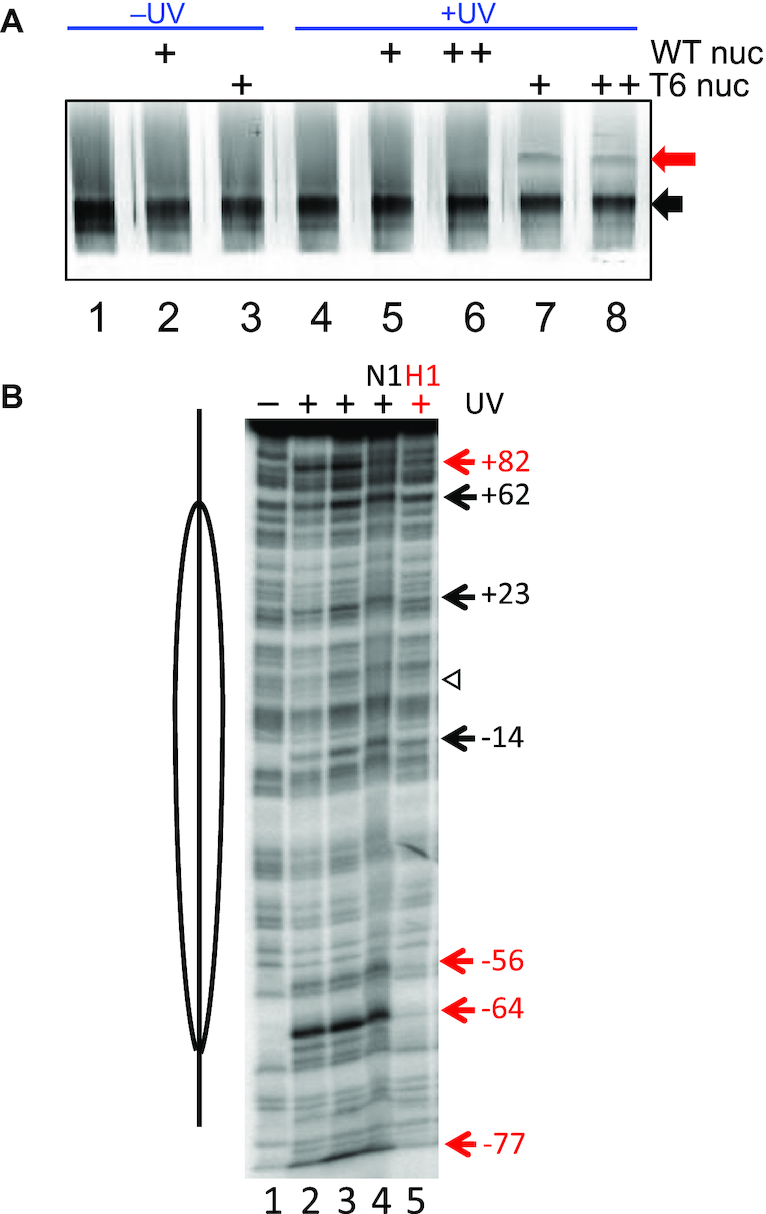
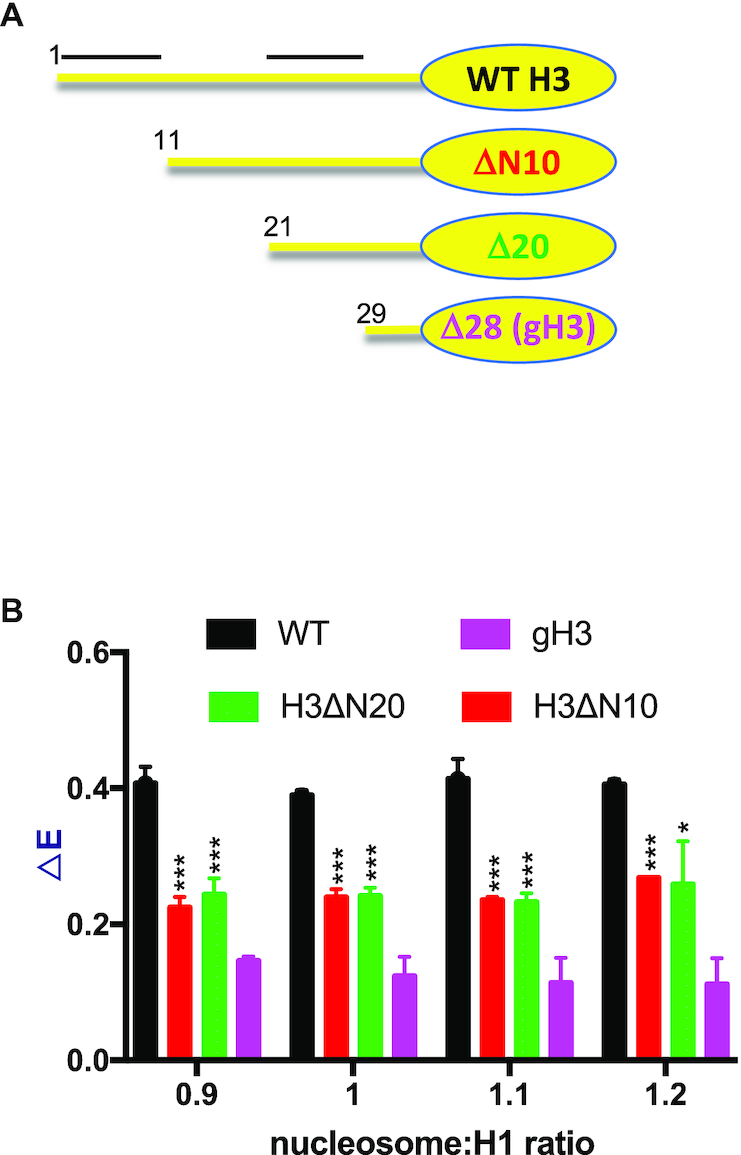
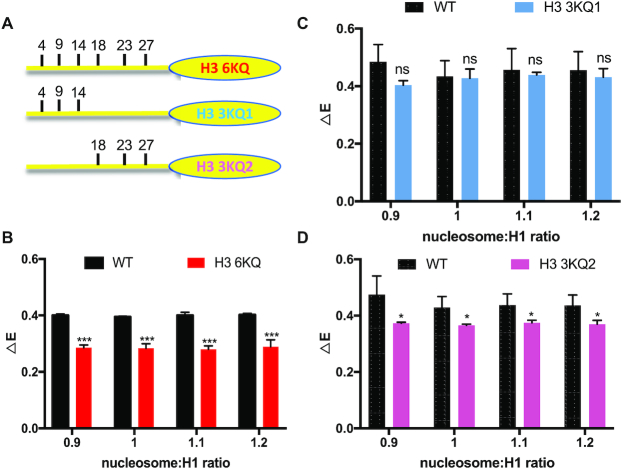
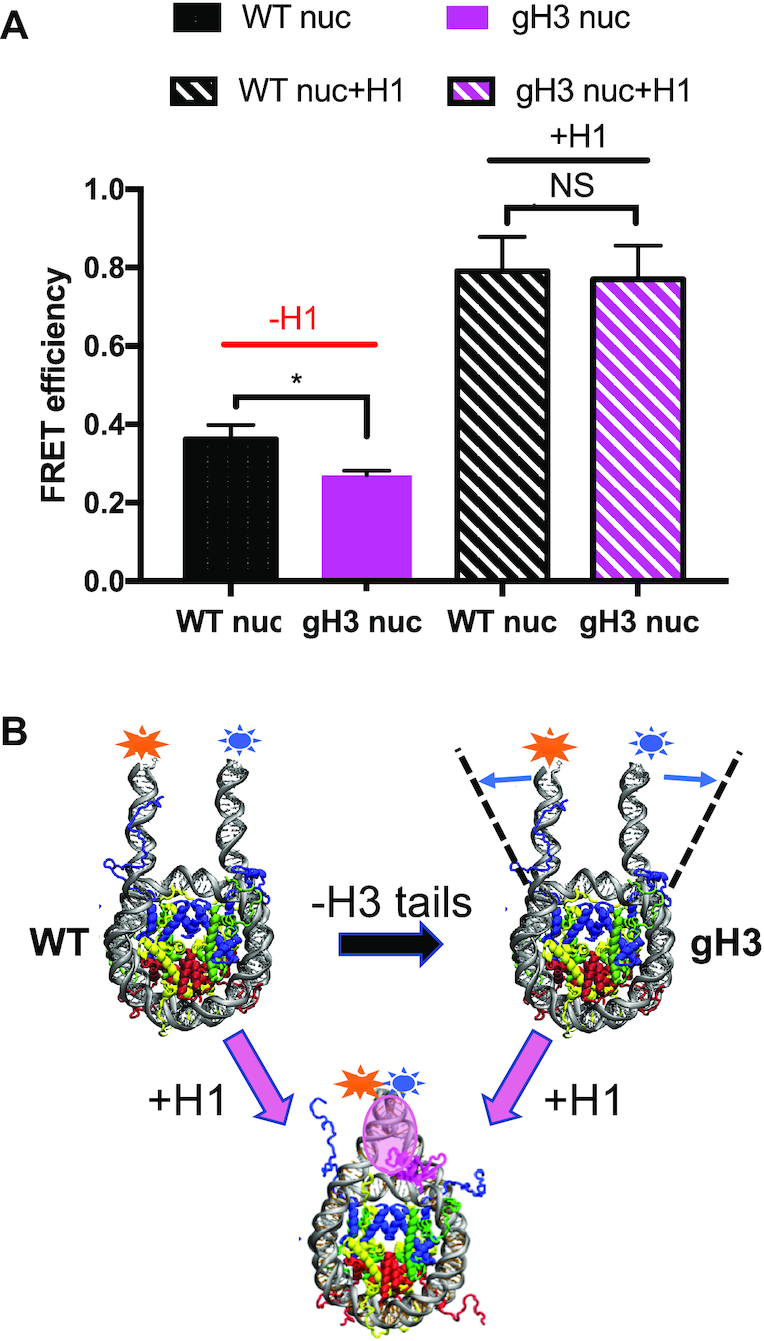
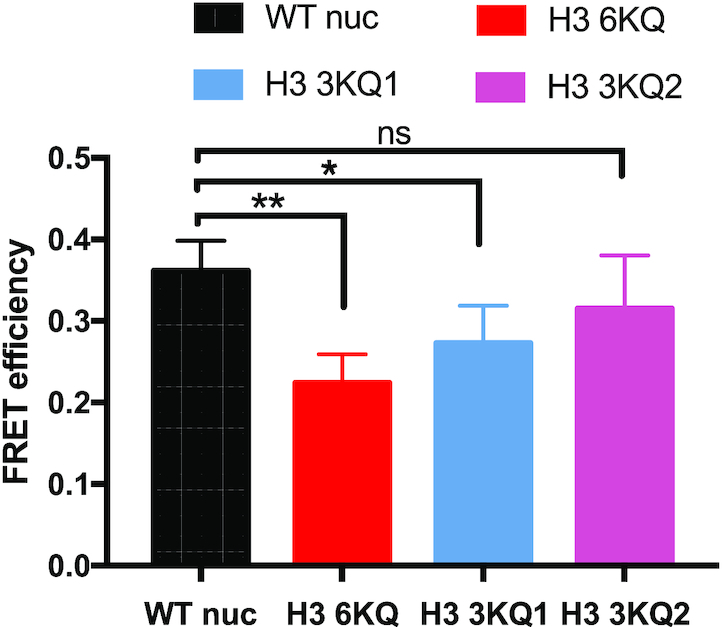
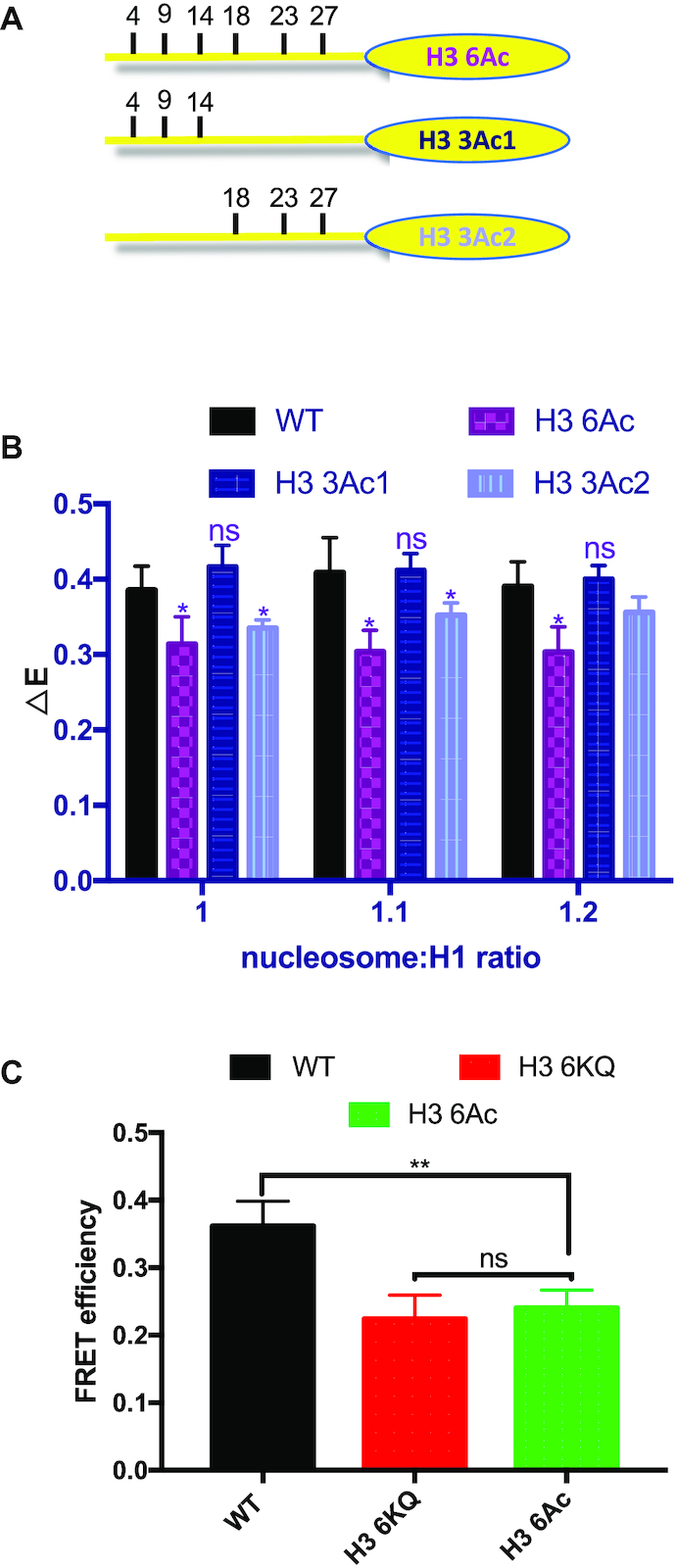
Linker histones (H1s) are key structural components of the chromatin of higher eukaryotes. However, the mechanisms by which the intrinsically disordered linker histone carboxy-terminal domain (H1 CTD) influences chromatin structure and gene regulation remain unclear. We previously demonstrated that the CTD of H1.0 undergoes a significant condensation (reduction of end-to-end distance) upon binding to nucleosomes, consistent with a transition to an ordered structure or ensemble of structures. Here, we show that deletion of the H3 N-terminal tail or the installation of acetylation mimics or bona fide acetylation within H3 N-terminal tail alters the condensation of the nucleosome-bound H1 CTD. Additionally, we present evidence that the H3 N-tail influences H1 CTD condensation through direct protein-protein interaction, rather than alterations in linker DNA trajectory. These results support an emerging hypothesis wherein the H1 CTD serves as a nexus for signaling in the nucleosome.
连接组蛋白(H1s)是高等真核生物染色质的关键结构成分。然而,结构上无序的连接组蛋白羧基末端结构域(H1 CTD)如何影响染色质结构和基因调控的机制尚不清楚。我们之前的研究表明,H1.0 的 CTD 在与核小体结合时会发生显著的凝聚(端到端距离减小),这与有序结构或结构集合的转变一致。在这里,我们表明,删除 H3 N 端尾巴或安装乙酰化模拟物或 H3 N 端尾巴中的真正乙酰化会改变核小体结合的 H1 CTD 的凝聚。此外,我们提供的证据表明,H3 N 尾巴通过直接的蛋白质-蛋白质相互作用影响 H1 CTD 的凝聚,而不是改变连接 DNA 的轨迹。这些结果支持了一个新兴的假说,即 H1 CTD 作为核小体中信号传递的枢纽。