Department of Biomaterials Science (BK21 Four Program), College of Natural Resources & Life Science/Life and Industry Convergence Research Institute/Laboratory Animal Resources Center, Pusan National University, Miryang 50463, Korea.
Department of Horticultural Bioscience, College of Natural Resources & Life Science, Pusan National University, Miryang 50463, Korea.
Molecules. 2020 Oct 28;25(21):4995. doi: 10.3390/molecules25214995.
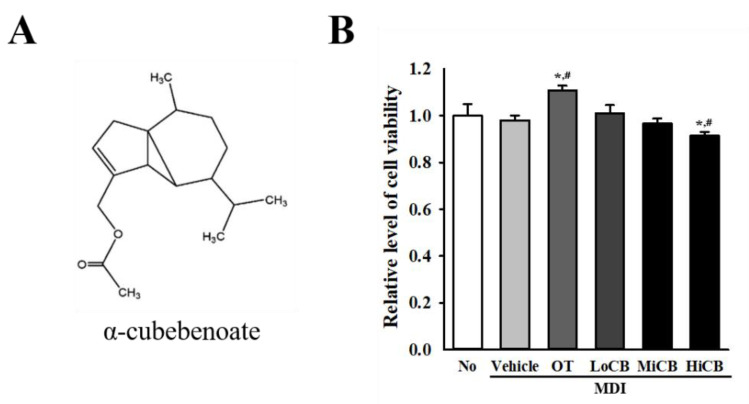
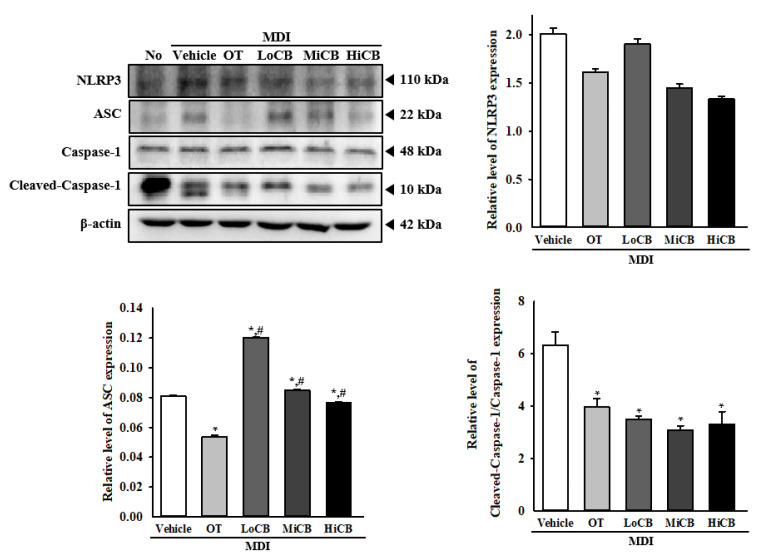
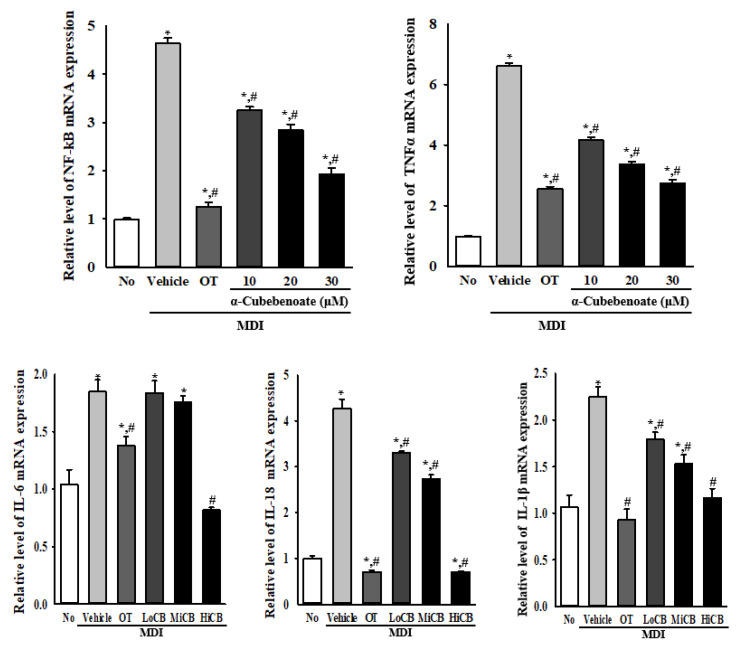
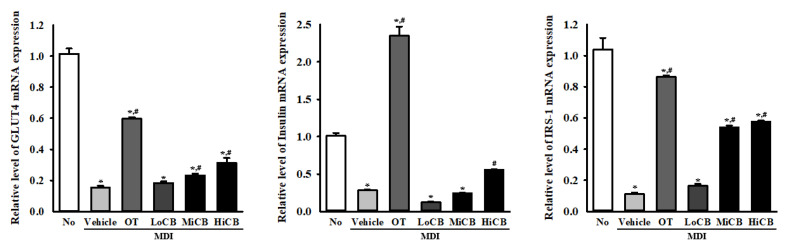
The efficacy of α-cubebenoate isolated from has been previously studied in three disease areas, namely inflammation, sepsis, and allergy, and its role in other diseases is still being explored. To identify the novel function of α-cubebenoate on lipid metabolism and related inflammatory response, alterations in fat accumulation, lipogenesis, lipolysis, and inflammasome activation were measured in 3T3-L1 preadipocytes and primary adipocytes treated with α-cubebenoate. Lipid accumulation significantly decreased in MDI (3-isobutyl-1-methylxanthine, dexamethasone, and insulin)-stimulated 3T3-L1 adipocytes treated with α-cubebenoate without any significant cytotoxicity. The mRNA levels of peroxisome proliferator-activated receptor (PPAR)γ and CCAAT-enhancer binding protein (C/EBP) α for adipogenesis, as well as adipocyte fatty acid binding protein 2 (aP2) and fatty acid synthetase (FAS) for lipogenesis, were reduced after α-cubebenoate treatment, while cell cycle arrest at G2/M stage was restored in the same group. α-cubebenoate treatment induced glycerol release in primary adipocytes and enhanced expression of lipolytic proteins (HSL, perilipin, and ATGL) expression in MDI-stimulated 3T3-L1 adipocytes. Inflammasome activation and downstream cytokines expression were suppressed with α-cubebenoate treatment, but the expression of insulin receptor signaling factors was remarkably increased by α-cubebenoate treatment in MDI-stimulated 3T3-L1 adipocytes. These results indicate that α-cubebenoate may play a novel role as lipogenesis inhibitor, lipolysis stimulator, and inflammasome suppressor in MDI-stimulated 3T3-L1 adipocytes. Our results provide the possibility that α-cubebenoate can be considered as one of the candidates for obesity management.
从荜澄茄中分离得到的 α-荜澄茄醇在三个疾病领域(炎症、脓毒症和过敏)的疗效已得到先前研究,其在其他疾病中的作用仍在探索中。为了确定 α-荜澄茄醇在脂代谢和相关炎症反应中的新功能,我们在 3T3-L1 前脂肪细胞和经 α-荜澄茄醇处理的原代脂肪细胞中测量了脂肪堆积、脂肪生成、脂肪分解和炎性体激活的变化。在 MDI(3-异丁基-1-甲基黄嘌呤、地塞米松和胰岛素)刺激的 3T3-L1 脂肪细胞中,α-荜澄茄醇处理显著降低了脂肪堆积,而没有任何明显的细胞毒性。脂肪生成的过氧化物酶体增殖物激活受体 (PPAR)γ 和 CCAAT 增强子结合蛋白 (C/EBP)α 的 mRNA 水平,以及脂肪生成的脂肪细胞脂肪酸结合蛋白 2 (aP2) 和脂肪酸合成酶 (FAS),在 α-荜澄茄醇处理后降低,而同一组中的 G2/M 期细胞周期停滞得到恢复。α-荜澄茄醇处理诱导原代脂肪细胞释放甘油,并增强 MDI 刺激的 3T3-L1 脂肪细胞中脂肪分解蛋白 (HSL、 perilipin 和 ATGL) 的表达。α-荜澄茄醇处理抑制炎性体激活和下游细胞因子表达,但在 MDI 刺激的 3T3-L1 脂肪细胞中,α-荜澄茄醇处理显著增加胰岛素受体信号转导因子的表达。这些结果表明,α-荜澄茄醇可能在 MDI 刺激的 3T3-L1 脂肪细胞中作为脂肪生成抑制剂、脂肪分解刺激剂和炎性体抑制剂发挥新作用。我们的研究结果提供了这样一种可能性,即 α-荜澄茄醇可以被认为是肥胖管理的候选药物之一。