Guo Jia, Das Shaurov, Hernandez-Garcia Luis
Department of Bioengineering, University of California Riverside, Riverside, California, USA.
Department of Biomedical Engineering, University of Michigan, Ann Arbor, Michigan, USA.
Magn Reson Med. 2021 Apr;85(4):2027-2039. doi: 10.1002/mrm.28572. Epub 2020 Oct 31.
In velocity-selective (VS) arterial spin labeling, strategies using multiple saturation modules or using VS inversion (VSI) pulse can provide improved SNR efficiency compared to the original labeling scheme using one VS saturation (VSS) module. Their performance improvement, however, has not been directly compared.
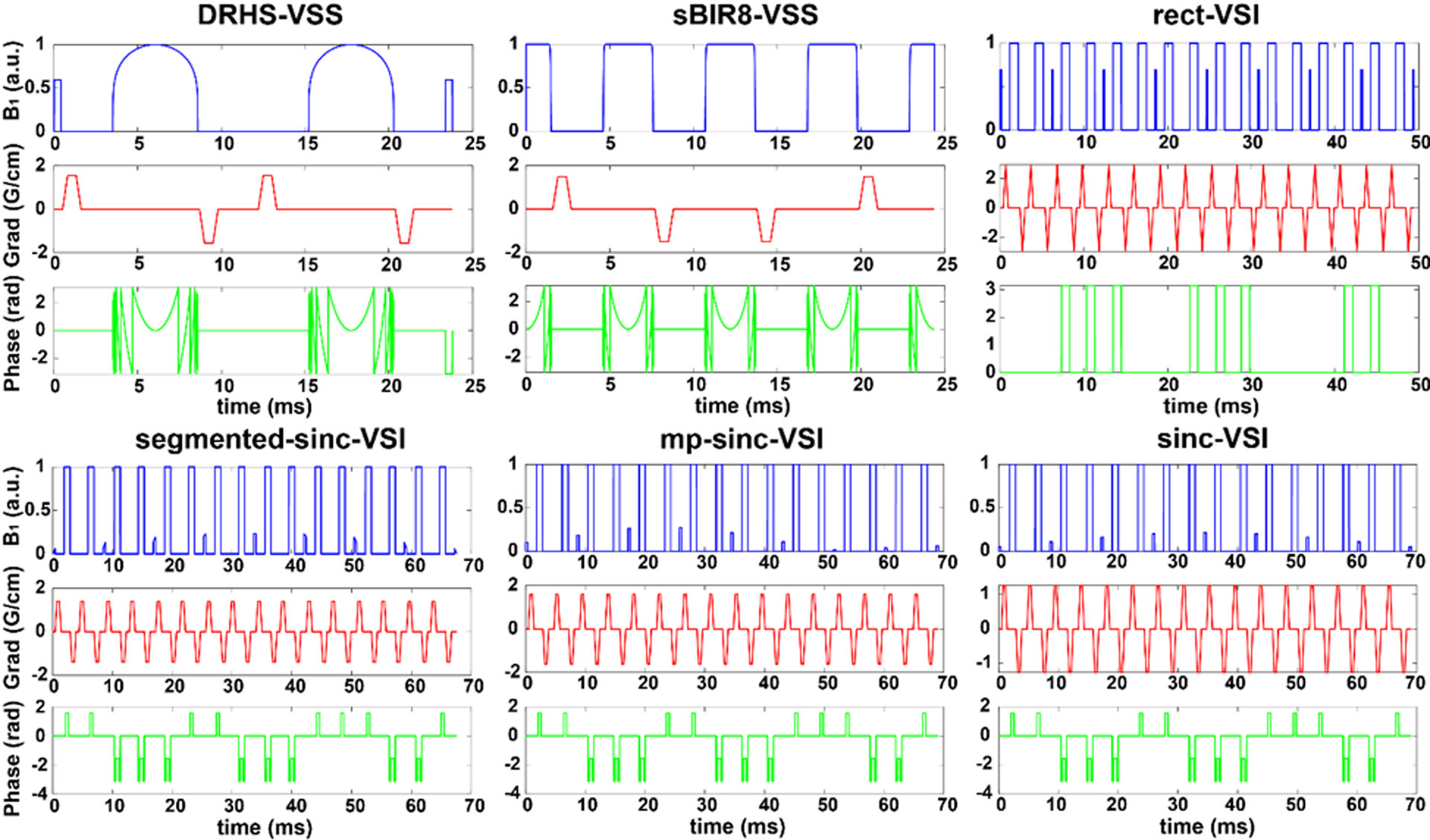
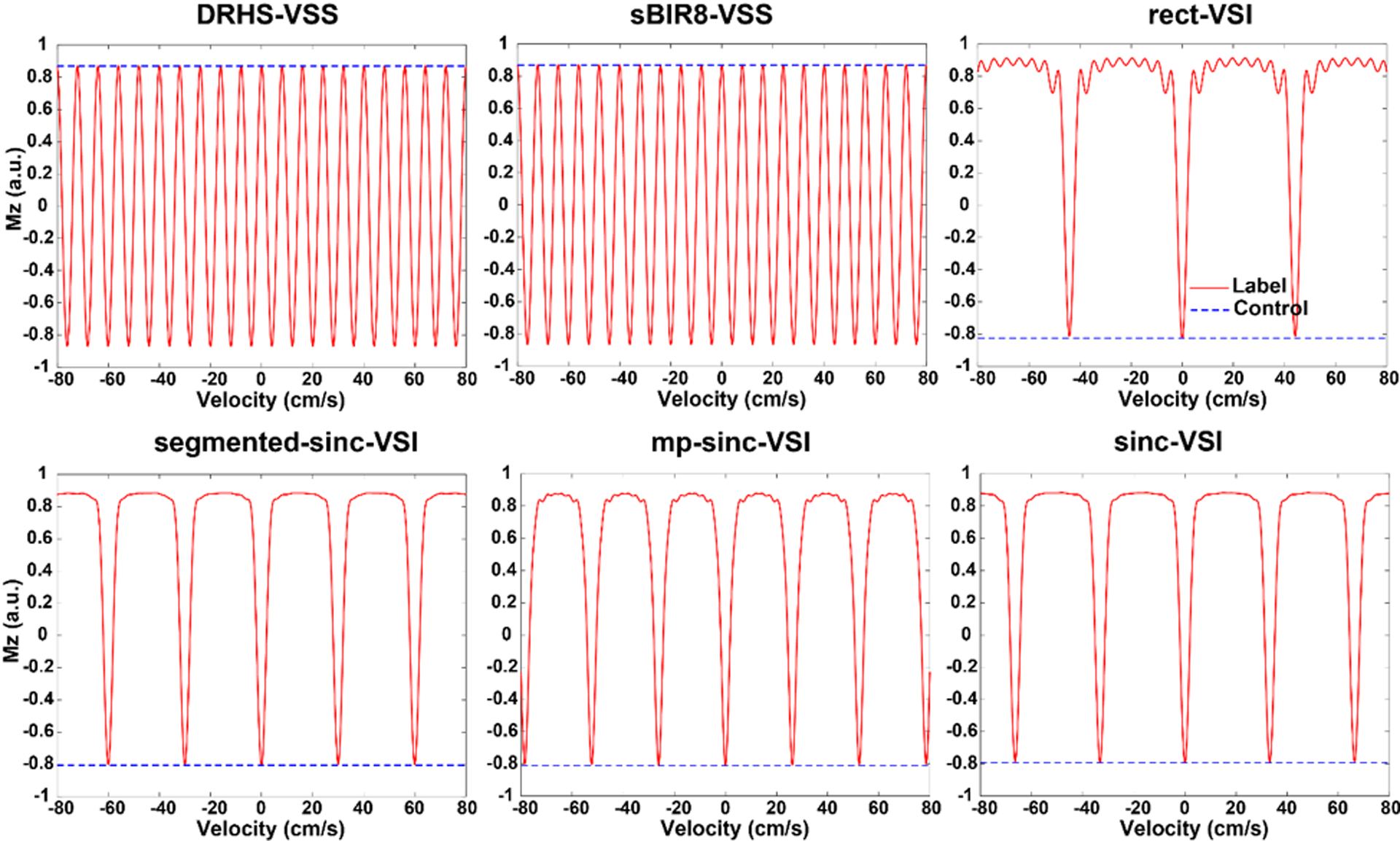
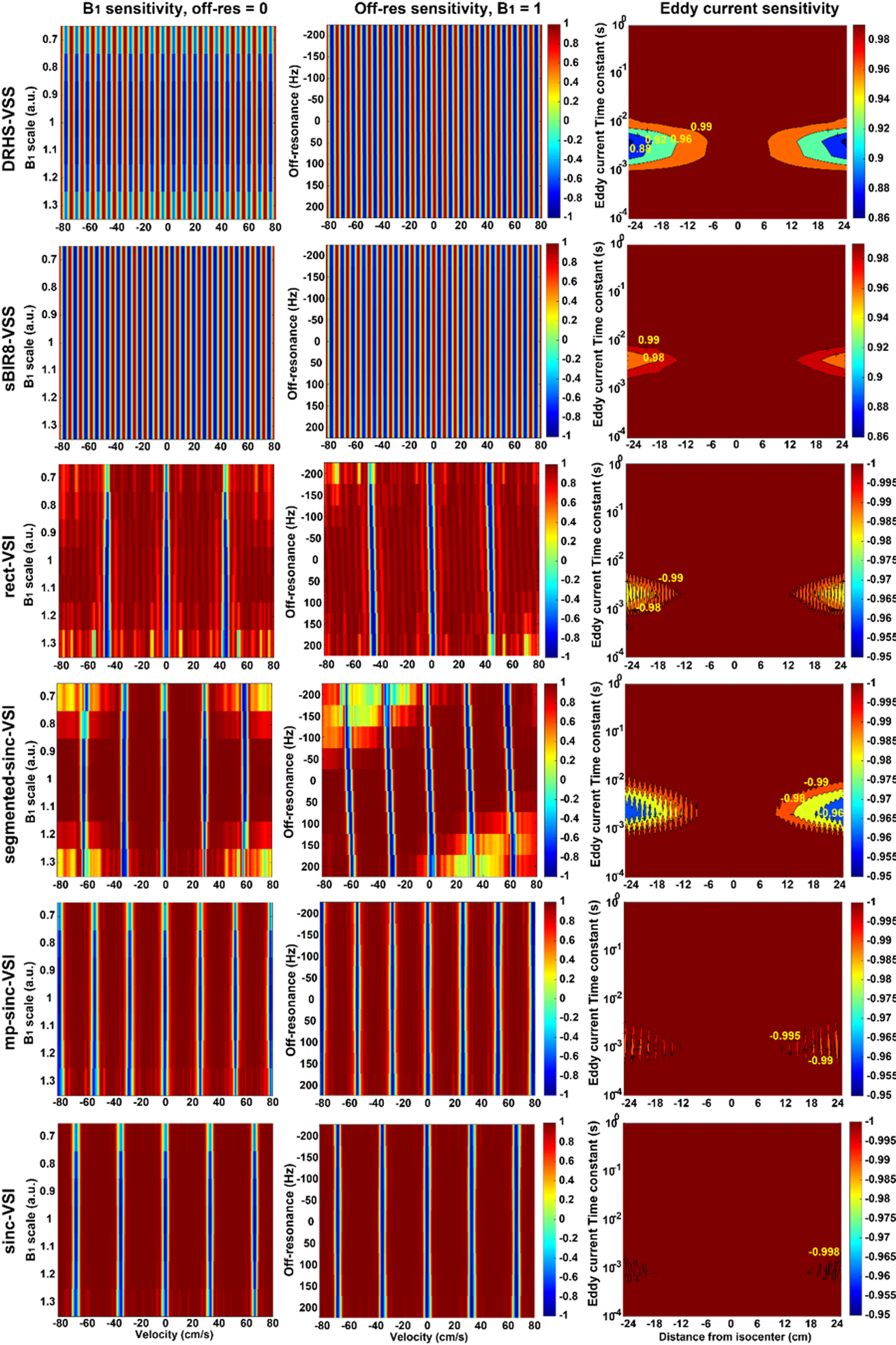
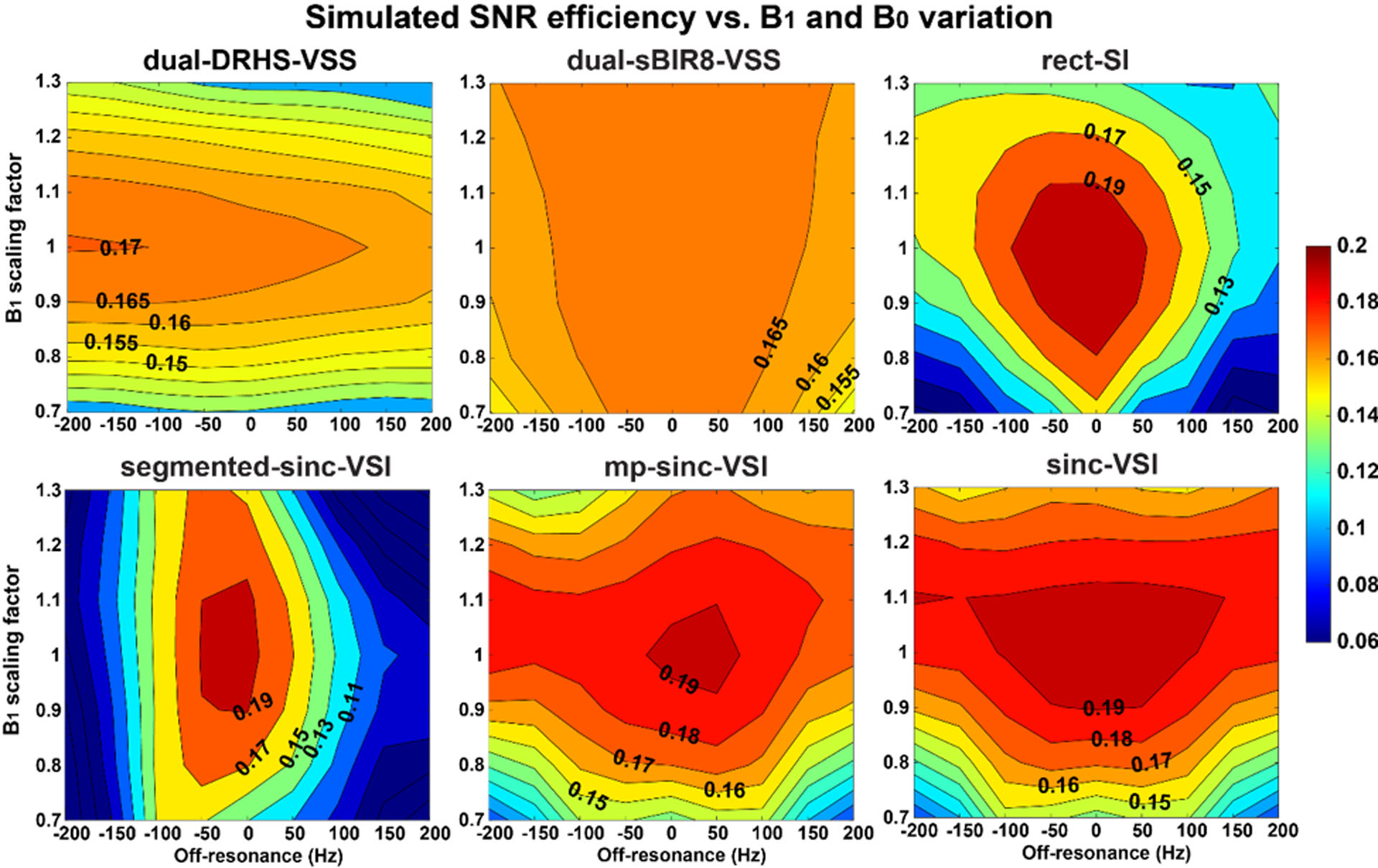
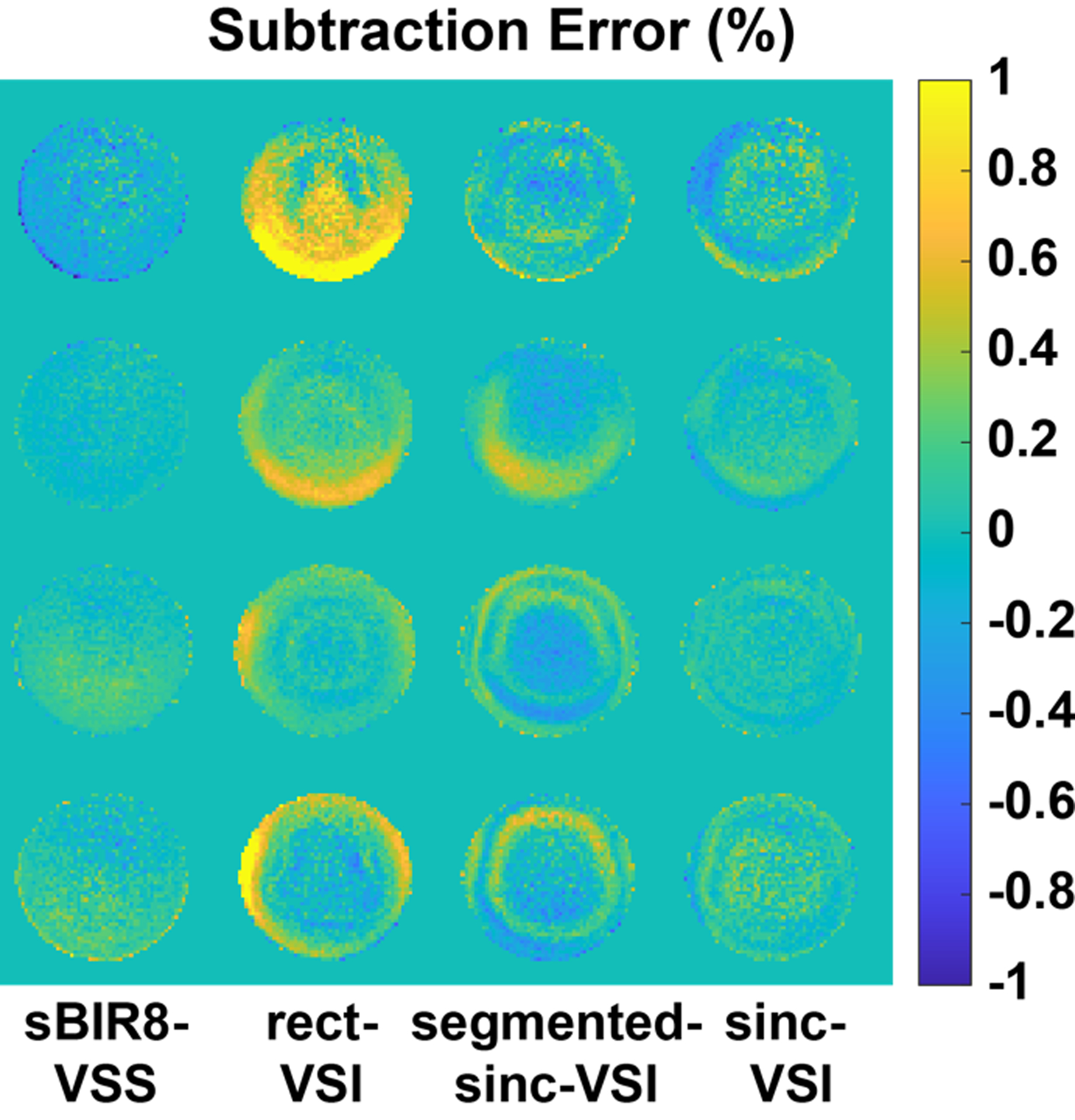
Different VS labeling schemes were evaluated by Bloch simulation for their SNR efficiency, eddy current sensitivity, and robustness against B and B variation. These schemes included dual-module double-refocused hyperbolic secant and symmetric 8-segment B -insensitive rotation (sBIR8-) VSS pulses, the original and modified Fourier transform-based VSI pulses. A subset of the labeling schemes was examined further in phantom and in vivo experiments for their eddy current sensitivity and SNR performance. An additional sBIR8-VSS with a built-in inversion (sBIR8-VSS-inversion) was evaluated for the effects of partial background suppression to allow a fairer comparison to VSI.
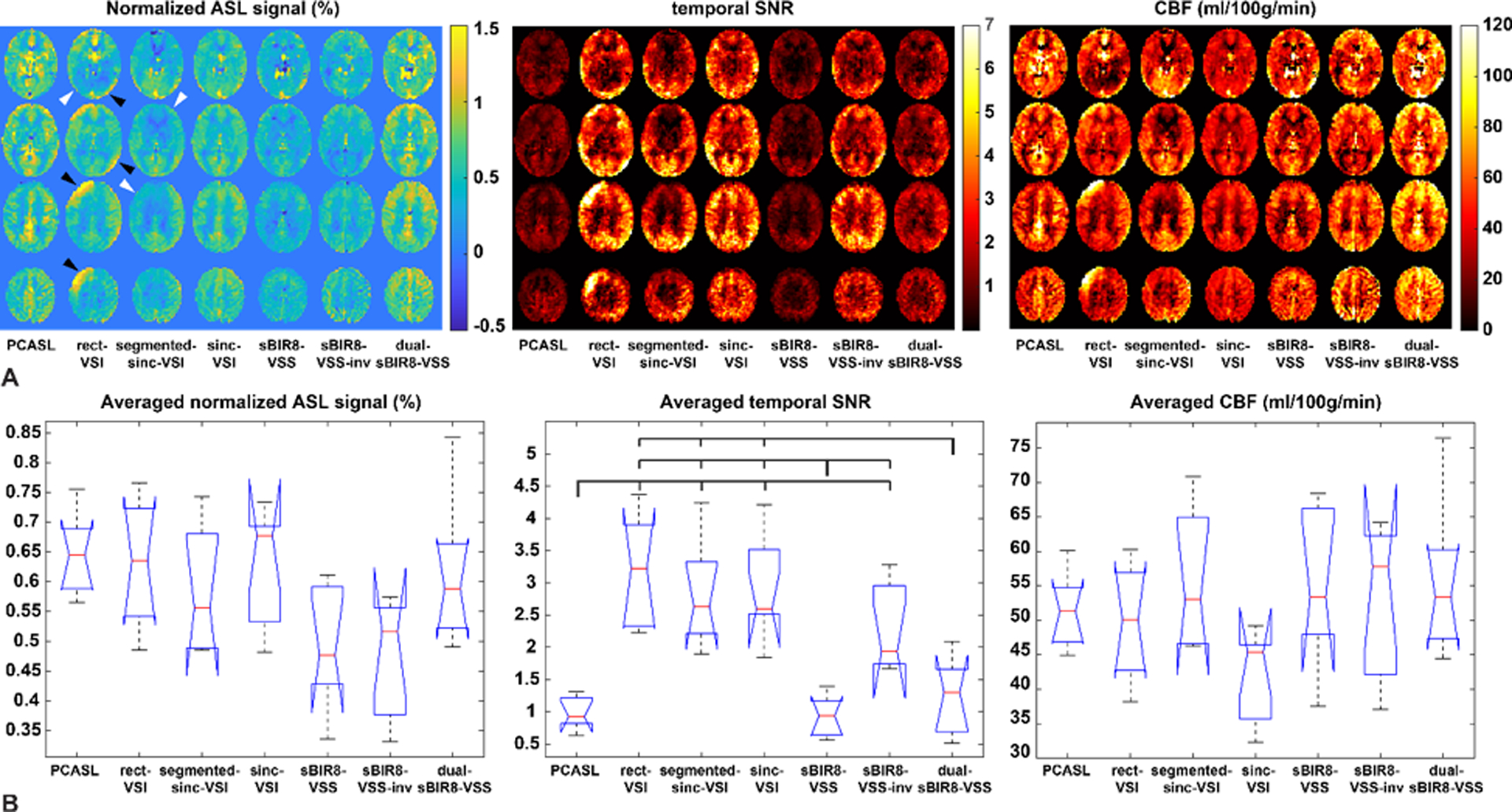
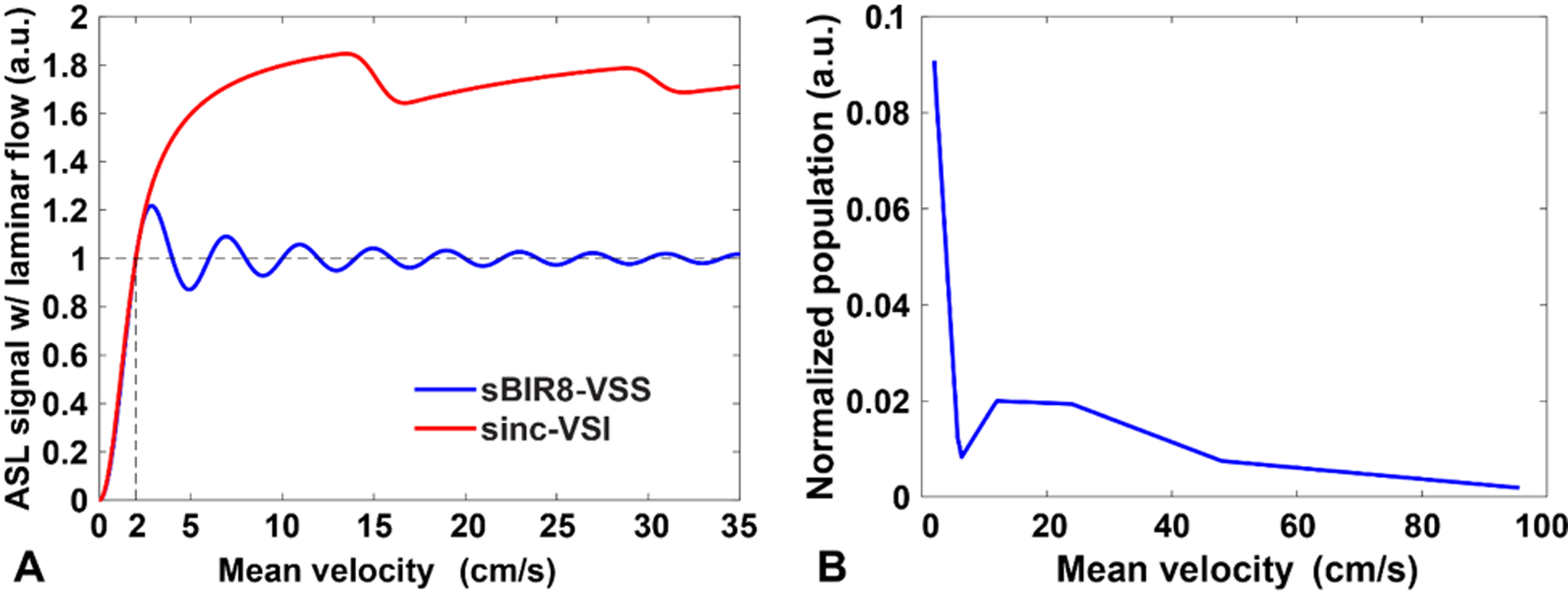
According to the simulations, the sBIR8-VSS was the most robust against field imperfections and had similarly high SNR efficiency (dual-module, dual-sBIR8-VSS) compared with the best VSI pulse (sinc-modulated, sinc-VSI). These were confirmed by the phantom and in vivo data. Without additional background suppression, the sinc-VSI pulses had the highest temporal SNR, closely followed by the sBIR8-VSS-inversion pulse, both benefited from partial background suppression effects.
Dual-sBIR8-VSS and sinc-VSI measured the highest SNR efficiency among the VS labeling schemes. Dual-sBIR8-VSS was the most robust against field imperfections, whereas sinc-VSI may provide a higher SNR efficiency if its immunity to field imperfections can be improved.
在速度选择(VS)动脉自旋标记中,与使用一个VS饱和(VSS)模块的原始标记方案相比,使用多个饱和模块或VS反转(VSI)脉冲的策略可以提高信噪比效率。然而,它们的性能改进尚未直接进行比较。
通过Bloch模拟评估不同的VS标记方案的信噪比效率、涡流敏感性以及对B和B变化的鲁棒性。这些方案包括双模块双重聚焦双曲正割和对称8段B不敏感旋转(sBIR8-)VSS脉冲、基于傅里叶变换的原始和改进VSI脉冲。在体模和体内实验中进一步研究了一部分标记方案的涡流敏感性和信噪比性能。评估了一种具有内置反转的额外sBIR8-VSS(sBIR8-VSS-反转)对部分背景抑制的效果,以便与VSI进行更公平的比较。
根据模拟,sBIR8-VSS对场不均匀性最具鲁棒性,并且与最佳VSI脉冲( sinc调制,sinc-VSI)相比具有相似的高信噪比效率(双模块,双sBIR8-VSS)。体模和体内数据证实了这些结果。在没有额外背景抑制的情况下,sinc-VSI脉冲具有最高的时间信噪比,紧随其后的是sBIR8-VSS-反转脉冲,两者都受益于部分背景抑制效果。
在VS标记方案中,双sBIR8-VSS和sinc-VSI的信噪比效率最高。双sBIR8-VSS对场不均匀性最具鲁棒性,而如果sinc-VSI对场不均匀性的抗性能够提高,则可能提供更高的信噪比效率。