Chen Chiahui, ValizadehAslani Taha, Rosen Gail L, Anderson Laura M, Jungquist Carla R
School of Nursing, University at Buffalo, Buffalo, NY, US.
Ecological and Evolutionary Signal-processing and Informatics lab, Department of Electrical and Computer Engineering, Drexel University, Philadelphia, PA, US.
J Circadian Rhythms. 2020 Oct 21;18:6. doi: 10.5334/jcr.199.
Circadian misalignment can impair healthcare shift workers' physical and mental health, resulting in sleep deprivation, obesity, and chronic disease. This multidisciplinary research team assessed eating patterns and sleep/physical activity of healthcare workers on three different shifts (day, night, and rotating-shift). To date, no study of real-world shift workers' daily eating and sleep has utilized a largely-objective measurement.
During this fourteen-day observational study, participants wore two devices (Actiwatch and Bite Technologies counter) to measure physical activity, sleep, light exposure, and eating time. Participants also reported food intake via food diaries on personal mobile devices.
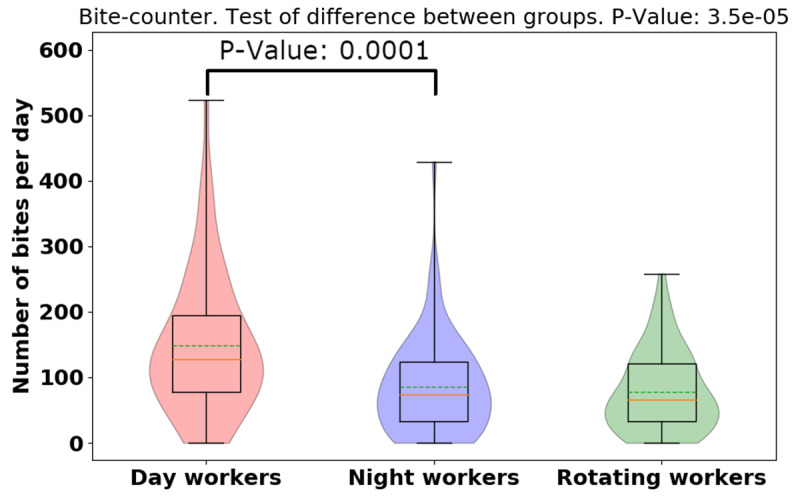
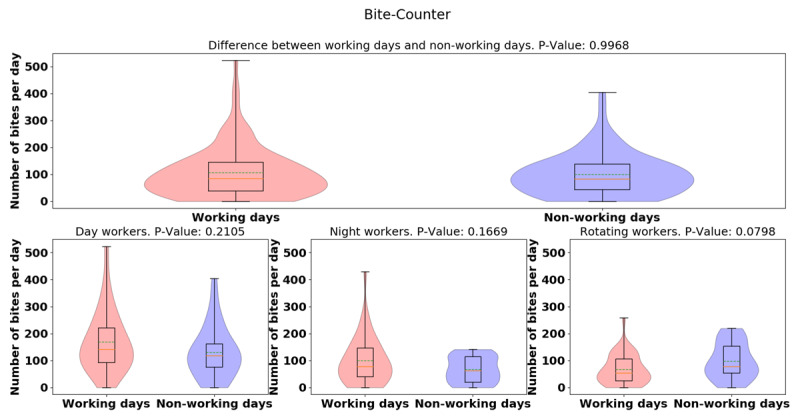
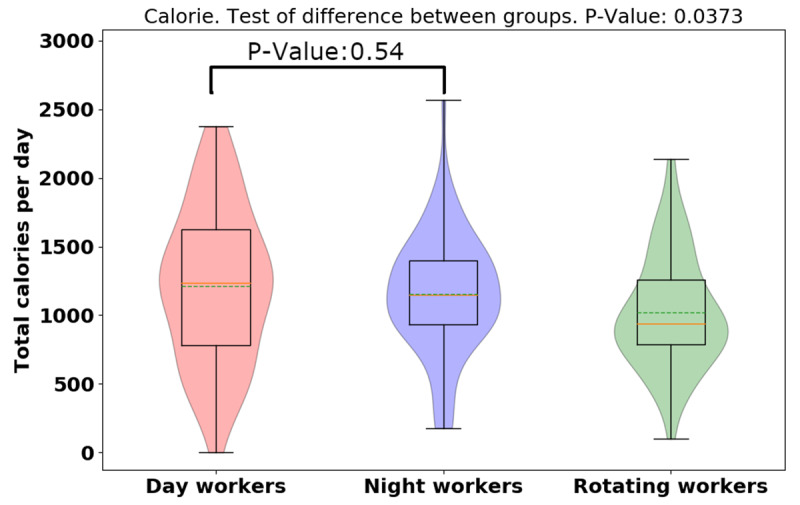
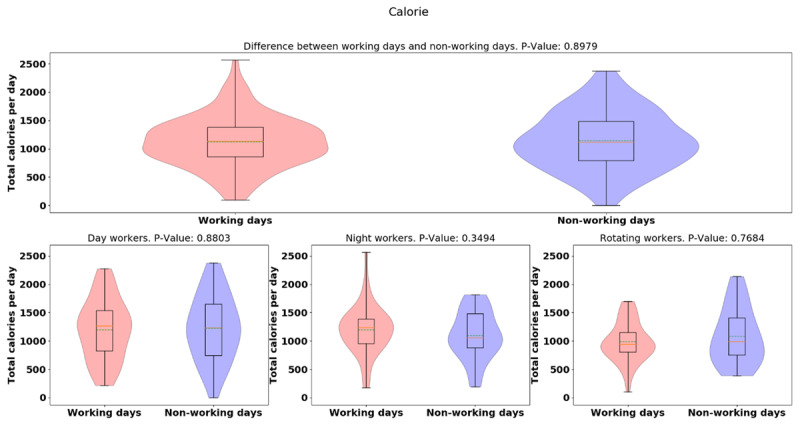
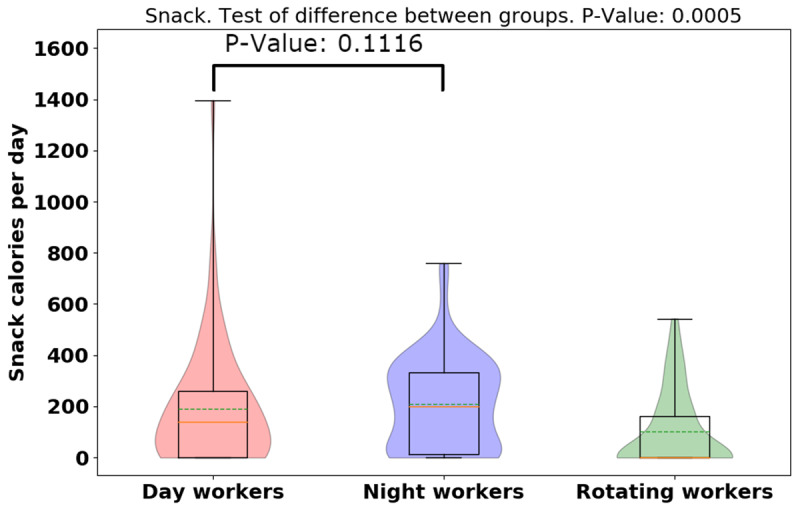
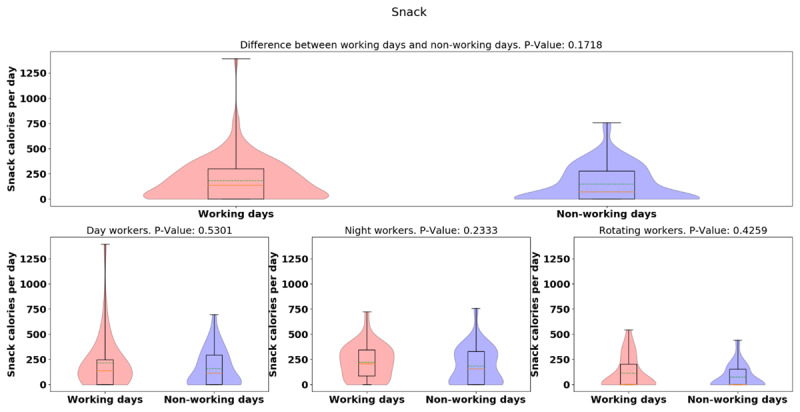
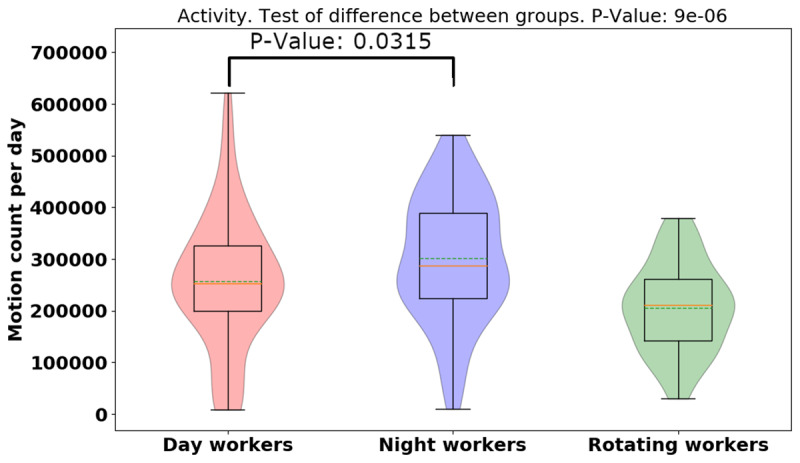
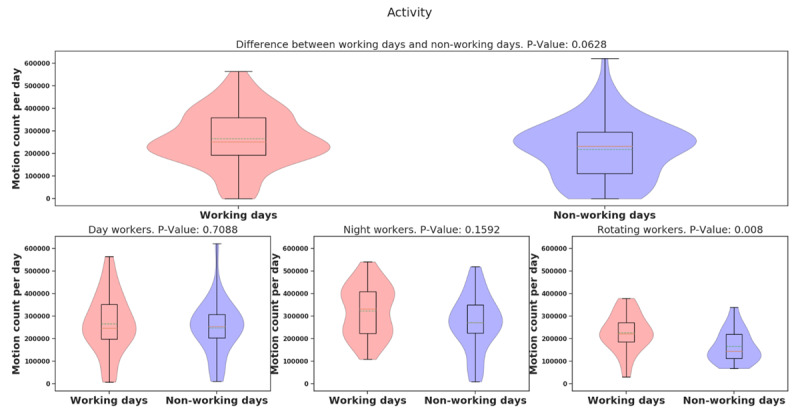
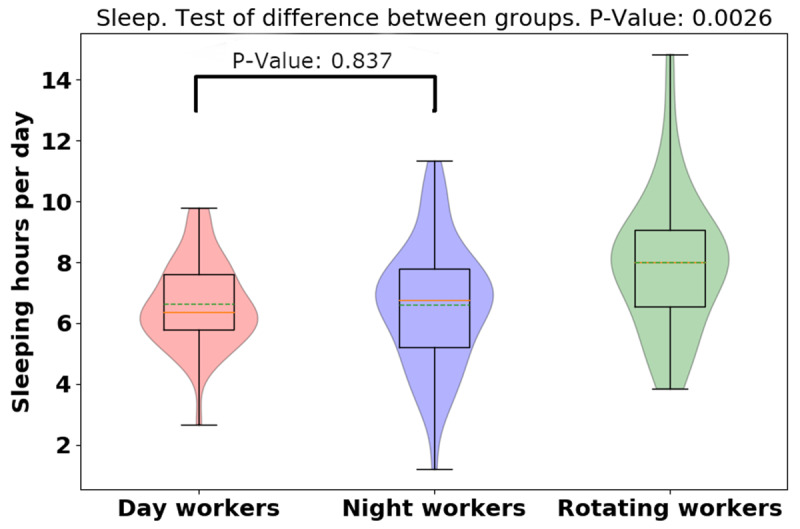
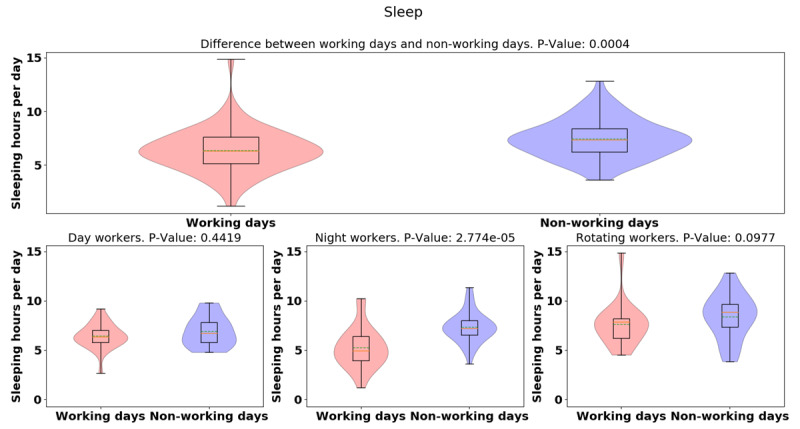
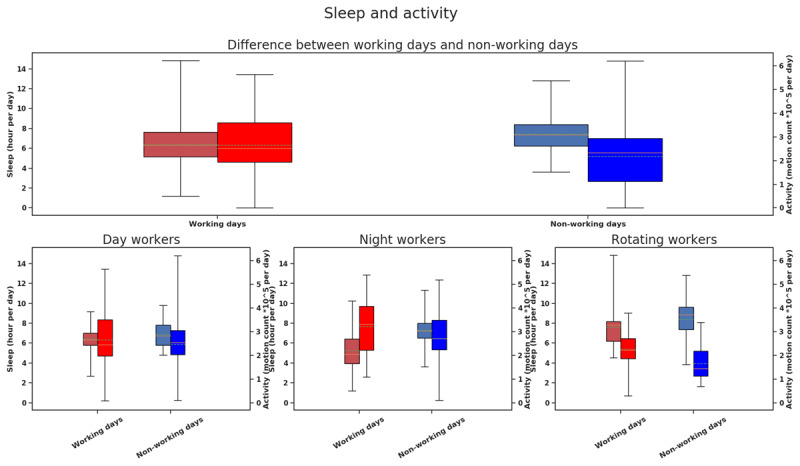
In fourteen (5 day-, 5 night-, and 4 rotating-shift) participants, no baseline difference in BMI was observed. Overall, rotating-shift workers consumed fewer calories and had less activity and sleep than day- and night-shift workers. For eating patterns, compared to night- and rotating-shift, day-shift workers ate more frequently during work days. Night workers, however, consumed more calories at work relative to day and rotating workers. For physical activity and sleep, night-shift workers had the highest activity and least sleep on work days.
This pilot study utilized primarily objective measurement to examine shift workers' habits outside the laboratory. Although no association between BMI and eating patterns/activity/sleep was observed across groups, a small, homogeneous sample may have influenced this. Overall, shift work was associated with 1) increased calorie intake and higher-fat and -carbohydrate diets and 2) sleep deprivation. A larger, more diverse sample can participate in future studies that objectively measure shift workers' real-world habits.
昼夜节律失调会损害医护轮班工作者的身心健康,导致睡眠不足、肥胖和慢性病。这个多学科研究团队评估了从事三种不同班次(日班、夜班和轮岗)工作的医护人员的饮食模式以及睡眠/身体活动情况。迄今为止,尚无针对现实世界中轮班工作者日常饮食和睡眠的研究采用主要基于客观的测量方法。
在这项为期14天的观察性研究中,参与者佩戴两种设备(活动监测仪和咬食技术计数器)来测量身体活动、睡眠、光照暴露和进食时间。参与者还通过个人移动设备上的饮食日记报告食物摄入量。
在14名参与者(5名日班、5名夜班和4名轮岗)中,未观察到BMI的基线差异。总体而言,轮岗工作者摄入的卡路里较少,活动和睡眠时间比日班和夜班工作者少。在饮食模式方面,与夜班和轮岗工作者相比,日班工作者在工作日进食更频繁。然而,夜班工作者在工作期间摄入的卡路里相对于日班和轮岗工作者更多。在身体活动和睡眠方面,夜班工作者在工作日的活动量最大,睡眠时间最少。
这项初步研究主要利用客观测量方法来检查实验室之外轮班工作者的习惯。尽管在各群体中未观察到BMI与饮食模式/活动/睡眠之间存在关联,但样本量小且同质化可能对此产生了影响。总体而言,轮班工作与以下情况相关:1)卡路里摄入量增加以及高脂肪和高碳水化合物饮食;2)睡眠剥夺。更大、更多样化的样本可参与未来客观测量轮班工作者现实世界习惯的研究。