Sang Hongzhen, Xie Yu, Su Xing, Zhang Mengdi, Zhang Yijie, Liu Kun, Wang Junpeng
Institute of Infection and Immunity and Translational Medical Center, Huaihe Hospital of Henan University, Kaifeng, China.
School of Basic Medical Science, Henan University, Kaifeng, China.
Front Nutr. 2020 Oct 8;7:144. doi: 10.3389/fnut.2020.00144. eCollection 2020.
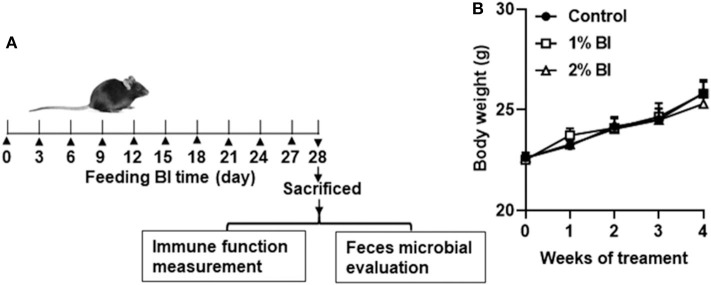
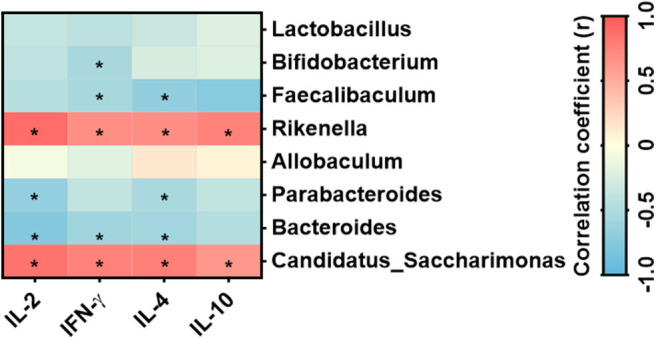
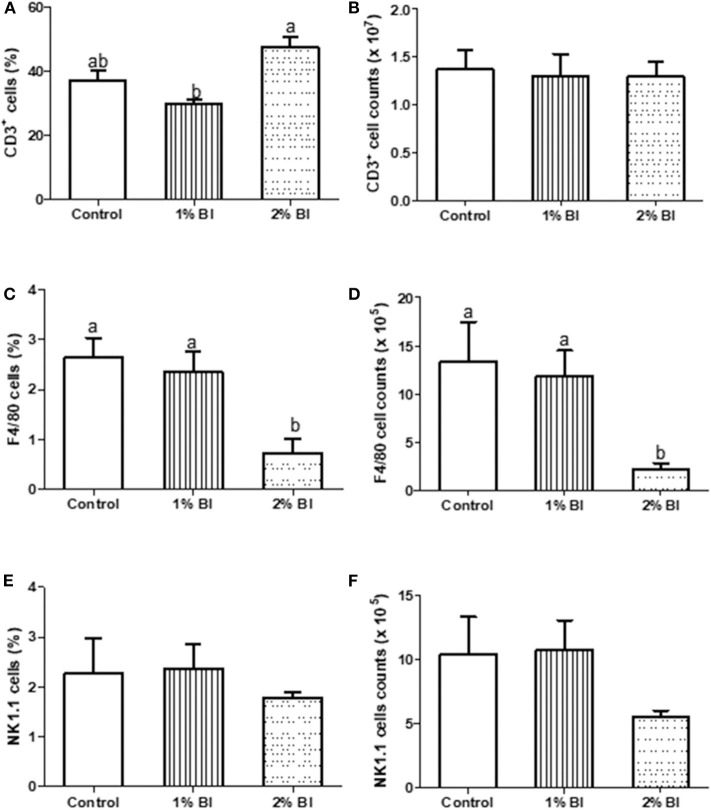
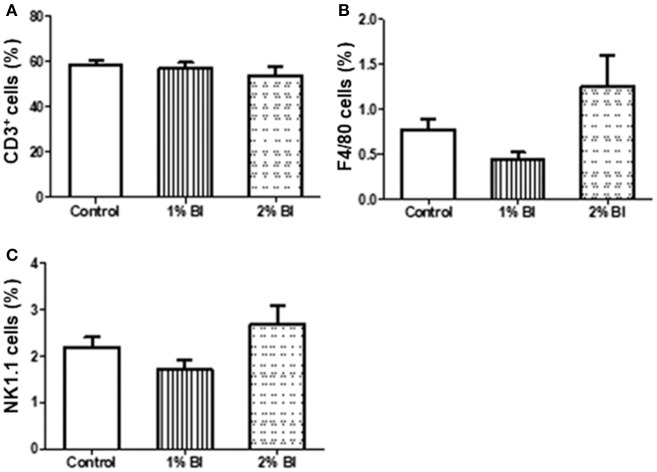
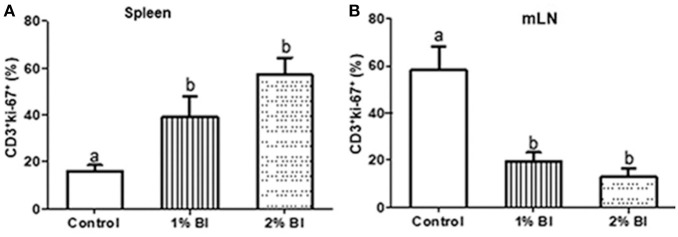
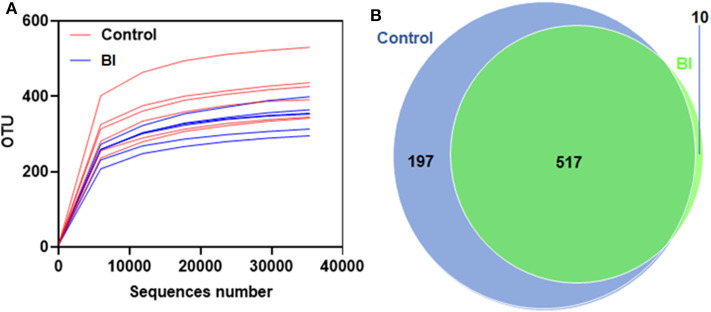
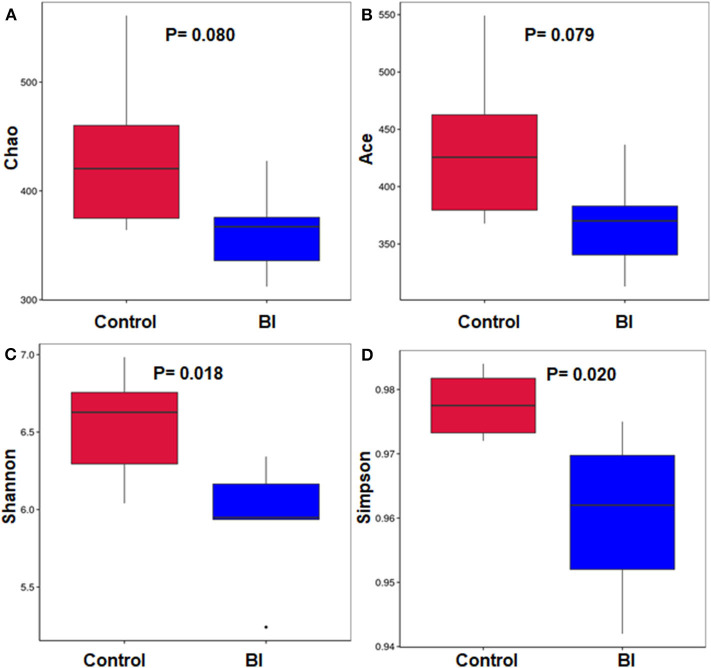
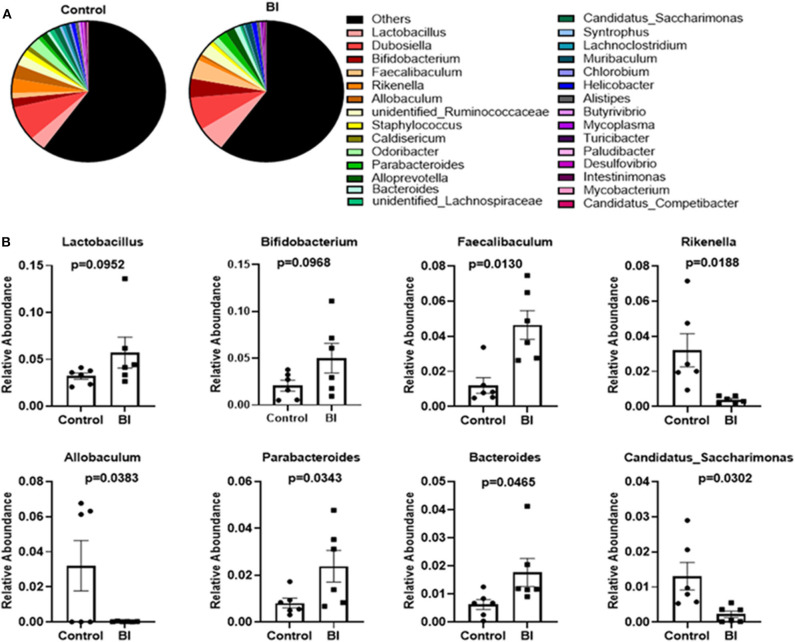
We aimed to determine the prebiotic impact of Mushroom (BI) on the host immune response and gut microbiota. Male C57BL/6 mice were fed a diet supplemented with 0, 1, or 2% BI for 4 wks. Compared to mice fed with a control diet (0% BI), mice fed with 1 or 2% BI had an increase of T cell proliferation from the spleen, but such change was not found between 1 and 2% BI treated mice. Also, BI at 2% increased the production of IL-2 of splenocytes stimulated with T-cell mitogens, but BI at 1 and 2% did not affect productions of other splenic-T cell cytokines including IL-4, IL-10, and IFN-γ. Interestingly, BI at 1 or 2% inhibited T cell proliferation of mesenteric lymph node (mLN) but this effect was not found between 1 and 2% BI treated mice. Furthermore, BI inhibited the production of IL-2 in anti-CD3/CD28-stimulated T cells from mLN in a dose-dependent manner. Meanwhile, BI at 2%, not 1% inhibited the production of IL-4, IL-10, and IFN-γ of mLN. Since BI at 2% produced a more significant effect on the immune response, we further used BI at 2% to evaluate the effect of BI on gut microbiota. Of note, BI reduced the diversity of gut microbiota and resulted in an increase of and abundance and the decrease of _, and abundance at the genus level. Finally, the correlation was observed between specific bacteria genera and the productions of T-cell cytokines from mesenteric lymphocytes: and correlated positively with IL-2, IL-4, IL-10, and IFN-γ; and correlated negatively with IL-2 and IL-4; correlated negatively with IFN-γ and IL-4 and and correlated negatively with IFN-γ. The specific role of each intestinal microbiota observed is still unclear, but BI might exert a prebiotic effect on gut microbiota by increasing the abundance of potentially beneficial bacteria (). This is helpful for further demonstrating the healthy-promotion mechanism of .
我们旨在确定蘑菇(BI)对宿主免疫反应和肠道微生物群的益生元影响。将雄性C57BL/6小鼠喂食补充有0%、1%或2% BI的饮食4周。与喂食对照饮食(0% BI)的小鼠相比,喂食1%或2% BI的小鼠脾脏T细胞增殖增加,但在1%和2% BI处理的小鼠之间未发现这种变化。此外,2%的BI增加了用T细胞有丝分裂原刺激的脾细胞中IL-2的产生,但1%和2%的BI不影响其他脾T细胞细胞因子(包括IL-4、IL-10和IFN-γ)的产生。有趣的是,1%或2%的BI抑制肠系膜淋巴结(mLN)的T细胞增殖,但在1%和2% BI处理的小鼠之间未发现这种效应。此外,BI以剂量依赖的方式抑制来自mLN的抗CD3/CD28刺激的T细胞中IL-2的产生。同时,2%而非1%的BI抑制mLN中IL-4、IL-10和IFN-γ的产生。由于2%的BI对免疫反应产生了更显著的影响,我们进一步使用2%的BI来评估BI对肠道微生物群的影响。值得注意的是,BI降低了肠道微生物群的多样性,并导致属水平上_和_丰度增加以及_、_和_丰度降低。最后,观察到特定细菌属与肠系膜淋巴细胞中T细胞细胞因子的产生之间存在相关性:_和_与IL-2、IL-4、IL-10和IFN-γ呈正相关;_和_与IL-2和IL-4呈负相关;_与IFN-γ和IL-4呈负相关,和_与IFN-γ呈负相关。所观察到的每种肠道微生物群的具体作用仍不清楚,但BI可能通过增加潜在有益细菌()的丰度对肠道微生物群发挥益生元作用。这有助于进一步证明_的健康促进机制。