Mathematics and Applied Mathematics Department, University of Johannesburg, Auckland Park Kingsway Campus, PO Box 524, 2006 Johannesburg, South Africa.
Comput Math Methods Med. 2020 Oct 29;2020:5379278. doi: 10.1155/2020/5379278. eCollection 2020.
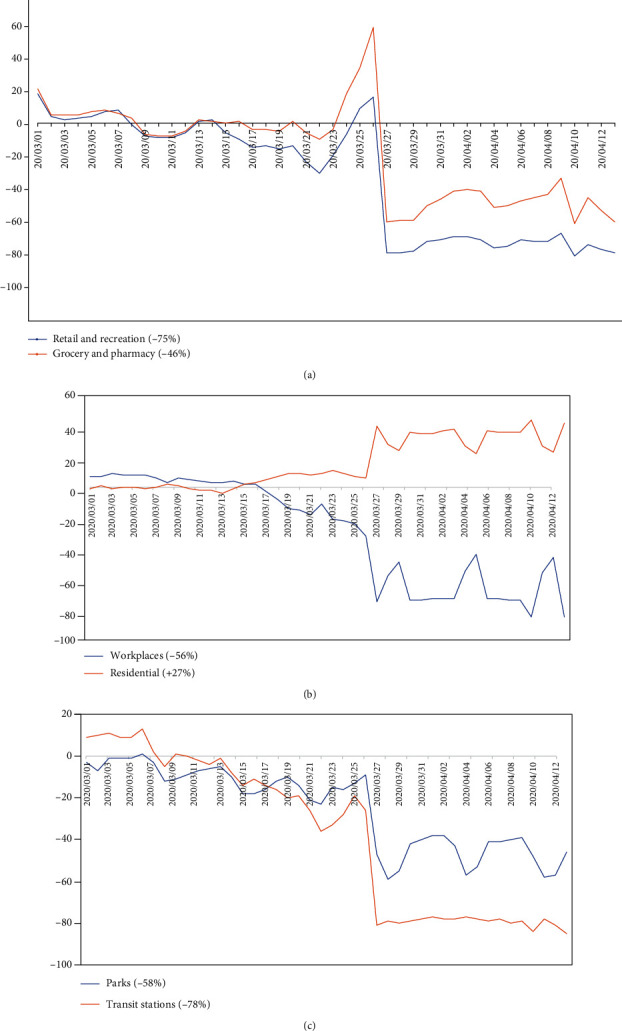
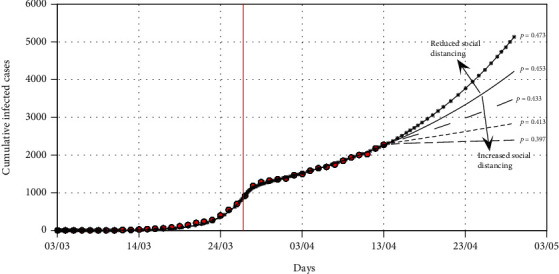
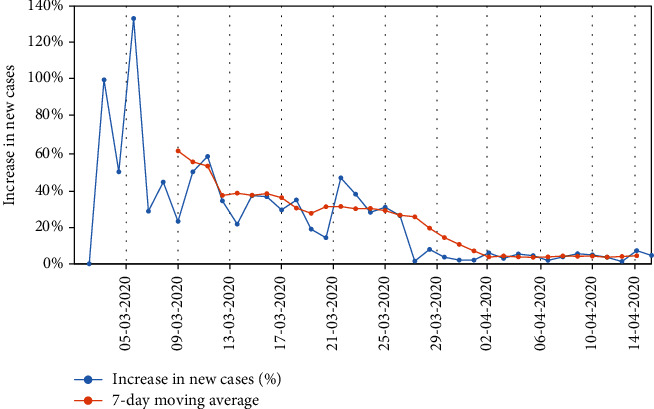
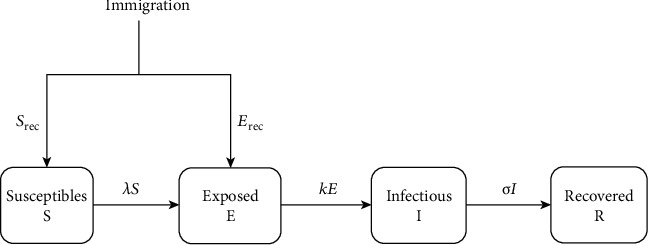
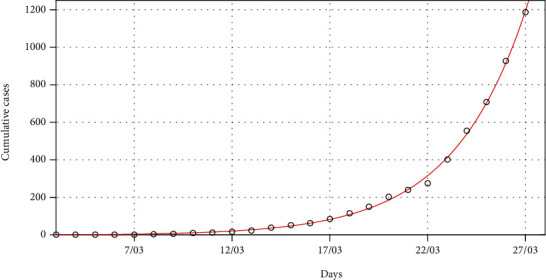
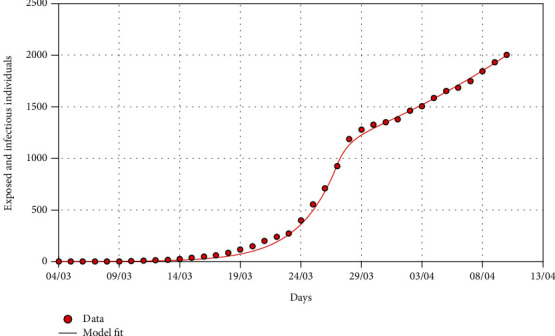
The novel coronavirus (COVID-19) pandemic continues to be a global health problem whose impact has been significantly felt in South Africa. With the global spread increasing and infecting millions, containment efforts by countries have largely focused on lockdowns and social distancing to minimise contact between persons. Social distancing has been touted as the best form of response in managing a rapid increase in the number of infected cases. In this paper, we present a deterministic model to describe the impact of social distancing on the transmission dynamics of COVID-19 in South Africa. The model is fitted to data from March 5 to April 13, 2020, on the cumulative number of infected cases, and a scenario analysis on different levels of social distancing is presented. The model shows that with the levels of social distancing under the initial lockdown level between March 26 and April 13, 2020, there would be a projected continued rise in the number of infected cases. The model also looks at the impact of relaxing the social distancing measures after the initial announcement of the lockdown. It is shown that relaxation of social distancing by 2% can result in a 23% rise in the number of cumulative cases whilst an increase in the level of social distancing by 2% would reduce the number of cumulative cases by about 18%. The model results accurately predicted the number of cases after the initial lockdown level was relaxed towards the end of April 2020. These results have implications on the management and policy direction in the early phase of the epidemic.
新型冠状病毒(COVID-19)疫情持续成为全球卫生问题,其影响在南非尤为明显。随着全球传播的加剧和数百万人感染,各国的防控工作主要集中在封锁和社交隔离上,以尽量减少人与人之间的接触。社交隔离被吹捧为应对感染人数迅速增加的最佳方式。在本文中,我们提出了一个确定性模型来描述社交隔离对南非 COVID-19 传播动态的影响。该模型拟合了 2020 年 3 月 5 日至 4 月 13 日期间累计感染人数的数据,并对不同水平的社交隔离进行了情景分析。该模型表明,在 2020 年 3 月 26 日至 4 月 13 日期间实施初始封锁水平以下的社交隔离水平,预计感染人数将继续上升。该模型还研究了在最初宣布封锁后放松社交隔离措施的影响。结果表明,放松社交隔离措施 2%可导致累计病例数增加 23%,而社交隔离水平提高 2%则可使累计病例数减少约 18%。该模型的结果准确预测了 2020 年 4 月底放松初始封锁水平后病例数的增加。这些结果对疫情早期的管理和政策方向具有重要意义。