You Yaqi, Kobayashi Kazuya, Colak Burcu, Luo Piaopiao, Cozens Edward, Fields Laura, Suzuki Ken, Gautrot Julien
Institute of Bioengineering, Queen Mary, University of London, Mile End Road, London, E1 4NS, UK; School of Engineering and Materials Science, Queen Mary, University of London, Mile End Road, London, E1 4NS, UK; William Harvey Research Institute, Barts and the London School of Medicine and Dentistry, Queen Mary University of London, EC1M 6BQ, UK.
William Harvey Research Institute, Barts and the London School of Medicine and Dentistry, Queen Mary University of London, EC1M 6BQ, UK.
Biomaterials. 2021 Feb;269:120356. doi: 10.1016/j.biomaterials.2020.120356. Epub 2020 Sep 19.
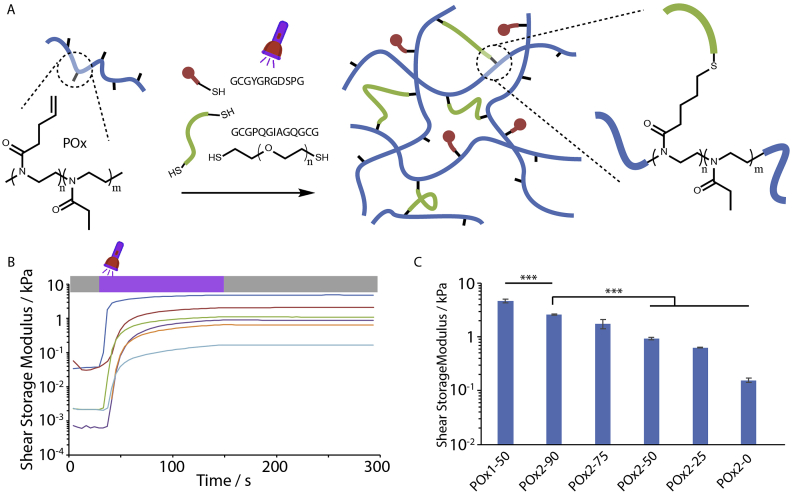
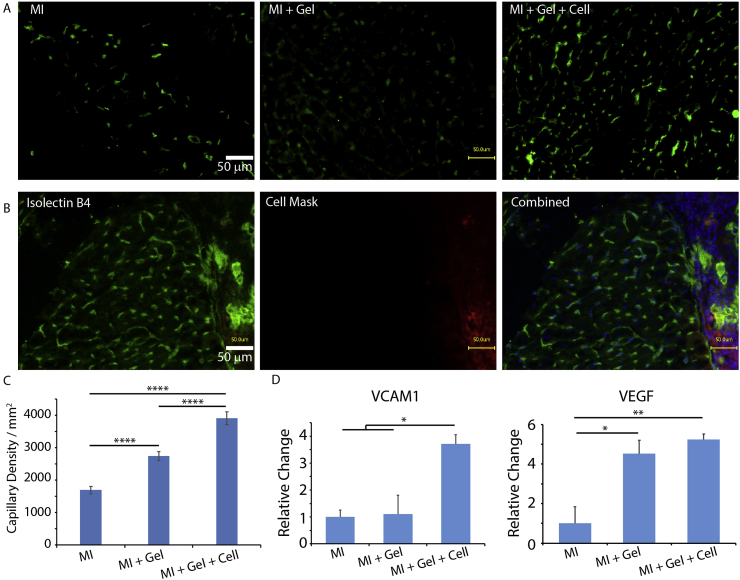
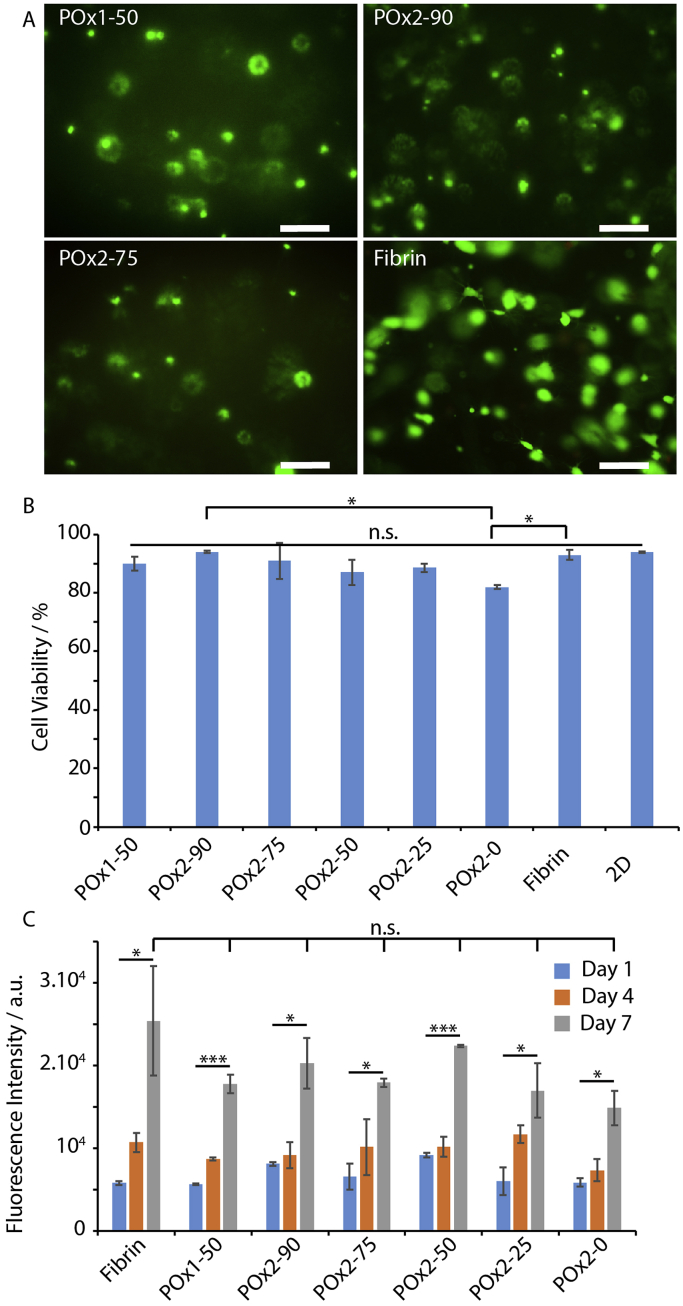
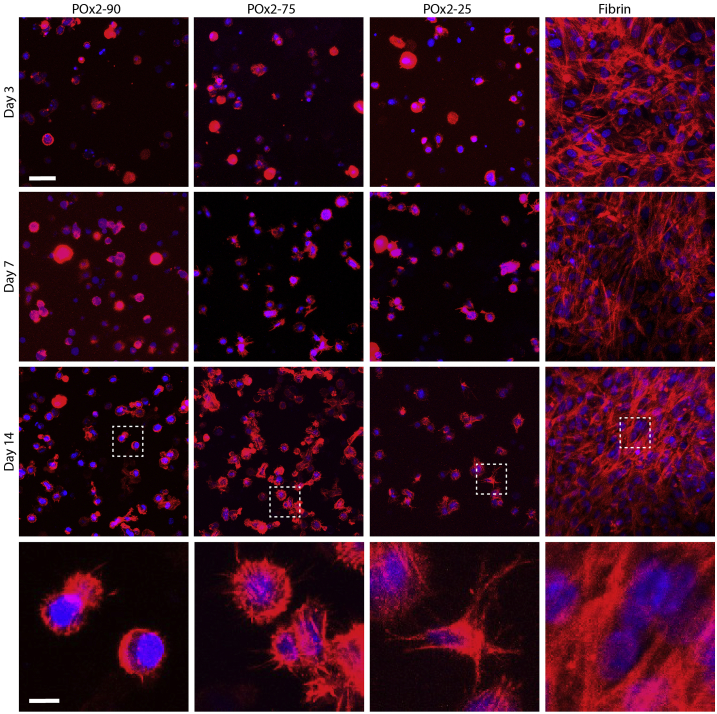
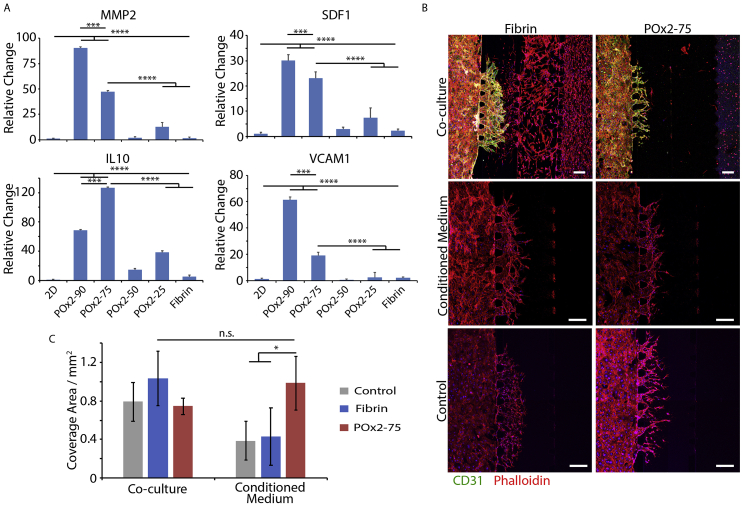
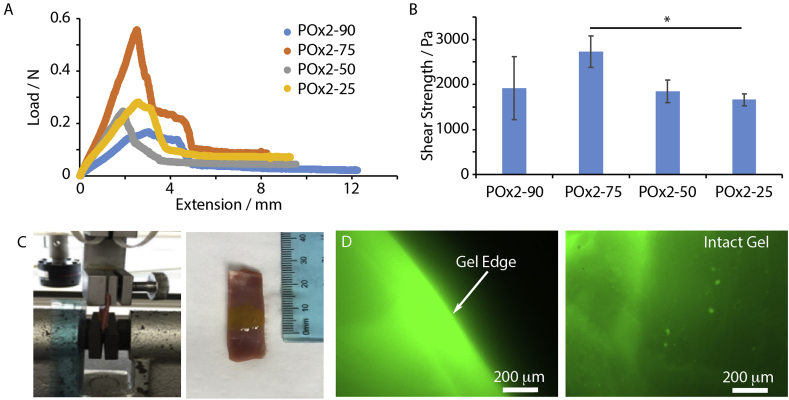
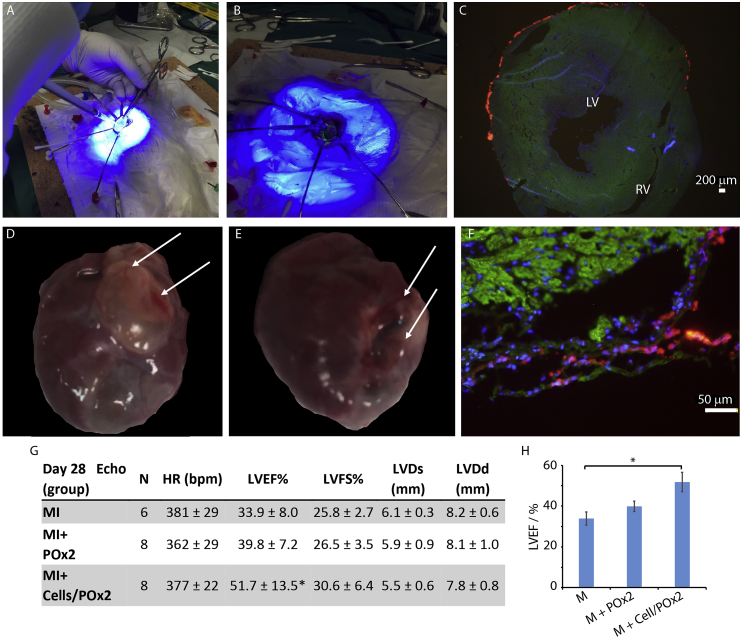
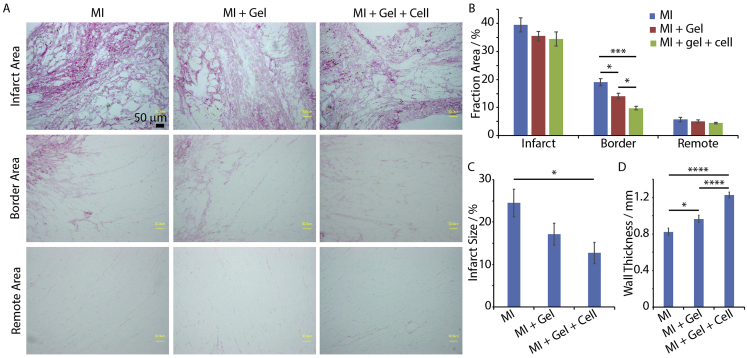
Epicardial placement of mesenchymal stromal cells (MSCs) is a promising strategy for cardiac repair post-myocardial infarction, but requires the design of biomaterials to maximise the retention of donor cells on the heart surface and control their phenotype. To this end, we propose the use of a poly(2-alkyl-2-oxazoline) (POx) derivative, based on 2-ethyl-2-oxazoline and 2-butenyl-2-oxazoline. This POx polymer can be cured rapidly (less than 2 min) via photo-irradiation due to the use of di-cysteine cell degradable peptides. We report that the cell-degradable properties of the resulting POx hydrogels enables the regulation of cell protrusion in corresponding 3D matrices and that this, in turn, regulates the secretory phenotype of MSCs. In particular, the expression of pro-angiogenic genes was upregulated in partially cell-degradable POx hydrogels. Improved angiogenesis was confirmed in an in vitro microfluidic assay. Finally, we confirmed that, owing to the excellent tissue adhesive properties of thiol-ene crosslinked hydrogels, the epicardial placement of MSC-loaded POx hydrogels promoted the recovery of cardiac function and structure with reduced interstitial fibrosis and improved neovascular formation in a rat myocardial infarction model. This report demonstrates that engineered synthetic hydrogels displaying controlled mechanical, cell degradable and bioactive properties are particularly attractive candidates for the epicardial placement of stem cells to promote cardiac repair post myocardial infarction.
间充质基质细胞(MSCs)的心外膜植入是心肌梗死后心脏修复的一种有前景的策略,但需要设计生物材料以最大限度地保留供体细胞在心脏表面并控制其表型。为此,我们提议使用基于2-乙基-2-恶唑啉和2-丁烯基-2-恶唑啉的聚(2-烷基-2-恶唑啉)(POx)衍生物。由于使用了二硫氨酸细胞可降解肽,这种POx聚合物可通过光照射快速固化(不到2分钟)。我们报告称,所得POx水凝胶的细胞可降解特性能够调节相应3D基质中的细胞突起,进而调节MSCs的分泌表型。特别是,促血管生成基因的表达在部分细胞可降解的POx水凝胶中上调。在体外微流控试验中证实了血管生成得到改善。最后,我们证实,由于硫醇-烯交联水凝胶具有优异的组织粘附特性,负载MSCs的POx水凝胶的心外膜植入促进了大鼠心肌梗死模型中心脏功能和结构的恢复,减少了间质纤维化并改善了新生血管形成。本报告表明,具有可控机械性能、细胞可降解和生物活性特性的工程合成水凝胶是干细胞心外膜植入以促进心肌梗死后心脏修复的极具吸引力的候选材料。