MOE Key Laboratory of Deep Earth Science and Engineering, College of Architecture and Environment, Sichuan University, Chengdu, 610065, China.
MOE Key Laboratory of Deep Earth Science and Engineering, College of Architecture and Environment, Sichuan University, Chengdu, 610065, China; Department of Chemical and Environmental Engineering, Yale University, New Haven, CT, 06511, United States.
Environ Res. 2021 Jul;198:110474. doi: 10.1016/j.envres.2020.110474. Epub 2020 Nov 13.
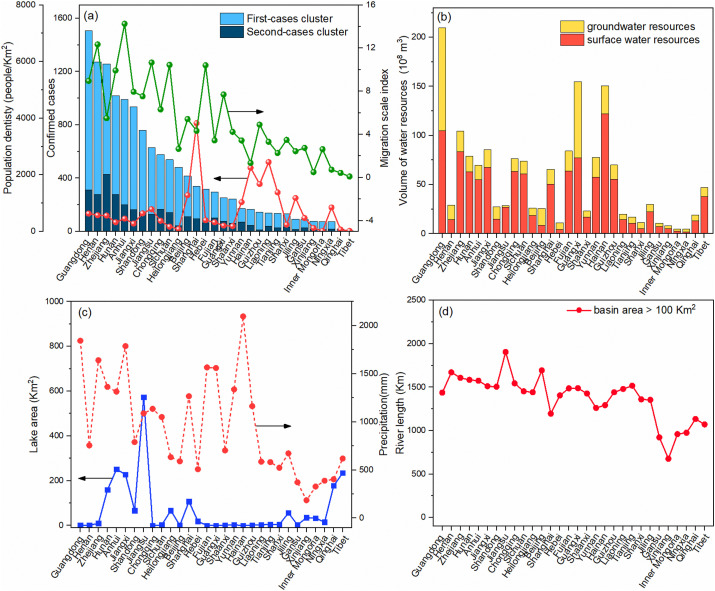
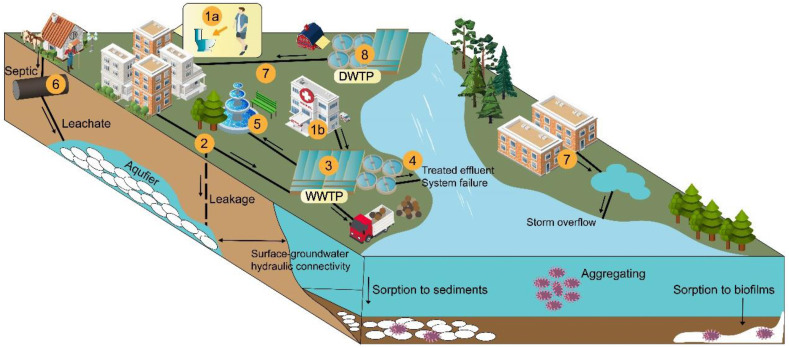
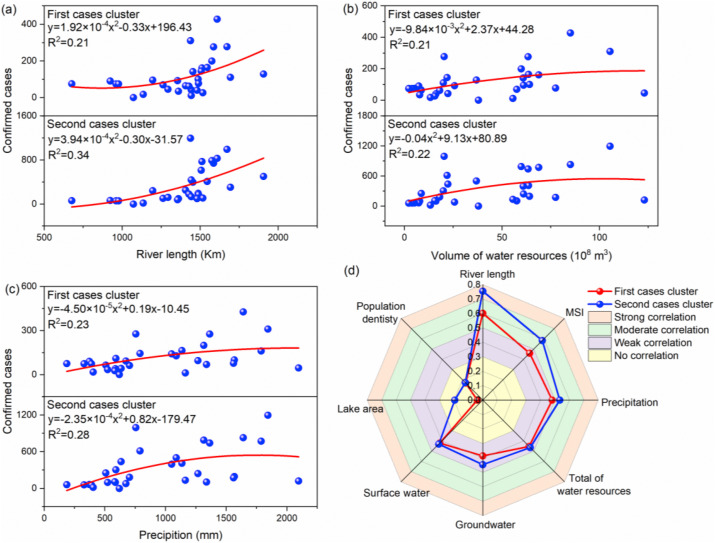
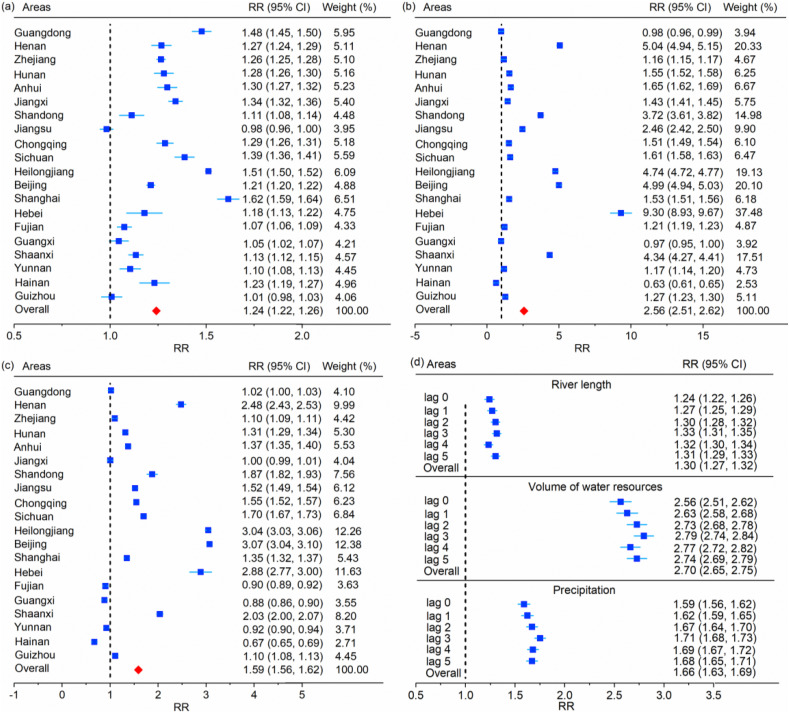
Considering the live SARS-CoV-2 was detected and isolated from the excrement and urine of infected patients, the potential public health risk of its waterborne transmission should be paid broad and close attention. The purpose of the current study is to investigate the associations between COVID-19 incidences and hydrological factors such as lake area, river length, precipitation and volume of water resources in 30 regions of China. All confirmed cases for each areas were divided into two clusters including first cases cluster driven by imported cases during the period of January 20th to January 29th, 2020 and second cases cluster driven by local cases during the period of January 30th to March 1st, 2020. Based on the results of descriptive analysis and nonlinear regression analysis, positive associations with COVID-19 confirmed numbers were observed for migration scale index (MSI), river length, precipitation and volume of water resources, but negative associations for population density. The correlation coefficient in the second stage cases cluster is apparently higher than that in the first stage cases cluster. Then, the negative binomial-generalized linear model (NB-GLM) was fitted to estimate area-specific effects of hydrological variables on relative risk (RR) with the incorporation of additional variables (e.g., MSI) and the effects of exposure-lag-response. The statistically significant associations between RR and river length, the volume of water resources, precipitation were obtained by meta-analysis as 1.24 (95% CI: 1.22, 1.27), 2.56 (95% CI: 2.50, 2.61) and 1.59 (95% CI: 1.56, 1.62), respectively. The possible water transmission routes of SARS-CoV-2 and the potential capacity of long-distance transmission of SARS-CoV-2 in water environment was also discussed. Our results could provide a better guidance for local and global authorities to broaden the mind for understanding the natural-social system or intervening measures for COVID-19 control at the current or futural stage.
考虑到活的 SARS-CoV-2 已从感染患者的粪便和尿液中检测和分离出来,其经水传播的潜在公共卫生风险应引起广泛和密切关注。本研究的目的是调查 COVID-19 发病率与中国 30 个地区的湖泊面积、河流长度、降水和水资源量等水文因素之间的关系。将每个地区的所有确诊病例分为两个集群,包括第一集群,该集群由 2020 年 1 月 20 日至 1 月 29 日期间输入病例驱动;第二集群由 2020 年 1 月 30 日至 3 月 1 日期间本地病例驱动。基于描述性分析和非线性回归分析的结果,发现迁移规模指数(MSI)、河流长度、降水和水资源量与 COVID-19 确诊人数呈正相关,而人口密度与 COVID-19 确诊人数呈负相关。第二阶段病例群的相关系数明显高于第一阶段病例群。然后,将负二项广义线性模型(NB-GLM)拟合到估计水文变量对相对风险(RR)的区域特定效应中,同时纳入了其他变量(例如 MSI)和暴露-滞后-反应的影响。通过荟萃分析获得了 RR 与河流长度、水资源量和降水之间的统计学显著关联,结果分别为 1.24(95%CI:1.22,1.27)、2.56(95%CI:2.50,2.61)和 1.59(95%CI:1.56,1.62)。还讨论了 SARS-CoV-2 的可能水传播途径以及 SARS-CoV-2 在水环境中的长途传播潜力。我们的研究结果可为地方和全球当局提供更好的指导,以拓宽思路,从自然-社会系统的角度理解或干预当前或未来阶段 COVID-19 控制措施。