Fernández Cruz Manuel, Álvarez Rodríguez José, Ávalos Ruiz Inmaculada, Cuevas López Mercedes, de Barros Camargo Claudia, Díaz Rosas Francisco, González Castellón Esther, González González Daniel, Hernández Fernández Antonio, Ibáñez Cubillas Pilar, Lizarte Simón Emilio Jesús
Department of Didactics and School Organization, Faculty of Education Sciences, University of Granada, Granada, Spain.
Department of Pedagogy, Faculty of Education Sciences, University of Granada, Granada, Spain.
Front Psychol. 2020 Oct 23;11:565503. doi: 10.3389/fpsyg.2020.565503. eCollection 2020.
In a situation of compulsory home isolation enacted by governments at the spreading of the Covid-19 pandemic, the emotional health and well-being of students became a key factor in the successful implementation of distance teaching methodologies in face-to-face education universities. Psychological well-being, an essential factor in preventing academic failure, has been threatened in this serious situation of unprecedented and stressful isolation. The aim of this study is to analyze the students' cognitive-emotional regulation as well as their beliefs and perceptions about the pandemic and this lockdown situation. With this extensive study we are carrying out, want to describe the extent to which the lockdown situation is a risk factor, and, in the future, make proposals for preventive and palliative actions, if necessary, to minimize this potential risk.
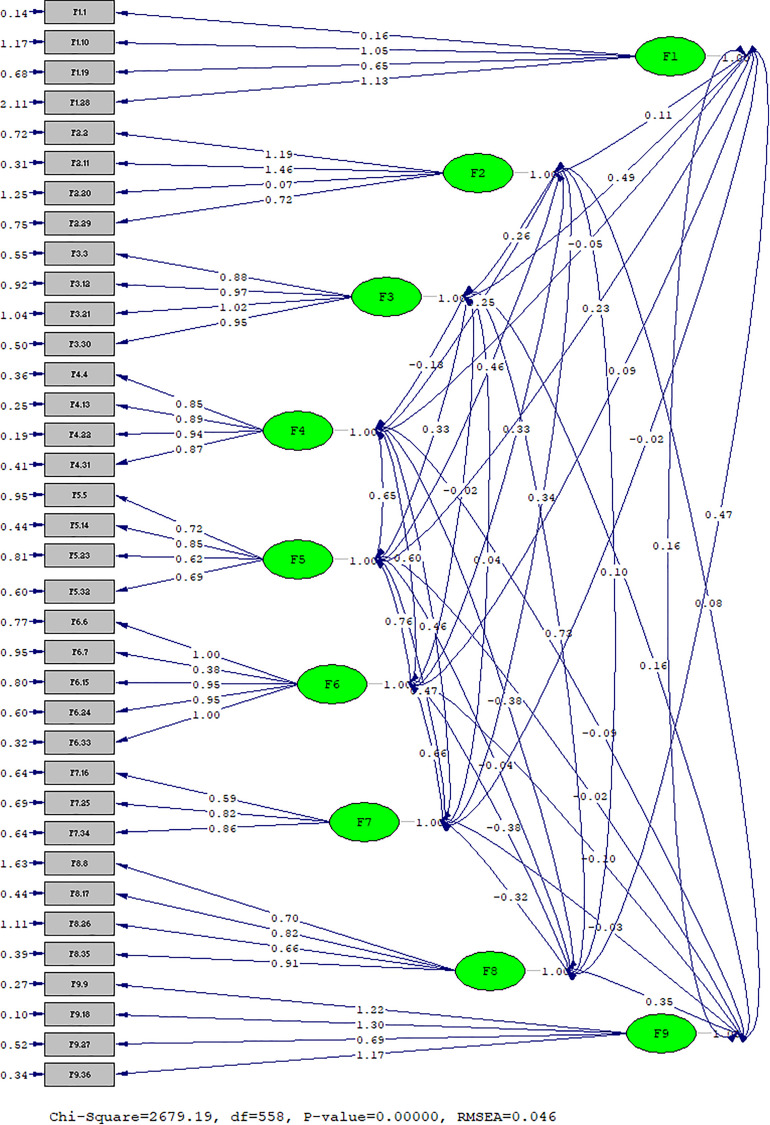
We applied the CERQ Cognitive Emotion Regulation Questionnaire by means of an online application together with a questionnaire, CC/covid-19, of objective description and subjective perception of the lockdown situation of the students, their conditions to study, general opinions about the pandemic and specific opinions about the real possibilities of implementing online education in the middle of the academic year at the university. 1910 valid responses from more than 80 universities in 13 different Spanish-speaking countries were obtained and submitted to descriptive analysis and modeling using structural equations.
Most of them consider that the lockdown decision is correct, that health systems are not prepared to deal with the pandemic, and that although the universities have adequate means, the teaching staff is not competent to implement online teaching methodologies. They have a good perception of the conditions of isolation, however, the time devoted to studying has not increased. One of the results of our study is the students' self-evaluation about their digital competence and their capacity to perform in online interactive communication. This is key to rejecting a feeling of loneliness or social isolation, even if there is momentary physical separation with friends and classmates which is consistent with the results of emotional well-being the surveyed students present. The cognitive strategies used by the students surveyed have allowed them coping with events arising from the pandemic, mandatory isolation and university closure, certainly adaptive and functional, while maintaining a positive perception of their new living and learning situation.
在新冠疫情蔓延期间政府实施强制居家隔离的情况下,学生的情绪健康和幸福成为面对面教育的大学成功实施远程教学方法的关键因素。心理健康是防止学业失败的重要因素,但在这种前所未有的、压力巨大的隔离严峻形势下受到了威胁。本研究的目的是分析学生的认知情绪调节以及他们对疫情和这种封锁情况的信念与看法。通过我们正在进行的这项广泛研究,想要描述封锁情况在多大程度上是一个风险因素,并在未来,如有必要,提出预防和缓解行动的建议,以尽量减少这种潜在风险。
我们通过在线应用程序应用了CERQ认知情绪调节问卷,以及一份关于学生封锁情况的客观描述和主观认知、学习条件、对疫情的总体看法以及对学年中大学实施在线教育实际可能性的具体看法的问卷(CC/covid - 19)。我们获得了来自13个不同西班牙语国家80多所大学的1910份有效回复,并对其进行描述性分析和使用结构方程的建模。
他们中的大多数人认为封锁决定是正确的,卫生系统没有准备好应对疫情,并且尽管大学有足够的手段,但教学人员没有能力实施在线教学方法。他们对隔离条件有良好的认知,然而,用于学习的时间并没有增加。我们研究的结果之一是学生对自己数字能力以及在在线互动交流中表现能力的自我评估。这是拒绝孤独感或社会隔离感的关键,即使与朋友和同学有暂时的身体分离,这与被调查学生呈现的情绪幸福结果一致。被调查学生使用的认知策略使他们能够应对疫情、强制隔离和大学关闭所引发的事件,这些策略肯定是适应性的且起作用的,同时对他们新的生活和学习状况保持积极的认知。