• 文献检索
  • 文档翻译
  • 深度研究
  • 学术资讯
  • Suppr Zotero 插件Zotero 插件
  • 邀请有礼
  • 套餐&价格
  • 历史记录
应用&插件
Suppr Zotero 插件Zotero 插件浏览器插件Mac 客户端Windows 客户端微信小程序
定价
高级版会员购买积分包购买API积分包
服务
文献检索文档翻译深度研究API 文档MCP 服务
关于我们
关于 Suppr公司介绍联系我们用户协议隐私条款
关注我们

Suppr 超能文献

核心技术专利:CN118964589B侵权必究
粤ICP备2023148730 号-1Suppr @ 2026

文献检索

告别复杂PubMed语法,用中文像聊天一样搜索,搜遍4000万医学文献。AI智能推荐,让科研检索更轻松。

立即免费搜索

文件翻译

保留排版,准确专业,支持PDF/Word/PPT等文件格式,支持 12+语言互译。

免费翻译文档

深度研究

AI帮你快速写综述,25分钟生成高质量综述,智能提取关键信息,辅助科研写作。

立即免费体验

采用迁移学习的深度学习卷积神经网络可在便携式胸部X光片上准确分类新型冠状病毒肺炎肺部感染情况。

Deep-learning convolutional neural networks with transfer learning accurately classify COVID-19 lung infection on portable chest radiographs.

作者信息

Kikkisetti Shreeja, Zhu Jocelyn, Shen Beiyi, Li Haifang, Duong Tim Q

机构信息

Radiology, Montefiore Medical Center and Albert Einstein College of Medicine, Bronx, NY, USA.

Radiology, State University of New York at Stony Brook, Stony Brook, NY, USA.

出版信息

PeerJ. 2020 Nov 5;8:e10309. doi: 10.7717/peerj.10309. eCollection 2020.

DOI:10.7717/peerj.10309
PMID:33194447
原文链接:https://pmc.ncbi.nlm.nih.gov/articles/PMC7649013/
Abstract

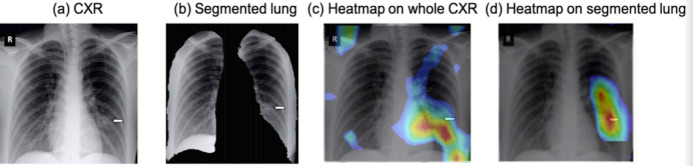
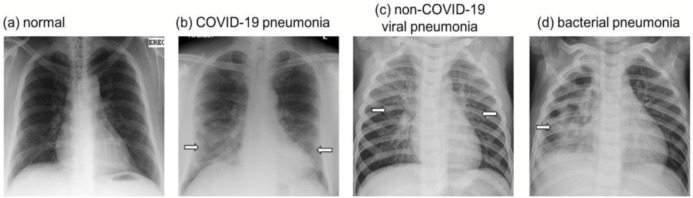
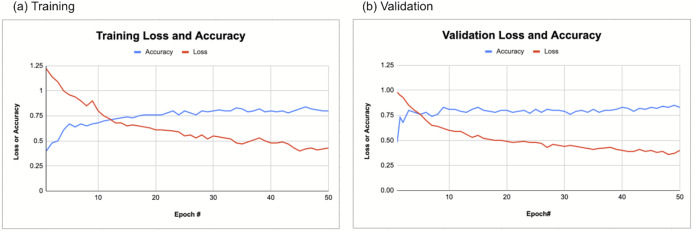
Portable chest X-ray (pCXR) has become an indispensable tool in the management of Coronavirus Disease 2019 (COVID-19) lung infection. This study employed deep-learning convolutional neural networks to classify COVID-19 lung infections on pCXR from normal and related lung infections to potentially enable more timely and accurate diagnosis. This retrospect study employed deep-learning convolutional neural network (CNN) with transfer learning to classify based on pCXRs COVID-19 pneumonia ( = 455) on pCXR from normal ( = 532), bacterial pneumonia ( = 492), and non-COVID viral pneumonia ( = 552). The data was randomly split into 75% training and 25% testing, randomly. A five-fold cross-validation was used for the testing set separately. Performance was evaluated using receiver-operating curve analysis. Comparison was made with CNN operated on the whole pCXR and segmented lungs. CNN accurately classified COVID-19 pCXR from those of normal, bacterial pneumonia, and non-COVID-19 viral pneumonia patients in a multiclass model. The overall sensitivity, specificity, accuracy, and AUC were 0.79, 0.93, and 0.79, 0.85 respectively (whole pCXR), and were 0.91, 0.93, 0.88, and 0.89 (CXR of segmented lung). The performance was generally better using segmented lungs. Heatmaps showed that CNN accurately localized areas of hazy appearance, ground glass opacity and/or consolidation on the pCXR. Deep-learning convolutional neural network with transfer learning accurately classifies COVID-19 on portable chest X-ray against normal, bacterial pneumonia or non-COVID viral pneumonia. This approach has the potential to help radiologists and frontline physicians by providing more timely and accurate diagnosis.

摘要

便携式胸部X光(pCXR)已成为2019冠状病毒病(COVID-19)肺部感染管理中不可或缺的工具。本研究采用深度学习卷积神经网络,对pCXR上的COVID-19肺部感染与正常及相关肺部感染进行分类,以实现更及时、准确的诊断。这项回顾性研究采用具有迁移学习的深度学习卷积神经网络(CNN),根据pCXR将COVID-19肺炎(n = 455)与正常情况(n = 532)、细菌性肺炎(n = 492)和非COVID病毒性肺炎(n = 552)进行分类。数据被随机分为75%用于训练和25%用于测试。对测试集分别使用五折交叉验证。使用受试者工作特征曲线分析评估性能。将其与在整个pCXR和分割肺部上运行的CNN进行比较。在多类模型中,CNN能准确地将COVID-19的pCXR与正常、细菌性肺炎和非COVID-19病毒性肺炎患者的pCXR区分开来。总体敏感性、特异性、准确性和AUC分别为0.79、0.93、0.79和0.85(整个pCXR),以及0.91、0.93、0.88和0.89(分割肺部的CXR)。使用分割肺部时性能通常更好。热图显示,CNN能准确地在pCXR上定位模糊外观、磨玻璃影和/或实变区域。具有迁移学习的深度学习卷积神经网络能在便携式胸部X光上准确地将COVID-19与正常、细菌性肺炎或非COVID病毒性肺炎区分开来。这种方法有可能通过提供更及时、准确的诊断来帮助放射科医生和一线医生。
https://cdn.ncbi.nlm.nih.gov/pmc/blobs/c226/7649013/f725638e8c35/peerj-08-10309-g004.jpg
https://cdn.ncbi.nlm.nih.gov/pmc/blobs/c226/7649013/57fbbd4307e4/peerj-08-10309-g001.jpg
https://cdn.ncbi.nlm.nih.gov/pmc/blobs/c226/7649013/17d0205d4352/peerj-08-10309-g002.jpg
https://cdn.ncbi.nlm.nih.gov/pmc/blobs/c226/7649013/f4c11c038b3f/peerj-08-10309-g003.jpg
https://cdn.ncbi.nlm.nih.gov/pmc/blobs/c226/7649013/f725638e8c35/peerj-08-10309-g004.jpg
https://cdn.ncbi.nlm.nih.gov/pmc/blobs/c226/7649013/57fbbd4307e4/peerj-08-10309-g001.jpg
https://cdn.ncbi.nlm.nih.gov/pmc/blobs/c226/7649013/17d0205d4352/peerj-08-10309-g002.jpg
https://cdn.ncbi.nlm.nih.gov/pmc/blobs/c226/7649013/f4c11c038b3f/peerj-08-10309-g003.jpg
https://cdn.ncbi.nlm.nih.gov/pmc/blobs/c226/7649013/f725638e8c35/peerj-08-10309-g004.jpg

相似文献

1
Deep-learning convolutional neural networks with transfer learning accurately classify COVID-19 lung infection on portable chest radiographs.采用迁移学习的深度学习卷积神经网络可在便携式胸部X光片上准确分类新型冠状病毒肺炎肺部感染情况。
PeerJ. 2020 Nov 5;8:e10309. doi: 10.7717/peerj.10309. eCollection 2020.
2
Deep transfer learning artificial intelligence accurately stages COVID-19 lung disease severity on portable chest radiographs.深度迁移学习人工智能可在便携式胸部 X 光片上准确分期 COVID-19 肺部疾病的严重程度。
PLoS One. 2020 Jul 28;15(7):e0236621. doi: 10.1371/journal.pone.0236621. eCollection 2020.
3
Machine-learning classification of texture features of portable chest X-ray accurately classifies COVID-19 lung infection.基于便携式胸部 X 光的纹理特征的机器学习分类可准确区分 COVID-19 肺部感染。
Biomed Eng Online. 2020 Nov 25;19(1):88. doi: 10.1186/s12938-020-00831-x.
4
Detection of COVID-19 from Chest X-Ray Images Using Convolutional Neural Networks.基于卷积神经网络的胸部 X 光图像 COVID-19 检测。
SLAS Technol. 2020 Dec;25(6):553-565. doi: 10.1177/2472630320958376. Epub 2020 Sep 18.
5
Deep learning of longitudinal chest X-ray and clinical variables predicts duration on ventilator and mortality in COVID-19 patients.深度学习纵向胸部 X 射线和临床变量可预测 COVID-19 患者的呼吸机使用时间和死亡率。
Biomed Eng Online. 2022 Oct 14;21(1):77. doi: 10.1186/s12938-022-01045-z.
6
Deep CNN models for predicting COVID-19 in CT and x-ray images.用于在CT和X光图像中预测新冠肺炎的深度卷积神经网络模型。
J Med Imaging (Bellingham). 2021 Jan;8(Suppl 1):014502. doi: 10.1117/1.JMI.8.S1.014502. Epub 2021 Apr 21.
7
Deep learning approaches for COVID-19 detection based on chest X-ray images.基于胸部X光图像的新冠肺炎检测深度学习方法
Expert Syst Appl. 2021 Feb;164:114054. doi: 10.1016/j.eswa.2020.114054. Epub 2020 Sep 28.
8
Multi-View Ensemble Convolutional Neural Network to Improve Classification of Pneumonia in Low Contrast Chest X-Ray Images.多视图集成卷积神经网络用于改善低对比度胸部X光图像中肺炎的分类
Annu Int Conf IEEE Eng Med Biol Soc. 2020 Jul;2020:1238-1241. doi: 10.1109/EMBC44109.2020.9176517.
9
Classifying COVID-19 and Viral Pneumonia Lung Infections through Deep Convolutional Neural Network Model using Chest X-Ray Images.使用胸部X光图像通过深度卷积神经网络模型对新冠肺炎和病毒性肺炎肺部感染进行分类。
J Med Phys. 2022 Jan-Mar;47(1):57-64. doi: 10.4103/jmp.jmp_100_21. Epub 2022 Mar 31.
10
Detection of COVID-19 in X-ray Images Using Densely Connected Squeeze Convolutional Neural Network (DCSCNN): Focusing on Interpretability and Explainability of the Black Box Model.基于密集连接挤压卷积神经网络(DCSCNN)的 X 射线图像中 COVID-19 的检测:聚焦黑箱模型的可解释性和可说明性。
Sensors (Basel). 2022 Dec 18;22(24):9983. doi: 10.3390/s22249983.

引用本文的文献

1
Short- and Long-Term Chest-CT Findings after Recovery from COVID-19: A Systematic Review and Meta-Analysis.新冠康复后的短期和长期胸部CT表现:一项系统评价和荟萃分析
Diagnostics (Basel). 2024 Mar 14;14(6):621. doi: 10.3390/diagnostics14060621.
2
Deep Learning Methods for Interpretation of Pulmonary CT and X-ray Images in Patients with COVID-19-Related Lung Involvement: A Systematic Review.用于解读2019冠状病毒病相关肺部受累患者肺部CT和X线图像的深度学习方法:一项系统综述
J Clin Med. 2023 May 13;12(10):3446. doi: 10.3390/jcm12103446.
3
Longitudinal Chest X-ray Scores and their Relations with Clinical Variables and Outcomes in COVID-19 Patients.

本文引用的文献

1
Predicting COVID-19 Pneumonia Severity on Chest X-ray With Deep Learning.利用深度学习通过胸部X光预测新冠肺炎肺炎严重程度
Cureus. 2020 Jul 28;12(7):e9448. doi: 10.7759/cureus.9448.
2
Deep-learning artificial intelligence analysis of clinical variables predicts mortality in COVID-19 patients.对临床变量进行深度学习人工智能分析可预测COVID-19患者的死亡率。
J Am Coll Emerg Physicians Open. 2020 Aug 25;1(6):1364-1373. doi: 10.1002/emp2.12205. eCollection 2020 Dec.
3
Prediction model and risk scores of ICU admission and mortality in COVID-19.
COVID-19患者的胸部X线纵向评分及其与临床变量和预后的关系。
Diagnostics (Basel). 2023 Mar 15;13(6):1107. doi: 10.3390/diagnostics13061107.
4
Artificial Intelligence-Assisted Chest X-ray for the Diagnosis of COVID-19: A Systematic Review and Meta-Analysis.人工智能辅助胸部X光用于诊断新型冠状病毒肺炎:一项系统评价与荟萃分析
Diagnostics (Basel). 2023 Feb 5;13(4):584. doi: 10.3390/diagnostics13040584.
5
Application of Machine Learning and Deep Learning Techniques for COVID-19 Screening Using Radiological Imaging: A Comprehensive Review.使用放射成像的机器学习和深度学习技术在COVID-19筛查中的应用:综述
SN Comput Sci. 2023;4(1):65. doi: 10.1007/s42979-022-01464-8. Epub 2022 Nov 24.
6
Deep learning of longitudinal chest X-ray and clinical variables predicts duration on ventilator and mortality in COVID-19 patients.深度学习纵向胸部 X 射线和临床变量可预测 COVID-19 患者的呼吸机使用时间和死亡率。
Biomed Eng Online. 2022 Oct 14;21(1):77. doi: 10.1186/s12938-022-01045-z.
7
Effect of neural network structure in accelerating performance and accuracy of a convolutional neural network with GPU/TPU for image analytics.神经网络结构对使用GPU/TPU的卷积神经网络在图像分析中加速性能和提高准确性的影响。
PeerJ Comput Sci. 2022 Mar 3;8:e909. doi: 10.7717/peerj-cs.909. eCollection 2022.
8
A Literature Review on the Use of Artificial Intelligence for the Diagnosis of COVID-19 on CT and Chest X-ray.关于人工智能在CT和胸部X光片上诊断新冠肺炎应用的文献综述
Diagnostics (Basel). 2022 Mar 31;12(4):869. doi: 10.3390/diagnostics12040869.
9
An artificial intelligence deep learning platform achieves high diagnostic accuracy for Covid-19 pneumonia by reading chest X-ray images.一个人工智能深度学习平台通过读取胸部X光图像,对新冠肺炎肺炎实现了高诊断准确率。
iScience. 2022 Apr 15;25(4):104031. doi: 10.1016/j.isci.2022.104031. Epub 2022 Mar 6.
10
Explainable Machine Learning for COVID-19 Pneumonia Classification With Texture-Based Features Extraction in Chest Radiography.基于胸部X光片纹理特征提取的可解释机器学习用于新冠肺炎肺炎分类
Front Digit Health. 2022 Jan 17;3:662343. doi: 10.3389/fdgth.2021.662343. eCollection 2021.
新型冠状病毒肺炎患者 ICU 入住和死亡的预测模型和风险评分。
PLoS One. 2020 Jul 30;15(7):e0236618. doi: 10.1371/journal.pone.0236618. eCollection 2020.
4
Deep transfer learning artificial intelligence accurately stages COVID-19 lung disease severity on portable chest radiographs.深度迁移学习人工智能可在便携式胸部 X 光片上准确分期 COVID-19 肺部疾病的严重程度。
PLoS One. 2020 Jul 28;15(7):e0236621. doi: 10.1371/journal.pone.0236621. eCollection 2020.
5
Continued In-Hospital Angiotensin-Converting Enzyme Inhibitor and Angiotensin II Receptor Blocker Use in Hypertensive COVID-19 Patients Is Associated With Positive Clinical Outcome.高血压合并 COVID-19 患者住院期间持续使用血管紧张素转换酶抑制剂和血管紧张素 II 受体阻滞剂与临床结局改善相关。
J Infect Dis. 2020 Sep 14;222(8):1256-1264. doi: 10.1093/infdis/jiaa447.
6
New machine learning method for image-based diagnosis of COVID-19.基于图像的 COVID-19 诊断的新机器学习方法。
PLoS One. 2020 Jun 26;15(6):e0235187. doi: 10.1371/journal.pone.0235187. eCollection 2020.
7
Automated detection of COVID-19 cases using deep neural networks with X-ray images.使用 X 射线图像的深度学习神经网络自动检测 COVID-19 病例。
Comput Biol Med. 2020 Jun;121:103792. doi: 10.1016/j.compbiomed.2020.103792. Epub 2020 Apr 28.
8
Covid-19: automatic detection from X-ray images utilizing transfer learning with convolutional neural networks.新冠病毒(Covid-19):利用卷积神经网络的迁移学习从 X 光图像中自动检测。
Phys Eng Sci Med. 2020 Jun;43(2):635-640. doi: 10.1007/s13246-020-00865-4. Epub 2020 Apr 3.
9
COVID-19 identification in chest X-ray images on flat and hierarchical classification scenarios.基于平面和分层分类场景的胸部 X 射线图像中的 COVID-19 识别。
Comput Methods Programs Biomed. 2020 Oct;194:105532. doi: 10.1016/j.cmpb.2020.105532. Epub 2020 May 8.
10
COVID-19 on Chest Radiographs: A Multireader Evaluation of an Artificial Intelligence System.COVID-19 胸片:人工智能系统的多读者评估。
Radiology. 2020 Sep;296(3):E166-E172. doi: 10.1148/radiol.2020201874. Epub 2020 May 8.