CIPER, Faculdade de Motricidade Humana, Universidade de Lisboa, Lisbon, Portugal.
Department of Primary Education, Democritus University of Thrace, Alexandroupolis, Greece.
Sci Rep. 2020 Nov 16;10(1):19888. doi: 10.1038/s41598-020-76740-9.
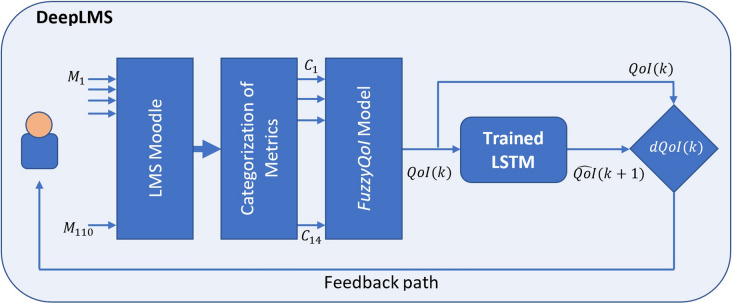
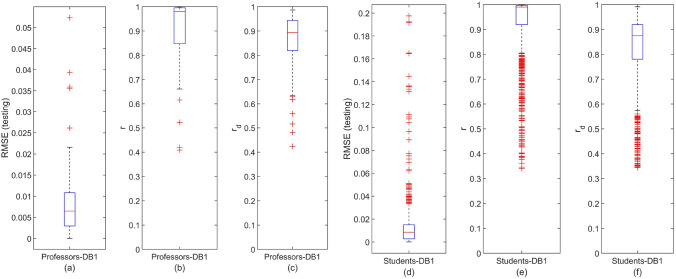
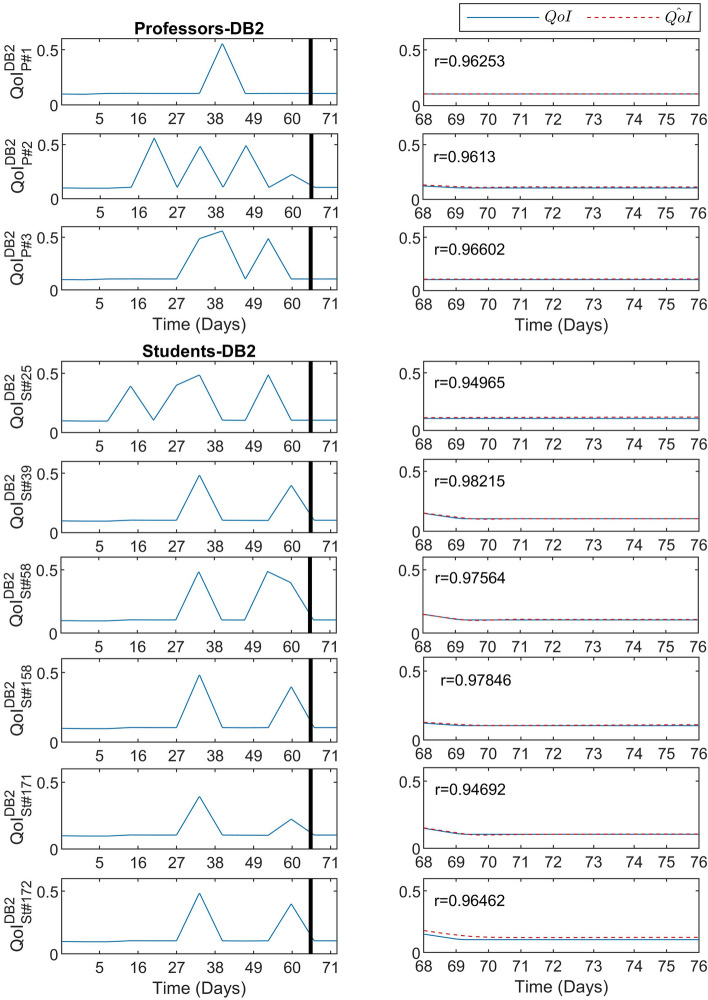
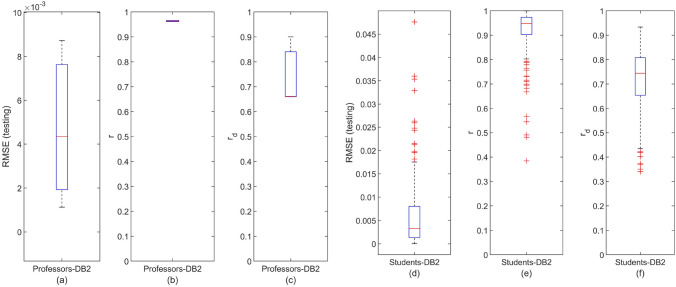
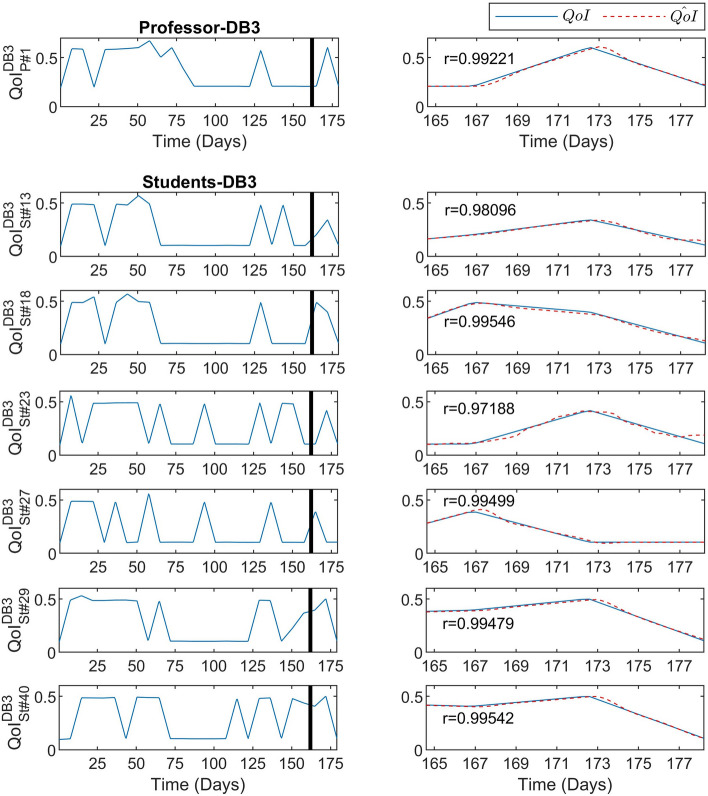
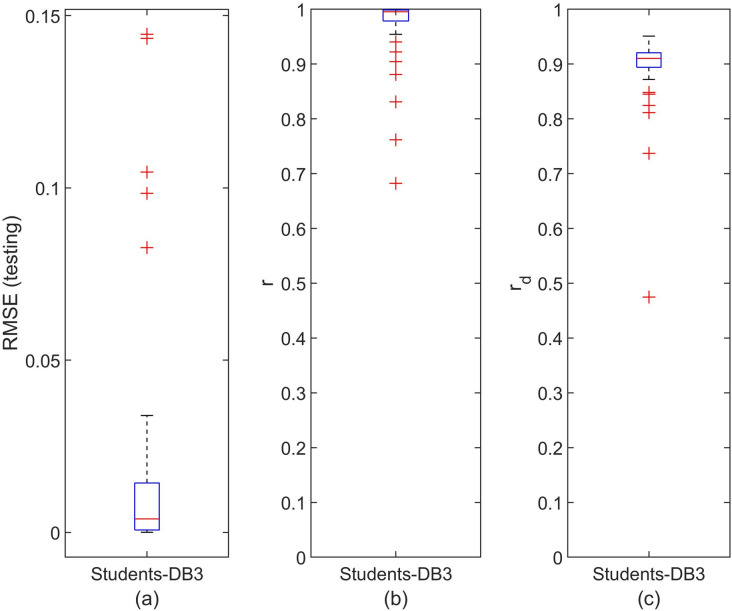
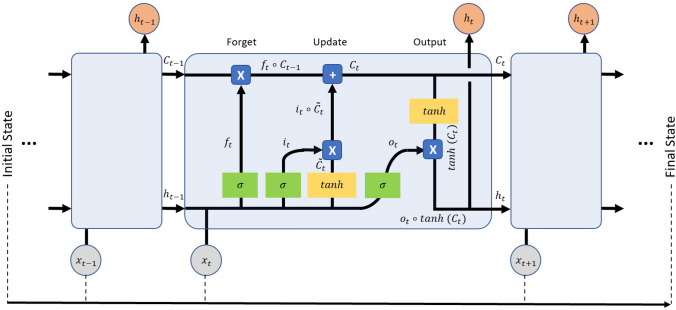
Coronavirus (Covid-19) pandemic has imposed a complete shut-down of face-to-face teaching to universities and schools, forcing a crash course for online learning plans and technology for students and faculty. In the midst of this unprecedented crisis, video conferencing platforms (e.g., Zoom, WebEx, MS Teams) and learning management systems (LMSs), like Moodle, Blackboard and Google Classroom, are being adopted and heavily used as online learning environments (OLEs). However, as such media solely provide the platform for e-interaction, effective methods that can be used to predict the learner's behavior in the OLEs, which should be available as supportive tools to educators and metacognitive triggers to learners. Here we show, for the first time, that Deep Learning techniques can be used to handle LMS users' interaction data and form a novel predictive model, namely DeepLMS, that can forecast the quality of interaction (QoI) with LMS. Using Long Short-Term Memory (LSTM) networks, DeepLMS results in average testing Root Mean Square Error (RMSE) [Formula: see text], and average correlation coefficient between ground truth and predicted QoI values [Formula: see text] [Formula: see text], when tested on QoI data from one database pre- and two ones during-Covid-19 pandemic. DeepLMS personalized QoI forecasting scaffolds user's online learning engagement and provides educators with an evaluation path, additionally to the content-related assessment, enriching the overall view on the learners' motivation and participation in the learning process.
冠状病毒(Covid-19)大流行迫使大学和学校全面停止面对面教学,迫使学生和教师仓促制定在线学习计划和技术。在这场前所未有的危机中,视频会议平台(例如 Zoom、WebEx、MS Teams)和学习管理系统(如 Moodle、Blackboard 和 Google Classroom)被采用并广泛用于在线学习环境(OLE)。然而,由于这些媒体仅提供电子交互的平台,因此需要有效的方法来预测学习者在 OLE 中的行为,这些方法可以作为教育者的支持工具和学习者的元认知触发因素。在这里,我们首次表明,深度学习技术可用于处理 LMS 用户的交互数据,并形成一种新颖的预测模型,即 DeepLMS,该模型可预测与 LMS 的交互质量(QoI)。使用长短时记忆(LSTM)网络,DeepLMS 在一个数据库的 QoI 数据上进行测试时,平均测试均方根误差(RMSE)[公式:见正文],并且真实值和预测 QoI 值之间的平均相关系数[公式:见正文],在两次疫情期间进行测试。DeepLMS 个性化的 QoI 预测支架可以预测用户的在线学习参与度,并为教育工作者提供评估路径,除了内容相关的评估之外,还丰富了学习者在学习过程中的动机和参与度的整体视图。