Department of Stem Cell and Regenerative Biology, Harvard University, Cambridge, MA, USA.
Int J Dev Biol. 2020;64(10-11-12):485-494. doi: 10.1387/ijdb.200114jw.
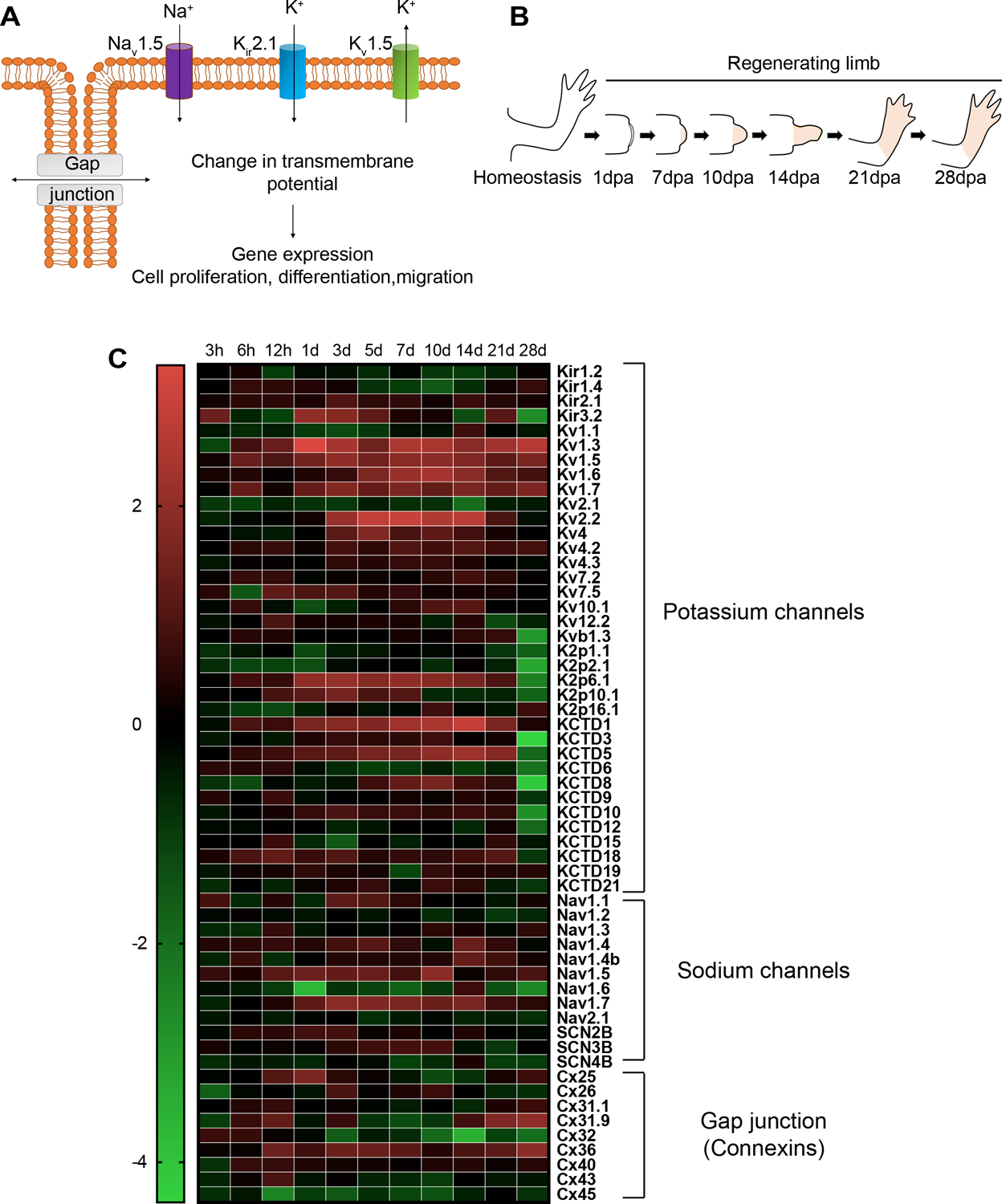
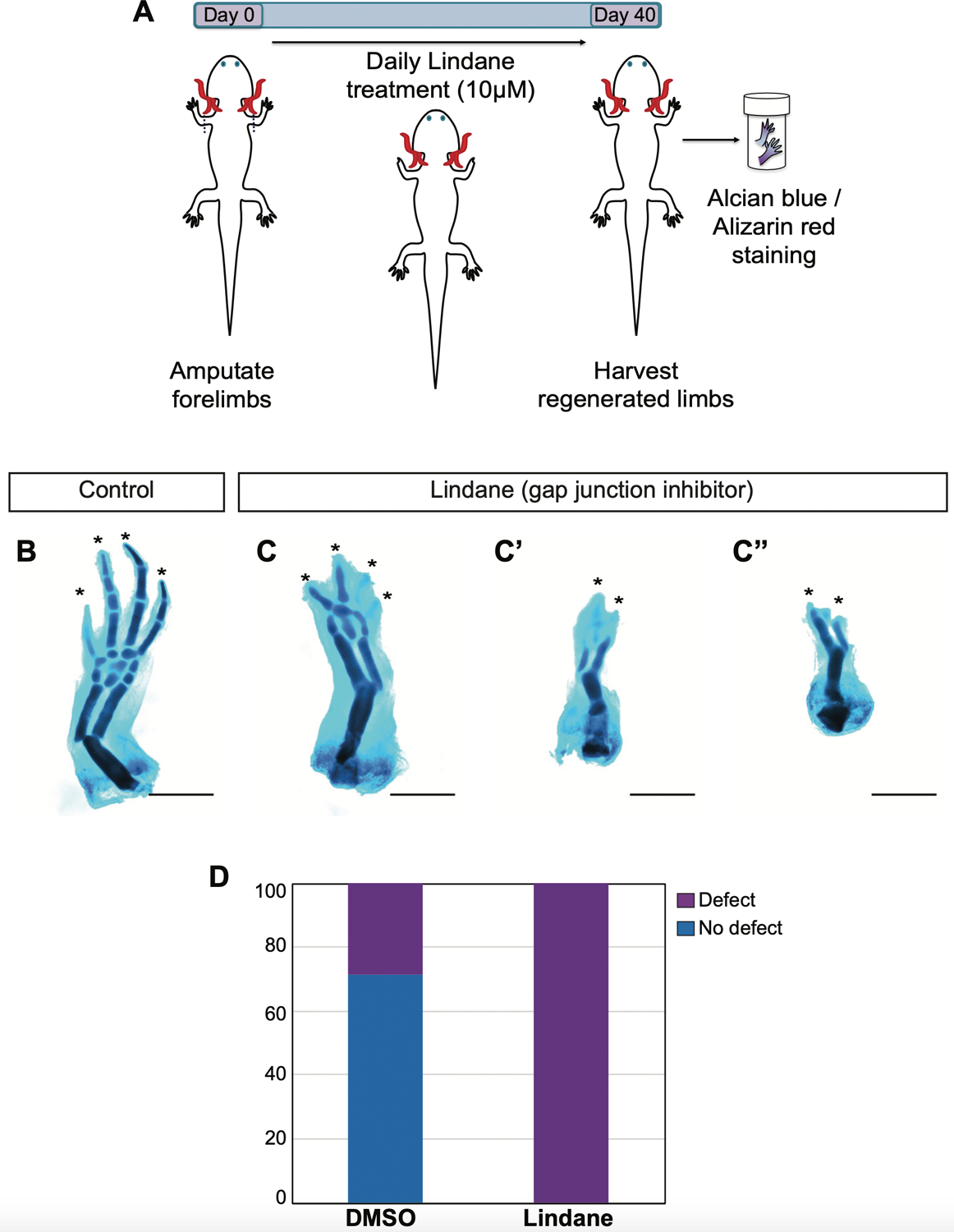
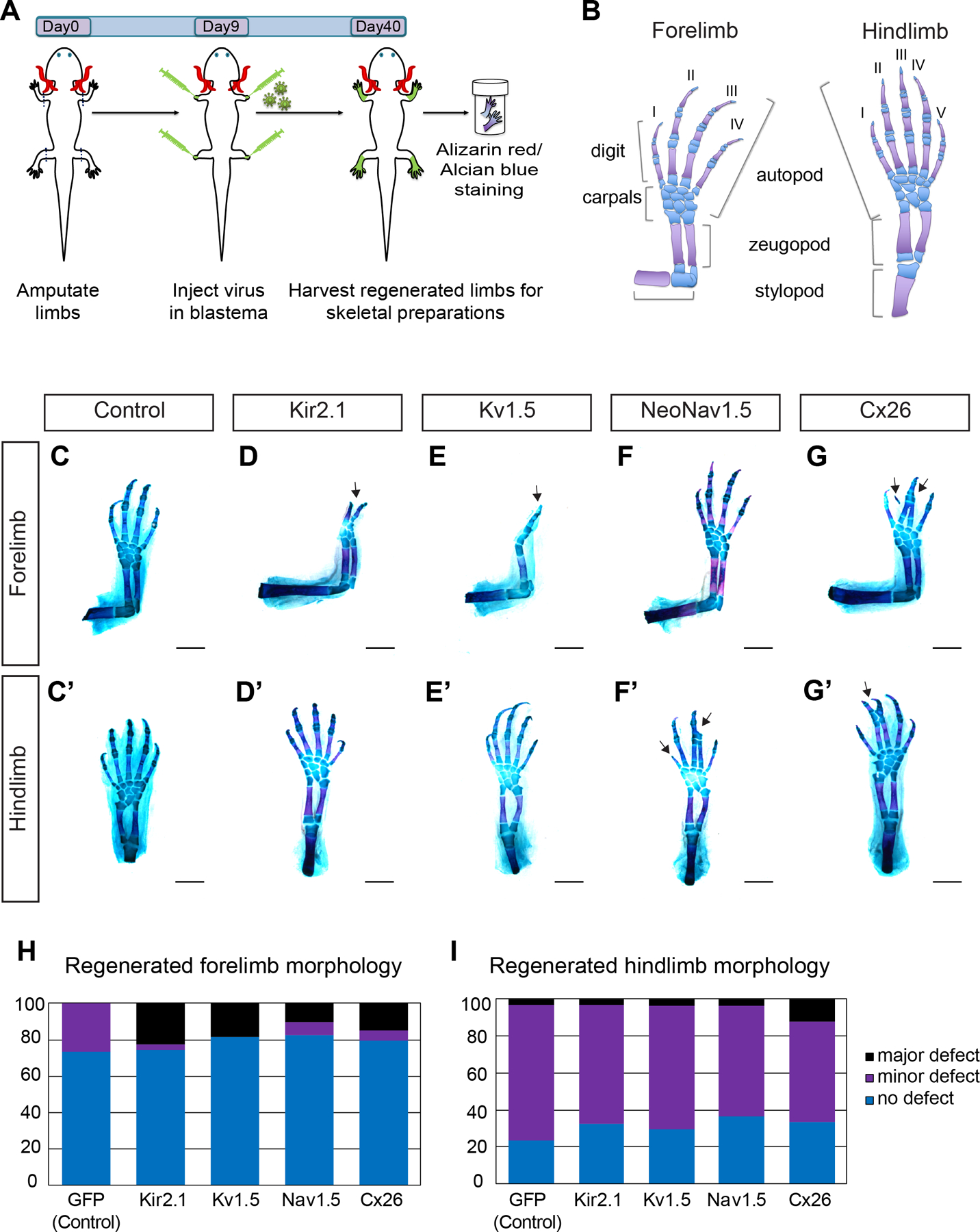
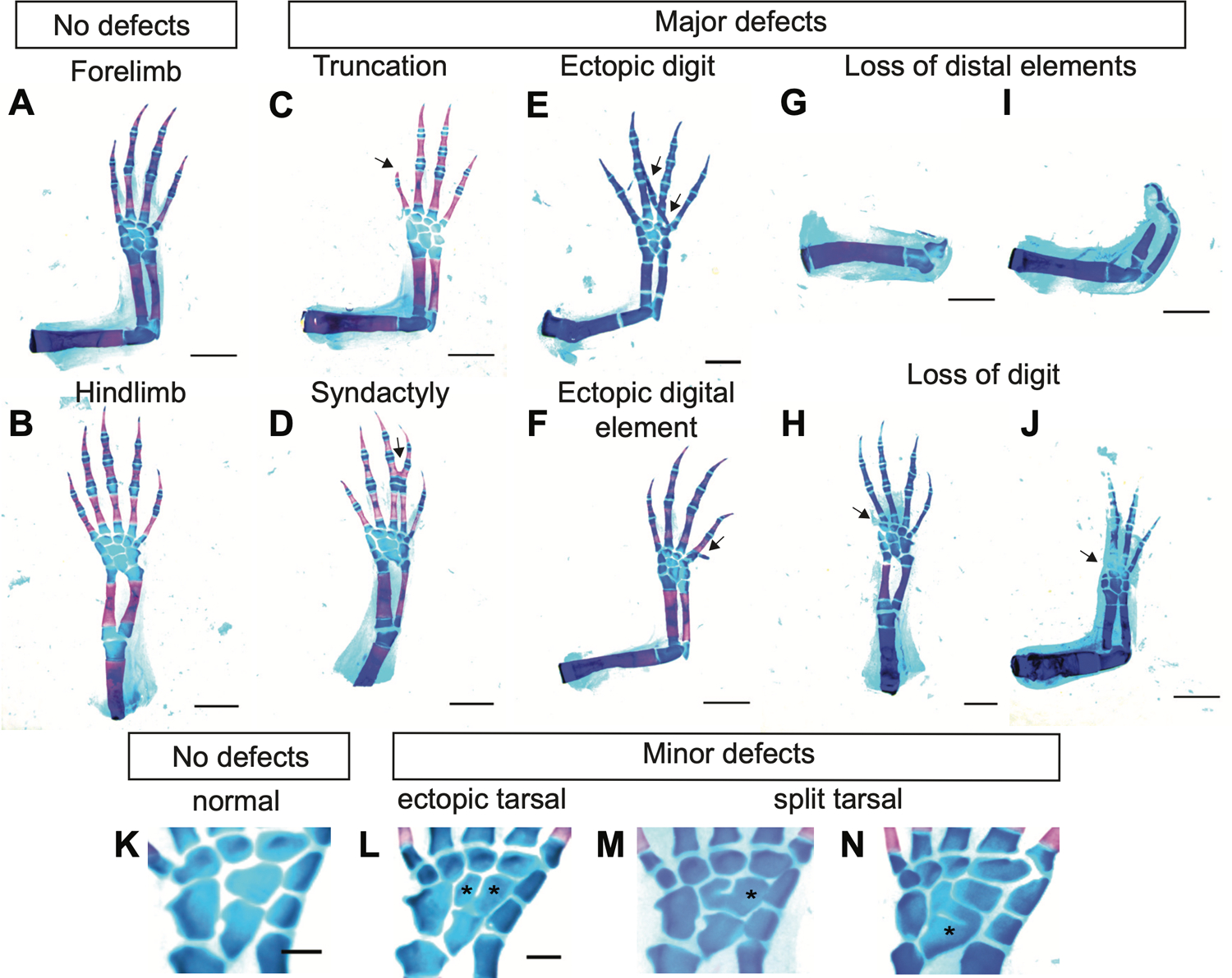
Axolotls and other salamanders have the capacity to regenerate lost tissue after an amputation or injury. Growth and morphogenesis are coordinated within cell groups in many contexts by the interplay of transcriptional networks and biophysical properties such as ion flows and voltage gradients. It is not, however, known whether regulators of a cell's ionic state are involved in limb patterning at later stages of regeneration. Here we manipulated expression and activities of ion channels and gap junctions in vivo, in axolotl limb blastema cells. Limb amputations followed by retroviral infections were performed to drive expression of a human gap junction protein Connexin 26 (Cx26), potassium (Kir2.1-Y242F and Kv1.5) and sodium (NeoNav1.5) ion channel proteins along with EGFP control. Skeletal preparation revealed that overexpressing Cx26 caused syndactyly, while overexpression of ion channel proteins resulted in digit loss and structural abnormalities compared to EGFP expressing control limbs. Additionally, we showed that exposing limbs to the gap junction inhibitor lindane during the regeneration process caused digit loss. Our data reveal that manipulating native ion channel and gap junction function in blastema cells results in patterning defects involving the number and structure of the regenerated digits. Gap junctions and ion channels have been shown to mediate ion flows that control the endogenous voltage gradients which are tightly associated with the regulation of gene expression, cell cycle progression, migration, and other cellular behaviors. Therefore, we postulate that mis-expression of these channels may have disturbed this regulation causing uncoordinated cell behavior which results in morphological defects.
蝾螈和其他蝾螈在截肢或受伤后有能力再生失去的组织。在许多情况下,转录网络和生物物理特性(如离子流和电压梯度)之间的相互作用协调细胞群中的生长和形态发生。然而,尚不清楚细胞离子状态的调节剂是否参与再生后期肢体模式的形成。在这里,我们在活体蝾螈肢体芽细胞中操纵离子通道和缝隙连接的表达和活性。进行肢体截肢,然后进行逆转录病毒感染,以驱动人缝隙连接蛋白 Connexin 26(Cx26)、钾(Kir2.1-Y242F 和 Kv1.5)和钠(NeoNav1.5)离子通道蛋白以及 EGFP 对照的表达。骨骼准备显示,过表达 Cx26 导致并指,而过表达离子通道蛋白与表达 EGFP 的对照肢体相比,导致digit 缺失和结构异常。此外,我们表明,在再生过程中向肢体暴露间隙连接抑制剂林丹会导致 digit 缺失。我们的数据表明,在芽细胞中操纵天然离子通道和缝隙连接功能会导致涉及再生 digit 数量和结构的模式缺陷。已经表明间隙连接和离子通道介导控制内源性电压梯度的离子流,内源性电压梯度与基因表达、细胞周期进程、迁移和其他细胞行为的调节密切相关。因此,我们假设这些通道的错误表达可能扰乱了这种调节,导致不协调的细胞行为,从而导致形态缺陷。