Neilson Eric W, Lamb Clayton T, Konkolics Sean M, Peers Michael J L, Majchrzak Yasmine N, Doran-Myers Darcy, Garland Laura, Martinig April Robin, Boutin Stan
Biological Sciences University of Alberta Edmonton AB Canada.
Natural Resources Canada - Canadian Forest Service Edmonton AB Canada.
Ecol Evol. 2020 Oct 1;10(21):12147-12156. doi: 10.1002/ece3.6842. eCollection 2020 Nov.
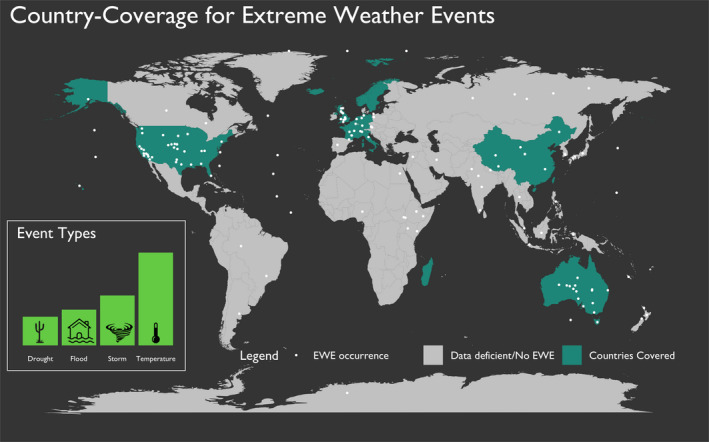
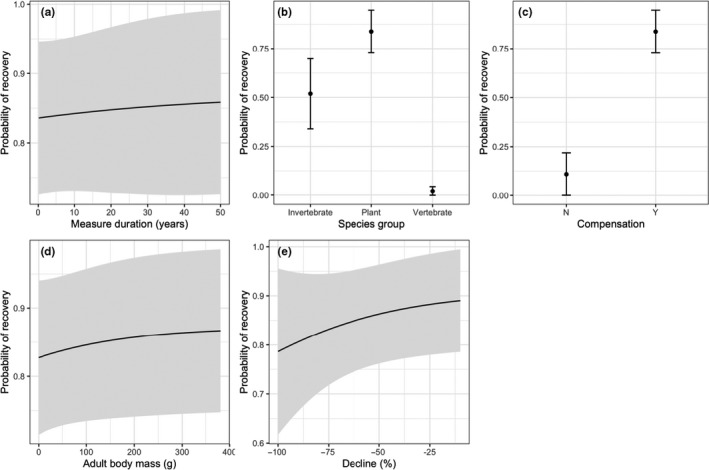
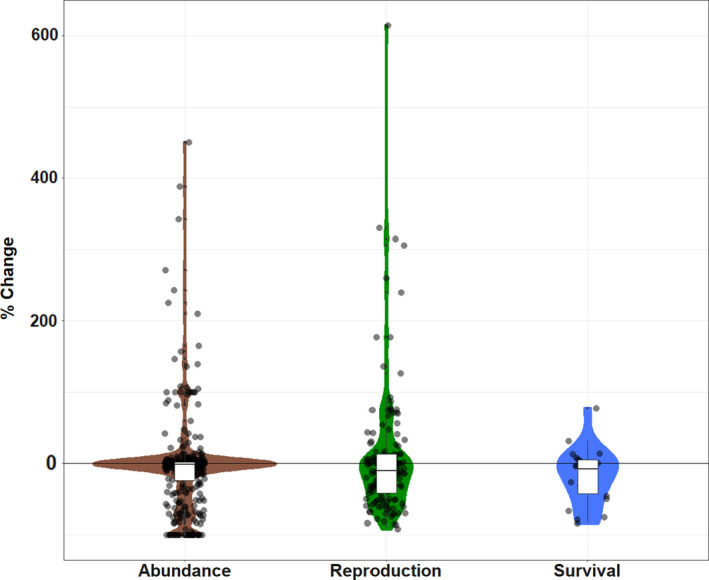
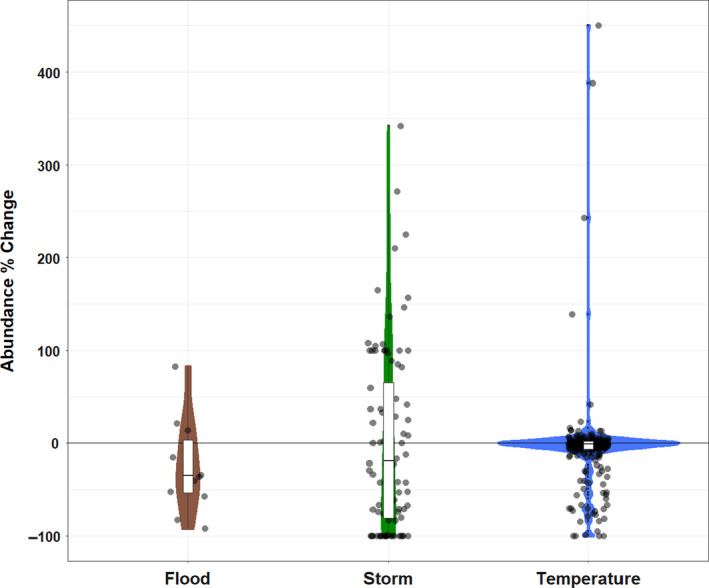
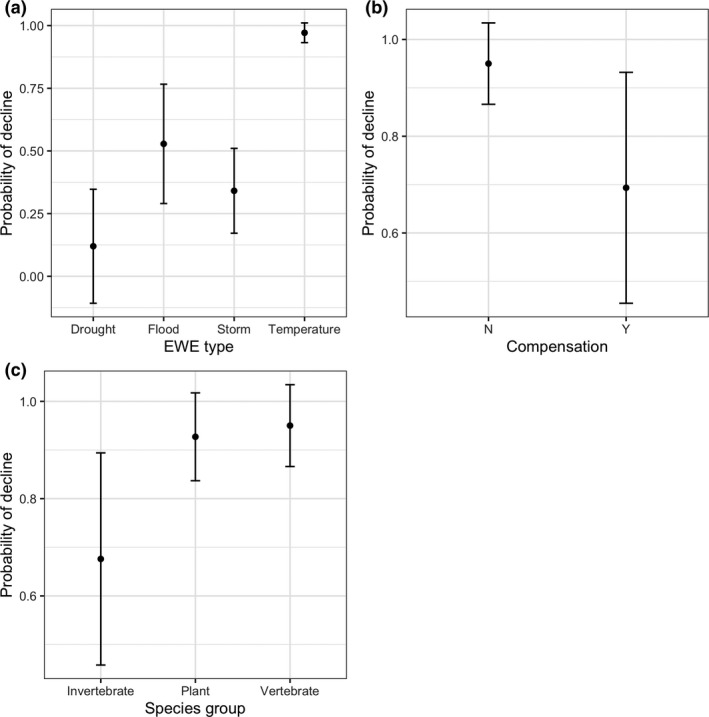
Extreme weather events (EWEs) are expected to increase in stochasticity, frequency, and intensity due to climate change. Documented effects of EWEs, such as droughts, hurricanes, and temperature extremes, range from shifting community stable states to species extirpations. To date, little attention has been paid to how populations resist and/or recover from EWEs through compensatory (behavioral, demographic, or physiological) mechanisms; limiting the capacity to predict species responses to future changes in EWEs. Here, we systematically reviewed the global variation in species' demographic responses, resistance to, and recovery from EWEs across weather types, species, and biogeographic regions. Through a literature review and meta-analysis, we tested the prediction that population abundance and probability of persistence will decrease in populations after an EWE and how compensation affects that probability. Across 524 species population responses to EWEs reviewed (27 articles), we noted large variation in responses, such that, on average, the effect of EWEs on population demographics was not negative as predicted. The majority of species populations (80.4%) demonstrated compensatory mechanisms during events to reduce their deleterious effects. However, for populations that were negatively impacted, the demographic consequences were severe. Nearly 20% of the populations monitored experienced declines of over 50% after an EWE, and 6.8% of populations were extirpated. Population declines were reflected in a reduction in survival. Further, resilience was not common, as 80.0% of populations that declined did not recover to before EWE levels while monitored. However, average monitoring time was only two years with over a quarter of studies tracking recovery for less than the study species generation time. We conclude that EWEs have positive and negative impacts on species demography, and this varies by taxa. Species population recovery over short-time intervals is rare, but long-term studies are required to accurately assess species resilience to current and future events.
由于气候变化,极端天气事件(EWEs)的随机性、频率和强度预计将会增加。有记录表明,干旱、飓风和极端温度等极端天气事件的影响范围很广,从改变群落稳定状态到导致物种灭绝。迄今为止,很少有人关注种群如何通过补偿性(行为、种群统计学或生理)机制来抵抗和/或从极端天气事件中恢复;这限制了预测物种对未来极端天气事件变化的反应的能力。在这里,我们系统地回顾了全球范围内不同天气类型、物种和生物地理区域的物种在种群统计学反应、对极端天气事件的抵抗力以及从极端天气事件中恢复的情况。通过文献综述和荟萃分析,我们检验了这样一个预测:极端天气事件发生后,种群数量和持续存在的概率将会下降,以及补偿如何影响这一概率。在回顾的524个物种对极端天气事件的种群反应(27篇文章)中,我们注意到反应存在很大差异,以至于平均而言,极端天气事件对种群统计学的影响并不像预测的那样是负面的。大多数物种种群(80.4%)在事件期间表现出补偿机制以减少其有害影响。然而,对于受到负面影响的种群,种群统计学后果是严重的。近20%的受监测种群在极端天气事件后经历了超过50%的下降,6.8%的种群灭绝。种群数量下降反映在存活率降低上。此外,恢复力并不常见,因为在监测期间,80.0%数量下降的种群没有恢复到极端天气事件发生前的水平。然而,平均监测时间仅为两年,超过四分之一的研究追踪恢复情况的时间不到研究物种的一代时间。我们得出结论,极端天气事件对物种种群统计学有正面和负面影响,并且这种影响因分类群而异。短期内物种种群恢复很少见,但需要长期研究来准确评估物种对当前和未来事件的恢复力。