• 文献检索
  • 文档翻译
  • 深度研究
  • 学术资讯
  • Suppr Zotero 插件Zotero 插件
  • 邀请有礼
  • 套餐&价格
  • 历史记录
应用&插件
Suppr Zotero 插件Zotero 插件浏览器插件Mac 客户端Windows 客户端微信小程序
定价
高级版会员购买积分包购买API积分包
服务
文献检索文档翻译深度研究API 文档MCP 服务
关于我们
关于 Suppr公司介绍联系我们用户协议隐私条款
关注我们

Suppr 超能文献

核心技术专利:CN118964589B侵权必究
粤ICP备2023148730 号-1Suppr @ 2026

文献检索

告别复杂PubMed语法,用中文像聊天一样搜索,搜遍4000万医学文献。AI智能推荐,让科研检索更轻松。

立即免费搜索

文件翻译

保留排版,准确专业,支持PDF/Word/PPT等文件格式,支持 12+语言互译。

免费翻译文档

深度研究

AI帮你快速写综述,25分钟生成高质量综述,智能提取关键信息,辅助科研写作。

立即免费体验

利用 3D 核染色对人肾组织中的细胞类型进行原位分类。

In Situ Classification of Cell Types in Human Kidney Tissue Using 3D Nuclear Staining.

机构信息

Department of Medicine, Division of Nephrology and Hypertension, Indiana University School of Medicine, Indianapolis, Indiana, USA.

Department of Computer Science, Indiana University Purdue University, Indianapolis, Indiana, USA.

出版信息

Cytometry A. 2021 Jul;99(7):707-721. doi: 10.1002/cyto.a.24274. Epub 2020 Dec 13.

DOI:10.1002/cyto.a.24274
PMID:33252180
原文链接:https://pmc.ncbi.nlm.nih.gov/articles/PMC8382162/
Abstract

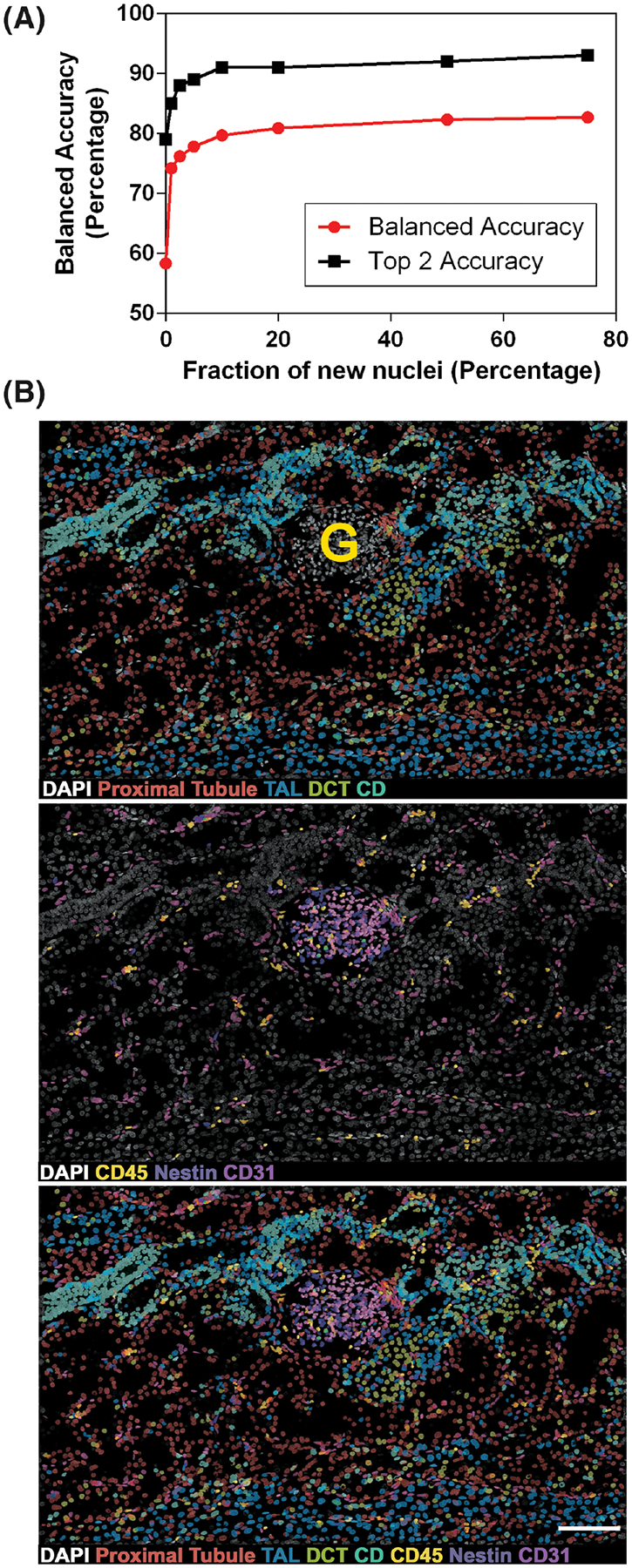
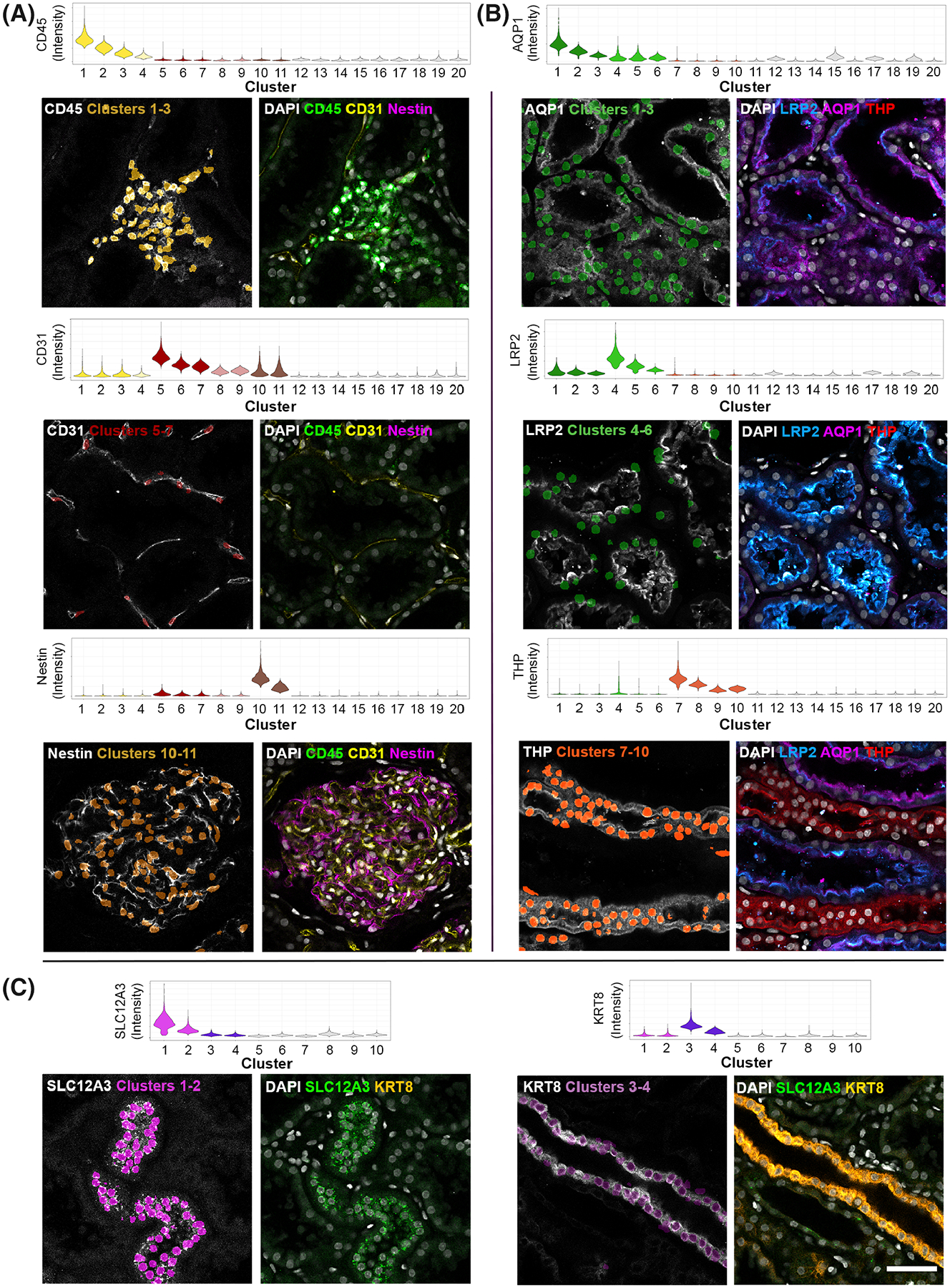
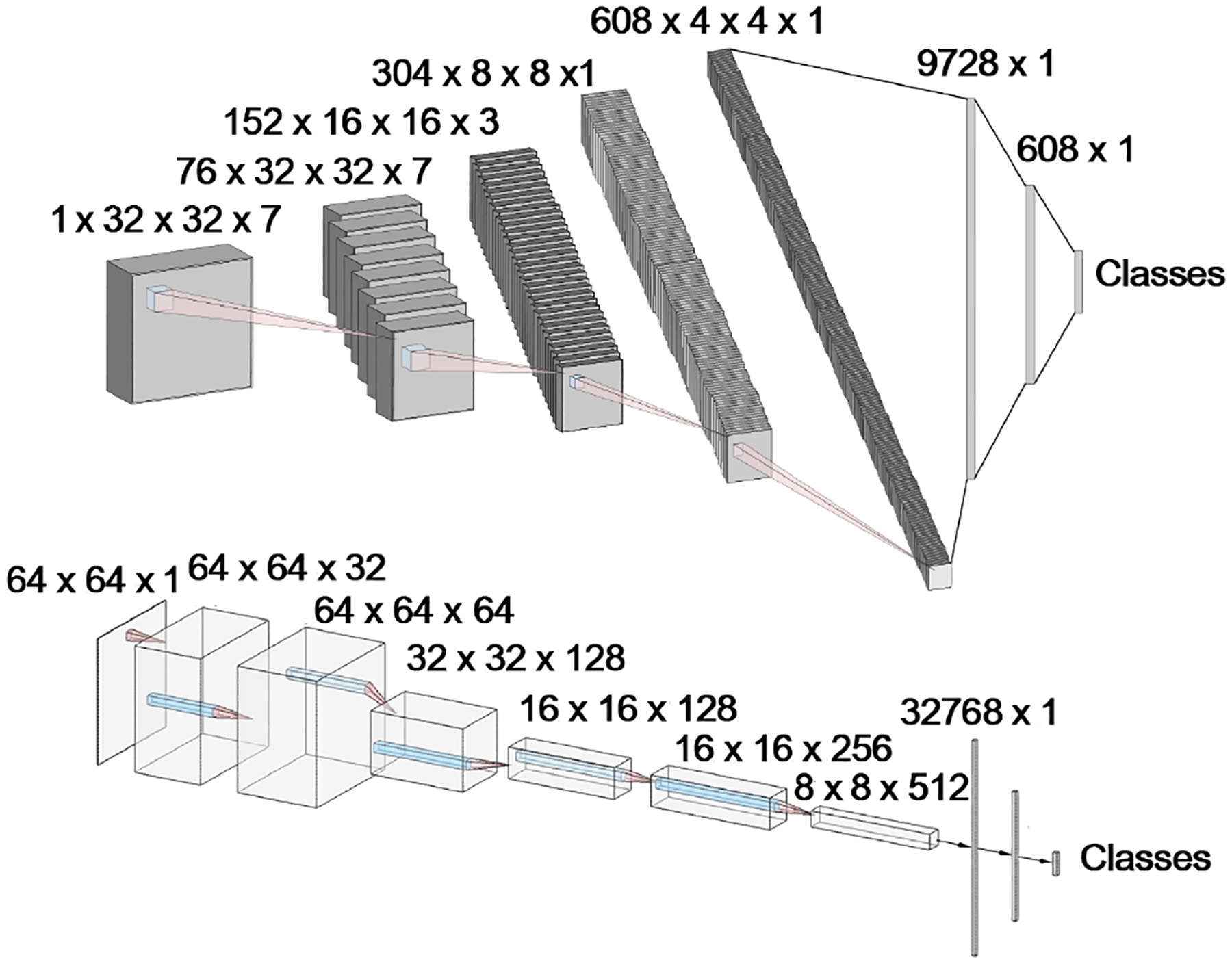
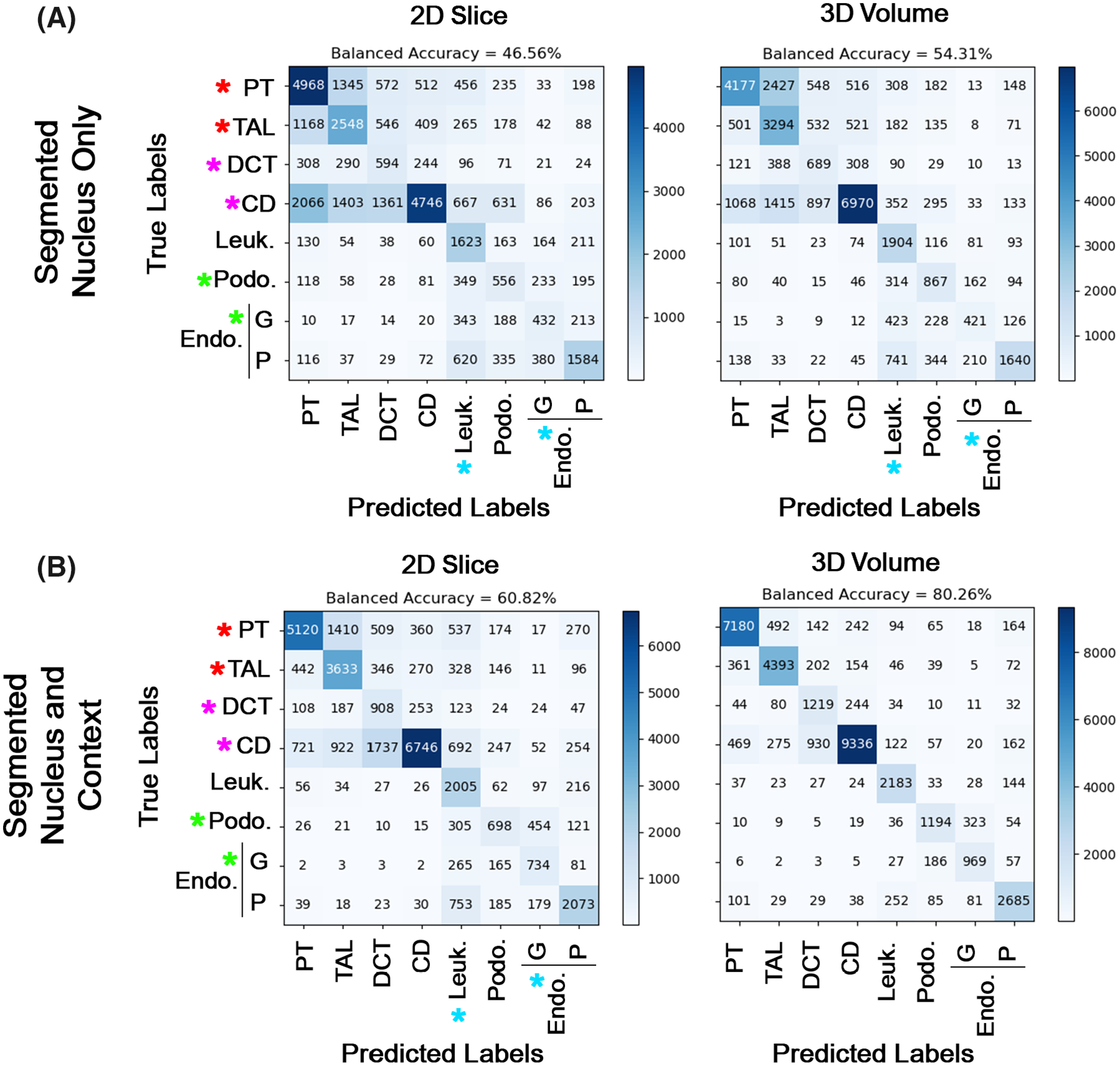
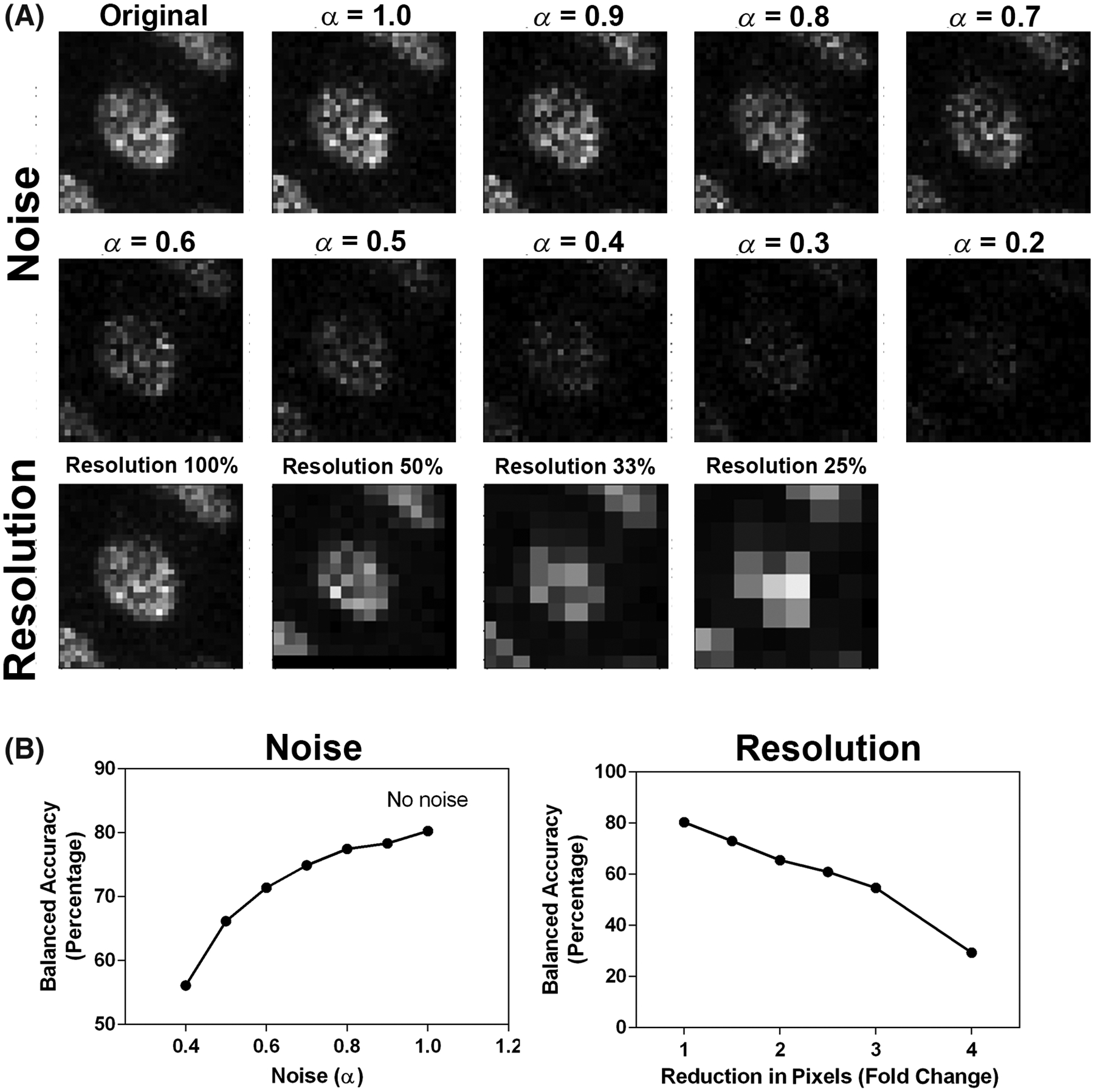
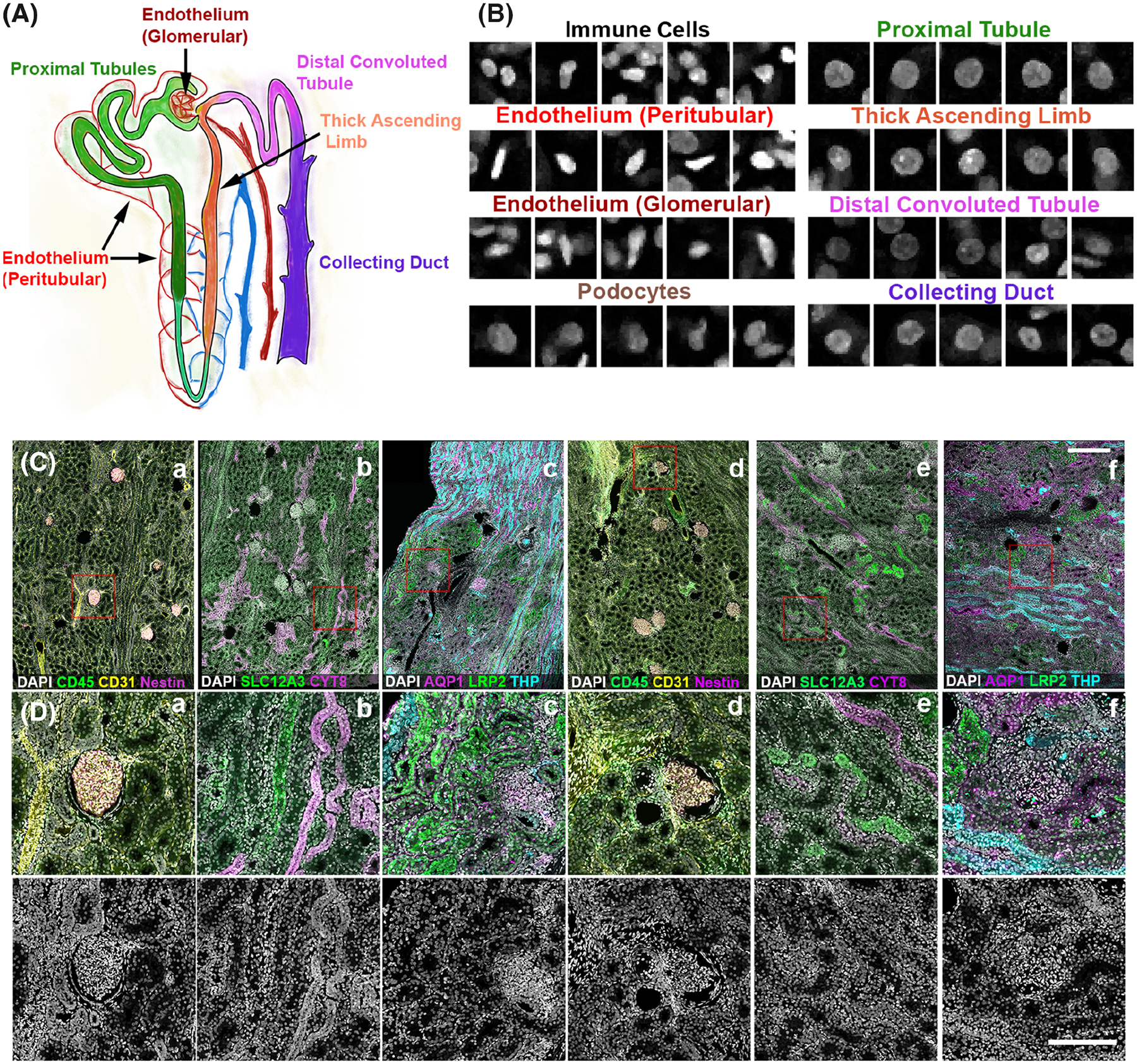
To understand the physiology and pathology of disease, capturing the heterogeneity of cell types within their tissue environment is fundamental. In such an endeavor, the human kidney presents a formidable challenge because its complex organizational structure is tightly linked to key physiological functions. Advances in imaging-based cell classification may be limited by the need to incorporate specific markers that can link classification to function. Multiplex imaging can mitigate these limitations, but requires cumulative incorporation of markers, which may lead to tissue exhaustion. Furthermore, the application of such strategies in large scale 3-dimensional (3D) imaging is challenging. Here, we propose that 3D nuclear signatures from a DNA stain, DAPI, which could be incorporated in most experimental imaging, can be used for classifying cells in intact human kidney tissue. We developed an unsupervised approach that uses 3D tissue cytometry to generate a large training dataset of nuclei images (NephNuc), where each nucleus is associated with a cell type label. We then devised various supervised machine learning approaches for kidney cell classification and demonstrated that a deep learning approach outperforms classical machine learning or shape-based classifiers. Specifically, a custom 3D convolutional neural network (NephNet3D) trained on nuclei image volumes achieved a balanced accuracy of 80.26%. Importantly, integrating NephNet3D classification with tissue cytometry allowed in situ visualization of cell type classifications in kidney tissue. In conclusion, we present a tissue cytometry and deep learning approach for in situ classification of cell types in human kidney tissue using only a DNA stain. This methodology is generalizable to other tissues and has potential advantages on tissue economy and non-exhaustive classification of different cell types.

摘要

为了理解疾病的生理学和病理学,捕捉组织环境中细胞类型的异质性是基础。在这样的努力中,人类肾脏提出了一个巨大的挑战,因为其复杂的组织结构与关键的生理功能紧密相连。基于成像的细胞分类的进展可能受到需要纳入可以将分类与功能联系起来的特定标记的限制。多重成像可以减轻这些限制,但需要累积纳入标记,这可能导致组织枯竭。此外,此类策略在大规模三维(3D)成像中的应用具有挑战性。在这里,我们提出可以从 DNA 染色剂 DAPI 获得的 3D 核特征,该特征可以整合到大多数实验成像中,用于对完整的人类肾脏组织中的细胞进行分类。我们开发了一种无监督方法,该方法使用 3D 组织细胞计量术生成大量核图像(NephNuc)的训练数据集,其中每个核都与细胞类型标签相关联。然后,我们设计了各种用于肾脏细胞分类的监督机器学习方法,并证明了深度学习方法优于经典机器学习或基于形状的分类器。具体而言,使用核图像体积训练的自定义 3D 卷积神经网络(NephNet3D)实现了 80.26%的平衡准确性。重要的是,将 NephNet3D 分类与组织细胞计量术集成允许在原位可视化肾脏组织中的细胞类型分类。总之,我们提出了一种使用仅 DNA 染色剂原位分类人类肾脏组织中细胞类型的组织细胞计量术和深度学习方法。该方法适用于其他组织,并且在组织经济性和不同细胞类型的非消耗性分类方面具有潜在优势。
https://cdn.ncbi.nlm.nih.gov/pmc/blobs/b937/8382162/8454b5da9eb9/nihms-1727517-f0006.jpg
https://cdn.ncbi.nlm.nih.gov/pmc/blobs/b937/8382162/26f87147335a/nihms-1727517-f0001.jpg
https://cdn.ncbi.nlm.nih.gov/pmc/blobs/b937/8382162/56b64efcfd90/nihms-1727517-f0002.jpg
https://cdn.ncbi.nlm.nih.gov/pmc/blobs/b937/8382162/e04f9d17112d/nihms-1727517-f0003.jpg
https://cdn.ncbi.nlm.nih.gov/pmc/blobs/b937/8382162/c3387f7fac62/nihms-1727517-f0004.jpg
https://cdn.ncbi.nlm.nih.gov/pmc/blobs/b937/8382162/a9816f9eeac4/nihms-1727517-f0005.jpg
https://cdn.ncbi.nlm.nih.gov/pmc/blobs/b937/8382162/8454b5da9eb9/nihms-1727517-f0006.jpg
https://cdn.ncbi.nlm.nih.gov/pmc/blobs/b937/8382162/26f87147335a/nihms-1727517-f0001.jpg
https://cdn.ncbi.nlm.nih.gov/pmc/blobs/b937/8382162/56b64efcfd90/nihms-1727517-f0002.jpg
https://cdn.ncbi.nlm.nih.gov/pmc/blobs/b937/8382162/e04f9d17112d/nihms-1727517-f0003.jpg
https://cdn.ncbi.nlm.nih.gov/pmc/blobs/b937/8382162/c3387f7fac62/nihms-1727517-f0004.jpg
https://cdn.ncbi.nlm.nih.gov/pmc/blobs/b937/8382162/a9816f9eeac4/nihms-1727517-f0005.jpg
https://cdn.ncbi.nlm.nih.gov/pmc/blobs/b937/8382162/8454b5da9eb9/nihms-1727517-f0006.jpg

相似文献

1
In Situ Classification of Cell Types in Human Kidney Tissue Using 3D Nuclear Staining.利用 3D 核染色对人肾组织中的细胞类型进行原位分类。
Cytometry A. 2021 Jul;99(7):707-721. doi: 10.1002/cyto.a.24274. Epub 2020 Dec 13.
2
Tissue Cytometry With Machine Learning in Kidney: From Small Specimens to Big Data.肾脏中基于机器学习的组织细胞计数法:从小样本到大数据
Front Physiol. 2022 Mar 4;13:832457. doi: 10.3389/fphys.2022.832457. eCollection 2022.
3
Deep virtual adversarial self-training with consistency regularization for semi-supervised medical image classification.深度对偶对抗自训练与一致性正则化在半监督医学图像分类中的应用。
Med Image Anal. 2021 May;70:102010. doi: 10.1016/j.media.2021.102010. Epub 2021 Feb 22.
4
Semi-supervised training of deep convolutional neural networks with heterogeneous data and few local annotations: An experiment on prostate histopathology image classification.基于异构数据和少量局部标注的深度卷积神经网络的半监督学习:前列腺组织病理学图像分类实验。
Med Image Anal. 2021 Oct;73:102165. doi: 10.1016/j.media.2021.102165. Epub 2021 Jul 14.
5
Method for Training Convolutional Neural Networks for In Situ Plankton Image Recognition and Classification Based on the Mechanisms of the Human Eye.基于人眼机制的原位浮游生物图像识别与分类卷积神经网络训练方法。
Sensors (Basel). 2020 May 2;20(9):2592. doi: 10.3390/s20092592.
6
Classification of Human White Blood Cells Using Machine Learning for Stain-Free Imaging Flow Cytometry.基于无染色成像流式细胞术的机器学习对人类白细胞的分类。
Cytometry A. 2020 Mar;97(3):308-319. doi: 10.1002/cyto.a.23920. Epub 2019 Nov 5.
7
Learning deep features for dead and living breast cancer cell classification without staining.无染色的死/活乳腺癌细胞分类的深度学习特征学习。
Sci Rep. 2021 May 13;11(1):10304. doi: 10.1038/s41598-021-89895-w.
8
Digital breast tomosynthesis versus digital mammography: integration of image modalities enhances deep learning-based breast mass classification.数字乳腺断层合成与数字乳腺钼靶摄影:图像模式的整合增强了基于深度学习的乳腺肿块分类。
Eur Radiol. 2020 Feb;30(2):778-788. doi: 10.1007/s00330-019-06457-5. Epub 2019 Nov 5.
9
MRI-Based Brain Tumor Classification Using Ensemble of Deep Features and Machine Learning Classifiers.基于 MRI 的脑肿瘤分类:深度学习特征集与机器学习分类器的应用
Sensors (Basel). 2021 Mar 22;21(6):2222. doi: 10.3390/s21062222.
10
Improving segmentation and classification of renal tumors in small sample 3D CT images using transfer learning with convolutional neural networks.利用卷积神经网络的迁移学习提高小样本三维 CT 图像中肾肿瘤的分割和分类。
Int J Comput Assist Radiol Surg. 2022 Jul;17(7):1303-1311. doi: 10.1007/s11548-022-02587-2. Epub 2022 Mar 15.

引用本文的文献

1
Few-shot learning for inference in medical imaging with subspace feature representations.基于子空间特征表示的医学影像推断中的少样本学习。
PLoS One. 2024 Nov 6;19(11):e0309368. doi: 10.1371/journal.pone.0309368. eCollection 2024.
2
High-throughput image analysis with deep learning captures heterogeneity and spatial relationships after kidney injury.高通量图像分析与深度学习捕捉肾损伤后的异质性和空间关系。
Sci Rep. 2023 Apr 19;13(1):6361. doi: 10.1038/s41598-023-33433-3.
3
Integrated Cytometry With Machine Learning Applied to High-Content Imaging of Human Kidney Tissue for In Situ Cell Classification and Neighborhood Analysis.

本文引用的文献

1
CytoMAP: A Spatial Analysis Toolbox Reveals Features of Myeloid Cell Organization in Lymphoid Tissues.CytoMAP:揭示淋巴组织中髓样细胞组织特征的空间分析工具箱。
Cell Rep. 2020 Apr 21;31(3):107523. doi: 10.1016/j.celrep.2020.107523.
2
Robust classification of cell cycle phase and biological feature extraction by image-based deep learning.基于图像的深度学习进行细胞周期相的稳健分类和生物特征提取。
Mol Biol Cell. 2020 Jun 15;31(13):1346-1354. doi: 10.1091/mbc.E20-03-0187. Epub 2020 Apr 22.
3
Dynamic spherical harmonics approach for shape classification of migrating cells.
整合流式细胞术与机器学习,应用于人类肾脏组织的高内涵成像,用于原位细胞分类和邻域分析。
Lab Invest. 2023 Jun;103(6):100104. doi: 10.1016/j.labinv.2023.100104. Epub 2023 Feb 4.
4
MedMNIST v2 - A large-scale lightweight benchmark for 2D and 3D biomedical image classification.MedMNIST v2 - 用于 2D 和 3D 生物医学图像分类的大规模轻量级基准。
Sci Data. 2023 Jan 19;10(1):41. doi: 10.1038/s41597-022-01721-8.
5
A Hybrid Risk Factor Evaluation Scheme for Metabolic Syndrome and Stage 3 Chronic Kidney Disease Based on Multiple Machine Learning Techniques.基于多种机器学习技术的代谢综合征和3期慢性肾脏病混合风险因素评估方案
Healthcare (Basel). 2022 Dec 9;10(12):2496. doi: 10.3390/healthcare10122496.
6
Integrating Health Data-Driven Machine Learning Algorithms to Evaluate Risk Factors of Early Stage Hypertension at Different Levels of HDL and LDL Cholesterol.整合健康数据驱动的机器学习算法,以评估不同高密度脂蛋白(HDL)和低密度脂蛋白(LDL)胆固醇水平下早期高血压的风险因素。
Diagnostics (Basel). 2022 Aug 14;12(8):1965. doi: 10.3390/diagnostics12081965.
7
Vascular Implications of COVID-19: Role of Radiological Imaging, Artificial Intelligence, and Tissue Characterization: A Special Report.2019冠状病毒病的血管影响:放射影像学、人工智能和组织特征分析的作用:特别报告
J Cardiovasc Dev Dis. 2022 Aug 15;9(8):268. doi: 10.3390/jcdd9080268.
8
User-Accessible Machine Learning Approaches for Cell Segmentation and Analysis in Tissue.用于组织中细胞分割与分析的用户可访问机器学习方法
Front Physiol. 2022 Mar 10;13:833333. doi: 10.3389/fphys.2022.833333. eCollection 2022.
9
Tissue Cytometry With Machine Learning in Kidney: From Small Specimens to Big Data.肾脏中基于机器学习的组织细胞计数法:从小样本到大数据
Front Physiol. 2022 Mar 4;13:832457. doi: 10.3389/fphys.2022.832457. eCollection 2022.
10
Label-free imaging of non-deparaffinized sections of the human kidney to determine tissue quality and signatures of disease.对未经脱蜡的人肾切片进行无标记成像,以确定组织质量和疾病特征。
Physiol Rep. 2022 Feb;10(3):e15167. doi: 10.14814/phy2.15167.
动态球谐函数方法用于迁移细胞的形状分类。
Sci Rep. 2020 Apr 8;10(1):6072. doi: 10.1038/s41598-020-62997-7.
4
Single cell transcriptomics identifies focal segmental glomerulosclerosis remission endothelial biomarker.单细胞转录组学鉴定局灶节段性肾小球硬化缓解的内皮生物标志物。
JCI Insight. 2020 Mar 26;5(6):133267. doi: 10.1172/jci.insight.133267.
5
Causability and explainability of artificial intelligence in medicine.人工智能在医学中的可归因性与可解释性。
Wiley Interdiscip Rev Data Min Knowl Discov. 2019 Jul-Aug;9(4):e1312. doi: 10.1002/widm.1312. Epub 2019 Apr 2.
6
Cell Image Classification: A Comparative Overview.细胞图像分类:比较综述。
Cytometry A. 2020 Apr;97(4):347-362. doi: 10.1002/cyto.a.23984. Epub 2020 Feb 10.
7
Multiscale, multimodal analysis of tumor heterogeneity in IDH1 mutant vs wild-type diffuse gliomas.多尺度、多模态分析 IDH1 突变型与野生型弥漫性胶质瘤的肿瘤异质性。
PLoS One. 2019 Dec 27;14(12):e0219724. doi: 10.1371/journal.pone.0219724. eCollection 2019.
8
DeepSynth: Three-dimensional nuclear segmentation of biological images using neural networks trained with synthetic data.DeepSynth:使用合成数据训练的神经网络进行生物图像的三维核分割。
Sci Rep. 2019 Dec 4;9(1):18295. doi: 10.1038/s41598-019-54244-5.
9
White blood cells detection and classification based on regional convolutional neural networks.基于区域卷积神经网络的白细胞检测与分类。
Med Hypotheses. 2020 Feb;135:109472. doi: 10.1016/j.mehy.2019.109472. Epub 2019 Nov 4.
10
Classification of Human White Blood Cells Using Machine Learning for Stain-Free Imaging Flow Cytometry.基于无染色成像流式细胞术的机器学习对人类白细胞的分类。
Cytometry A. 2020 Mar;97(3):308-319. doi: 10.1002/cyto.a.23920. Epub 2019 Nov 5.